Hand-watering a yard in July is a fast way to ruin a Saturday. The right timer takes over the schedule, runs through the night, and frees you up for anything else. After sorting through the noise, here are nine lawn watering timers worth a look, ranging from simple hose-end units to a multi-zone panel built for whole-property irrigation.
A Fast Comparison Of The Options

RAINPOINT Sprinkler Timer with 3 Programs, Brass Inlet

RAINPOINT Sprinkler Timer with 3 Independent Programs

LinkTap G1S Wireless Garden Watering Timer & Gateway

RAINPOINT Cycle & Soak Hose Timer

RAINPOINT Sprinkler Timer with Brass Inlet & Outlet
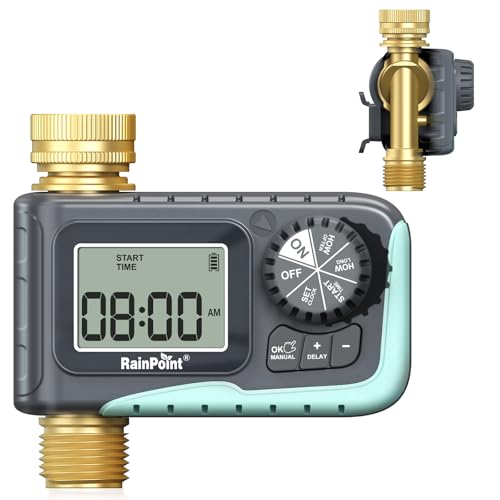
RAINPOINT 100% Metal Pipe Sprinkler Timer

Orbit 57899 9-Station Outdoor Sprinkler Timer

RAINPOINT 2 Zone Sprinkler Timer

Sprinkler Timer with Brass Inlet, Auto/Manual/Rain Delay
The Details Behind The Selections
The first pick in this list is a hose-end timer that runs three independent schedules at once, which is the kind of flexibility that saves headaches when one bed needs a daily drink and another only needs a soak every few days. The brass inlet threads on tight, and the body is built to shrug off weather, sitting by the spigot through summer storms and winter freezes without complaint.
For most yards, this lands at the sweet spot between too simple and too clever. Setup takes a few minutes the first time, then the schedule just runs, and the rain delay gives you a manual escape hatch when a thunderstorm rolls through unexpectedly.
Useful Touches
- Three independent programs let you run different watering routines side by side
- Brass inlet adds durability at the most common wear point
- Rain delay skips a cycle when the weather does your job for you
- Large LCD reads clearly at a glance, even on bright afternoons
Things To Consider
- Programming takes patience the first time, especially across all three schedules
- One outlet means single-zone coverage; multi-zone properties need a splitter or another unit
Feature Snapshot
Right Fit For
Garden owners juggling multiple plant types who want one reliable hose-end timer to coordinate the whole routine.
Swap It Out When
Pick the RAINPOINT 2 Zone Sprinkler Timer instead if your yard splits cleanly into front and back watering zones that need their own schedule.
The second RAINPOINT model on this list shares the same three-program structure as the first, but trims back some of the extras in favor of a cleaner setup experience. The dial walks you through start time, watering duration, and frequency in plain language, with the option of watering every 6, 8, or 12 hours or anywhere from 1 to 7 days.
First-timers tend to appreciate the straightforward logic. You set the clock, choose how often, choose how long, and walk away. It does not try to be a smart-home hub, which is exactly why some shoppers prefer it.
Reasons It Performs
- Set-and-forget programming that new users can complete in minutes
- Frequency options cover everything from several times a day to once a week
- Manual mode offers on-demand watering without disturbing the saved schedule
Worth Noting
- Lacks the brass inlet upgrade found on higher-tier RAINPOINT models
- Single outlet limits you to one watering zone at a time
- Plastic housing handles weather fine, but benefits from a little shade in extreme heat
Best Suited To
New timer users who want the basics handled well without wading through advanced settings or app pairing.
Consider Something Else When
Step up to the RAINPOINT Cycle and Soak Hose Timer if your soil drains slowly and puddles tend to form before the water soaks in.
The LinkTap G1S is the only pick here that takes the scheduling problem off the timer entirely and hands it to your phone. A wireless gateway talks to the valve unit, which means you can adjust cycles, skip a watering, or check on the system while sitting in a hotel lobby three states away.
The headline feature is flexibility: up to 100 cycles a day, with each one running anywhere from 3 seconds to 24 hours. That kind of range is overkill for a basic lawn, but it shines for greenhouses, germination setups, and any gardener who wants to fine-tune by the minute rather than the hour.
Good Reasons To Consider
- App control works from anywhere with a cellular or Wi-Fi connection
- Cycle duration as short as 3 seconds suits misting and seed-starting setups
- 2-year battery life removes the hassle of annual swaps
- No wiring required between gateway and valve
Honest Caveats
- App ecosystem is the only way to program, which rules out shoppers without a smartphone
- Gateway adds a piece of hardware to set up and locate within range of the valve
Whose Shelf It Belongs On
Tech-forward gardeners who want app-level control and the ability to tweak cycles remotely, especially frequent travelers.
Look Elsewhere When
Reach for the RAINPOINT Sprinkler Timer with 3 Programs if you prefer a no-app, dial-and-go approach with no extra components to set up.
Cycle and soak is a watering method where the timer pulses water on and off in short bursts, giving the soil time to absorb each round before more arrives. That approach prevents runoff on slopes and helps clay-heavy lawns actually take in moisture instead of shedding it. This RAINPOINT model bakes that logic right in.
The 3.02-inch screen is large enough to read across the yard, and the 360-degree swivel interface takes the awkwardness out of attaching it to a tight spigot. It leans toward gardeners who think in terms of efficiency rather than raw convenience.
Where It Helps
- Cycle and soak logic reduces runoff on slopes and clay-heavy ground
- Oversized screen improves visibility from a distance
- Swivel interface simplifies attachment in awkward positions
- Rain delay prevents wasted cycles after a downpour
Trade Offs
- Setup takes more thought than a basic on-off timer
- Single outlet keeps this to one zone at a time
Quick Facts
Who Should Grab It
Gardeners with sloped or compacted soil who watch water roll off rather than soak in during regular watering cycles.
Another Choice May Suit
Pick the Orbit 57899 9-Station Sprinkler Timer if your real concern is running several zones on a property-wide system rather than optimizing how water lands.
The upgraded version of the basic RAINPOINT timer swaps the plastic connection points for solid brass on both the inlet and outlet sides. That detail matters more than it sounds: brass threads seal better, resist cross-threading, and shrug off the kind of mineral buildup that slowly chokes plastic fittings.
Owners running a soaker hose or drip line through a long bed often find the brass outlet is the difference between a snug seal and a slow leak that erodes a path in the mulch. Pressure handling is rated up to 116 PSI, well beyond what a typical residential system produces.
Positive Takeaways
- Brass inlet and outlet upgrade over the standard plastic design
- Built-in metal filter gasket keeps sediment out of the valve
- UV-resistant body holds up to prolonged sun exposure
- Pressure rating handles typical home water pressure with margin to spare
Points To Keep In Mind
- Single outlet only, so multi-zone setups still need additional hardware
- Slightly heavier than all-plastic timers given the metal threading
- Sediment filter requires occasional cleaning to maintain flow
Perfect Match For
Gardeners with mineral-heavy water or anyone running a long soaker line where connection integrity matters most.
Where Another Pick Suits Better
Step up to the RAINPOINT 100% Metal Pipe Sprinkler Timer if you want metal all the way through the body, not just at the connections.
Most hose-end timers route water through an internal plastic channel and a solenoid, which is fine until it is not. This RAINPOINT unit uses a full metal pipe and a full-bore metal ball valve, so the water pathway stays consistent from inlet to outlet and the internal mechanism is far less likely to crack under pressure spikes.
The trade-off shows up in weight and price, but for daily-use setups on farms, large gardens, or anywhere a hose timer runs through several seasons without a break, the metal internals tend to outlast plastic alternatives by a wide margin.
Advantages To Know
- All-metal water pathway eliminates the plastic fatigue failure point
- Full-bore ball valve minimizes flow restriction
- Handles pressure up to 116 PSI without compromise
- Standard manual and rain delay modes for everyday flexibility
Where It Is Less Suited
- Heavier than plastic-bodied timers, which can strain a wobbling hose bib
- Premium construction comes at a higher price than entry models
Core Details
Made For
Heavy-use properties, small farms, and large gardens where a hose timer runs daily through the season and needs to keep doing so for years.
Reach For A Different Pick When
Pick the Orbit 57899 9-Station Sprinkler Timer instead if your priority is coordinating multiple zones on a single wired panel rather than strengthening a single hose run.
The Orbit 57899 is in a different category from the hose-end units on this list. This is a wall-mounted controller wired into a multi-zone sprinkler manifold, and it can run up to nine separate stations independently. For a property with distinct zones like a front lawn, side garden, back lawn, and drip beds, one panel replaces a tangle of individual timers.
The swing panel design flips open for programming and closes into a locking cabinet, so curious kids and casual visitors cannot bump the schedule around. It works as a hardwired outdoor unit, which most homeowners handle with a bit of basic electrical comfort or a call to an installer.
A Strong Showing
- Nine-station capacity covers whole-property irrigation from one panel
- Locking cabinet protects schedules from accidental changes
- Weather-resistant enclosure rated for permanent outdoor mounting
- Independent programming per station matches each zone’s actual needs
Some Limits To Know
- Requires wired valve installation, which adds setup time or installer cost
- Overkill for anyone with a single hose bib and one lawn
Key Product Details
Who Will Love This
Property owners with a multi-zone sprinkler system who want one wired controller instead of stacking hose-end timers across the yard.
Skip It When
Choose the RAINPOINT 2 Zone Sprinkler Timer instead for a simpler two-zone hose setup that installs in minutes without wiring.
For yards that split cleanly into two zones, such as a front lawn on one side and a backyard garden on the other, a two-zone timer handles both without requiring the complexity of a full manifold system. This RAINPOINT unit runs independent schedules for each outlet, so the front yard can get a five-minute morning mist while the vegetable bed gets a deeper evening soak.
The upgraded valves reduce flow resistance compared to older designs, and the housing carries an IP65 waterproof rating, meaning it shrugs off rain and hose spray without complaint. Lab testing has the valves through 20,000 cycles, which is a long way of saying the internals are built for many seasons of daily use.
Features That Help
- Two independently programmed zones replace the need for two separate timers
- IP65 waterproof housing handles outdoor conditions year-round
- Reduced flow resistance keeps pressure strong across both outlets
- Rain delay prevents overwatering after storms
Possible Compromises
- Two outlets max, so anything beyond a front and back yard still needs expansion
- Programming both zones takes more setup time than a single-zone timer
Built With In Mind
Homeowners with a clear two-zone property layout who want separate schedules for the front and back without a wired controller.
Where A Sibling Pick Shines
Pick the Orbit 57899 9-Station Sprinkler Timer instead if your yard has more than two distinct zones that each need their own program.
Insoma’s sprinkler timer rounds out the list with a design aimed squarely at gardeners who travel and need a set-it-and-leave-it routine. The dial-based programming covers clock, frequency, duration, start time, and end time, with frequency options running from every 1 to 23 hours or every 1 to 15 days.
The wide frequency range is the headline feature. A two-week vacation with watering every other day is a routine this unit can handle without intervention, and the brass inlet keeps the connection to the spigot sealed through it all.
The Value In It
- Frequency range up to 15 days supports long absences
- Brass inlet upgrade over comparable plastic-only models
- Dial and button layout simplifies programming without an app
- Manual override gives you on-demand watering when needed
Things To Weigh
- Single outlet only, so multi-zone properties will need more hardware
- Display readability can suffer in harsh midday sun without shade
Who It Suits Best
Frequent travelers and seasonal residents who need a long-interval schedule that runs unattended for weeks at a time.
Not Your Match When
Reach for the RAINPOINT Cycle and Soak Hose Timer if your soil needs pulsed watering to absorb moisture effectively.
What To Weigh Before Picking A Timer
The first thing to settle is how many watering zones your yard actually has. A single lawn with one hose spigot gets by on a basic one-outlet timer, but anything with distinct areas like a vegetable bed, a flower border, and a turf section benefits from multi-zone or multi-program hardware. Program count, the number of independent schedules a timer can run, matters just as much as outlet count, because three programs on one outlet often beat one program on three outlets if the runs happen at the right times.
Power source is the second decision. Hose-end timers usually run on AA batteries tucked behind a panel, and battery life ranges from one season to several years depending on valve usage. Wired panels like the Orbit 57899 plug into a low-voltage transformer wired to the house, so they need a nearby outlet or a bit of electrical planning. App-connected units like the LinkTap G1S still need batteries in the valve, plus a powered gateway with a stable internet connection.
Construction quality shows up most clearly at the connection points. Plastic threads are common and usually fine, but brass threads handle repeated attachment cycles and mineral-heavy water without cross-threading. If your water runs through an older well system or sits in a hot hose in summer, that brass upgrade earns its place quickly.
Smart Habits And Common Slips
Pitfalls Shoppers Hit
The biggest mistake is overestimating how much water a zone actually needs. Most lawns do well on deep, infrequent soakings rather than short daily sprinkles, so a timer that can run for 30 to 60 minutes per cycle tends to outperform one stuck at 5-minute bursts. The second slip is forgetting to factor in the rain delay, which is exactly the feature that prevents an automatic system from drowning a yard right after a thunderstorm.
What The Higher Tier Buys
The extra cost of a brass-inlet or full-metal-pipe model mostly buys durability under daily pressure cycling. For a homeowner who sets the timer once and walks away, a basic plastic-bodied unit does the job. For anyone running a long soaker hose, a multi-zone property, or a timer that goes through summer after summer without rest, the upgrade pays back in fewer replacements and fewer mid-season surprises.
Frequently Asked Questions
How long do batteries typically last in a hose-end timer?
Battery life depends heavily on how often the valve opens and how long each cycle runs. A timer that waters twice a day for 20 minutes will drain batteries much sooner than one watering twice a week. Many users report getting a full season or longer from a fresh set of alkaline batteries.
Can a single timer run both drip lines and sprinklers at once?
Most hose-end timers with a single outlet send water through one path at a time, so they can run a drip line or a sprinkler, but not both simultaneously without a splitter. Multi-zone timers split the flow into separate outlets, which lets you run drip on one zone and sprinklers on another without conflict.
What does IP65 waterproofing actually mean?
IP65 is an ingress protection rating indicating the housing is fully dust-tight and resistant to water jets from any direction. In practical terms, the timer can handle rain, sprinkler overspray, and an occasional splash from a hose without water reaching the electronics inside.
How does a rain delay feature actually work?
A rain delay tells the timer to skip its next scheduled cycle for a chosen number of hours or days. Some models use a fixed delay that you set manually, while others read a built-in sensor to skip cycles when moisture is detected. The point is to keep the system from watering right after a storm.
Is a wired controller worth the extra installation effort?
A wired controller pays off when your yard has multiple zones that each need their own schedule. For a single-zone property, a hose-end timer covers the same job with no wiring and no installer cost.
Wrap Up
The right timer depends less on the brand and more on what your yard actually needs. A small lawn with one spigot and a basic schedule gets by on the simplest unit, while a multi-zone property with mixed plantings benefits from a panel or a multi-zone hose timer. Brass and metal internals add longevity where the system runs daily, and smart features like app control or cycle-and-soak logic address very specific watering challenges. Match the timer to your yard, set the schedule once, and let it do the rest.