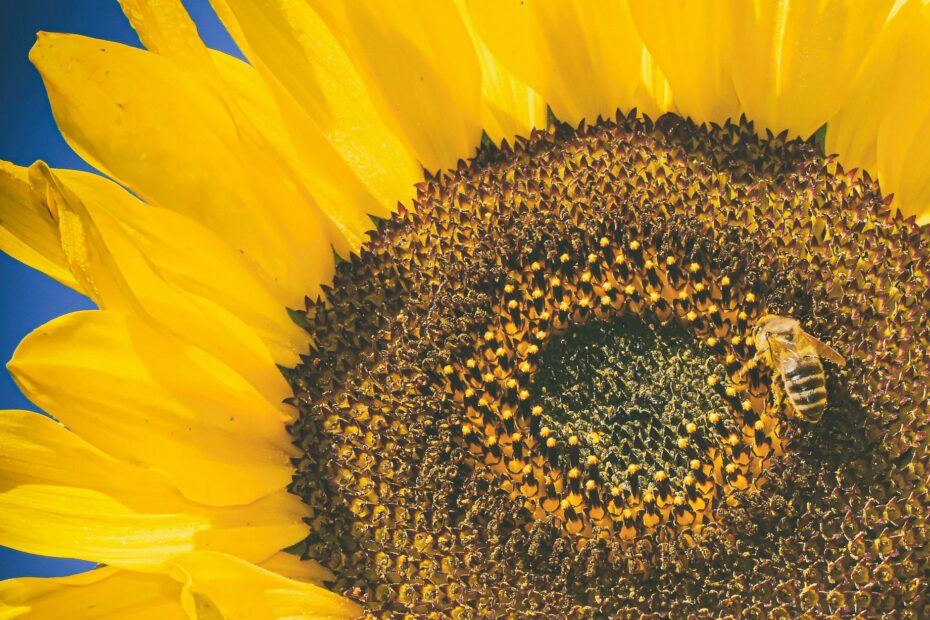
A single grain of pollen must travel from an anther to a compatible stigma, initiating reproduction that can produce seeds and fruit. A bee dusted yellow on a spring bloom shows a familiar route, but wind, water, gravity, and your hand can move pollen as well.
You’ll learn how flower parts work together, how pollen reaches an ovule, which carriers move it, and what visible signs show whether your garden flowers are setting fruit.
Flower Structures Set the Route for Pollen
Two specialized parts guide every successful transfer: an anther that releases pollen and a stigma that receives it. The stamen holds the anther, while the pistil includes the stigma, style, ovary, and ovules. For plant pollination to move forward, your pollen must reach a stigma that accepts it.
| Flower part | Job in reproduction | What you can spot |
|---|---|---|
| Anther | Releases pollen grains carrying male genetic material. | A powdery tip on a stamen. |
| Stigma | Catches compatible pollen at the top of the pistil. | A sticky, knob-like, or feathery surface. |
| Style | Forms the passage between stigma and ovary. | A narrow stalk beneath the stigma. |
| Ovary and ovules | Hold ovules, which can become seeds after fertilization. | A swollen base behind flower petals. |
For a child-friendly view, picture each grain as a tiny packet of plant instructions. Your flower needs that packet to land on the right surface rather than brush across a petal. A lily makes the layout easy to see because its long stamens stand apart from the central pistil.
That landing point begins the next stage. Pollen sitting on a stigma has arrived, but reproduction still depends on what happens inside the flower.
Pollen Reaches an Ovule Through Seven Linked Stages
Compatible pollen absorbs moisture on the stigma and grows a microscopic pollen tube down the style. That tube carries male cells toward an ovule inside the ovary. You can think of the style as a narrow passage between the flower’s receiving surface and its seed-forming tissue.
Seven stages move pollen toward seed formation
- Pollen forms Anthers mature and release grains from the flower’s male structures.
- A carrier arrives A bee, breeze, bird, bat, water current, gravity, or your brush moves grains away from an anther.
- The stigma receives pollen Grains stick to a compatible receptive surface on a flower.
- The grain germinates A viable grain starts growing a pollen tube after contact with the stigma.
- The tube enters the style The tube travels through living tissue toward an ovule below.
- Male cells arrive Cells move through the tube and reach the female cell in the ovule.
- A seed begins Fertilization occurs, the ovule becomes a seed, and the ovary can become fruit.
Your tomato flower shows how pollination works in a garden. Vibration from a bumblebee can shake pollen loose inside its cone of anthers. A successful pollen-tube sequence can then lead to a swelling green tomato.
A yellow dusting alone does not prove success. The grain must be alive, compatible, and able to grow through the style before seed formation starts. This pollination process step by step explains why a flower needs more than a brief insect visit.
Pollen transfer occurs first, while fertilization follows later inside the ovule after the tube completes its growth.
Pollination and Fertilization Happen at Separate Points
Pollen transfer takes place on the stigma, while fertilization happens deeper inside an ovule. The two events can occur hours or days apart, depending on the plant species and growing conditions. Your flower can receive pollen without forming a seed.
| Stage | Location | What happens |
|---|---|---|
| Pollination | Stigma | Pollen reaches the flower’s receiving surface. |
| Pollen-tube growth | Style | A tube carries male cells toward an ovule. |
| Fertilization | Ovule | Male and female cells join. |
| Fruit formation | Ovary | The ovary enlarges around developing seeds in many plants. |
Fruit set can stop after pollen arrives. Incompatible pollen, heat stress, cold nights, weak pollen-tube growth, or chewing-insect damage can halt the sequence before an ovule receives male cells. You may see petals fall even though fertilization never occurred.
A fading blossom proves little by itself. Petals fall after successful reproduction, but they also drop after heat, drought, or poor pollen transfer.
That difference matters in your garden. A flower visited by several bees can still produce no fruit. Look for a growing ovary, not pollen alone, before deciding that plant pollination succeeded.
Because pollen must travel before fertilization can occur, its carrier often determines whether that journey succeeds.
Animals, Wind, Water, and Gravity Move Pollen
Bees draw attention because their fuzzy bodies pick up grains while they seek nectar and pollen. Each visit can leave grains on a later flower, turning feeding into transport. Your garden may rely on several types of pollination at the same time.
Animal carriers fit flowers in distinct ways
- Bees carry dust Their branched hairs trap pollen from open blooms such as apple and squash flowers.
- Butterflies reach tubes Their long tongues suit flat flower clusters and narrow blooms with accessible nectar.
- Moths visit at dusk Pale, fragrant flowers draw night-flying species after daylight activity fades.
- Birds probe blossoms Hummingbirds transfer pollen among red or tubular flowers while drinking nectar.
- Bats serve large blooms Some desert plants open at night and offer copious nectar to bats.
- Flies and beetles wander These visitors move grains through flowers with strong odors or bowl-shaped blooms.
Wind follows a separate route. Grasses, corn, birch, and ragweed release large clouds of lightweight pollen. Their flowers tend to lack showy petals because no nectar-seeking animal needs a visual signal.
Water carries pollen in a small group of aquatic plants, while gravity can shift grains from anther to stigma within one bloom. Your hand acts as a carrier during hand pollination because a brush, swab, or fingertip can move pollen between flowers.
Self-Pollination and Cross-Pollination Have Different Trade-Offs
A plant does not always need pollen from a neighboring plant. Self-pollination occurs where pollen fertilizes the same flower or another flower on the same plant. You may see this route in beans, peas, and tomatoes grown in sheltered spaces.
| Route | Pollen source | Main advantage | Trade-off |
|---|---|---|---|
| Self-pollination | The same flower or plant | Seed formation can continue with little outside transfer. | Offspring carry less genetic variety. |
| Cross-pollination | A separate compatible plant | Mixes genetic material across plants. | Depends on distance, bloom timing, and a carrier. |
Self-pollination vs cross-pollination becomes clear with familiar crops. Your bean plant can set pods with its own pollen. Many apple varieties need compatible pollen from another variety that flowers during the same period.
Cross-pollination adds genetic diversity to a plant population. That wider mix of traits can give future seedlings a better chance during a dry spell or local disease outbreak. Your planting plan matters where a fruit tree needs a compatible partner nearby.
That genetic trade-off becomes visible only after successful fertilization triggers the development of seeds and surrounding fruit tissue.
Seed and Fruit Formation Explain Why Pollen Transfer Matters
Each fertilized ovule holds the start of a new plant inside a seed. The surrounding ovary can enlarge into fruit, turning a pea pod, pumpkin, berry, or apple into a protective structure around developing seeds. That chain shows why pollination is important for plants.
Your meals show the result. Almonds are seeds, corn kernels are seeds, and cucumbers form from flower ovaries. Reduced animal activity can affect crops that depend on animal pollen transfer.
Flower signals guide particular carriers
Color, scent, shape, and bloom timing act as filters. A hummingbird flower offers a deep tube and bright red cues. A night-blooming cactus relies on pale petals and scent that bats can locate after sunset.
Specialized flowers face a trade-off. A bloom built around one visitor can receive accurate pollen placement, yet fruit set drops where that animal disappears during a brief bloom window. You can spread that risk by growing flowers that attract bees, flies, butterflies, birds, and other carriers.
Plant pollination reaches beyond crops. Wildflowers set seed for future seasons, and those seeds feed birds, rodents, and insects across fields, roadsides, forests, and home landscapes.
Visible Signs Show Whether a Flower Is Setting Fruit
A swelling base behind the petals gives the strongest visible clue. On squash, the small immature fruit beneath a female flower starts enlarging after fertilization. On peppers, your flower stem stays firm as the pod starts to form.
Several visible clues point to fruit set
- Petals drop away Flower parts fade after a bloom finishes, though this sign alone proves nothing.
- The ovary swells The base behind the flower thickens during fruit development.
- The stem stays green A retained, sturdy stem can show that the plant is feeding young fruit.
- Fruit gains size Growth across several days gives stronger evidence than one inspection.
- Seeds appear later Mature fruit reveals developed seeds after enough time has passed.
Poor weather can leave blossoms empty despite insect visits. Your plants need enough water, light, and nutrition to retain young fruit. Pests can damage flowers before pollen reaches the stigma.
Hand transfer can replace a missing carrier
Move dry pollen with a small paintbrush, cotton swab, or clean fingertip from a ripe anther to a receptive stigma. For squash, take pollen from a male flower and touch it to the central stigma inside a female flower. You can identify that flower by the tiny squash behind it.
Work during the brief period that a flower remains open, using separate plants where cross-pollination is required. Avoid wet tools and rainy conditions because damp pollen clumps. Keep pollen away from diseased plants.
Hand pollination substitutes for a missing carrier, not for compatible varieties or healthy growing conditions. Your brush cannot overcome a variety that needs pollen from a separate cultivar.
Final Thoughts on Flower Reproduction
Pollen transfer starts reproduction, but a seed appears only after compatible grains grow a tube and fertilization occurs inside an ovule. Watch the flower’s anatomy, the carrier it depends on, and the swelling ovary afterward. Those three clues tell you more than a bee visit alone.
FAQ
How does pollination work step by step?
An anther releases pollen, and an animal, wind, water, gravity, or your hand moves it to a compatible stigma. The grain grows a pollen tube through the style, male cells reach an ovule, fertilization occurs, and the ovule can become a seed.
What is the difference between pollination and fertilization?
Pollination is pollen transfer to the stigma. Fertilization happens later inside an ovule, where male cells carried through a pollen tube join the female cell. Fruit growth begins only after that deeper reproductive stage succeeds.
Which parts of a flower receive and produce pollen?
The anther produces and releases pollen, while the stigma receives compatible pollen. Your flower’s style links the stigma to the ovary, and the ovary holds the ovules that can form seeds after fertilization.
Can the same plant pollinate itself?
Yes, self-pollinating plants can fertilize flowers with pollen from the same flower or another flower on the same plant. Beans and peas can do this, while many fruit trees need pollen from a separate compatible variety.
How can you tell if a flower has been pollinated?
Look for the ovary behind the flower to enlarge across several days, along with a green stem that remains attached. Petal drop alone is not proof because weather stress, pests, or incompatible pollen can also end a bloom.
Are humans technically pollinators?
Yes, you act as a pollinator when you move pollen from an anther to a compatible stigma by hand. Gardeners and greenhouse growers use brushes, swabs, or fingertips where natural carriers are scarce.