Picking a nozzle for a 2 inch hose sounds simple until you start threading one onto the wrong coupling. Fire hose systems, standpipes, and high-flow water transfer lines all use different thread standards, and forcing the wrong match can strip fittings or cause leaks at the worst moment. The right nozzle is really about three things: matching your hose thread (NPSH, NPT, or NH/NST), choosing a body material that suits the environment, and picking a flow pattern that fits the job. This roundup walks through ten options spanning caps, brass adapters, thermoplastic nozzles, and aluminum camlock rigs so you can zero in on what your setup actually needs.
The Choices Worth Comparing

SpringSpray 2-1/2″ NH/NST FDC Caps with Chain

SpringSpray 1-1/2″ NPT x 1-1/2″ NST Brass Adapter
SpringSpray 2-1/2″ NST Female x 2″ NPT Adapter

MorningRo 2″ NPSH/NPT Fire Hose Jet Nozzle

SpringSpray 2″ NPSH Nozzle with Two Camlocks

SpringSpray 2″ NPSH Nozzle with Single Camlock
SpringSpray 1-1/2″ NPSH Nozzle with Camlock
SpringSpray 2″ NPSH Brass Nozzle with Camlock

NOVINO 2″ NPSH Heavy-Duty Fire Hose Nozzle
SpringSpray 1-1/2″ NST/NH Thermoplastic Nozzle
Taking A Closer Look At The Options
Capping a fire department connection is one of those small details inspectors love to flag. This SpringSpray set covers 2-1/2″ NH/NST threads, which is the standard threading found on most standpipes, siamese connections, and sprinkler intake fittings in commercial buildings. The caps keep debris, insects, and moisture out of the connection when the system sits idle between tests or inspections.
The integrated metal chain is the part that wins you over in real use. Without it, caps end up on the ground behind a mechanical room or walked off after the first service call. Tethering the cap to the FDC body means you stop finding loose chrome pieces rolling around the riser room floor.
Real Benefits
- Thread standard matches 2-1/2″ NH/NST FDCs, which most municipal standpipes use.
- Chain tethering cuts down on lost caps during routine testing.
- Metal body shrugs off the corrosion that eats untreated caps in humid mechanical rooms.
- Pair-friendly with the brass adapters later in this list when you need to run test hose through the same thread.
Worth Noting
- This is a cap, not a nozzle, so it only protects the connection rather than delivering flow.
- Owners commonly report the chain length can wrap awkwardly on tighter siamese clusters.
Who It Suits Best
Building maintenance crews and fire protection contractors outfitting a standpipe or sprinkler siamese.
Where Another Pick Suits Better
For active flow rather than protection, the MorningRo 2″ NPSH jet nozzle is a more relevant tool on a job site.
Thread standards are where most hose jobs quietly fall apart. NPT (National Pipe Taper) and NST/NH (National Standard Thread) look almost identical at a glance, yet they seal differently and refuse to mate cleanly. This brass adapter solves the gap by giving you male NPT on one end and male NST on the other, so a pump or pipe thread can talk to a fire hose thread without leaks at the shoulder.
The central hex flats give a wrench something to grab. That detail matters when the fitting has been sitting in a hot mechanical room and the threads have welded themselves together with corrosion.
Useful Highlights
- Brass body handles heat far better than aluminum, useful near boilers or hot water washdown.
- Doubles as a thread identifier in the truck, since it physically proves what each side actually is.
- Compact enough to live in a turnout pocket or a service van drawer.
Trade Offs
- 1-1/2″ size rules out larger 2-1/2″ hydrant work, which is the focus of several other picks on this list.
- Brass is heavier than aluminum, so you will feel it on a long hose lay.
Made For
Plumbers and facility techs connecting threaded pumps or pipe systems to standard fire hose fittings.
Consider Something Else When
Firefighters running a 2-1/2″ hydrant line will get more use out of the SpringSpray 2-1/2″ NST x 2″ NPT adapter.
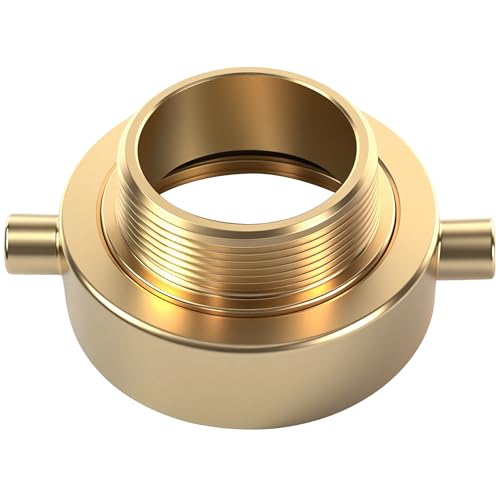
Stepping down from a 2-1/2″ hydrant outlet to a 2″ hose is one of the most common transitions in industrial water transfer. This adapter does exactly that, with a 2-1/2″ NST female for the hydrant side and a 2″ NPT male for the hose. The swivel feature is the part that pays for itself, because a rigid fitting at this size will twist your hose every time you back the truck away from the hydrant.
Brass is the right call for a fitting that lives at the hydrant. It resists the corrosion that pocks aluminum and tolerates the heat that builds up during long lays in summer sun.
The Upside
- Swivel design keeps the hose from kinking when the pumper repositions.
- Heat resistance suits hydrant work where summer sun cooks exposed fittings for hours.
- Solid one-piece body reduces the leak paths that multi-piece adapters introduce.
Honest Caveats
- 2-1/2″ to 2″ step-down restricts flow compared with a same-size 2-1/2″ hose run.
- Brass adds weight that you notice when threading onto a hydrant by hand.
Best Suited To
Fire crews and industrial users running 2″ attack or transfer lines off a 2-1/2″ hydrant outlet.
Not Your Match When
For direct flow control at the end of the line, the SpringSpray 2″ NPSH nozzle with camlock delivers the actual spray pattern you are after.
Polycarbonate on a fire hose nozzle sounds unusual until you watch an aluminum nozzle bounce off a steel track on a job site. MorningRo’s 2″ NPSH/NPT jet nozzle trades the metal-body tradition for a high-impact polymer that shrugs off drops and the heat of a sun-coiled hose. The trade-off is weight, which is where this design actually helps when you are holding a live line for any length of time.
Thread compatibility is the catch. This female 2″ NPSH inlet only mates to a male 2″ NPSH or NPT, not NH/NST, so check your hose end before ordering.
Where It Excels
- Polycarbonate body absorbs impact that would dent an aluminum nozzle.
- Heat tolerance suits hot summer washdown duty on asphalt or concrete.
- Lighter carry weight reduces arm fatigue during extended flow operations.
Points To Note
- Will not thread onto NH/NST hose fittings, which excludes some standard fire hose inventories.
- Polycarbonate is tough but can crack under sharp, focused impact from a hard edge.
Who Will Love This
Construction crews and dust suppression teams running 2″ NPSH or NPT hose on rough sites.
Look Elsewhere When
Anyone tied to NH/NST hose threads should pick the SpringSpray 1-1/2″ or 1-1/2″ thermoplastic NH/NST nozzle for a clean fit.
Two camlocks on a single nozzle is one of those setups that makes a dewatering or transfer rig feel professional rather than improvised. The thermoplastic nozzle threads 2″ NPSH, and the two aluminum camlock couplings let you drop the nozzle between two hose lengths without rewrenching the threaded joint each time. A simple twist of the cam arms releases or locks the line in seconds.
The flow pattern is the same adjustable straight stream to fog you’ll find on the single-camlock version below. The difference is the camlock count.
Notable Upsides
- Twin camlocks let the nozzle sit inline as a removable mid-run component.
- Aluminum camlock arms stay light, so a quick disconnect is a one-hand operation.
- Pattern adjusts from a tight stream to a wide conical fog for washdown or cooling.
Small Caveats
- Extra coupling adds a potential leak point compared with a single direct thread.
- Camlock gaskets need occasional inspection and replacement under heavy use.
Right Fit For
Industrial dewatering crews and pool service teams who break and remake hose runs in the same day.
A Better Fit Elsewhere
For a permanent end-of-line nozzle with no inline swaps, the SpringSpray 2″ NPSH nozzle with single camlock keeps the rig simpler.
Sometimes the right answer is the simpler one. This is the same thermoplastic 2″ NPSH nozzle found in the dual-camlock configuration above, but with a single camlock at the inlet. The result is a clean end-of-line nozzle that you lock to a hose run and leave in place, with no inline couplings to add weight or wear.
For most garden and small farm setups that need a real industrial-grade nozzle, this is the one to reach for. A twist of the nozzle body adjusts the spray from a focused stream to a wide fog cone.
Bright Spots
- Single camlock reduces inline bulk and keeps the hose lay cleaner.
- Adjustable pattern covers both watering and washdown tasks on the same fitting.
- Thermoplastic body holds up to UV exposure in outdoor storage.
Less Ideal Details
- No second coupling means you cannot drop it inline as a removable break point.
- Will not connect to NH/NST threaded hose without an additional adapter.
Whose Shelf It Belongs On
Property owners and small farm hands who want a permanent, no-fuss end-of-line nozzle on a 2″ hose.
Reach For A Different Pick When
Rigging setups that need the nozzle removable mid-line will be happier with the SpringSpray 2″ NPSH twin camlock version.
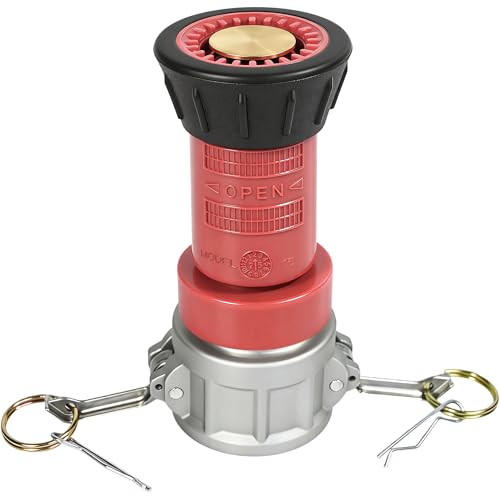
Not every hose system runs at 2″. Many residential washdown, garden, and light commercial setups use 1-1/2″ NPSH hose, and forcing a 2″ nozzle onto that line just creates a flow bottleneck. This SpringSpray 1-1/2″ NPSH nozzle solves that with a smaller thermoplastic body and an aluminum camlock at the inlet for quick hose changes.
Pattern control runs the same straight stream to fog range, just scaled down for the smaller flow volume. The whole unit feels balanced in the hand without the wrist fatigue of larger industrial nozzles.
Useful Touches
- 1-1/2″ NPSH thread matches the hose size used in many home and farm water systems.
- Smaller body makes the nozzle easier to control during longer spray sessions.
- Aluminum camlock keeps the connection quick to break for storage.
Points To Keep In Mind
- 1-1/2″ line flows less water than 2″, so high-volume washdown jobs take longer.
- NPSH threads will not mate to NH/NST fire hose without a separate adapter.
Perfect Match For
Homeowners and small acreage owners running 1-1/2″ hose for yard, garden, or barn washdown.
Swap It Out When
Larger property work that benefits from higher 2″ flow points to the SpringSpray 2″ NPSH nozzle with single camlock.
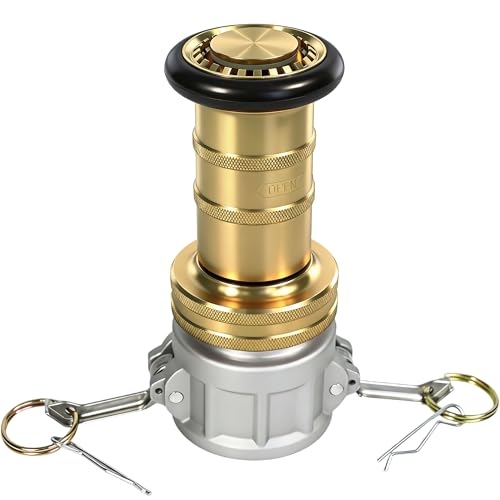
Brass on a 2″ nozzle is the heavy-duty answer for crews who need a body that shrugs off abuse rather than cracks on impact. This SpringSpray model pairs a brass nozzle body with the same adjustable straight stream to fog pattern as the thermoplastic versions, plus an aluminum camlock at the inlet. The pattern control still works the same way, by rotating the nozzle head.
Compared to the MorningRo polycarbonate pick, this is the metal-body counterpart for shops and yards where impact damage and corrosion are everyday concerns.
The Good Stuff
- Brass construction handles drops, abrasion, and heat that wear out plastic bodies.
- Corrosion resistance suits outdoor storage in humid barns or coastal shops.
- Camlock inlet keeps the hose change fast when the rig moves between sites.
Factors To Consider
- Brass body adds noticeable weight, especially during long hand-held spray sessions.
- Will not connect directly to NH/NST hose without a separate adapter.
Built With In Mind
Industrial washdown crews and shop owners who want a metal-body nozzle for years of hard use.
Another Choice May Suit
Anyone who values lighter carry weight should consider the MorningRo 2″ NPSH polycarbonate jet nozzle as a lighter alternative.
NOVINO takes a different material approach by combining a brass nozzle stem with aluminum camlock fittings. That split makes sense: the stem is the part that takes the most mechanical stress and benefits from brass durability, while the camlock arms are easier to operate in aluminum at a lower carry weight. The result is a 2″ NPSH nozzle that threads onto standard NPSH or NPT male hose ends.
Pattern control is the same constant-flow fog style found across most of the picks on this list. You get a steady, predictable cone for dust suppression or washdown.
Everyday Perks
- Mixed material design keeps weight reasonable without giving up stem durability.
- Constant flow fog pattern suits dust control on driveways and job sites.
- Aluminum camlocks stay cool enough to operate without gloves in mild weather.
Some Limits To Know
- No dedicated straight stream mode, so pinpoint reach is limited.
- Thread standard rules out NH/NST hose without an adapter.
Who Should Grab It
Garage and farm users who want a steady fog pattern for cooling, dust control, or general washdown.
Skip It When
You need adjustable flow from stream to fog in a single nozzle. The SpringSpray 2″ NPSH with single camlock covers that range more cleanly.
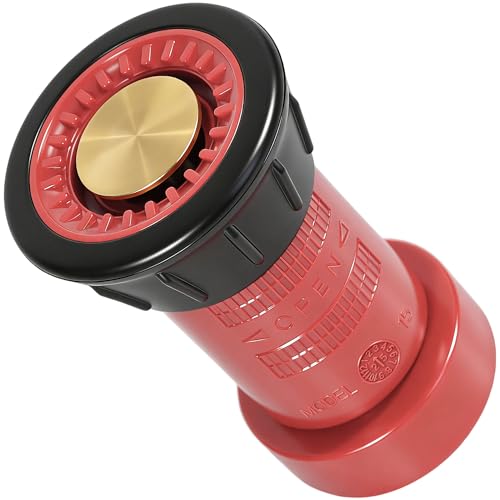
For most residential and small commercial hose inventories, NH/NST is the thread standard that shows up on the hose you already own. This 1-1/2″ thermoplastic nozzle threads directly onto standard NH/NST male hose ends, no adapter required. It covers the same straight stream to fog pattern found across the rest of the SpringSpray line, scaled down for 1-1/2″ flow.
Useful roles range from fire support and washdown to dust suppression, irrigation, and greenhouse cooling. It’s the kind of nozzle that lives on a hose for years and rarely gets swapped out.
Benefits That Matter
- Direct NH/NST thread matches the most common residential fire hose standard.
- Thermoplastic body is light enough for one-hand spray control.
- Pattern adjustment covers garden, cleanup, and emergency cooling uses.
Worth Bearing In Mind
- 1-1/2″ flow volume is lower than 2″ versions, so larger jobs take longer.
- Plastic body can mark if dragged across rough concrete repeatedly.
The Right Fit
Homeowners and small businesses with a 1-1/2″ NH/NST hose who need a versatile, low-fuss nozzle.
Where A Sibling Pick Shines
For a 2″ NH/NST-compatible line, NOVINO or the SpringSpray 2″ thermoplastic options step up the flow volume.
Matching Thread, Material, and Flow To The Job
Before you commit to a nozzle, the first real decision is the thread. NPSH (National Pipe Straight Hose) and NPT (National Pipe Taper) are the most common on industrial and irrigation hose, while NH/NST (National Standard Thread) dominates the fire service and many residential setups. Forcing one into the other can strip threads and create leak paths that only show up under pressure.
Material follows the use environment. Thermoplastic bodies keep weight down and resist impact, but brass and aluminum handle heat and corrosion better in industrial or coastal settings. Camlock couplings in aluminum speed up hose changes but add a gasket that benefits from periodic inspection, particularly in dirty water transfer work.
Flow pattern is the third lever. Straight stream to fog nozzles cover most washdown and watering tasks. Constant flow fog models throw a steady cone for dust suppression but cannot reach a tight stream. The 1-1/2″ line is enough for home and garden use, while 2″ and up suits construction and industrial transfer work.
Finally, do not overlook the role of adapters. A small brass NPT to NST adapter in the toolbox solves more job site problems than any single nozzle alone, especially when matching pumps, pipes, and hose threads across older equipment.
Pitfalls Shoppers Hit and Where The Extra Money Goes
Common Shopping Slip Ups
The single biggest mistake is ordering by hose diameter alone. A 2″ hose with NPSH threads will not accept a 2″ NH/NST nozzle, and vice versa. Always confirm the thread standard on the male end of your hose before clicking through. The second trap is over-spec’ing material: a brass body on a hose that lives on a porch wall is just extra weight to carry around. Match material to environment rather than reaching for the heaviest option.
Why Top Tier Costs More
Higher tier pricing in this category usually buys three things: a brass or upgraded metal body that survives harder environments, integrated camlock fittings for faster hose swaps, and tighter machining on threads that hold pressure without tape or sealant. For most home and farm users, a thermoplastic nozzle is plenty. For crews running daily washdown or fire support, the upgrade to brass or dual camlock pays for itself in fewer replacements and faster rig setup.