Tackling yard work without the noise and upkeep of a gas engine is a small daily upgrade. The M18 platform covers the bulk of what homeowners actually cut: limbs, lumber, sheet goods, and metal. This roundup focuses on saws that pair with your existing batteries, with a few M18-compatible options for shoppers who want a lighter footprint or a tighter budget.
The Leading Options At A Glance

Milwaukee 2719-21 M18 Fuel Hackzall Kit
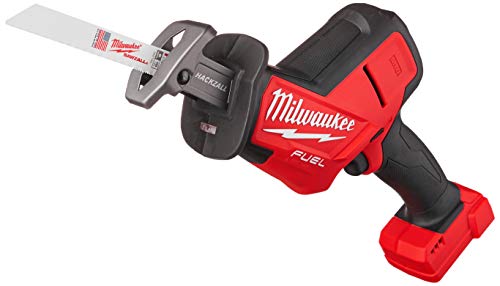
Milwaukee 2719-20 M18 FUEL Hackzall (Bare Tool)
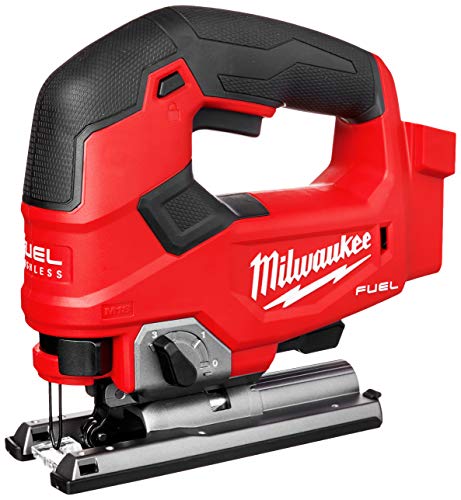
Milwaukee M18 FUEL D-Handle Jigsaw (Bare Tool)
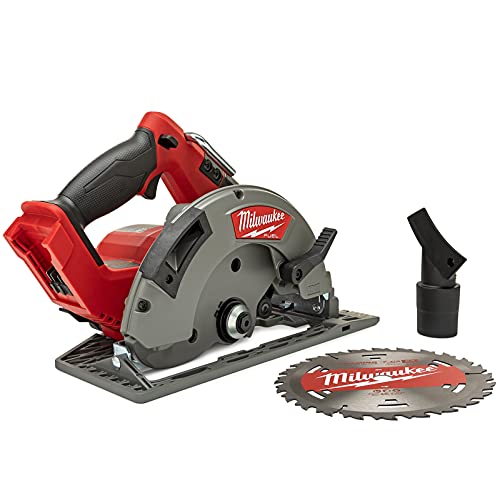
Milwaukee 2732-20 M18 FUEL 7-1/4 in. Circular Saw

Milwaukee 2729-20 M18 Fuel Deep Cut Band Saw

Milwaukee M18 Brushless Portable Band Saw
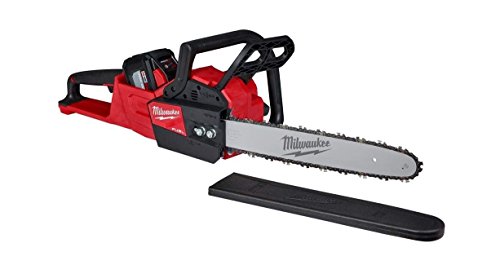
Milwaukee 2727-20 M18 FUEL 16 in. Chainsaw (Tool Only)
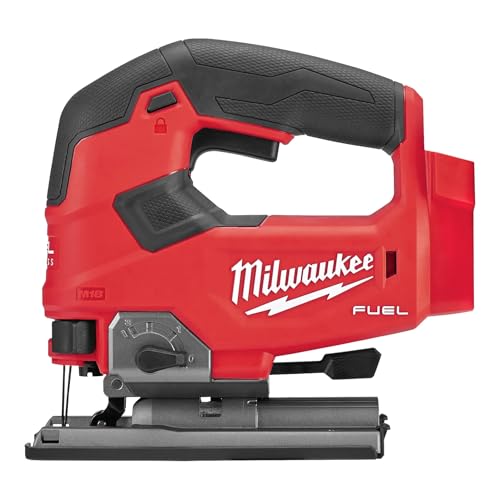
Milwaukee M18 FUEL D-Handle 10T Metal Blade Jigsaw

Milwaukee 2627-20 M18 Cordless Cut Out Tool (Bare Tool)

NEO-TEC 6&8 Inch Cordless Brushless Chainsaw for M18
Meet The Standout Selections
Starting off with the entry point most newcomers actually buy. The Milwaukee 2719-21 M18 Fuel Hackzall Kit arrives as a complete package, so you can grab it, drop in a battery, and start cutting on the same afternoon. It’s a one-handed reciprocating saw, which matters when you’re holding pipe, lumber, or scrap in awkward spots.
Brushless motors (motor designs that use electronic controllers instead of carbon brushes, lasting longer and running more efficiently) tend to deliver more torque per charge than brushed equivalents. For homeowners pruning roots, slicing through old deck boards, or trimming copper, that translates to fewer stalls and longer runtime. Compared to the bare-tool Hackzall later in this list, this kit adds the battery, charger, and case, which is why it’s a sensible first M18 purchase.
Where It Excels
- Includes battery, charger, and carrying case, so you skip the starter-pack math entirely.
- Brushless motor gives you longer cuts per charge than brushed one-handed recip saws.
- One-handed format is genuinely useful for plumbing repairs, overhead work, and tight crawl spaces.
- Build quality matches the rest of the M18 FUEL line, so it survives drops and job-site dust.
Trade-Offs To Consider
- Bundled battery may be a smaller capacity pack than you already own, leaving you wanting an upgrade later.
- One-handed saws aren’t ideal for long, heavy demo jobs where a full-size reciprocating saw feels more stable.
Key Advantages
Made For
First-time M18 shoppers who want a complete, ready-to-go kit rather than a bare tool they need to piece together.
Where Another Pick Suits Better
If you already own M18 batteries and chargers, the Milwaukee 2719-20 M18 FUEL Hackzall (Bare Tool) saves you the bundled-pack premium.
The same cutting platform as the kit above, minus the battery, charger, and case. If your garage already has a stack of M18 packs and at least one charger, this is the version that avoids doubling up on gear you don’t need.
Owners with multiple M18 tools tend to buy bare tools because the batteries do the heavy lifting across the lineup. The Hackzall stays compact and light, which matters if you’re trimming tree roots one-handed or slicing old PVC in a cramped basement corner. Compared to the heavier full-size recip saws, it’s easier on your wrist during longer detail sessions.
What Helps Most
- Drops the bundled battery cost since most M18 households already own packs.
- Light enough to use overhead or from a ladder without arm fatigue setting in quickly.
- Brushless electronics pair with Redlink Plus overload protection to prevent burnouts under heavy load.
Points To Note
- No battery or charger included, so new shoppers will need to budget those separately.
- One-handed format limits cut depth on thicker dimensional lumber.
Right Fit For
Homeowners with an established M18 battery collection who just need the tool head itself.
Skip It When
You don’t yet own M18 batteries. The Milwaukee 2719-21 M18 Fuel Hackzall Kit is the more complete starting point.
Jigsaws earn their place on curved cuts, plunge cuts in countertops, and detail work where a circular saw would be overkill. The D-handle layout gives you a grip closer to the blade, which improves control when you’re following a pencil line on a finished surface.
Powered by the same M18 battery platform you’ve seen already, this jigsaw slots in alongside the Hackzall and the circular saw in your kit. The D-handle geometry feels less natural for some users who prefer the top-handle barrel grip, so a quick in-store handle test is worth the trip. For cabinet backsplashes, laminate flooring patterns, or scroll work in thin plywood, it stays accurate without the wandering some jigsaws show.
Key Advantages
- D-handle position puts your hand closer to the work, which helps on tight curves and bevels.
- M18 battery compatibility means no separate charger or battery family.
- Detail-friendly format for cabinetry, trim cutouts, and template routing.
Honest Caveats
- Bare tool only, so newcomers need a battery and charger to make it run.
- Not designed for heavy stock; for thick framing lumber the circular saw covers that workload better.
Best Suited To
Cabinet makers, remodelers, and DIYers cutting curves, plunge cuts, or detailed openings in sheet goods.
A Better Fit Elsewhere
For straight, full-depth cuts in lumber, the Milwaukee 2732-20 M18 FUEL 7-1/4 in. Circular Saw is the more capable option.
This is the circular saw that turns M18 from a trim-work platform into a deck-building platform. The 7-1/4 inch blade handles the same dimensional lumber a corded circular saw chews through, so you can rip 2x4s and crosscut plywood without hunting for an outlet.
Where this saw earns its keep is durability. Magnesium (a lightweight metal alloy that resists impact and warping) makes up the shoe and guards, and the integrated rafter hook keeps it hanging between cuts so you’re not bending to set it down constantly. The electric brake stops the blade quickly after you release the trigger, which feels like a small thing until you’ve had a saw coast for several seconds.
What Pays Off
- Magnesium shoe and guards shrug off drops better than plastic-bodied cordless saws.
- Integrated LED light and dust port improve cut-line visibility and cleanup.
- Rafter hook stores the saw between cuts at chest height, sparing your back.
- Brushless motor delivers corded-comparable cutting for typical framing tasks.
Things To Consider
- Heavier than the Hackzall or jigsaw, so it tires out overhead or ladder work faster.
- Tool only; you need an M18 battery (preferably a high-output pack) to unlock full performance.
Feature Snapshot
Whose Shelf It Belongs On
Shed builders, deck builders, and homeowners framing walls or replacing subfloors.
Consider Something Else When
You’re only making light pruning cuts. The NEO-TEC 6&8 Inch Cordless Brushless Chainsaw for M18 is the simpler tool for that scope of work.
Band saws serve a narrower audience than the circular saw, but if you cut metal regularly, nothing else replaces them. This M18 Fuel model handles the deep-throat cuts that hacksaw frames and angle grinders struggle with, especially on thicker black pipe and square tubing.
The trade-off versus a corded stationary band saw is portability. You carry it to the workpiece rather than dragging the workpiece to a shop tool, which suits plumbing repairs, HVAC work, and field fabrication. Compared to the Hackzall reviewed earlier, the band saw produces cleaner, cooler cuts in metal because the blade doesn’t reciprocate through the kerf (the gap left by the cutting blade).
Good Reasons To Consider
- Cuts round and rectangular stock that reciprocating saws handle awkwardly.
- Brushless motor helps stretch battery life on long metal-cutting sessions.
- M18 compatibility removes the need for a separate battery ecosystem.
Small Caveats
- Bare tool only, and you’ll want a higher-capacity M18 pack for extended fabrication work.
- Blade changes require a few minutes; keeping a spare on hand avoids mid-job delays.
Built With In Mind
Plumbers, HVAC techs, and metalworkers who need portable cuts in pipe and tube.
Look Elsewhere When
Your work focuses on wood. The Milwaukee 2732-20 M18 FUEL 7-1/4 in. Circular Saw is better suited to framing tasks.
Stepping up from the previous band saw, this brushed-versus-brushless distinction matters for production environments. The brushless motor (a motor that electronically switches its internal magnetic fields, eliminating the wear-prone carbon brushes found in brushed motors) runs cooler and sips battery less aggressively, which is the difference between finishing a job on one pack or swapping mid-cut.
The 35-3/8 inch blade length and roughly 3-1/4 inch round capacity handle the most common plumbing and structural metalwork you’ll encounter on a residential or light-commercial site. At roughly 7-2/3 pounds bare, it stays manageable overhead, though you feel the weight by the end of a long day. The D-handle gives you a secure grip when feeding the saw through stock.
Useful Highlights
- Brushless motor extends runtime, useful for shops running multiple cuts per shift.
- Variable blade speed (0 to 540 SFPM, or surface feet per minute) lets you tune the cut for steel versus aluminum.
- D-handle design offers better feed control on long cuts than top-handle alternatives.
A Few Limitations
- Tool only, so the total cost climbs once you factor in a high-output battery.
- Band saw blades are a recurring consumable, so factor blade inventory into your budget.
Quick Facts
Who Should Grab It
Tradespeople cutting metal daily who want longer runtime and the productivity gain of brushless efficiency.
Swap It Out When
You only cut metal occasionally. The Milwaukee 2729-20 M18 Fuel Deep Cut Band Saw covers light metalwork at a lower entry cost.
The headline tool for the keyword search and a fair candidate for the top pick on this list. The Milwaukee 2727-20 brings cordless convenience to a 16 inch bar, which covers full hardwood limb removal and storm cleanup without dragging out a gas chainsaw.
What sets it apart from the smaller NEO-TEC reviewed later is build quality and cutting depth. The Oregon bar and chain are commercial-grade consumables, and the automatic oiler keeps the chain lubricated without you remembering to pump a primer. The variable-speed trigger gives you throttle control for finesse cuts in finished lumber versus aggressive cuts in green wood.
Positive Takeaways
- 16 inch bar handles storm cleanup, tree felling, and firewood processing that smaller saws can’t reach.
- Automatic chain oiler reduces maintenance steps and extends chain life.
- M18 compatibility lets you skip gas mixing, pull cords, and exhaust fumes.
- Variable-speed trigger helps with controlled cuts in finished lumber.
Things That May Matter
- Battery and charger not included, which adds to the total cost for newcomers.
- Higher-capacity M18 packs are recommended for sustained cutting; smaller packs will drain quickly.
- Bar oil is a separate consumable you’ll need to keep on hand.
Spec Overview
Who Will Love This
Homeowners with mature trees, rural properties, or storm debris who want cordless convenience without sacrificing bar length.
Reach For A Different Pick When
You only need light pruning and limbing. The NEO-TEC 6&8 Inch Cordless Brushless Chainsaw for M18 is easier to handle for that scale of work.
Stepping up from the basic D-handle jigsaw, this version of the Milwaukee M18 FUEL 10T Jigsaw layers in the fine-tooth blade geometry that earns it a place in metal shops and finish-carpentry shops. The 10T (10 teeth per inch) designation means smoother cuts in thin sheet metal and laminated materials.
The brushless motor keeps blade speed consistent under load, which matters when you’re cutting through steel flashing or aluminum trim that would otherwise slow a brushed motor down. It pairs nicely with the band saw covered earlier for shops that need both fine scroll cuts and deep throat capacity. For DIYers, this is overkill unless you’re regularly cutting metal.
Everyday Perks
- 10T blade geometry produces cleaner cuts in sheet metal than coarser-tooth jigsaw blades.
- Brushless motor maintains blade speed under load, which helps on dense material.
- D-handle grip keeps your hand close to the cut line for improved accuracy.
Potential Drawbacks
- Specialty blades (10T and similar) cost more than standard wood blades and wear faster on abrasive stock.
- Tool only, so you’ll need an M18 battery plus a charger to get started.
Perfect Match For
Metalworkers and finish carpenters who need clean, controlled cuts in sheet goods and thin metal.
Another Choice May Suit
If your work is mostly wood and curves, the standard Milwaukee M18 FUEL D-Handle Jigsaw (Bare Tool) handles that with less blade expense.
Cut-out tools earn their keep during electrical and drywall rough-in, when you need to plunge-cut outlet boxes, switch boxes, and ceiling light holes without a jigsaw’s bulk. The compact spiral saw format stays controllable for those short, repeated cuts.
The 4-pole motor (a motor design with four magnetic poles for higher torque than the more common two-pole configuration) delivers fast cuts through drywall and plywood backings, and the tool-free depth adjustment lets you reset for different material thicknesses without hunting for an Allen key. Compared to the jigsaws above, this is a single-purpose tool, so it makes sense for electricians and drywall pros more than general DIYers.
The Practical Payoff
- Compact spiral saw format is easier to plunge than a jigsaw for outlet-box cutouts.
- Tool-free depth adjustment speeds up material changes on the job.
- LED work light and top vent improve visibility and debris clearing during cuts.
Where It Is Less Suited
- Narrow specialty focus; not a substitute for a jigsaw on curved or general cuts.
- Bare tool, with bit replacements representing an ongoing consumable cost.
Built With In Mind
Electricians, drywall installers, and remodelers who need fast, repeated cutouts in panel materials.
Not Your Match When
You only need a versatile cutting tool. The Milwaukee M18 FUEL D-Handle Jigsaw (Bare Tool) covers more varied cuts.
Rounding out the list is a third-party option that targets shoppers who already own M18 batteries and want a smaller, lighter saw for routine pruning. NEO-TEC’s 6 and 8 inch options cover most homeowner limbing tasks without the bulk of a full-size chainsaw.
The trade-off versus the Milwaukee 2727-20 reviewed earlier is bar length, brand support, and long-term durability. For light pruning on small limbs, brush cleanup, and the occasional craft or hobby cut, this saw does the job. For storm cleanup or felling mature trees, you’ll outgrow the 8 inch bar quickly.
Reasons It Performs
- Reuses M18 batteries you already own, so no new battery investment is required.
- Brushless motor extends runtime and reduces heat buildup during longer sessions.
- Compact 6 and 8 inch bar options suit one-handed pruning and overhead work.
- Lower price point than first-party Milwaukee chainsaws.
Trade-Offs To Consider
- Smaller bar limits use to branches and light limbs; not a substitute for full-size chainsaws.
- Third-party brand means support, parts availability, and warranty service may differ from Milwaukee’s ecosystem.
- No battery or charger included in the bare tool configuration.
Feature Card
Who Will Love This
M18 owners who mostly prune small branches, clear brush, or handle light yard cleanup.
Look Elsewhere When
You need a full-size bar for storm cleanup or tree felling. The Milwaukee 2727-20 M18 FUEL 16 in. Chainsaw handles those workloads.
Picking The Right M18 Saw For Your Tasks
Matching the saw to the cut makes more difference than chasing specs. A 16 inch chainsaw is wasted on light pruning, while a 6 inch bar is dangerous on hardwood limbs. Start with the largest cut you realistically face each season.
Bar length, battery capacity, and motor type shape daily ownership more than any other factor. Brushless motors, where present in this list, cost more upfront but save battery life and brush replacements over time. Higher-capacity M18 packs (XC and High Output designations) deliver noticeably more cuts per charge than compact packs, especially on the chainsaw and circular saw.
Comfort and control matter on the tools you’ll use most. D-handle saws keep your hand close to the blade for better accuracy. Top-handle saws feel more natural for overhead pruning but trade away some precision. Bare tool pricing makes sense only after you’ve committed to the M18 platform with batteries already on hand.
Think through storage and transport before you commit. Long bar saws need truck space; compact one-handed recip saws fit in a kitchen drawer. Battery chargers draw phantom power when left plugged in, so a designated charging spot avoids clutter.
Key Considerations Across These Picks
Pitfalls Shoppers Hit
Buying a bare tool without checking the battery and charger situation leaves you with an expensive paperweight until you add those pieces separately. Measure your largest expected cut before settling on bar length; an 8 inch bar feels oversized until you face a 10 inch limb. Ignore total cost of ownership and you’ll be surprised how fast bar oil, chain replacements, and extra batteries add up.
The Upgrade Payoff
Higher-tier M18 saws add brushless motors, magnesium shoes, and electronic brakes that show up over years of ownership rather than minutes of cutting. The brushless jump matters most on tools you run hard: chainsaws, circular saws, and band saws. For occasional-use jigsaws and cut-out tools, the upgrade path matters less than ergonomics and battery fit.