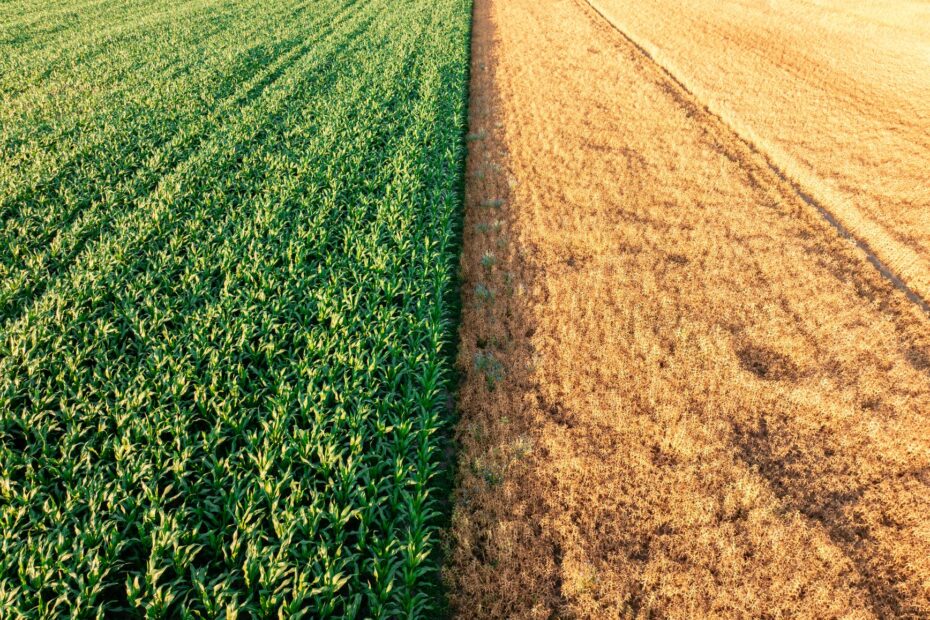
Alternating corn with legumes and small grains across seasons keeps identical roots, nutrient demands, and pest hosts from dominating the same ground. Your soil receives varied residues, root channels, and microbial food sources instead of the same annual strain. Over several seasons, that variety can strengthen productive ground.
This discussion covers nutrient cycling, soil structure, pest pressure, cover crops, workable crop sequences, and field checks for your garden bed or farm field.
Crop Rotation Changes Demands Below Ground
A tomato bed planted with tomatoes year after year asks the same portion of soil to perform the same task. Crop rotation moves different crop families through that space over time rather than repeating one crop or relying on monocropping. Your ground responds differently to corn, peas, cabbage, and carrots.
Rotation Works Across Seasons
Each crop family leaves a distinct mark in the root zone. Fruiting crops such as tomatoes, peppers, squash, and corn draw heavily on nutrients. Legume crops such as peas and beans host nitrogen-fixing bacteria, while root and leafy crops leave different residue levels and nutrient demands.
| Practice | What changes | What it means for your soil |
|---|---|---|
| Crop rotation | Crop family across seasons | Your root zone receives changing nutrient demands and root forms. |
| Cover cropping | Plants grown between cash crops | Your bare ground stays protected and captures leftover nutrients. |
| Intercropping | Two crops grown together | Your space can contain varied roots during one growing period. |
| Companion planting | Nearby plant pairings | Your layout can aid pollinators or spacing, but it does not replace rotation. |
Rotation works through time, while intercropping and companion planting work through space. You can include all three practices in one growing plan. Winter rye after sweet corn, followed by beans the next summer, protects your soil between crops and changes the main crop afterward.
Different Crops Alter the Root Zone
Your soil is not an empty container for fertilizer. Roots feed microbes with sugars, pull water through pores, and leave decaying channels after harvest. Diversified crop rotations widen those biological and physical inputs instead of repeating a narrow root pattern.
Repeated heavy feeding can leave the same zones short of nitrogen, potassium, or other essentials. That uneven demand leads directly to nutrient cycling and soil fertility concerns in your next planting season.
Nutrient Cycling Spreads Fertility Demands
Sweet corn can leave a bed hungry, while peas draw far less from the same nutrient pool. Alternating heavy feeders, moderate feeders, and lower-demand crops spreads nutrient removal across seasons. Your fertilizer choices become easier to target because one crop does not repeat another crop’s appetite.
Legumes Add Nitrogen Through Biology
Peas, beans, clover, and alfalfa form partnerships with Rhizobium bacteria in root nodules. Those bacteria turn nitrogen gas from the air into plant compounds through nitrogen fixation. A following crop can access part of that nitrogen after roots and residues break down.
| Crop group | Typical nutrient demand | Useful following crop |
|---|---|---|
| Tomatoes, corn, squash | Heavy feeder | Peas, beans, clover, or oats |
| Peas and beans | Low to moderate feeder | Brassicas or leafy greens |
| Lettuce and spinach | Moderate feeder | Root crops or a grain cover |
| Carrots and beets | Moderate feeder | Fruiting crops after compost and soil checks |
Legume nitrogen is not instant fertilizer. Residue needs moisture, warmth, active microbes, and time before plant-available nitrogen enters your soil. Your following crop gains more from a well-timed legume stand than from roots removed cleanly at harvest.
Residue Timing Controls Nitrogen Release
Pea vines left as mulch after harvest can feed soil organisms through late summer. A fall brassica crop can draw on some released nitrogen, but cold soil slows decomposition. Your spring nutrient test still matters because texture, rainfall, and residue volume alter the result.
Mature straw contains high-carbon material that can temporarily tie up nitrogen while microbes digest it. Mixed residues feed nutrient cycling through different carbon-to-nitrogen ratios, which helps explain how crop rotation improves soil fertility over time.
Roots and Residue Strengthen Soil Structure
A shovel pushed into a rotated field can reveal old root channels that guide rainwater downward. Fibrous roots from grasses knit surface particles together. Taproots from daikon radish, alfalfa, or sunflower press into denser layers and leave vertical pores after decay.
Root Types Shape Pores and Aggregates
| Root pattern | Crop examples | Soil effect |
|---|---|---|
| Fibrous | Oats, rye, wheat | Your surface soil gains fine-root density and stronger aggregation. |
| Taproot | Radish, carrot, sunflower | Your compacted layer gains channels for air and water movement. |
| Deep perennial | Alfalfa, clover | Your lower layers yield nutrients that shallow roots cannot reach. |
| Branched vegetable roots | Beans, brassicas | Your root zone receives varied pores and carbon compounds. |
Soil aggregation happens as roots, fungal threads, and microbial compounds bind mineral particles into stable crumbs. Those crumbs resist crusting and hold air and water. You can see the result during a hard rain, as water sinks rather than skating across the surface.
Deep-rooted crops can loosen soil only where living roots can enter. A severe plow pan still needs traffic control, moisture-aware field work, and occasional mechanical correction.
Residues Feed the Soil Microbiome
Stems, leaves, and dead roots become carbon inputs. Diverse residue types feed a wider soil microbiome, including bacteria, fungi, earthworms, and organisms that graze on microbes. Your soil organic matter rises slowly, yet small gains can improve moisture storage and nutrient retention.
Mycorrhizal fungi form threads that link with many crop roots and move water or nutrients toward plants. Repeated disturbance and bare soil weaken those networks. A varied sequence gives fungal communities more chances to persist while surface residue buffers heat and moisture swings.
That living network also affects crop health. A soil community with varied food sources can compete with some disease organisms, though it cannot make a susceptible crop immune. This is one reason crop rotation and soil health remain closely linked in long-term field management.
Changing Crop Families Interrupts Pest Cycles
Colorado potato beetles lose a favored food source in a bed shifted from potatoes to beans. Host-specific insects, pathogens, and weeds build up where their preferred crop returns too soon. Your sequence removes the steady host supply that keeps those populations rising.
Family Gaps Reduce Carryover Pressure
A four-year gap between potatoes, tomatoes, peppers, and eggplants can lower shared disease pressure because those crops belong to the nightshade family. Cabbage, broccoli, kale, and radish share another family, so rotating among them does not form a meaningful break for clubroot or cabbage pests.
Consider a garden patch with recurring squash vine borer damage. Moving cucurbits to another bed does not erase the insect from your property, yet a non-cucurbit crop in that patch interrupts local host access. Your records can reveal whether pressure falls across two or three seasons.
Rotation Lowers Pressure Rather Than Erasing Problems
Some pests feed on several hosts, survive for years in soil, or persist in crop debris. Weed seeds also wait in the seedbank for light and disturbed ground. Your crop sequence works best beside sanitation, resistant varieties, timely cultivation, and careful residue handling.
Do not count two related crops as a rotation break. Tomatoes after peppers, or broccoli after cabbage, can carry forward the same disease and insect risks.
Lower pest and disease cycles can mean fewer spray passes and stronger crop establishment. Stable stands matter because weak seedlings leave open soil, lose moisture faster, and face more weed competition.
Protecting that vulnerable ground with living cover and less disruption helps preserve the gains from stronger establishment.
Cover and Low Disturbance Extend Soil Gains
Rain striking bare soil acts like thousands of tiny hammers, breaking surface aggregates and moving sediment downhill. Cover crops hold that surface in place between cash crops. Your rotation holds more value where living plants or residue shield the ground during fall, winter, and spring gaps.
Cover Crops Protect Nutrients and Soil
- Winter rye roots capture leftover nitrate and reduce nutrient loss during wet months.
- Crimson clover stands add legume biomass before a nitrogen-demanding crop enters your field.
- Oat residue softens raindrop impact and slows wind-driven erosion across exposed beds.
- Radish channels open paths that improve water infiltration after the roots decay.
- Mixed cover stands give your soil grasses, legumes, and broadleaf residues in one interval.
Termination timing controls a real trade-off. Mature rye produces abundant biomass but can slow soil warming and tie up nitrogen near planting. Your planting date, equipment, and cash-crop needs should guide mowing, rolling, grazing, or incorporation.
Low Disturbance Preserves Biological Work
Tillage can bury residue and prepare a seedbed, yet repeated aggressive passes break aggregates and sever fungal networks. Reduced tillage leaves more protective cover near the surface. Your soil keeps more pores made by roots and earthworms, reducing later compaction work.
Cleaner runoff follows from less exposed soil and better infiltration. The Natural Resources Conservation Service describes cover and reduced disturbance as conservation practices because sediment and nutrients move less readily from protected ground. Your drought resilience also rises as organic matter stores more water.
To retain those moisture and erosion benefits, crop choices must fit a workable order across seasons.
A Simple Sequence Turns Goals Into Crop Choices
A useful rotation starts with the crop family already in your bed rather than a generic calendar. Your next planting should answer the prior crop’s main effect, whether that effect involved high nutrient demand, shallow rooting, disease pressure, or bare-soil exposure.
A Four-Part Garden Pattern
| Season or year | Crop family | Examples | Soil goal |
|---|---|---|---|
| 1 | Fruiting crops | Tomatoes, peppers, squash | Your compost and fertility reserves feed a heavy-demand crop. |
| 2 | Legumes | Peas, beans | Your soil receives nitrogen-rich roots and lower nutrient demand. |
| 3 | Leafy or brassica crops | Kale, broccoli, lettuce | Your nutrients feed quick growth while family pressure shifts. |
| 4 | Root crops | Carrots, beets, onions | Your root zone gains a different rooting pattern before fruiting crops return. |
Mark each bed on a paper map and record crop family, planting date, compost use, and major problems. A four-bed garden makes the pattern visible: move each group one bed clockwise each year. Your map matters more than a sequence recalled from memory.
Field Sequences Need Operational Fit
A field-scale pattern can run corn, then cereal rye with red clover, then soybeans, then a deep-rooted forage such as alfalfa before corn returns. The cereal cover catches leftover nutrients after corn. Your livestock can graze a forage phase where fencing, water, and timing allow it.
Farm acreage brings harder limits. Equipment width, labor, crop contracts, rainfall patterns, storage, and local markets shape what fits. Sustainable Agriculture Research and Education materials describe rotations as systems rather than fixed four-year recipes copied onto every soil type.
Results Depend on Records and Local Conditions
A rotation can look diverse on paper and still disappoint in compacted, low-residue ground. Close relatives masquerading as variety, repeated intensive tillage, weak cover establishment, and poor residue return can weaken crop rotation benefits for soil health in your field.
Limits and Common Failure Points
- Short family gaps leave shared pathogens and insects close to preferred hosts.
- Removed residues leave your soil with less carbon for microbes and organic matter.
- Wet-soil traffic compresses pores faster than roots can reopen them.
- Missed cover windows expose soil during months with greater erosion risk.
- Market pressure can force repeated cash crops despite a sound agronomic plan.
- Thin records hide patterns in yield, weeds, fertility, and drainage from your view.
More recordkeeping is a real limitation. You need crop-family maps, soil test dates, residue notes, and field history. Some rotations also need different planting tools or leave fewer short-term crop choices, especially where one cash crop dominates local infrastructure.
Progress Appears in Field Observations
Track soil organic matter through the same laboratory and sampling depth every two to three years. Check infiltration with a ring test after rain, probe for dense layers, and record earthworm activity in a consistent shovel slice. Your nutrient tests should guide amendments rather than habit.
Yield stability tells a fuller story than one banner harvest. Compare crop performance across dry and wet seasons, record erosion marks after storms, and log pest outbreaks by crop family. Soil Health Institute resources include such field observations because living soil changes gradually rather than on one schedule.
Start with one manageable change. Your clearest next move is mapping the past three seasons, grouping crops by family, and selecting a cover crop for the next open window.
What Your Rotation Can Deliver Over Time
Healthy soil develops through variety over time, not through one crop or one amendment. Your rotation works because roots, residues, nutrient demand, and pest hosts shift from season to season. Cover, lower disturbance, and useful records help your ground hold water, cycle nutrients, and produce steadier crops.
Crop rotation examples for gardens and farms work best after you match crop families with your own soil limits, weather pattern, and planting window. A bed map, a soil test, and a record of pest pressure give you practical evidence for the next season’s choices.
FAQ
Why is crop rotation so important?
Crop rotation matters because repeated crops draw on the same nutrient zones and favor the same pests, diseases, and weeds. Changing families across seasons gives your soil varied roots and residues while reducing buildup tied to a single host crop.
How does crop rotation help rejuvenate soil?
Crop rotation rejuvenates soil through varied root systems, residue inputs, and nutrient demands. Your soil can gain pores from deep roots, stronger aggregates from fibrous roots, and more microbial food from mixed residues. These shifts can improve infiltration and soil organic matter across several seasons.
How do legumes improve soil nitrogen in a crop rotation?
Legumes work with root-nodule bacteria that convert nitrogen gas into plant compounds. After legume roots and crop residue decompose, part of that nitrogen becomes available to your following crop. Moisture, temperature, residue handling, and soil biology control the timing and amount released.
How does rotating crops reduce pests, diseases, and weeds?
Rotating crops removes a steady host crop from one patch of ground. Your field can see less pressure from host-specific insects and diseases, while changing crop timing and canopy cover can disrupt weed growth. Persistent pests and weed seeds still need sanitation, cultivation, and resistant varieties.
Can crop rotation prevent soil erosion and compaction?
After heavy rain, varied crop cover can curb erosion and compaction pressure, though severe damage still needs direct remediation. Fibrous roots, deep-rooted crops, residue, and cover crops help your soil hold together and absorb water. Wet-soil traffic and a severe plow pan still need direct field management.
What are the disadvantages of crop rotation?
A three-year planting plan demands records, advance planning, and crop choices suited to local climate, equipment, and markets. Your operation can need different planting windows or residue tools, and a poorly planned sequence can still leave nutrient gaps, compaction, or disease pressure in place.