Whether you’re nursing a single pothos through a dark winter corner or running a 4×4 tent packed with leafy greens, the right lighting changes everything. Indoor gardens live or die by the photons they receive, and today’s LED panels deliver serious output without the heat penalty of older HID setups. Below is a curated shortlist spanning tiny clip-on helpers, designer pendants, and tent-ready quantum boards, so you can match the fixture to your space, your plants, and your patience level.
The Main Contenders

GLOWRIUM 48W Full Spectrum LED Grow Light with Stand

HLG 600 Rspec FR 600W LED Quantum Board Grow Light
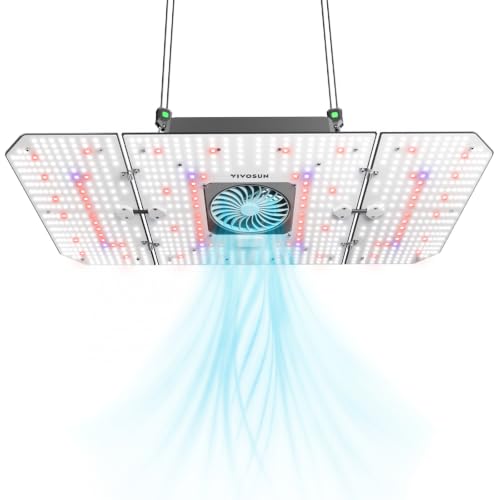
VIVOSUN AeroLight 240W LED Grow Light with Fan

VIIVUU Clip-On Plant Grow Light, White, 1 Pack

Soltech Aspect Gen 2 Pendant Grow Light, Warm White

DOMMIA Under Shelf Grow Light, Daylight White

DOMMIA Under Shelf Grow Light, Pinkish White

DOMMIA Under Shelf Grow Light, Full Spectrum
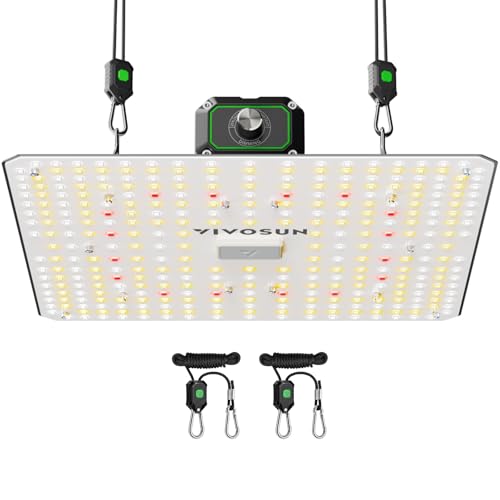
VIVOSUN LumaLight 100W LED Grow Light

VIVOSUN LumaLight 320W LED Grow Light
A Closer Look At Each Pick
For anyone dipping into indoor gardening without a tent, this freestanding tower from GLOWRIUM sidesteps the usual mounting headaches. The four-section pole stretches up to roughly 79 inches, which means a fiddle-leaf fig or a tall monstera on the floor finally gets usable light without an awkward clamp or a shelf rearrangement.
Stepless dimming lets you walk the brightness up or down as plants move from seedling to mature growth, and three preset modes tune the spectrum to the stage you are targeting. It is a friendly pick for a living room or a sun-challenged corner where drilling into a ceiling is not on the table.
The Good Stuff
- Telescoping stand reaches about 79 inches, so floor plants get usable overhead light without wall mounts.
- Stepless dimmer plus three spectrum modes adapt to seedlings, leafy growth, and flowering stages.
- Full-spectrum output mimics natural daylight, simplifying the choice for new indoor gardeners.
- Freestanding design keeps installation to a single outlet, no clamps or hardware needed.
Small Caveats
- The base footprint can wobble on thick carpet, so a hard floor gives the most stable setup.
- At 48 watts, it covers a modest area, meaning dense seedling trays may outgrow the beam quickly.
Quick Facts
Whose Shelf It Belongs On
New indoor gardeners caring for a few tall floor plants in a dim apartment.
Look Elsewhere When
You run a sealed 4×4 tent and need serious canopy penetration, where the HLG 600 Rspec FR 600W LED Quantum Board Grow Light pulls ahead.
This is the panel serious growers reach for when they want lab-grade numbers in a tent. Quantum board designs spread diodes across a broad PCB (printed circuit board), so light lands evenly rather than in harsh hot spots, and the dimmer lets you throttle output through seedling, vegetative, and flower cycles.
Compared to the GLOWRIUM starter tower, this is a completely different scale of fixture. You hang it, dial it in, and let it feed a full canopy. Setup is heavier than a clip-on, and you will want a properly rated hanging kit and some clearance above the tallest plants.
What It Does Well
- High-output diodes drive deep canopy penetration, useful for dense flower stages.
- Quantum board layout spreads light evenly across a 4×4 footprint.
- Onboard dimmer adjusts output without changing height or swapping panels.
- ETL/UL certification adds a layer of safety assurance for a high-wattage fixture.
Honest Caveats
- 600 watts draws meaningful power, so a standard household circuit can run warm if you stack other gear.
- Bulk and weight call for a solid hanging setup, and you will need adequate vertical clearance.
Made For
Experienced growers running a 4×4 tent who want one panel to cover the entire canopy.
Skip It When
You only have a windowsill herb garden, where the VIIVUU Clip-On Plant Grow Light does the job for a fraction of the energy draw.
The twist here is the built-in fan, which is not a gimmick. Stagnant air inside a tent breeds hot pockets and humidity spikes, and a fixture that pushes air through the canopy while it lights saves you from buying a separate clip fan. VIVOSUN leans into that airflow story with a turbo-style center fan built into the housing.
Sitting between the HLG 600 Rspec FR 600W LED Quantum Board Grow Light and the smaller LumaLight 100W, this 240W panel hits a middle ground. The tunable spectrum aims to follow a plant through its full life cycle without swapping bulbs, though the fan does add a low hum you will notice in a quiet room.
A Few Highlights
- Integrated fan moves air through the canopy, helping CO₂ reach lower leaves.
- Tunable spectrum supports seedlings, vegetative growth, and flowering on one panel.
- 240W output covers a mid-size tent without the punishing draw of a 600W board.
Points To Keep In Mind
- The integrated fan adds audible noise, which matters in a living-space tent.
- Heavier than a non-fanned panel, so plan hanging hardware for the extra weight.
Best Suited To
Growers fighting humidity pockets in a sealed tent who want one fixture to handle both light and airflow.
Swap It Out When
You need maximum output for a high-yield flowering run, where the VIVOSUN LumaLight 320W LED Grow Light delivers more wattage per square foot.
Small fixtures earn their place on cluttered windowsills where a tall tower or a hanging panel simply will not fit. VIIVUU’s clip-on unit clamps onto a pot rim or pops into the soil with the included stake, giving you flexibility when your “garden” is a single herb pot on a kitchen counter.
The hollow-ring lamp head keeps weight down so the clamp does not droop, and the white finish blends into a brighter interior. Compared with the GLOWRIUM tower, this is the right scale for one or two plants rather than a tall floor specimen.
What Earns Its Place
- Clamp or soil-stake mounting fits almost any small pot without extra hardware.
- Lightweight ring head keeps the clamp from tipping on thinner pot edges.
- Compact size suits kitchens, desks, and single-shelf herb gardens.
Some Limits To Know
- Coverage area is narrow, so you may want multiple units for a small shelf of seedlings.
- Lower output means slower growth on light-hungry plants like tomatoes.
Who It Suits Best
Apartment dwellers keeping a single herb pot or a small pothos on a desk or shelf.
A Better Fit Elsewhere
You need even coverage across a full shelf of seedlings, where the DOMMIA Under Shelf Grow Light, Full Spectrum handles the run with one panel.
This is the fixture you hang when you do not want your living room to look like a grow room. Soltech designed the Aspect Gen 2 to read as a real pendant, the kind you would pick from a home decor catalog, while still pushing serious plant-usable light downward.
The warm white tone avoids the purple or harsh blue glare that gives away most grow setups, and the dimmer lets you soften the output in the evening. Compared with the VIVOSUN AeroLight 240W LED Grow Light, this one trades raw output for aesthetics and ambient glow.
A Favorable Mix
- Pendant form factor reads as home decor, not lab equipment.
- Warm white tone avoids the harsh purple glare of typical grow diodes.
- Dimmable output transitions from daytime plant feeding to evening ambient light.
Trade-Offs
- Lower output than a tent-ready quantum board, so heavy feeders may stretch.
- Pendant mounting means a ceiling hook or hardwire, which is more involved than a clip-on.
Perfect Match For
Plant owners who want a statement piece in a living room or bedroom without the grow-room look.
Reach For A Different Pick When
Your priority is maximum yield per square foot in a sealed environment, where the HLG 600 Rspec FR 600W LED Quantum Board Grow Light earns its keep.
At roughly 0.28 inches thick, this panel disappears under a bookshelf or cabinet without crowding the space below. The 4-inch square footprint suits tight propagation shelves where every inch counts, and the daylight white tone keeps the look natural in a living area.
The built-in timer cycles 6, 12, or 16 hours on, with four brightness levels, so the panel runs without an external plug-in timer. Compared with the VIIVUU clip-on, this covers a wider shelf footprint from a single unit.
The Case For It
- 0.28-inch panel slides under standard shelving without crowding the space below.
- Built-in controller removes the need for a separate outlet timer.
- Daylight white tone keeps the shelf reading as natural light in a living area.
Points To Note
- Hardwired mounting means installation is less flexible than a clip-on.
- Daylight white may show leaf discoloration less obviously than a pinkish tint.
Quick Facts
Built With In Mind
Apartment dwellers with a tight propagation shelf who want automated on/off cycles.
Where Another Pick Suits Better
You want a softer, warmer glow in a visible living space, where the DOMMIA Under Shelf Grow Light, Pinkish White suits the decor better.
The pinkish-white tint sits between the daylight and full-spectrum siblings in this DOMMIA lineup, giving plants a usable boost while adding a soft warm cast to the room. It carries the same slim 0.28-inch panel and built-in timer as the daylight version, so the bones are familiar.
Where the daylight tone disappears into a room, this one leans decorative. For open shelving in a living area, the warm hue reads more like accent lighting than utility gear.
Notable Upsides
- Warm pinkish tone doubles as accent lighting on visible shelves.
- Same integrated timer and dimmer as the sibling panels, simplifying setup.
- Slim profile keeps shelves uncluttered while feeding the plants below.
Things To Consider
- Pinkish tint can clash with neutral room palettes, depending on your decor.
- Lower color temperature may be less ideal for late-stage flowering compared to a true full-spectrum panel.
Who Should Grab It
Plant owners styling open shelving in a living room who want lighting that doubles as decor.
Consider Something Else When
You want a balanced spectrum that supports a plant from seedling through flower, where the DOMMIA Under Shelf Grow Light, Full Spectrum is the better pick.
For a shelf setup that needs to take plants from propagation through flowering, this DOMMIA panel pulls in broader wavelengths than its daylight or pinkish siblings. The same slim 0.28-inch housing and 6/12/16-hour timer mean you do not need to relearn a new control layout.
Compared with the VIIVUU clip-on, this is a cleaner fit for a full shelf of seedlings rather than a single pot. You trade the easy clamp for a more permanent mount, and you gain automated on/off cycling that a clip cannot match.
Useful Touches
- Full-spectrum output follows a plant through seedling, vegetative, and flower stages.
- Memory function resumes the last setting after a power outage.
- Four brightness levels dial in the right push for delicate or hungry plants.
Potential Drawbacks
- Hardwired shelf mount is less repositionable than a clip-on form factor.
- USB power ties placement to a nearby USB source, limiting shelf mobility.
The Right Fit
Indoor gardeners running a propagation shelf who want one panel to cover a full plant life cycle.
Not Your Match When
You want a cozy warm accent on visible shelving, where the DOMMIA Under Shelf Grow Light, Pinkish White reads better in a living area.
The 100W LumaLight slots in below the AeroLight 240W in VIVOSUN’s lineup, which makes it a sensible middle-ground panel for a smaller footprint where you still want full-spectrum coverage. White, blue, red, and far-red diodes (3000K, 5000K, 660nm, 730nm) cover the wavelengths most plants need across their life cycle.
If the HLG 600 Rspec FR 600W LED Quantum Board Grow Light feels like overkill for a 2×2 or 2×4 tent, this one lands in a more approachable wattage range. Expect more even coverage than a single bulb setup without the higher energy draw.
Benefits That Matter
- Multi-wavelength diode mix supports growth from seedling to flowering.
- Strategic diode spread evens out PPFD (photosynthetic photon flux density, the measure of usable light reaching the plant) across the canopy.
- 100W rating fits a standard household circuit alongside other gear.
Things To Weigh
- Lower output means longer flower cycles compared to a 320W panel.
- Hanging hardware and clearance planning still apply, just on a smaller scale than a 600W quantum board.
Who Will Love This
Growers running a 2×2 or 2×4 tent who want serious light without jumping to a 600W quantum board.
Where A Sibling Pick Shines
You want maximum uniform coverage for a larger flowering tent, where the VIVOSUN LumaLight 320W LED Grow Light pulls ahead.
The 320W LumaLight sits between the AeroLight 240W with fan and the much larger 600W quantum boards, giving serious growers a bar-matrix layout that targets uniform light across a full tent. Micro-lens optics redirect and concentrate output, reducing the hot spots that punish corner plants.
If the HLG 600 Rspec FR 600W LED Quantum Board Grow Light is too much panel for your space, this one carves out a useful middle ground. You still need a proper hanging setup, and you will notice the heat load in a small tent.
What Works In Its Favor
- Bar-matrix layout evens out light across the canopy edge-to-edge.
- Micro-lens optics redirect output for deeper canopy reach.
- Full-spectrum design supports a plant across its full life cycle.
Practical Considerations
- 320 watts draws real power, so a dedicated circuit is wise in a busy tent.
- Heat output rises with wattage, meaning ventilation planning becomes more important than with smaller panels.
Quick Facts
Right Fit For
Intermediate growers running a 3×3 or 4×4 tent who want strong uniform coverage without a 600W quantum board.
Wrong Turns To Avoid
You primarily want airflow plus light in one unit, where the VIVOSUN AeroLight 240W LED Grow Light combines a circulation fan with the panel.
Picking The Right LED Grow Light For Your Space
Match Wattage To Canopy Size
The first number to translate is wattage relative to the area you intend to cover. A small herb garden on a kitchen shelf has no business running a 600W quantum board, and a 4×4 flowering tent will starve under a 48W tower. PPFD, or photosynthetic photon flux density, measures usable light reaching the leaves, and most fruiting and flowering plants want meaningfully higher readings than herbs or foliage. Hanging height also matters: more output lets you push the panel higher for even coverage, but too much height wastes light and stretches plants.
Spectrum And Color Temperature
Full-spectrum panels aim to mimic daylight, which simplifies the choice for mixed plant collections. Color temperature, expressed in Kelvin, signals the tone: lower Kelvin leans warm, higher Kelvin leans cool and blue-heavy. Warm-white fixtures blend into living spaces more easily, while panels with dedicated blue and red diodes tend to push better flowering responses.
Form Factor And Mounting
Form factor drives daily use as much as output does. Clip-on units like the VIIVUU fit single pots and travel between rooms. Freestanding towers like the GLOWRIUM serve floor plants without wall mounts. Under-shelf panels disappear into tight setups, and pendants like the Soltech Aspect Gen 2 read as home decor. Quantum boards and bar-matrix panels expect a proper tent with hanging hardware and ventilation.
Noise, Heat, And Energy
Two practical ownership questions often decide the choice. Heat rises with wattage, so high-output panels in a small tent push you toward ventilation and ducting. Noise matters in living spaces, where a fan-cooled fixture adds a low hum you will notice at night. Energy draw ties back to your circuit capacity and your monthly bill, especially if the light runs 12 to 18 hours a day.
Key Considerations Across These Picks
Pitfalls Shoppers Hit
The most common slip is buying by wattage alone, since raw wattage tells you only how much power a fixture draws, not how much usable light reaches the canopy. Coverage area and PPFD matter more for plant outcomes. Another trap is ignoring mounting logistics: a 600W quantum board is the wrong call for a windowsill, and a clip-on is the wrong call for a 4×4 flower tent. Failing to plan ventilation is the third slip, and high-output panels in a sealed space can cook a garden quickly.
The Upgrade Payoff
Higher-tier panels earn their place through deeper canopy penetration, more even PPFD, and broader spectrum tuning. The HLG 600 Rspec FR 600W LED Quantum Board Grow Light and VIVOSUN LumaLight 320W LED Grow Light push output far beyond entry-level fixtures, which translates to faster flowering and healthier fruiting. The honest read is that for a single windowsill herb, the upgrade overshoots. For a serious tent, it pays back through yield and shorter crop cycles.
Frequently Asked Questions
How Many Hours Per Day Should LED Grow Lights Run?
Most leafy houseplants do well with 12 to 16 hours of light per day, while flowering plants often shift to a 12-hour cycle to trigger blooming. Seedlings appreciate slightly shorter cycles to prevent stress, so dialing a timer is part of the routine.
Do Full-Spectrum LED Grow Lights Work For Vegetables?
Full-spectrum panels support vegetables from seedling through harvest when the output and coverage match the garden size. Fruiting crops like tomatoes need higher PPFD than leafy greens, so a small clip-on works for lettuce while a tent-ready panel suits a tomato run.
How Far Should LED Grow Lights Hang Above Plants?
Hanging height depends on wattage and the plant’s light tolerance. Lower-wattage panels typically hang a few inches above seedlings, while high-output quantum boards often need 12 to 24 inches of clearance to prevent leaf burn.
Can LED Grow Lights Replace Sunlight Completely?
LED panels can sustain plant growth indoors when the spectrum, intensity, and duration are dialed in correctly. Natural sunlight remains stronger and broader, so indoor setups compensate with longer daily cycles and closer mounting distances.
Are Built-In Timers Worth The Extra Cost?
Built-in timers remove the need for a separate outlet timer and let you set-and-forget daily cycles, which is convenient for propagation shelves and busy households. The convenience is real, especially for beginners managing multiple plants.
Bottom Line
The right LED grow light comes down to your space, your plant count, and how hands-on you want to be. Small pots and herbs call for clip-on or under-shelf panels, while serious tents benefit from high-output quantum boards or bar-matrix designs. Pick the form factor that fits your room, match the wattage to your canopy, and let the plants tell you what they need from there.