A windowsill herb garden looks cheerful until January, when the daylight drops to ten hours and your basil starts stretching toward the glass like it’s trying to escape. I’ve been there, and the fix is usually simpler than people expect: a screw-in grow light bulb that fits a normal socket, runs on a regular lamp, and gives your plants the wavelengths they actually use. The six options below cover different setups, from a single bulb over a windowsill to a flood-style lamp lighting up a serious indoor garden. I’ve matched each one to a specific type of grower, so you can skip the ones that don’t match your space.
Your Options, Compared

Briignite LED Grow Light Bulb A19 Full Spectrum

Briignite Full Spectrum LED Grow Light Bulb

Briignite 2 Pack BR30 LED Grow Light Bulbs

Barrina OG11A Grow Light Bulb 4000K 11W
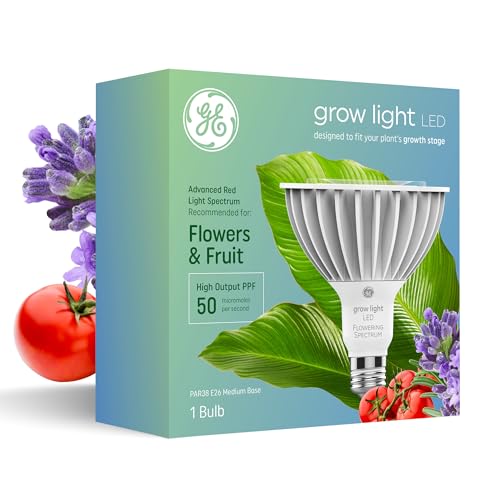
GE Grow LED PAR38 Flood Light Bulb

GE Grow LED PAR38 Bulb Balanced Spectrum
More Details On Our Top Picks
The A19 shape is the classic light bulb outline, so this Briignite drops into any standard lamp or clip fixture you already own. It runs at a 4000K color temperature (a neutral white that reads as soft daylight to your eye) while still pushing out the red and blue wavelengths plants use most. PPF, or photosynthetic photon flux, is the measure of usable light energy a bulb delivers to plants, and this one is sized for everyday countertop or shelf use.
Most first-timers just want something that screws in, doesn’t hum, and keeps a basil plant alive through February. That’s the brief this bulb meets, and the price-per-bulk approach from Briignite tends to make it approachable for a starter setup.
The Helpful Details
- Screws into a standard E26 socket, the same base as a regular table lamp
- Full spectrum output covers both vegetative leafy growth and fruiting stages
- A19 form factor fits most common household lamps without an adapter
- Neutral 4000K tone blends into a living space better than purple-tinted grow lights
Trade Offs To Consider
- Beam angle is narrower than a flood bulb, so larger plant groupings may need more than one unit
- No built-in dimmer or timer means a separate smart plug fills that role
- Heat output is low, which is gentle on tender seedlings but limits how close you can cluster plants underneath
Who It Suits Best
First-time growers tending a small windowsill herb garden or a few houseplants through the darker months.
A Better Fit Elsewhere
Anyone needing a dimmer and on-board timer should look at the Barrina OG11A Grow Light Bulb instead, since it packs those controls into the bulb itself.
Same A19 shape as the first Briignite, but the color temperature here reads at 5000K, which lands closer to midday sun than soft morning light. For most living rooms, that matters more than people realize, because the bulb looks like a normal daylight lamp rather than something obviously medical.
If your plants share a shelf next to a reading chair or a kitchen counter, the cleaner white helps the bulb disappear into the decor. You still get the same red and blue content underneath, so the photosynthetic work happens either way.
Notable Gains
- 5000K tone appears bright and clean, ideal for shared living spaces
- Same full spectrum coverage as the first Briignite, just a cooler visual color
- Standard A19 form factor, no rewiring or special housing needed
- Light enough that a clip-on gooseneck lamp handles it without sagging
Minor Gripes
- Cooler tone can feel slightly clinical in a cozy den or bedroom corner
- Coverage area is still best for one to three small plants at a time
Made For
Apartment dwellers and renters who want a grow light that looks like a regular lamp bulb in an open living area.
Swap It Out When
Gardeners running a wider shelf or multiple plants should reach for the Briignite 2 Pack BR30 LED Grow Light Bulbs, since the broader reflector shape throws light further across a tray of seedlings.
The BR30 shape is a wider, flatter reflector than the A19, and the two-pack format is the real reason this one earns its spot. A single bulb covers a small pot; two of them cover a full shelf at the same height. The 3500K color here sits in the warm-white range, which gives plants a slightly amber glow indoors while still pushing out usable red and blue wavelengths.
For anyone starting a seed tray under one lamp and a separate propagation station under another, having a matched pair removes guesswork. You set the same height, the same distance, and let the bulbs do their work.
The Upside
- Two bulbs per pack for a multi-shelf or multi-station setup
- BR30 reflector shape throws a wider footprint than a standard A19
- 3500K warm white tones sit comfortably in a home interior
- Higher 120W-equivalent output handles leafy greens through fruiting
Soft Spots
- Warm-white tone isn’t ideal in a workspace where daylight-clean color matters more
- Two-pack format costs more upfront than a single bulb, even if the per-unit math works out
- Reflector shape needs a housing with enough clearance, so an open clip lamp may sit awkwardly
Best Suited To
Home gardeners running two or more propagation shelves and wanting matched bulbs without buying singles twice.
Look Elsewhere When
Someone focused on a single lamp and a single plant might prefer the Briignite LED Grow Light Bulb A19 Full Spectrum for its lower entry point.
This is the only bulb in the list with controls built directly into the unit. Stepless dimming means you can dial the brightness anywhere between off and full without stepping through preset levels, and the timer offers 4, 8, or 12 hour cycles. For a grower who travels or works long days, that automation removes the most common failure mode of indoor lighting: forgetting to turn it on or off.
The 4000K tone is the same neutral white the first Briignite uses, but Barrina pairs that with a slightly more focused reflector and a lower 11W draw, which is helpful in a fixture that runs for many hours.
Bright Spots
- Integrated dimmer and 4/8/12-hour timer on the bulb itself, no separate smart plug needed
- Stepless brightness control suits sensitive seedlings and mature plants in the same fixture
- Lower 11W draw makes long daily runs easier on a household energy bill
- Standard E26 base fits any normal socket
Honest Caveats
- Onboard controls add bulk near the bulb base, so tightly enclosed lampshades may not close around it
- Single-pack format means a multi-shelf setup needs multiple units
- Brightness tops out lower than a non-dimmable bulb at full power
Right Fit For
Schedulers and frequent travelers who want their grow light to follow a routine without leaning on a separate smart plug.
Another Choice May Suit
Planters who just need one bulb and don’t care about dimming should consider the Briignite LED Grow Light Bulb A19 Full Spectrum, which is a simpler, lower-entry option.
A PAR38 is a flood-lamp shape: short, wide, and built to throw a broad pool of light across a wider area. This GE bulb is sized for serious indoor gardening, and the 50 micromole-per-second PPF rating is the kind of output that supports fruiting plants like tomatoes and peppers through their flowering stage, not just leafy greens. The natural-white tone reads as a normal warm bulb to your eye, so the room doesn’t turn purple.
You do need a housing that fits a PAR bulb, since the shape is chunkier than an A19. A clamp-rated work lamp or a clamp-rated reflector fixture is the usual match.
Strong Points
- High-output PPF of 50 micromoles per second supports fruiting and flowering stages
- PAR38 flood shape covers a wider plant grouping than an A19 reflector
- Natural white spectrum blends into a room better than the pink-purple look of older grow bulbs
- Works with tomatoes, cucumbers, peppers, and herbs through every growth phase
Points To Note
- Larger PAR38 shape needs a compatible housing or clamp fixture, not a standard table lamp
- Higher output produces more heat than the smaller Briignite A19 bulbs, so leave clearance above foliage
- Single-pack format means larger gardens need multiple units
Whose Shelf It Belongs On
Serious indoor gardeners running tomatoes, peppers, or other fruiting crops that need heavier photon output than herbs require.
Reach For A Different Pick When
Someone tending a small windowsill herb garden may find the Briignite LED Grow Light Bulb A19 Full Spectrum easier to mount in a regular lamp.
The other GE PAR38 here shares the same 50 micromole-per-second output and the same broad flood shape, but it leans toward a balanced spectrum rather than a strictly fruiting-and-flowering focus. That makes it more forgiving for gardeners running mixed trays of greens, herbs, and the occasional tomato. The 25,000-hour lifespan is the headline for anyone who hates swapping bulbs.
You may find that a single one of these handles a four-foot shelf if it’s mounted correctly, which is unusual for a single bulb at this size. The packaging can vary, so plan for that small inconsistency if you’re ordering multiples to match.
Well-Handled Touches
- 25,000-hour rated lifespan covers years of daily use without a swap
- Balanced spectrum handles seedlings, leafy greens, herbs, and flowers in the same fixture
- PAR38 flood beam covers a wider plant grouping from one socket
- Natural-white output keeps the room looking like a room
Things To Weigh
- Packaging may vary between orders, which matters when matching fixtures for visual consistency
- PAR38 shape requires a compatible housing, not a standard table lamp
- Higher initial cost pays off over time, but a smaller garden may not use the full lifespan
Perfect Match For
Year-round indoor gardeners who want a single bulb type they can swap into multiple fixtures without thinking about it.
Not Your Match When
Setup-bound beginners working with a plain table lamp should pick up the Briignite LED Grow Light Bulb A19 Full Spectrum instead, since it drops into any standard lamp without a housing swap.
Matching The Right Bulb To Your Indoor Garden
The first thing most people overlook is the shape. An A19 bulb fits a normal lamp, but a BR30 or PAR38 needs a wider housing, and forcing the wrong shape into a clip fixture leads to awkward angles and hot spots. Match the bulb shape to the fixture you already own, or buy the fixture to fit the bulb.
Color temperature matters more than people expect, especially if the bulb lives in a shared room. A 3500K to 5000K range reads as a normal warm-to-daylight white to your eye while still pushing out the red and blue wavelengths plants use. Anything lower, or anything with a strong purple tint, will read as medical-looking in a living space.
Wattage and PPF are two different conversations. Wattage tells you how much electricity the bulb draws, while PPF tells you how much usable light energy reaches the plant. A low-wattage bulb with a strong PPF rating is usually the better pick for a daily 12-to-16-hour run, since it keeps the energy bill down without starving the plants.
For mixed gardens with seedlings, leafy greens, herbs, and the occasional flowering plant, a balanced or full-spectrum bulb covers the most ground. For dedicated fruiting setups, a higher-output PAR-style flood bulb gives the photon density that flowering and fruiting crops need.
Key Considerations Across These Picks
Where Shoppers Go Wrong
The most common slip is buying the brightest bulb available and mounting it six inches from the foliage. Seedlings and tender herbs will bleach and crisp under that kind of intensity. Start the bulb higher, around 12 to 18 inches above the canopy, and bring it down gradually as the plants respond.
The other frequent mistake is forgetting that photoperiod matters as much as brightness. Most fruiting and flowering plants want 12 to 16 hours of light per day, with a real dark period to recover. Leaving a bulb on 24 hours a day stresses plants and burns electricity without improving growth.
When Paying More Pays Off
A higher-tier bulb earns its keep through three things: longer lifespan, higher PPF per watt, and built-in controls like dimming or timers. For a gardener running a fixture 14 hours a day, a 25,000-hour bulb outlasts multiple cheaper replacements, and an integrated timer removes a separate smart plug from the wall. The upgrade pays off most when daily use is the plan, not occasional weekend seed starting.
Frequently Asked Questions
How close should a grow light bulb sit to my plants?
For most A19-style bulbs, 12 to 18 inches above the canopy works for herbs and leafy greens. Fruiting crops under a PAR38 flood bulb can sit closer, around 8 to 12 inches, since the wider beam spreads intensity across more leaves.
Can I use a regular lamp socket for a grow light bulb?
Yes, as long as the bulb uses a standard E26 screw base and the lamp’s wattage rating matches or exceeds the bulb’s draw. The A19 and BR30 bulbs in this list all fit a standard table or clamp lamp without modification.
What’s the difference between full spectrum and purple grow lights?
Full spectrum bulbs push red, blue, and other wavelengths together so the output appears white to your eye. Older purple grow lights emphasize just the red and blue bands plants use most, which looks harsh indoors but works fine in a basement or closet.
Do grow light bulbs use a lot of electricity?
Most LED grow bulbs run between 9 and 15 watts, which costs very little over a 12-to-16-hour daily cycle. A 1000-lumen LED draw translates to a small fraction of what an older incandescent grow lamp would use.
How long do LED grow light bulbs typically last?
Most quality LED grow bulbs are rated for 20,000 to 25,000 hours. At 14 hours a day, that works out to roughly four years of continuous use before output starts to fade noticeably.
Wrap Up
Pick the bulb that matches the fixture you already own, the plants you actually grow, and the schedule you can keep up with. A small herb garden under one lamp wants a different bulb than a four-shelf seed-starting operation, and matching the tool to the job avoids both wasted money and disappointed plants.