Most apartments and home offices simply don’t get enough natural light to keep a fiddle leaf fig, a herb garden, or even a tray of seedlings happy through the darker half of the year. A good grow light fills that gap without turning the room into a science project. I spend a lot of time talking to indoor gardeners, and the same frustrations come up: leggy seedlings, herbs that bolt and fade, and zero space for a big fixture.
That’s exactly why I put this roundup together. These six picks cover everything from serious 4×4 foot grow tents to clip-on helpers for a single houseplant. Each one is built for a specific kind of setup, so you can match your space, your plants, and your skill level instead of guessing.
A Side-By-Side Look

HLG 600 Rspec FR 600W LED Quantum Board Grow Light

VIIVUU Clip-On Plant Grow Light, White

DOMMIA Under Shelf Grow Light, Daylight White

DOMMIA Under Shelf Grow Light, Natural White

GLOWRIUM Smart Grow Light for Indoor Plants
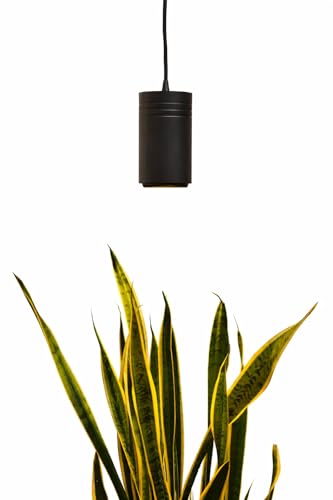
Aspect Soltech Gen 2 Black Pendant Grow Light
The Picks, Examined More Closely
The HLG 600 Rspec sits in a different league from every other pick here. It’s a 600W quantum board (a flat panel of high-efficiency LEDs spread across a large board) designed to throw serious light into a 4×4 foot footprint, and it carries ETL/UL certification for safety. For a home grower running a dedicated tent with fruiting tomatoes, peppers, or a dense canopy of leafy greens, this is the kind of light that actually powers a real harvest.
The dimmable driver means you can tune output down for seedlings and crank it up during flowering, which matters because plants in early life stages need far less intensity than mature ones. For anyone serious about indoor cultivation, the canopy penetration on this unit is hard to match in a home setting. It’s overkill for a windowsill pothos, but that’s not who it’s built for.
Advantages To Know
- High 2.60 micromole-per-joule efficiency keeps energy use reasonable for the output class.
- Broad 4×4 foot coverage means one fixture handles an entire tent without gaps.
- Full-spectrum output supports everything from seedlings through flowering, so you don’t swap lights as plants mature.
- Dimming knob lets you match intensity to growth stage without raising or lowering the panel.
- ETL/UL certification gives a clear safety baseline for a high-draw electrical fixture.
Things To Consider
- At 600W, it pulls real current, so older garage circuits may need verification before install.
- The fixture runs warm and typically needs the passive cooling space a tent setup provides.
- No built-in timer means you’ll likely add an outlet timer to automate the photoperiod.
Who Will Love This
Intermediate and advanced home cultivators running a 4×4 foot tent with fruiting or flowering plants.
A Better Fit Elsewhere
Anyone growing a small shelf of houseplants will find the GLOWRIUM Smart Grow Light a far better match.
Sometimes a single struggling pothos on a side table is the whole project. The VIIVUU clip-on light is built exactly for that scale. It clamps onto a pot rim or a nearby shelf edge, and there’s also a soil-stake option for inserting it directly into the growing medium. That dual mounting is rare at this size and means it can adapt to a cramped apartment corner where a panel simply won’t fit.
The hollow ring lamp head keeps weight low, so the clamp doesn’t slowly slide down a wide pot. Compare that to the HLG board, which assumes a whole room of its own, and you see the trade-off: this light gives up raw intensity for genuine portability. For a single plant in a dim hallway, that’s a sensible swap.
Benefits That Matter
- Two mounting options (clamp or stake) let it fit oddball spaces and wide pots.
- Lightweight ring head prevents the slow droop you get with heavier clip fixtures.
- Simple clamp operation means no tools or shelf modification.
- Direct soil lighting keeps the light close to lower leaves where it counts.
Points To Keep In Mind
- Coverage is genuinely limited to a single plant, so a windowsill collection would need multiple units.
- Owners commonly report that the gooseneck may need occasional repositioning as the plant leans toward the light.
Built With In Mind
Beginners tending a single houseplant who want zero setup fuss and don’t need to light a whole shelf.
Reach For A Different Pick When
Shoppers lighting a full shelf of herbs will find the DOMMIA Under Shelf Grow Light in Natural White far more useful.
Tight apartments rarely have room for a freestanding grow rig, and most of us would rather not see a purple blur every time we walk past the bookshelf. The DOMMIA under-shelf panel solves both problems by hiding the hardware above the plants. The 4×4 inch panel is only about 0.28 inches thick, so it tucks under a standard floating shelf without leaving a visible gap.
The onboard controller is the real headline feature: 6, 12, or 16-hour auto cycles, four brightness levels, and a memory function that resumes your last setting after a power blip. Unlike the VIIVUU clip-on, this assumes a more permanent setup, but it requires no extra timer or dimmer module cluttering the wall outlet.
Where It Excels
- Ultra-slim 0.28-inch profile disappears under a shelf for a clean look.
- Built-in auto timer removes the need for a separate plug-in timer module.
- Four brightness levels let you match output to a seedling or a mature herb.
- USB power simplifies cable routing behind a shelf or desk.
Trade Offs
- Coverage is sized for a small shelf, so a long bookcase would need several units to light evenly.
- The daylight-white color temperature is cooler than a typical living-room lamp, which some people find less cozy in evening hours.
Key Specs
Right Fit For
Apartment dwellers running a small herb or seedling shelf who want a tidy, hidden fixture.
Look Elsewhere When
Anyone who wants the fixture itself to double as décor should consider the Aspect Soltech Gen 2 Pendant.
This is the same DOMMIA panel as the previous pick, but with a natural-white color temperature instead of daylight. That single change reshapes how the fixture feels in a living space. A cooler daylight tone pushes toward a workbench mood; the natural-white version blends more easily with a warm floor lamp in the evening, which matters in a room where you also relax.
The hardware story is identical: slim 0.28-inch profile, built-in timer with 6/12/16 hour cycles, four brightness steps, and USB power. So the choice between this and the daylight-white version comes down to room mood more than anything technical. For a shelf visible from the couch, the natural-white option usually wins.
The Good Stuff
- Natural-white tone keeps the shelf looking like part of the living room after dark.
- Same onboard auto timer means no extra wall modules.
- Power-loss memory resumes the last setting, useful after brief outages.
- Slim panel disappears under most floating shelves.
Worth Noting
- Natural-white tones favor foliage over flowering, so fruiting plants may need a stronger dedicated fixture.
- Coverage is limited to a small footprint, so larger shelves require more than one panel.
Best Suited To
Living room or den decorators who want healthy foliage plants without a clinical-looking light cast.
Not Your Match When
Growers focused on yield and flowering output will do better with the HLG 600 Rspec.
The GLOWRIUM is the only pick here built for the smartphone generation of plant parents. It uses 32 calibrated full-spectrum LEDs combining 4000K white with 660-nanometer red (a wavelength plants use heavily during flowering), and it publishes a measured PPFD (photosynthetic photon flux density, the usable light reaching the plant) figure of 180 micromoles per square meter per second at 8 inches. That number lands well above a casual clip-on, even though the GLOWRIUM is still a small desktop unit.
The dual control setup, inline controller plus an app, lets you schedule light cycles from your phone, which beats crawling behind a shelf to press buttons. For a mixed shelf of tropicals and herbs, the spectrum covers leaf development through fruiting. It’s quieter in operation than older high-output panels because there’s no noisy fan.
Notable Gains
- Full 32-LED array with dedicated red 660nm chips supports flowering and fruiting, not just foliage.
- App-based scheduling removes the need to manually toggle the light each day.
- Inline controller keeps basic adjustments possible even without the phone.
- Fanless operation keeps the unit quiet for bedrooms or offices.
A Few Limitations
- Best PPFD is achieved at 8 inches, so taller plants may need repositioning as they grow.
- Smart features depend on the app ecosystem, which may evolve separately from the hardware.
Feature Snapshot
Perfect Match For
Tech-comfortable plant parents managing a mixed shelf of foliage and flowering species.
Swap It Out When
Someone focused on a dedicated high-yield tent will get more from the HLG 600 Rspec.
The Aspect Gen 2 is the only fixture in this roundup that doesn’t look like a grow light. It’s a slim black pendant that hangs like a designer lamp, designed for living rooms and bedrooms where a purple blur would never fly. Soltech built it as a full-spectrum grow light disguised as a piece of décor, and the warm-white natural output makes that work.
Soltech publishes a 110% increase in plant-usable light compared to the smaller original Aspect, which matters because pendant fixtures often sacrifice output for form. The dimmable design lets you drop the intensity for ambient evenings and raise it for serious growth hours. For a single large floor plant or a hanging basket in a stylish room, this is the rare grow light you actually want guests to see.
Notable Upsides
- Pendant styling reads as a designer lamp, not a horticultural tool.
- Warm-white natural output keeps the room cozy after dark.
- Higher output than the original Aspect, addressing the usual form-versus-power trade-off.
- Dimmable for shifting between ambient and growth intensity.
Practical Considerations
- Pendant mounting requires a ceiling hook or hardwire, so renters may need a no-drill alternative.
- Coverage is shaped for a single plant or hanging basket rather than a full shelf.
- Style-first design means it commands a higher cost than utilitarian panels.
Whose Shelf It Belongs On
Design-conscious urbanites with a statement plant in a visible living space.
Consider Something Else When
Growers with a shelf full of herbs will find the DOMMIA Under Shelf Grow Light in Natural White far more practical.
What To Weigh Before Choosing A Grow Light
Light intensity and spectrum are the first things to lock in. Intensity is usually expressed in PPFD, which simply measures how much usable light actually reaches the leaves at a given distance. Higher numbers matter most for fruiting and flowering plants; leafy greens and foliage houseplants do fine at lower readings. Full-spectrum output covers the wavelengths plants use from seedling through bloom, which is why every pick in this roundup lists it.
Color temperature, measured in Kelvin, affects how the light looks in your room. Daylight-white readings (around 5000K and up) lean cool and clinical, while natural-white tones (around 4000K) feel closer to a normal lamp. For rooms where you also relax, the warmer tones tend to play nicer with evening décor.
Coverage area matters more than people expect. A clip-on might handle one plant, while a quantum board is sized for a full 4×4 foot tent. Always match the fixture to your actual footprint, not the plant you wish you had.
Finally, control features shape daily ownership. Built-in timers, dimming, and memory functions decide whether you fiddle with the light every day or set it once and forget it for months.
Key Considerations Across These Picks
Traps First Timers Fall Into
The most common slip is chasing raw wattage without checking usable output. A 600W fixture with poor efficiency delivers less plant-usable light than a smaller, well-engineered panel. PPFD at the actual leaf level tells you far more than the box wattage.
Another mistake is ignoring heat and clearance. High-output panels like quantum boards run warm and need breathing room. Mounting one directly against a shelf or curtain is a fire risk and shortens the fixture’s life.
Where The Extra Money Goes
Higher-tier fixtures typically buy better LED drivers, more efficient spectrum tuning, and certifications like ETL/UL that show the unit has been independently tested for safety. The Aspect pendant, for example, spends part of its cost on form factor and finish so it actually fits a living room. Premium money also buys longer warranties through the manufacturer and quieter cooling, which matters if the light runs near a workspace.
For serious flowering or fruiting plants, the upgrade pays back in yield and canopy health. For a couple of pothos on a shelf, a slim under-shelf panel is usually plenty.
Frequently Asked Questions
How many hours a day should I run a grow light for indoor plants? Most foliage houseplants do well on 12 to 16 hours of light per day, mimicking a long summer day. Flowering and fruiting plants often respond to shorter, more controlled photoperiods to trigger bloom.
Do plants actually need a full-spectrum grow light, or is any bright lamp enough? A regular lamp looks bright to your eyes but may be missing the red and blue wavelengths plants use most. Full-spectrum LEDs cover those gaps, which is why every pick on this list ships with one.
How close should a grow light hang to my plants? Clip-on and desktop units usually work best within 4 to 12 inches of the leaves. Hanging panels in a tent typically sit 12 to 24 inches above the canopy and get raised as plants grow.
Can I leave a grow light on 24 hours a day? Plants need a dark respiration period to move sugars and rest, so continuous light is generally counterproductive. Most timers in this roundup cap at 16 hours, which is a sensible upper limit for foliage growth.
Is a quantum board overkill for houseplants? For a windowsill pothos, yes. Quantum boards make sense once you’re running a tent or a dense shelf of fruiting plants where canopy penetration and efficiency matter.
Final Verdict
The right grow light comes down to your space, not the spec sheet. A 4×4 foot tent wants the HLG 600 Rspec; a single houseplant is happier with the VIIVUU clip-on; a tidy shelf calls for a DOMMIA panel; a style-forward living room earns the Aspect pendant; and a connected plant parent will appreciate the GLOWRIUM. Match the fixture to the footprint you actually have, and your plants will tell you the rest.