Anyone who’s tried to keep a fiddle leaf fig happy through a dim winter, or start seedlings on a chilly kitchen counter, knows the value of a good grow light. I pulled together five solid options that span serious tent setups, low-key home shelves, and single-pot rescues. There is genuinely something here for apartment plant parents, basement vegetable growers, and people who just want to keep one pothos alive through January.
The Essentials At A Glance

HLG 600 Rspec FR 600W Quantum Board Grow Light (Full Spectrum)
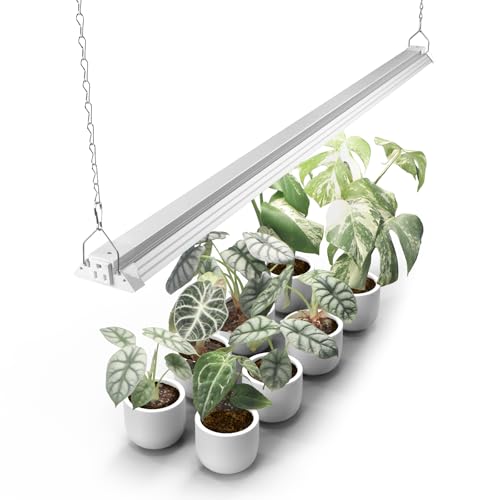
Barrina TX72 4FT LED Grow Light, 72W, 5000K Full Spectrum

VIIVUU Clip-On Grow Light for Indoor Plants (White)
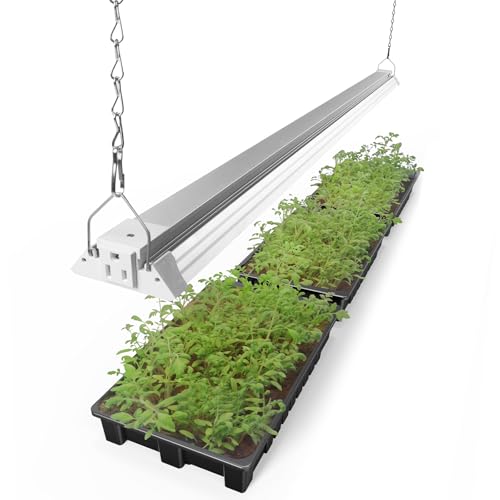
Barrina TX72 4FT LED Grow Light, 72W, Full Spectrum (1 Pack)
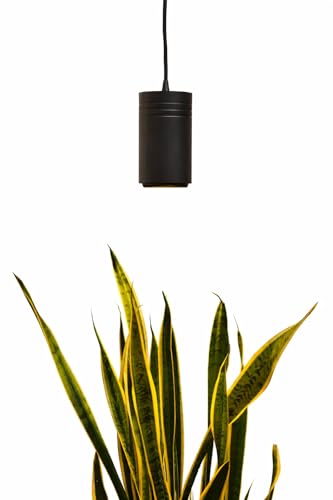
Soltech Aspect Gen 2 Black Pendant LED Grow Light, Warm White
Taking A Closer Look At The Options
The HLG 600 Rspec FR sits in serious-territory territory, aimed squarely at growers running a 4×4 ft tent or a dedicated veg/flower room. The quantum board form factor spreads hundreds of small diodes across a wide panel, so light lands evenly instead of pooling in one bright spot. Compared to the slim Barrina bars and the tiny clip-on later in this list, this is overkill for a single pothos, but it’s the right scale when you want leafy greens fruiting under artificial sun.
It’s the kind of fixture I think of when someone tells me they want harvests that rival outdoor summer yields. The 600W draw is real, so this belongs on a dedicated circuit in a basement, garage, or enclosed grow space. Most hobbyists I talk to treat this as the eventual upgrade after outgrowing a starter setup.
Bright Spots
- Quantum board spreads light evenly across a full 4×4 ft footprint, which reduces hot spots and leggy seedlings on the edges.
- Full spectrum output covers both the blue wavelengths plants want for vegetative stretch and the red end that drives flowering.
- Built-in dimmer lets you tune intensity down for seedlings and crank it up for hungry flowering plants.
- ETL/UL certification means the fixture has been independently tested to recognized electrical safety standards, useful when it runs for 16+ hours a day.
Honest Caveats
- At 600W, it’s genuinely heavy on the power bill, so owners commonly run it on a separate circuit and watch their utility usage.
- The panel needs decent hanging height and ventilation; pushing it too close can bleach leaves on sensitive greens.
- No reflector hood or included ratchet hangers in the box, so factor in mounting hardware separately.
Feature Snapshot
Who It Suits Best
Intermediate to advanced growers running a 4×4 ft tent who need serious, even coverage for vegetables or flowering plants.
A Better Fit Elsewhere
For a casual living-room pothos, the Soltech Aspect Gen 2 looks more at home and costs less to run.
Barrina’s TX72 4FT bar takes the opposite approach from the HLG panel above. It’s a long, slim 4-foot strip that you hang in parallel rows over seedlings, microgreens, or a basement shelf of houseplants. The 5000K color temperature lands right in that daylight-sweet-spot range that most leafy plants respond to without complaint.
This is the fixture I picture over a wire rack full of seed trays in February, and it threads together nicely if you want to link multiple bars. Compared to the HLG quantum board, this is far less intense per square foot, but for a flat of lettuce starts it’s a sensible match.
Useful Touches
- 72W actual draw replaces older 500W-equivalent shop lights, which keeps the electricity bill reasonable for long daily runs.
- 5000K daylight color temperature reads close to natural sun for leafy growth without the purple “disco” look.
- Slim 4FT form factor tucks under standard wire shelving and matches common shelf widths.
- Full spectrum layout supports both germination and continued vegetative growth in one bar.
Things To Consider
- Coverage is narrow, so a single bar over a wide tray leaves edge plants reaching toward the center.
- Owners commonly report the included hanging hardware is functional but basic; ratchet hangers make height adjustments easier.
Made For
Beginners running a seed-starting rack or a single shelf of leafy herbs who want full spectrum without complicated setup.
Consider Something Else When
If your goal is a flowering harvest in a tent, the HLG 600 Rspec FR brings the canopy penetration this slim bar can’t.
The VIIVUU clip-on is the smallest item on this list by a wide margin, and that’s exactly its appeal. The clamp grips a pot rim, shelf edge, or windowsill, and the hollow ring-style lamp head keeps the weight down so a thin lip can still hold it. There’s also a soil-insertion stake if you’d rather mount it directly into the planter.
This is the kind of light a friend reaches for when one sad plant is parked in a dark corner and refuses to bounce back. It won’t replace the Barrina bars or the HLG panel for serious growing, but it solves a different problem: bringing just enough extra light to a single houseplant.
Useful Highlights
- Strong clamp means it stays put on standard pot rims and shelf edges without sliding.
- Included soil-stake option lets you mount it directly in the planter for low-profile setups.
- Hollow ring lamp head trims weight, so it won’t tip a lightweight ceramic pot.
- Tiny footprint suits apartments, dorms, and desks where a tent is impossible.
Trade Offs
- Output covers one plant, so larger collections need several units or a swap to a Barrina bar.
- Clamp size has a maximum thickness; very wide rims or thick shelves may not fit securely.
Right Fit For
Apartment dwellers and office workers keeping a single pothos, succulent, or herb alive through a low-light season.
Skip It When
For a full seedling rack or a multi-plant shelf, the Barrina TX72 single bar covers the same space more evenly.
This is the same Barrina TX72 platform as the previous item, sold as a single-bar starter pack with a slightly different spectrum tuning aimed at vegetative growth. For someone dipping a toe in without committing to a multi-bar setup, one bar over a single shelf of herbs or leafy starts is often exactly enough.
Compared to the multi-row 5000K version above, this single-pack leans into red-dominant wavelengths for the vegetative stretch phase. Think of it as the slower, steadier sibling rather than a fundamentally different tool.
The Good Stuff
- Single-bar format keeps the up-front cost low while still covering one full shelf width.
- Full spectrum with red-forward bias supports stretchy vegetative growth in seedlings and herbs.
- Same slim 4FT housing as the multi-pack, so the unit tucks under standard wire racks.
Worth Noting
- One bar leaves coverage gaps on wider shelves, so expansion to a second unit is likely down the road.
- Light intensity drops off fast at the ends, so center the bar over your most demanding plants.
- Owners commonly mention the included hanging clips are serviceable rather than premium.
Key Specs
Best Suited To
First-time growers starting a single shelf of seedlings or herbs who want a low-commitment entry point.
Look Elsewhere When
Style-conscious living-room growers should jump to the Soltech Aspect Gen 2 instead of mounting a shop-style bar.
The Soltech Aspect Gen 2 is the most “furniture-grade” option on this list. It hangs like a designer pendant in a living room or open loft, and the warm white output reads as regular household lighting rather than the purple-pink glow that screams “grow tent.” That alone makes it the only item here I’d happily leave visible above a coffee table.
Beyond looks, the Aspect Gen 2 reportedly pushes considerably more plant-usable light than the original Small Aspect. Compared to the HLG 600 Rspec, it’s far gentler on the eyes but also far less intense for serious flowering crops, so I treat it as a living-room houseplant light first and a growing tool second.
Reasons It Performs
- Pendant form factor blends into living rooms, bedrooms, and open-plan spaces without screaming “lab equipment.”
- Warm white output is comfortable to sit under, so it doubles as accent lighting in the evening.
- Dimmable design lets you dial intensity for everything from a low-light pothos to a hungry fiddle leaf.
- Higher output than the original Small Aspect means serious plant growth, not just survival.
Softer Spots
- Coverage is one plant or a small cluster, so a jungle of houseplants needs multiple pendants or a different fixture.
- Pendant installation requires ceiling mounting, which renters may not be able to do.
Who Will Love This
Design-minded plant parents who want the light to look like part of the room rather than a piece of equipment.
Reach For A Different Pick When
For a tent or a basement veg garden, the HLG 600 Rspec FR is the serious grower tool over this style-first pendant.
What Matters Most Before Choosing grow light plants
Wattage tells you roughly how much electricity the fixture pulls, while PPFD (photosynthetic photon flux density) measures how much usable light actually lands on the leaves. For a single houseplant, anything in the 20-40W range is plenty. For a 4×4 ft flowering tent, you want fixtures that push real photon counts across the whole canopy.
Spectrum matters too. Blue-leaning light keeps plants compact and leafy, which is what you want for herbs and seedlings. Red-dominant light drives flowering and fruiting. A balanced full spectrum covers both, which is why almost every modern fixture leans that way. Color temperature (the Kelvin number) is the easy shorthand: 5000K reads as cool daylight, 3000K reads as warm and gentle on living-room eyes.
Coverage and form factor decide whether a light fits your space at all. Slim 4FT bars slide under wire shelves, quantum boards hang in tents, and pendants mount like ceiling lamps. Match the footprint to the area you actually have, not the area you wish you had.
Dimmability is worth paying a little extra for. Seedlings want gentle light, hungry flowering plants want full intensity, and a dimmer covers both without buying two fixtures.
Smart Angles Worth Considering
Pitfalls Shoppers Hit
The most common mistake is matching fixture wattage to room size instead of plant needs. A 600W quantum board over a single pothos is wasteful, and a 20W clip-on over a tomato seedling is starving. Measure the space you actually need to light, then pick the fixture sized to that footprint.
Another trap is chasing purple “blurple” lights because they look technical. Modern full spectrum white LEDs grow plants just as well and look far better in a living space. Ignore the look and read the spectrum chart instead.
What The Higher Tier Buys
Spending more generally buys three things: higher photon delivery per watt (efficiency), better thermal management so the diodes last longer, and cleaner spectrum tuning that actually matches plant needs. For a casual herb shelf, the jump is hard to justify. For a flowering tent, the efficiency gain pays back in lower power bills within a season or two.
Frequently Asked Questions
How far should a grow light hang above my plants? Most LED panels sit 12 to 24 inches above the canopy for vegetative growth, with closer positioning for seedlings and farther distance for light-hungry flowering plants. Always check the manufacturer’s recommendation, since intensity varies widely between fixtures.
Can I use a regular LED bulb instead of a grow light? Regular household LEDs provide some usable light, but they lack the spectrum tuning and intensity a dedicated grow light offers. For a single dim corner plant, they can be enough, but anything hungry needs a real grow fixture.
How many hours per day should grow lights stay on? Most vegetables and herbs do well on 14 to 18 hours of light per day, while flowering plants often benefit from a strict 12-hour on, 12-hour off cycle. Adjust based on how your specific plants respond.
Do grow lights increase electricity bills a lot? A small clip-on draws about as much as a reading lamp. A 600W quantum board running 16 hours a day adds meaningfully to a utility bill, so factor that in for serious setups.
Will any of these work for seedlings? Yes, all five can support seedlings, but the Barrina TX72 bars and the VIIVUU clip-on are the most beginner-friendly scales for a small seed-starting setup.
Wrap Up
The right grow light depends almost entirely on what you’re growing and where it lives. For serious tents, the HLG 600 Rspec FR is the heavy hitter. For shelves and racks, the Barrina TX72 bars are practical and forgiving. For single plants and small spaces, the VIIVUU clip-on earns its keep. For rooms where looks matter, the Soltech Aspect Gen 2 disappears into the decor while doing real work. Match the light to the space, and your plants will tell you when you got it right.