Off-grid living, RV road trips, and backyard patios have one thing in common: you need reliable light without leaning on the grid. The right LED solar light bulbs make a 12V battery bank feel like a real home, or turn a pergola into the spot where everyone lingers after dark. This guide breaks down ten solid options across both jobs, from low-voltage replacement bulbs to full solar string-light kits, so you can match the gear to the way you actually use it.
A Closer Look At The Lineup

Taysing 12V Light Bulb A19 9W Cold White 6000K E26 Screw Base 12v led Bulb DC 12 Volt 24v 36v 48v Low Voltage Lights
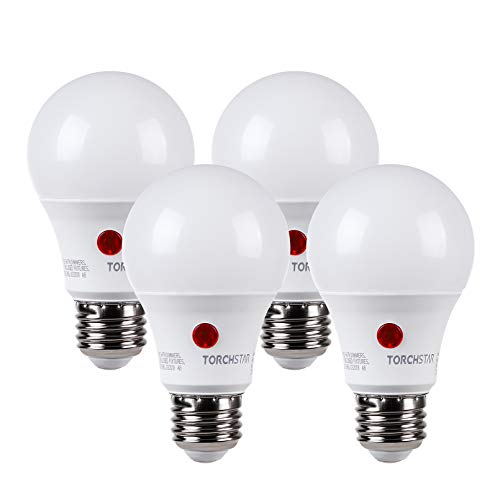
TORCHSTAR 4-Pack Dusk to Dawn LED Light Bulb Outdoor, A19, 5000K

TORCHSTAR 4-Pack Dusk to Dawn LED Light Bulb Outdoor, A19, 2700K

TORCHSTAR 4-Pack Dusk to Dawn LED Light Bulb Outdoor, A19, Yellow Housing

Brightech Ambience Pro Solar Outdoor String Lights 48 ft, 15 Edison Bulbs, 1W Soft White

Brightech Ambience Pro Solar String Lights 48 ft Remote, 15 Edison Bulbs, 1W Soft White

Maelsrlg LED 12V Light Bulb 100W Equivalent, Daylight 5000K, 13W 1200 Lumens, E26, 4-Pack
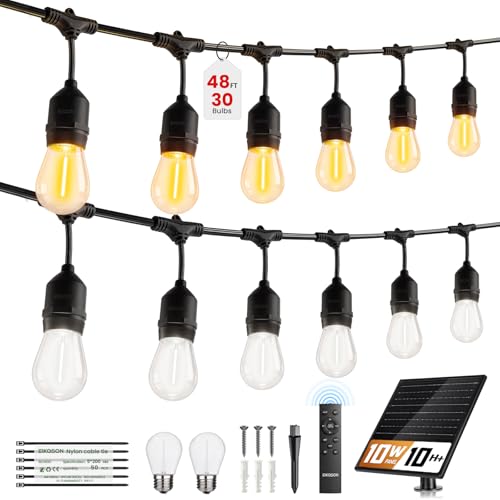
EIKOSON 48FT Solar String Lights Outdoor, Color Adjustable, Intelligent Positioning

Brightech Ambience Pro Solar Outdoor String Lights 48 ft, 15 Edison Bulbs, 1W Warm White

BAYSHE 12V Low Voltage LED Light Bulb E26 Base, 7W 630LM Cool White 6000K
Why These Options Stand Out
The Taysing A19 is built for the messy reality of off-grid wiring, where battery voltage drifts depending on charge state. It accepts anything from 12V to 48V on either AC or DC current, which removes the guesswork when you swap between a small solar setup, a 24V RV house bank, or a 48V cabin array. The standard E26 screw base means it drops into the same fixtures you already own, so retrofitting a coach or a fishing cabin takes about ten seconds per socket.
Cold white at 6000K feels clinical to some, but in a workspace or workshop it pulls double duty, helping you see what you’re doing without the warm-tinted softness of a porch bulb. At 9W and roughly 810 lumens, it’s a 60W incandescent replacement, which matters on a battery bank where every watt counts. Color rendering index (CRI) sits at 85, decent enough that woodwork, food, and skin tones look reasonably natural.
What Stands Out
- Wide 12V to 48V tolerance handles battery sag and oversized arrays without flicker.
- E26 base fits standard household fixtures, no rewiring needed.
- 810 lumens at 9W makes it a true 60W incandescent swap for RV or cabin use.
- CRI 85 keeps colors looking believable in kitchens and workspaces.
- Works on both AC and DC current, useful when an inverter is in the mix.
Things To Consider
- 6000K cool white can feel harsh in a cozy interior if you wanted warm light.
- Plugging this into a 120V household socket will burn the bulb and the socket, so labeling fixtures matters in shared spaces.
Feature Snapshot
Who It Suits Best
Anyone running a 12V, 24V, or 48V battery bank who wants a no-fuss E26 bulb that just works across voltages.
Consider Something Else When
The BAYSHE 12V bulb is a tighter fit when your system stays in the 11V to 18V range and you prefer a smaller 7W footprint.
Forget timers and smart apps: this TORCHSTAR bulb has a built-in photocell that reads ambient sunlight and switches itself on at dusk, off at dawn. That single feature changes the calculus for outdoor fixtures in sheds, barns, and porch lanterns where running a switch isn’t practical. The sensor is calibrated to ignore neighboring fixtures too, so mounting two bulbs close together doesn’t trick either of them into staying dark.
The 5000K daylight tone reads bright and clean on a driveway, which is exactly where these earn their keep. At 9W in an A19 envelope, you get an easy swap for older outdoor bulbs without rebuilding the fixture. For most homes, four bulbs in a pack covers the front entry, side gate, and a pair of backyard lights in one go.
A Favorable Mix
- Photocell sensor kills the need for external timers or apps.
- 5000K tone reads clear and alert on driveways and walkways.
- Sensor ignores nearby light sources, avoiding the common “won’t turn on” failure.
- Four-pack covers typical home perimeter lighting in one buy.
Points To Note
- Sensor requires an open fixture or one that lets daylight reach the bulb, so enclosed globes can confuse it.
- Daylight white can feel too crisp if you wanted soft curb appeal.
The Right Fit For
Homeowners who want set-and-forget dusk-to-dawn lighting across a driveway, garage entry, or barn exterior without buying smart gear.
Skip It When
The TORCHSTAR 2700K Yellow Housing bulb is a better pick if you want the same sensor with a warmer, more porch-friendly glow.
This is the same dusk-to-dawn TORCHSTAR platform as the 5000K version above, retuned to a 2700K warm white that flatters a front porch. If your outdoor fixtures sit next to brick, wood, or warm-tone siding, the softer color reads as inviting rather than institutional. It’s a small change that matters more than people expect after the first night.
The sensor logic and 9W A19 form factor carry over, so installing four of these takes the same drill-free, app-free path. For covered porches and carriage-style lanterns, this is usually the right tone over daylight white.
A Few Strong Suits
- 2700K warm white looks natural against wood and brick porches.
- Same reliable photocell as the daylight version.
- Four-bulb pack suits whole-home front-yard coverage.
Worth Bearing In Mind
- Sensor still needs daylight access, so fully enclosed fixtures won’t trigger reliably.
- Warm tone trades visibility for ambiance on darker driveways.
Best Suited To
Homeowners with traditional porch or carriage fixtures who want automatic dusk-to-dawn light in a warm, residential tone.
Reach For A Different Pick When
The TORCHSTAR 5000K bulb is the better call when you want security-style brightness on a driveway over porch warmth.
The yellow housing is the twist on this TORCHSTAR bulb, and it’s a real feature rather than marketing. Yellow-tinted outdoor light is widely reported to attract fewer moths and mosquitoes than cooler whites, which makes a difference on a deck where you’d rather not share your evening with a swarm. The dusk-to-dawn sensor runs the same reliable photocell as the rest of the lineup.
At 9W in an A19 shape, you can drop it into most standard outdoor lanterns and forget about it. For patio nights where bugs are the dealbreaker, the yellow housing is the quieter answer.
Positive Takeaways
- Yellow housing helps reduce insect attraction around dining and seating areas.
- Automatic dusk-to-dawn sensor removes manual on-off routines.
- A19 form factor fits common porch lanterns.
Some Limits To Know
- Yellow tint distorts color rendering, so food and faces look a bit off compared to neutral white.
- Sensor can struggle in fixtures that block daylight from the bulb’s window.
Perfect Match For
Anyone hosting outdoor dinners on a screened-in porch or deck where bug pressure usually dictates the schedule.
Look Elsewhere When
The Brightech Ambience Pro solar string lights are a better fit for a covered patio where you want decorative glow rather than overhead bug defense.
Forty-eight feet of café-style string lighting with a detachable solar panel is a different category than replacement bulbs, and Brightech has been refining this kit for a while. The 15 Edison-style LED filaments spread across three feet of spacing, so the lit portion covers 42 feet and leaves a clean run for hanging. Mount it once over a pergola or fence line and you get soft white light that flatters skin and food without overpowering the table.
The solar panel clips off, which is useful when you need to chase the sunniest spot during short winter days. Filament LEDs are rated for 20,000 hours of life, so a few seasons of weekend dinners won’t make a dent. Charge time in direct sun runs about six hours for roughly five to six hours of light afterward.
What Makes Sense
- Edison-style filament LEDs deliver ambiance without the fragility of real glass bulbs.
- Detachable solar panel lets you optimize placement for sun exposure.
- 20,000-hour LED lifespan covers years of weekend use.
- 48-foot total run covers most residential patio spans.
Trade-Offs
- Five to six hours of light per charge means shorter winter nights may run out before the party’s over.
- No remote or dimming control on this base model.
Key Specs
Whose Shelf It Belongs On
Hosts who entertain on a patio or pergola and want wire-free overhead lighting that works without an outlet nearby.
A Better Fit Elsewhere
The Brightech remote-controlled version suits anyone who wants dimming and color modes without leaving the table.
This is the more grown-up sibling of the base Ambience Pro kit, adding a handheld remote that handles on/off, dimming, and light-mode selection. Same 48-foot run, same 15 Edison-style LED filaments, same detachable solar panel. The difference shows up when you’re sitting at the table and don’t want to walk to the back of the patio to dim the lights.
Mode options usually include steady-on plus breathing or flash patterns, which lets you shift from dinner glow to a more lively tempo without swapping fixtures. For backyards where the lighting plan covers more than one seating zone, the remote pays for itself the first time you use it.
What Earns Its Place
- Remote control adds on/off, dimming, and mode switching from your seat.
- Same Edison filament aesthetic and detachable solar panel as the base kit.
- Mode variety supports both relaxed and party-style settings.
Points To Keep In Mind
- Remote adds a small electronics dependency that can fail before the LEDs do.
- Higher draw in dynamic modes can shorten runtime on cloudy days.
Made For
Patio entertainers who want one remote to rule brightness, color, and rhythm without leaving the table.
Not Your Match When
The base Brightech Ambience Pro is the smarter buy for a simpler setup that doesn’t need remote dimming.
This Maelsrlg bulb is the heavyweight of the 12V replacement category, putting out 1200 lumens at 13W, the rough equivalent of a 100W incandescent. That kind of output matters in a shop, a large shed, or anywhere you’re trying to light an actual room, not just a porch sconce. The E26 base keeps installation boring, which is the point on a 12V system.
Daylight 5000K is crisp and clinical, and that tone is what makes the lumen count useful for tasks like reading, sorting tools, or working at a bench. Rated for 25,000 hours, you’re looking at years of daily use before thinking about replacements. Just remember: 12V only, not a household socket.
Where It Helps
- 1200 lumens handles larger rooms and workshop ceilings.
- 25,000-hour rating stretches across years of daily runtime.
- 100W incandescent equivalent without the wattage hit on a battery bank.
- E26 base fits standard fixtures found in sheds and cabins.
Honest Caveats
- Non-dimmable, so it can’t drop to a softer evening level.
- Higher draw at 13W demands a battery bank with real capacity.
Feature Card
Right Fit For
Off-grid workshops, sheds, and cabin kitchens where you want real room-filling light from a 12V source.
Another Choice May Suit
The Taysing 9W bulb is the smarter swap when you only need general lighting and want broader voltage tolerance.
EIKOSON takes a different swing at solar string lights by stuffing a 7000mAh, 10W panel and a USB-C backup into one rig. The 48-foot run covers a long fence line or a wraparound porch, and the 30 high-efficiency LEDs spread brightness more evenly across the length, which removes the dim-spot-between-bulbs effect that cheaper kits can show.
Color-adjustable output lets you shift between cool and warm tones depending on the season or the occasion, and ECO mode stretches the battery across cloudy stretches. Intelligent positioning refers to placement optimization: the panel and battery setup is built to keep charging even when the sun moves. For users in unpredictable weather, that runtime headroom is what separates this kit from the entry-level options.
The Practical Payoff
- 7000mAh battery plus USB-C backup covers cloudy stretches in ECO mode.
- 30 LEDs across 48 feet reduce dark spots between bulbs.
- Color-adjustable output suits seasonal mood shifts.
- 10W solar panel handles shorter winter charge cycles.
Soft Spots
- Color and mode adjustments can shorten runtime compared to steady-on.
- Larger panel footprint demands a sunny mounting location.
Who Will Love This
Homeowners with long pergolas or wraparound porches in regions where cloud cover routinely shortens solar runtime.
Swap It Out When
The Brightech Ambience Pro kit is a simpler fit for smaller patios that don’t need color shifting or USB backup.
The warm white version of the Brightech Ambience Pro trades soft white for a deeper, more amber Edison-style glow. On a covered porch or a pergola where you want the string lights to disappear into the architecture at night, this warmer tone reads as older, more candlelight-like than its sibling. The 48-foot run and detachable solar panel are unchanged.
It’s a small change with a big effect on mood, especially in autumn and winter when cooler tones start to feel out of place. Same 20,000-hour LED lifespan, same 1W per bulb draw, same straightforward solar setup.
Real Benefits
- Warm white tone reads as candlelight, ideal for cozy porches.
- Detachable solar panel optimizes for sun placement.
- 20,000-hour LEDs handle years of seasonal use.
A Few Limitations
- Warmer tone reads dimmer to the eye, so it isn’t a security light.
- No remote or dimming on this base model.
Built With In Mind
Covered porches and pergolas where warm candlelight-style glow flatters the seating area more than soft or cool white would.
Where A Sibling Pick Shines
The Brightech remote-controlled kit is the better call when you want dimming and mode control over fixed warm output.
The BAYSHE 12V bulb is the lightest option in this lineup, drawing 7W for 630 lumens at a 6000K cool white tone. For a small solar shed, a single-bulb garden fixture, or a tight RV reading lamp, that smaller output is actually a benefit: less draw on the battery bank, more runtime per charge.
The 11V to 18V operating window is narrower than the Taysing’s wider range, which is fine for straightforward 12V systems but means you can’t drop it into a 24V or 48V battery bank. The E26 base and standard A19 shape mean installation stays boring, which is exactly what you want from a basic replacement bulb.
What Helps Most
- 7W draw is friendly to small battery banks and short runtime needs.
- CRI 85 keeps colors looking believable.
- Standard E26 base fits typical low-voltage fixtures.
Where It May Fall Short
- 11V to 18V range limits use to true 12V systems only.
- Non-dimmable, so brightness is fixed.
Who Should Grab It
Anyone building a small solar shed, garden fixture, or RV reading lamp on a strict 12V setup.
Not Your Match When
The Maelsrlg 100W-equivalent bulb handles larger rooms and brighter tasks that exceed the BAYSHE’s 630-lumen output.
Matching The Right Bulb To Your Setup
Picking the right gear starts with a clear read on what you’re trying to light and how it gets powered. Three factors matter more than the rest, and the right answer depends on the job at hand.
Voltage And Battery Compatibility
Low-voltage solar systems live in a few common bands: 12V for small sheds, RVs, and basic solar arrays; 24V for mid-sized cabins; and 48V for larger off-grid homes. Bulbs like the Taysing handle 12V to 48V on the same fixture, which removes guesswork when system voltage changes. Smaller 12V-only bulbs like the BAYSHE are cheaper and lighter, but lock you out of higher-voltage arrays. Mismatched voltage is the most common reason these bulbs fail early, so check the rating before you buy.
Color Temperature And Use Case
Color temperature, measured in Kelvin (K), sets the tone of the light. Lower numbers like 2700K read warm and residential, the kind of light you’d want over a porch or dining table. Higher numbers like 5000K or 6000K read crisp and clinical, which is what you want in a workshop, shed, or task-focused space. Yellow-housed bulbs add a tint that reduces insect attraction, a real benefit on summer patios. The right color depends on whether you’re prioritizing ambiance, visibility, or bug reduction.
Lumens, Wattage, And Runtime
Lumens tell you how much light comes out; watts tell you how much energy it takes to make it. On a battery bank, the watts-per-lumen ratio matters as much as the lumen count itself. A 7W bulb putting out 630 lumens is gentle on a small battery, while a 13W bulb at 1200 lumens pulls more, but lights a real room. For solar string lights, panel size, battery capacity, and runtime mode (steady versus ECO) determine whether the kit survives cloudy stretches.
Key Considerations Across These Picks
Where Shoppers Go Wrong
The most common mistake is plugging a 12V bulb into a 120V household socket, which burns both the bulb and the fixture. The second is choosing a bulb with too narrow a voltage range for an evolving battery bank, then upgrading later and finding the lights no longer fit. For solar string lights, skipping the panel placement step is the classic regret: a panel mounted in partial shade charges slowly and the runtime never matches the marketing claims.
Where The Extra Money Goes
Higher-tier solar string lights buy a larger battery, a USB backup port, and a more efficient panel, all of which translate to longer runtime and resilience in cloudy weather. Upgraded remote-control kits buy dimming and color modes, useful when the lights need to span both dinner and party settings. Higher-lumen 12V bulbs buy room-filling output for tasks, which justifies the extra wattage only if your battery bank can support it. The upgrade is worth it when the gap between entry-level and premium matches the way you’ll actually use the system.
Frequently Asked Questions
Can I use a 12V LED bulb in a standard household socket?
No. A 12V bulb connected to a 120V household socket will burn out immediately and may damage the fixture. These bulbs are designed for low-voltage AC or DC systems only.
What does color temperature mean for outdoor lighting?
Color temperature, measured in Kelvin, sets how warm or cool the light looks. Lower values like 2700K read warm and inviting, while higher values like 5000K or 6000K read crisp and clinical, which is better for security and task lighting.
How long do solar string lights actually run at night?
Run time depends on panel size, battery capacity, and mode. Entry-level kits typically run 5 to 6 hours per charge, while larger panels with bigger batteries can stretch past 10 hours, especially in ECO mode.
Do yellow bug-reducing bulbs actually work?
Yellow-tinted housings filter out the wavelengths that attract most insects, so fewer moths and mosquitoes congregate around the fixture. Color rendering suffers a little, but for patios and porches, the trade is usually worth it.
Can I mix 12V bulbs on a 24V or 48V battery bank?
Only if the bulb is rated for the higher voltage. Standard 12V-only bulbs will burn out quickly on a 24V or 48V system. Wider-range bulbs like the Taysing handle 12V to 48V on the same fixture without issue.
Closing Remarks
The right pick comes down to matching voltage tolerance, color temperature, and brightness to the system you actually have. Off-grid cabins and RVs do well with the wider-voltage Taysing or the higher-output Maelsrlg. Patios and porches lean toward the Brightech string light kits, with the remote-control version earning its place when you want dimming and color modes. Whichever path fits your setup, matching the bulb to the battery bank and the mood is what makes solar lighting feel like a real upgrade rather than a compromise.