A dark shed turns a simple task into a guessing game. Anyone who has fumbled for a lawnmower handle in the dark or cracked a shin on a misplaced shovel knows the frustration. The good news: a quality solar or rechargeable fixture brings real visibility to windowless outbuildings, basements, and garden structures without any wiring work. These ten options cover the situations most people actually face, from quick tool grabs to longer workshop sessions.
Your Options, Compared
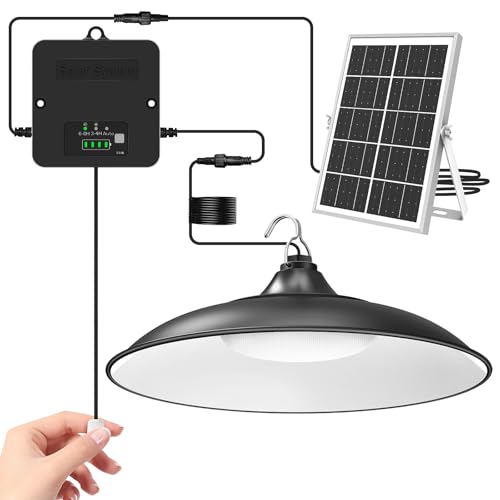
APILAB Solar Shed Light with Pull String 2000LM

APILAB Solar Shed Light Dual Lamp 2000LM 6500K
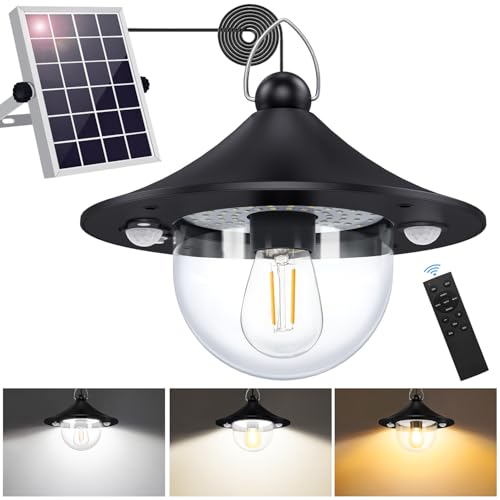
AEQ Solar Shed Light 3000LM 3 Color Temps

Sunco 6 Pack 4 Foot LED Shop Light Linkable

AEQ Solar Shed Light 267LED 5+1 Panels

AEQ Solar Shed Light 5 Modes Daytime

AEQ Solar Shed Light Pull String 2000LM

Supokeh 2 Pack Rechargeable Motion Sensor Light

YETHKE Motion Sensor Ceiling Light with Remote
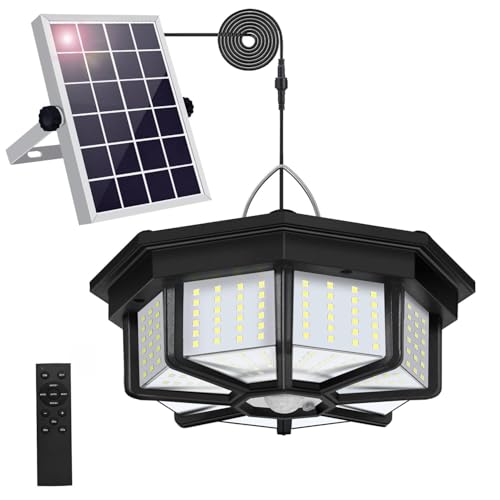
AEQ Solar Shed Light Motion Sensor Daytime
A Breakdown Of The Leading Choices
The APILAB solar shed light opens the list because it solves the most common headache with solar fixtures: fiddly remotes. A physical pull string on the power box changes modes directly, which matters in a dusty shed where remotes vanish between work gloves. Battery and mode indicators sit on the same box, so you always know the charge state before climbing in.
Output is 2000 lumens at a 6500K color temperature, bright enough for general tool retrieval and basic project work. The 6500K rating (a cool, bluish-white tone, useful for visibility but slightly harsh for long sessions) is worth knowing if you spend hours inside. You may find the color temperature reads as “cool” rather than “warm” if you’re used to residential bulbs.
Real-World Strengths
- Pull-string control removes dependency on a remote that can get lost in a cluttered shed.
- Battery level and mode indicators on the power box eliminate guesswork before a task.
- 2000 lumens handles mid-size sheds for general work, tool location, and short project sessions.
- Solar-powered setup means no wiring, no electrician fees, and zero impact on your monthly bill.
Honest Caveats
- Solar charging depends on panel placement, so shaded shed roofs may yield shorter runtime.
- 6500K light leans cool and can feel sterile during extended indoor sessions.
At A Glance
Made For
Shed owners who want a no-fuss solar install and prefer tactile controls over app or remote interfaces.
Consider Something Else When
The APILAB Solar Shed Light Dual Lamp 2000LM 6500K fits wider sheds needing more lateral coverage.
Where the first APILAB light centers output on a single zone, this dual-lamp version spreads illumination across two directions. It keeps the same pull-string control and battery indicator box, so the user experience stays familiar. Long, narrow sheds or two-bay setups benefit most from the wider footprint.
You’ll notice the difference immediately in a workshop where a single overhead light leaves corners in shadow. For task benches along one wall, the dual-lamp layout reduces eye strain from constant head-turning. The 2000-lumen total rating here applies to the combined output, so individual lamp heads are dimmer than the single-lamp version above.
The Case For It
- Dual lamp heads cover a wider floor area, ideal for elongated sheds or split workspaces.
- Same pull-string control and indicator box as the single-lamp sibling, so operation stays intuitive.
- Solar setup keeps installation to mounting and sunlight exposure, no electrician needed.
Trade-Offs
- Total lumens split between two heads means each side is less intense than the single-lamp APILAB.
- Requires sufficient roof or wall space for mounting two lamp heads, which may not fit tiny sheds.
- Solar runtime in winter or shaded conditions may require more frequent sunlight exposure to top off.
Right Fit For
Owners of longer or two-bay sheds who need balanced coverage rather than one bright hotspot.
Skip It When
The AEQ Solar Shed Light 3000LM 3 Color Temps suits compact sheds where maximum output from one fixture matters more.
AEQ’s 3000-lumen solar fixture steps up the brightness game and adds a rare feature: three selectable color temperatures. Daytime-available mode is a standout for darker sheds where afternoon tasks happen with the door closed and no natural light filtering in. The motion-sensing and timer modes round out a versatile package.
You may find the 3000-lumen ceiling is overkill for a small garden shed but ideal for a workshop where you’re reading fine print or working with power tools. Three color temperature options (warm, neutral, and cool) let you tune the room for the task. Cooler tones sharpen visibility; warmer tones feel less fatiguing during long sessions.
What Works In Its Favor
- 3000-lumen output handles workshops and detailed tasks where visibility matters most.
- Three color temperature settings adapt the room to the work, from cozy storage to precision benchwork.
- Daytime-available mode keeps the light functional even in enclosed sheds with no window light.
- Motion and timer modes help preserve battery on days with limited sun exposure.
Where It May Fall Short
- Higher output drains the battery faster, so runtime depends heavily on solar charge quality.
- More modes can feel like overkill for users who just want a simple on/off light.
Feature Snapshot
Who It Suits Best
Workshop users and hobbyists who spend extended time inside their shed and value adjustable lighting tones.
Look Elsewhere When
The Sunco 6 Pack 4 Foot LED Shop Light Linkable fits larger outbuildings with an available outlet for a wired chain of fixtures.
The Sunco 6-pack shifts the conversation from solar to wired. These four-foot LED shop lights link end to end, up to four units per chain, which means a single outlet can illuminate a large space. At 5000K, the tone is daylight-balanced and very neutral, a working shop favorite.
For sheds with existing power, this six-pack delivers serious coverage per dollar. Each unit is 40W, and the linkable design avoids running extension cords across the floor. The honest read: this is for sheds with a plug, not truly off-grid setups. If your shed has no electricity at all, solar picks earlier in this list are the better fit.
A Favorable Mix
- Linkable chain design covers large sheds with one outlet, cutting cable clutter across the floor.
- 5000K daylight tone renders colors accurately, useful for paint matching or project finishing.
- Six-pack format lets you scale coverage up or down based on shed dimensions.
Some Limits To Know
- Requires an existing outlet, so this won’t work in truly off-grid or remote sheds.
- Four-foot fixtures need adequate ceiling or wall space for mounting and linking.
- Installation is more involved than peel-and-stick solar options.
Best Suited To
Sheds with power access where serious, consistent overhead lighting is the priority.
Reach For A Different Pick When
The AEQ Solar Shed Light 267LED 5+1 Panels is a better off-grid solution for sheds with no wiring at all.
AEQ’s 267-LED fixture with five plus one adjustable panels is the most flexible solar option in this roundup. The 5+1 design means five foldable LED panels plus a central panel, all on hinges you can angle toward specific work zones. For sheds with benches, tool walls, and storage racks in different directions, this matters more than raw lumens.
The 15.5″ x 15.5″ panel array covers a generous footprint once unfolded. All-day available mode and timer settings add versatility for varying sun conditions. You may find the many moving parts require occasional adjustment, especially after bumping them with stored items.
Where It Delivers
- Adjustable panel angles let you direct light to specific work zones instead of one overhead splash.
- 267 LEDs across five plus one panels create wide, even coverage without dark corners.
- All-day available and timer modes adapt to seasonal sunlight shifts.
Worth Bearing In Mind
- More hinges and moving parts mean more potential for misalignment over time.
- Larger panel array requires more roof or ceiling real estate for solar charging and mounting.
Who Will Love This
Shed owners with multi-zone layouts, workbenches along different walls, or hobby setups needing directional light.
A Better Fit Elsewhere
The AEQ Solar Shed Light 5 Modes Daytime offers simpler operation in a more compact housing for those who don’t need adjustable panels.
The 5-Modes Daytime version from AEQ simplifies the formula. Five operating modes cover the bases: motion activation, dim standby, and continuous on, with two dedicated daytime modes for sheds that need light even with the door open. For users who don’t want to study a manual, the mode variety still offers useful flexibility without overwhelming controls.
Daytime-availability is the headline feature here. Most solar lights assume darkness, but this one works during the day without tricks like covering the panel. Inside a dim shed at noon, that distinction makes a real difference. You may find the motion sensor’s range and sensitivity vary based on mounting height and shed clutter.
Well-Handled Touches
- Daytime mode works without covering the solar panel, a common frustration with other solar lights.
- Five modes balance simplicity with enough variety for different tasks and battery situations.
- Motion-sensing helps preserve battery for occasional-use sheds.
Practical Considerations
- Motion sensor range can be inconsistent in cluttered sheds with many obstacles.
- Without adjustable panels, light direction is fixed once mounted.
Perfect Match For
Shed users who visit during daylight hours and want solar lighting that works without solar-panel tricks.
Another Choice May Suit
The AEQ Solar Shed Light Pull String 2000LM fits those who want a tactile pull control instead of mode-switching via motion.
AEQ’s pull-string 2000LM model combines the tactile control of the APILAB picks with AEQ’s all-day solar operation. Four adjustable LED panels give you some directional control, and the pull string eliminates remote dependency. It’s a practical middle ground between fixed-angle and fully multi-panel designs.
For all-day workshops where the door stays closed, the daytime-available function removes the usual solar-light limitation. You may find the four-panel design doesn’t aim as precisely as the 5+1 panel version earlier in the list, but for most sheds, it’s plenty of aiming flexibility.
The Good Stuff
- Pull-string control means no remote hunting, useful in dusty or cluttered shed environments.
- All-day solar operation keeps the light working in dim sheds during daylight hours.
- Four adjustable LED panels offer directional aiming without the complexity of five-plus-one hinges.
Points To Note
- Less aiming precision than the 5+1 panel version from the same brand.
- All-day mode draws more battery, so shaded mounting spots may struggle to keep up.
Built With In Mind
Workshop users who want pull-string simplicity and decent panel aiming without going full multi-hinge.
Swap It Out When
The YETHKE Motion Sensor Ceiling Light with Remote works better for sheds where you want a remote control and magnetic mount instead of a solar setup.
Supokeh’s two-pack moves away from solar entirely, using USB-rechargeable batteries instead. For sheds with no sun exposure or where solar panel placement is awkward, this sidesteps the charging question completely. A ceiling-mount design keeps the light overhead, and motion activation means the battery stretches across weeks of typical use.
You get two lights in the box, so a shed and an adjacent hallway or stairway can share the same system. The trade-off: periodic recharging via USB cable. For most people, that’s a small price for reliable, sun-independent lighting. You may find recharge intervals shorter in high-traffic sheds where motion triggers fire constantly.
The Practical Payoff
- USB-rechargeable design works in any shed, regardless of solar panel placement or roof shading.
- Two-pack covers a shed and an entryway, stair, or secondary room with one purchase.
- Motion sensor extends battery life across weeks of typical shed visits.
Honest Caveats
- Requires periodic recharging, so access to a USB power source matters for convenience.
- No solar backup means a dead light stays dead until you plug it in.
Whose Shelf It Belongs On
Shed owners without good sun exposure, or anyone who wants matched lighting across a shed and an adjacent space.
Not Your Match When
The APILAB Solar Shed Light with Pull String 2000LM suits those who want zero-maintenance solar charging with no USB dependency.
The YETHKE fixture brings three features most shed lights skip: a remote control, three selectable color temperatures, and magnetic mounting. The magnetic base is a real differentiator for metal-roofed sheds or anywhere you don’t want to drill holes. The remote adds convenience, though it’s also one more thing to keep track of.
For stairs, lofts, and tricky ceiling angles, magnetic mounting removes the installation friction that screws and brackets introduce. Three color temperatures (warm, neutral, cool) let you tune the light without swapping fixtures. You may find the remote easy to misplace in a busy shed, similar to the challenge APILAB’s pull-string design solves.
Strong Points
- Magnetic mounting avoids drilling, ideal for metal-roofed sheds or renters who can’t modify structures.
- Three color temperature options adapt the light to the room’s purpose.
- Remote control adds convenience for fixtures mounted high or in awkward spots.
Trade-Offs To Consider
- Remote control is convenient but can be misplaced in active shed environments.
- Magnetic mount requires a metal surface, so it won’t adhere to wood or plastic ceilings.
Who Should Grab It
Shed owners with metal structures or anyone who wants remote-controlled color temperature tuning.
Where A Sibling Pick Shines
The Supokeh 2 Pack Rechargeable Motion Sensor Light covers two rooms at once for those who want matched lighting without magnetic mounting.
Closing the list is AEQ’s motion-sensor daytime model, a balanced all-rounder. Five lighting modes include two dedicated daytime options, where Mode 4 triggers high-intensity output on motion and Mode 5 provides continuous illumination. Nighttime modes add dim standby, full brightness on motion, and constant-on options. It’s a versatile package for mixed-use sheds.
The trade-off: more modes mean more to learn, and the motion sensor’s range depends on where you mount it. You may find the daytime continuous mode drains the battery faster than nighttime dim modes, especially in low-sun seasons. For most people, that balance of day-and-night flexibility is worth the slight learning curve.
Noteworthy Benefits
- Five lighting modes cover both daytime and nighttime scenarios in one fixture.
- Motion activation preserves battery on days with limited sun exposure.
Where It Is Less Suited
- Five modes can feel excessive for users who want simple on/off operation.
- Daytime continuous mode drains the battery faster than dim nighttime modes.
The Right Fit
Mixed-use shed owners who want day-and-night flexibility without swapping fixtures or buying separate units.
Where Another Pick Suits Better
The AEQ Solar Shed Light 3000LM 3 Color Temps fits those who prioritize brightness and color tuning over mode variety.
Factors That Matter When Picking Shed Lights
Light Output and Coverage Area
Lumens measure total light output; a small garden shed typically needs 1,000 to 2,000 lumens, while a workshop where you’re reading labels or working with tools benefits from 2,500 to 3,000+. Coverage area depends on the fixture’s beam angle and mounting height, not just raw lumens. A 3000-lumen flood from a high ceiling may feel dimmer at bench level than 1500 lumens from a closer mount.
Power Source and Charging Method
Solar panels work best on south-facing roofs or walls with unobstructed sun. Shaded sheds, north-facing structures, or dense tree cover push you toward USB-rechargeable options. Rechargeable battery life in motion-sensor mode typically runs weeks; always-on mode drains much faster. Match the power source to your shed’s exposure and your tolerance for periodic recharging.
Color Temperature and Mood
Color temperature, measured in Kelvin (K), affects how light feels. 3000K reads warm and cozy, similar to a residential living room. 5000K mimics daylight, useful for accurate color rendering in paint or craft work. 6500K leans cool and clinical, offering high visibility but potentially fatiguing during long sessions. Three-temperature fixtures let you adjust without committing to one tone.
Control Interface
Pull strings, remotes, motion sensors, and physical buttons each have trade-offs. Pull strings work with gloves and never need batteries, but require reaching the fixture. Remotes offer convenience from across the room but vanish in cluttered sheds. Motion sensors save battery but can trigger unexpectedly from pets or wind-blown items. Match the control style to your typical use pattern.
Key Considerations Across These Picks
Where Shoppers Go Wrong
The most common mistake is underestimating the importance of solar panel placement. A solar light mounted under a shaded eave or inside a deep shed never fully charges, leaving you with dim runtime exactly when you need it most. Map your shed’s sun exposure for a full day before choosing a solar model. For shaded structures, a USB-rechargeable unit avoids the charging problem entirely.
Another misstep: ignoring color temperature until you’ve lived with a 6500K cool tone for a month. If you spend hours in the shed, that clinical brightness reads as harsh over time. A fixture with three selectable temperatures (like the AEQ 3000LM model) costs a bit more but prevents the regret of a tone mismatch.
When Paying More Pays Off
Higher-tier options in this category earn their keep through flexibility. The 5+1 panel AEQ fixture costs more than a single-panel solar light, but it lets you aim light at specific work zones instead of one overhead splash. Three color temperature options mean one fixture adapts to storage, workbench, and relaxation use without buying separate lights.
The upgrade is worth it for users who’ll actually use the features: hobbyists with multi-zone sheds, workshop owners with varied tasks, or anyone who resents the limitations of a fixed-tone, single-direction solar light. For occasional tool-grab use, a simpler model delivers most of the value at a lower entry cost.
Frequently Asked Questions
How long do solar shed lights typically last on a full charge?
Runtime depends heavily on the mode you’re using. Motion-activated mode can stretch across many days of typical use, while continuous-on mode often lasts only a few hours. Battery capacity and solar panel efficiency vary by model, so runtime figures should be taken as rough estimates.
Can I install these lights without drilling holes?
Some models, particularly the YETHKE magnetic-mount fixture, attach without drilling. Solar and wired shop lights usually require screws or brackets. For renters or anyone avoiding permanent modifications, magnetic or adhesive-mounting options are worth seeking out.
Do solar lights work in winter or cloudy weather?
Solar charging drops significantly in winter and during overcast stretches, so runtime may shorten. Positioning the panel for maximum sun exposure (south-facing, unobstructed) helps. Some fixtures include a USB or DC backup for low-charge situations, though the picks in this list rely on solar alone.
What’s the difference between 2000 and 3000 lumens for a shed?
A 2000-lumen output covers a small to mid-size shed for general tasks. A 3000-lumen output suits workshops, detailed project work, or larger sheds where shadows and dim corners become a problem. The difference is noticeable during precision tasks, less so for quick tool retrieval.
Are motion sensors reliable in outdoor or semi-outdoor sheds?
Motion sensors in sheds generally work well, though sensitivity varies by model. Cluttered interiors with many obstacles can reduce detection range. Cold temperatures may also affect sensor response in unheated structures. For consistent triggering, mount sensors at typical head height with a clear line of sight to the entry point.
Closing Remarks
The right shed light depends on your specific space: sun exposure, size, how often you visit, and what you do inside. Solar models like the APILAB and AEQ options handle most off-grid sheds with zero maintenance beyond the initial install. For shaded structures or those who prefer USB charging, the Supokeh and YETHKE picks cover the gap. Match the fixture to your shed rather than the other way around, and the dark-tool-grab problem disappears for good.