You want to sleep up high without punishing your fuel economy, your roof rack, or your back. A truly lightweight rooftop tent trades weight for comfort in smart places, using aluminum shells instead of steel, polyester instead of canvas where it matters, and pop-up hardware that one person can deploy at a dark trailhead. The eight tents below span hard-shell aluminum rigs, soft-shell family sleepers, and a truck-bed alternative that changes the whole question.
The Choices Worth Comparing
The Choices Worth Comparing

Rooftop Tent Hard Shell with Winter Insulation

Aluminum Rooftop Tent Hard Shell

Adventurer Pro Rooftop Tent Hard Shell 2-3 Person

WildFinder Rooftop Tent Hard Shell

JOYTUTUS Pickup Truck Tent 5ft
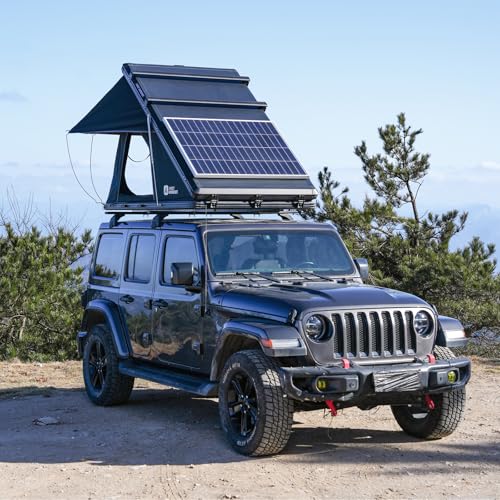
Solar Panel Rooftop Tent Hard Shell

Rooftop Tent Hard Shell Winter Thermal Layer

Overland Vehicle Systems Nomadic 3 Soft Shell
The Strengths Of Each Pick
The first entry in this roundup is a four-season aluminum hard-shell tent from JOYINRUTE, built for campers who chase shoulder seasons. Unlike the pop-up shells that focus on speed, this one layers in winter insulation to handle frost and overnight temperature swings.
You benefit most if you camp at elevation, in early-spring snowmelt zones, or anywhere night temperatures dip below what a thin canvas can handle. For a quick weekend in mild weather, the insulation layer is overkill, but for cold-climate overlanders it’s the headline feature.
Benefits That Matter
- Built-in winter insulation reduces condensation and heat loss on cold nights
- Aluminum hard-shell body shrugs off UV, hail, and trail debris better than fabric
- Aerodynamic profile keeps wind noise and drag down on highway drives
- Four-season rating means fewer seasonal swaps and less storage hassle
- Insulation layer adds thermal buffer without major weight penalty versus comparable hard shells
Things To Consider
- Hard-shell lid adds weight over a soft-shell design, so check your rack’s dynamic rating
- Insulation shines in cold but can trap heat in summer desert conditions
Who It Suits Best
Four-season adventurers who camp in spring, fall, or winter conditions and want one tent that handles all of them.
Skip It When
You mostly camp in summer and want a lighter shell: the JOYINRUTE Aluminum Rooftop Tent Hard Shell is the warmer-weather sibling without the cold-weather insulation cost.
The second JOYINRUTE entry strips the winter layer and focuses on speed and durability. Aircraft-grade aluminum forms the shell, and a hydraulic-assisted pop-up cuts deployment to a fraction of the time a soft-shell takes.
You benefit most if you arrive at camp tired, in the dark, or in weather that’s about to turn. The hydraulic struts do the heavy lifting, so one person can open the tent without wrestling canvas. Compared to Pick 1, this one trades cold-weather insulation for a lighter, faster-deploying package.
What It Does Well
- Hydraulic-assisted pop-up opens in seconds rather than minutes
- Aircraft-grade aluminum resists corrosion across wet and salty environments
- Lighter than four-season variants, so it fits a wider range of roof racks
- Streamlined profile cuts wind drag on long highway stretches
Worth Noting
- No dedicated cold-weather layer, so sub-freezing nights feel draftier
- Aluminum shell conducts heat, so summer sun can warm the interior before you climb in
Made For
Solo travelers and couples who value fast setup, light weight, and a corrosion-resistant shell for varied climates.
Look Elsewhere When
You camp in snow and need thermal insulation: the JOYINRUTE Rooftop Tent Hard Shell with Winter Insulation is the better cold-weather pick.
The HEYFUN Adventurer Pro brings extras that the bare-bones shells skip: an attachable side awning and a built-in LED light strip. These touches turn a hard-shell into a small camp system, especially for overnighters that need shade by day and light by night.
The 2-3 person rating gives you elbow room for a small family or a couple with gear, and the flocked tent floor (a soft, velvety lining that reduces condensation drip and feels warmer underfoot) addresses one of the most common hard-shell complaints. Compared to Pick 2’s no-frills approach, this one adds creature comforts without changing the lightweight aluminum formula.
A Few Strong Suits
- Built-in LED light strip means no fumbling for a headlamp at bedtime
- Attachable side awning extends usable living space without a second structure
- Flocked tent floor softens contact and helps manage condensation
- 2-3 person capacity suits couples, small families, or solo travelers with dogs and gear
Trade Offs
- Awning and LED strip add complexity, so setup takes longer than bare shells
- Wiring for the LED strip may require routing to your vehicle’s power
Best Suited To
Couples and small families who want a self-contained camp setup with lighting and shade included.
Consider Something Else When
You camp solo and want the lightest shell possible: the JOYINRUTE Aluminum Rooftop Tent Hard Shell is the simpler, lighter alternative.
The WildFinder reads like a Jeep forum favorite in hard-shell form: aircraft-grade aluminum across the body, stainless steel hardware, and a polyester canopy that balances breathability with blackout privacy.
You benefit most if you drive a Jeep, SUV, truck, or van and want a tent that fits as many roof profiles as possible. Compared to Pick 1’s cold-weather focus, this one leans into year-round durability and multi-vehicle mounting flexibility. For most weekend campers, the build is more tent than you’ll ever stress, but that’s the point.
The Helpful Details
- Aircraft-grade aluminum shell holds up to sun, salt, and rough trail miles
- Stainless steel pressure lever resists rust at hinge points
- Multi-vehicle compatibility covers Jeep, SUV, truck, and van roof racks
- Blackout polyester canopy improves sleep on bright mornings and adds privacy
Points To Note
- Heavier than minimalist shells, so smaller racks may exceed dynamic load ratings
- Multi-vehicle fit is broad but not universal, so measure your rack before committing
Who Should Grab It
Overlanders with multiple vehicles or those planning to swap the tent between rigs, who want a corrosion-resistant hard shell.
A Better Fit Elsewhere
You camp mostly in deep winter and want insulation baked in: the JOYINRUTE Rooftop Tent Hard Shell with Winter Insulation is the better seasonal match.
The JOYTUTUS is the contrarian of the roundup: a truck-bed tent that sits inside your pickup instead of mounting to a roof rack. It’s a different tool for a different truck owner, and at 5 feet it fits a wide range of mid-size beds.
You benefit most if you own a pickup without a roof rack, or you want a sleeping setup that doesn’t add height to your rig (helpful in low-clearance garages and tree-lined forest roads). Double-layer PU2000mm-coated 210D polyester oxford (a tightly woven fabric with a polyurethane waterproof rating that resists heavy rain) and a separate rainfly handle wet weather, while aluminum poles keep weight low. Compared to the hard-shell tents above, this is lighter on your roof and lighter on your wallet.
Key Advantages
- PU2000mm-rated double-layer fabric handles sustained rain without soak-through
- Aluminum poles cut weight without sacrificing structure
- Truck-bed design keeps your roof rack free for cargo and kayaks
- Lower profile means no garage clearance headaches
Honest Caveats
- Truck-bed only: useless to anyone without a compatible pickup
- Ground-level tent exposure means wildlife and theft awareness matter more than with elevated hard shells
- Less insulation than four-season hard shells in freezing weather
The Right Fit
Pickup owners on a budget who want rain-ready shelter without the cost or weight of a roof-mounted system.
Where Another Pick Suits Better
You don’t own a truck or you want elevated camping: the Overland Vehicle Systems Nomadic 3 Soft Shell is the traditional rooftop answer for families who want height and comfort.
The ARCTWONDER solar-panel variant layers a winter thermal system with a built-in photovoltaic surface. For campers who run fridges, lights, and pumps, integrated solar means one fewer piece of gear to mount and wire.
You benefit most on multi-day trips away from plug-in power, where charging from the cab and a portable panel is annoying. Aluminum reinforcement at the bottom plate, top cover, and four corners keeps the structure rigid under the solar load. Compared to Pick 1’s insulation-only design, this one trades pure cold-weather focus for power-generation versatility.
Real Benefits
- Integrated solar panel charges batteries without a separate portable array
- Winter thermal layer keeps interior warmer on cold nights
- Aluminum reinforcement at base, top, and corners adds structural rigidity
- One-package design reduces roof clutter from separate solar mounts
Soft Spots
- Solar adds cost that only pays off on multi-day, off-grid trips
- Shaded parking and tree cover reduce charging output
Perfect Match For
Off-grid campers running 12V fridges and lights who want charging and shelter in one roof-mounted package.
Swap It Out When
You mostly camp at powered sites or one-night stops: the HEYFUN Adventurer Pro Rooftop Tent Hard Shell offers better creature-comfort features without the solar premium.
The second ARCTWONDER entry strips the solar panel but keeps the thermal layer and full aluminum construction. Where many competitors use plastic at corners and hinges (the failure points that crack after a season or two of UV exposure), this one stays aluminum across the bottom plate, top cover, and all four corners.
You benefit most if you want cold-weather capability without paying for solar you don’t need, or if you’ve watched plastic-cornered tents crack in the sun. Compared to Pick 6, this is the lighter, simpler cold-weather shell.
The Value In It
- Full aluminum corners and hardware resist UV cracking over years of sun exposure
- Winter thermal layer improves comfort in shoulder-season and snow conditions
- Two-person capacity fits couples and solo travelers with gear
- No solar premium keeps the package focused on shelter
A Few Limitations
- Aluminum-everywhere build adds weight over plastic-reinforced competitors
- Two-person rating means tight quarters for a family or two adults plus a dog
Whose Rig It Belongs On
Snow-season campers and desert-sun overlanders who prioritize aluminum durability over weight savings.
Reach For A Different Pick When
You want a feature-loaded family tent: the Overland Vehicle Systems Nomadic 3 Soft Shell offers three-person capacity in a softer, more spacious format.
The Nomadic 3 is the soft-shell counterpoint to the aluminum-heavy list above, and it’s the most family-oriented tent here. A 600D poly-cotton ripstop canvas body (a heavy, abrasion-resistant fabric woven from polyester and cotton) breathes better than polyester and feels quieter in wind.
You benefit most if you camp with a partner and a child, or simply want more interior volume than a hard-shell pop-up. The double-insulated black-diamond-plated base (a textured aluminum plate with raised diamond pattern, prized for toughness) and marine-grade stainless steel hardware (316-grade stainless, the alloy used on boats for its corrosion resistance) signal a long-service-life build. Compared to Pick 7’s compact aluminum shell, this one trades weight and setup speed for living space and breathability.
Where It Delivers
- Three-person capacity handles couples, kids, and dogs without cramping
- 600D poly-cotton ripstop canvas is quieter and more breathable than polyester
- Marine-grade stainless steel hardware resists rust in coastal environments
- Soft-shell format folds flatter than hard-shell tents for storage
- Double-insulated base reduces cold transfer from the vehicle roof
Practical Considerations
- Soft-shell setup takes longer than hydraulic hard-shell pop-ups
- Canvas adds weight over aluminum hard-shell alternatives
- Rainfly performance depends on proper tensioning, so first setups need patience
Who Will Love This
Families and couples who camp multiple nights at a time and value interior space, breathability, and quiet nights.
Not Your Match When
You want one-minute setup from your vehicle: the JOYINRUTE Aluminum Rooftop Tent Hard Shell pops up faster and fits a solo traveler’s rhythm better.
What To Weigh Before Picking A Rooftop Tent
Weight changes everything about a rooftop tent. A heavy tent eats into your payload, raises your vehicle’s center of gravity, and may exceed your roof rack’s dynamic load rating (the maximum weight the rack can carry while the vehicle is moving, usually lower than the static rating). Check the rack manufacturer specs, not just the tent’s listed weight, before committing. A 130-pound tent on a 150-pound dynamic-rated rack leaves little margin for two adults, bedding, and a winter layer.
Hard-shell versus soft-shell is the next fork. Hard shells pop up fast, shed snow and debris, and store flatter, but they cost more per cubic foot of sleeping space and trap more condensation. Soft shells breathe better, sleep more people for the same footprint, and cost less, but they take longer to deploy and need careful rainfly tension.
Mounting compatibility quietly decides whether a tent works on your rig at all. Crossbar spread (the distance between your rack’s front-to-back bars), dynamic weight rating, and whether your rack uses t-slots (channels on the bar that accept mounting hardware) or clamp mounts all affect fit. Measure twice, and confirm the tent’s mounting hardware matches your rack before you order. The tents above list Jeep, SUV, truck, and van compatibility, but fitment varies by model year.
Season matters more than most shoppers expect. A three-season tent in shoulder-season conditions means cold mornings and damp bedding. A four-season tent in desert summer means a heat trap. Match the tent’s thermal layer, fabric weight, and ventilation to your most common camping season, not your dream trip.
Key Considerations Across These Picks
Pitfalls Shoppers Hit
The most common mistake is choosing a tent heavier than the rack can safely handle. Dynamic ratings are stricter than static ones, and a fully loaded tent with two sleepers and bedding adds up faster than expected. Another trap is ignoring crossbar spread: many tents assume a specific distance between bars, and racks outside that range either need adapter brackets or simply won’t mount.
Why Top Tier Costs More
Higher-end tents earn their price through aluminum-everywhere construction, integrated features like solar or LED strips, and marine-grade hardware that resists corrosion. For weekend campers in mild weather, those upgrades may stay dormant. For full-time overlanders, four-season campers, and coastal drivers, the upgrade pays back in years of service instead of seasons.