Kneeling in damp soil for an hour to drop in a hundred tulip bulbs is the kind of chore that makes a gardener rethink their spring plans. Long handle bulb planters fix that problem by letting you work from a standing position, pushing the tool in with your foot and twisting out a clean soil core without ever bending past your knees. The list below mixes dedicated long-handle designs with shorter dibbers and multi-tools that handle related jobs, so you can match the right tool to your bed size, soil type, and how much planting you actually do each season.
The Choices Worth Comparing

Berry&Bird Hand Dibber Wood Handle Seed Tool
Sukiise Hand Dibber Stainless Steel Bulb Planter

Eadwiella Dibber with 5 Inch Measurements

FLORA GUARD Steel Seed Planter with Wood Handle

Haliaeetus Bulb Planter 6 Inch Depth Mark

Haliaeetus Bulb Planter 4 Inch Depth Mark

Haliaeetus 37 Inch Long Handle Bulb Planter

Garden Guru Eco Bulb Planter Recycled Steel
ProPlugger 5-IN-1 Lawn and Garden Tool

TABOR Tools D123A 3-Piece Bulb Planter Set
Meet The Standout Selections
The Berry&Bird Hand Dibber is built for gardeners who would rather crouch at the edge of a seed tray than wrestle with a long-handle tool in a tight bed. A wood handle sits above a pointed metal tip, and the source notes a 6-inch measuring scale etched into the shaft so you can drop seeds or small transplants to a consistent depth without guessing.
You push the tip straight into worked soil, twist, and lift. A dibber like this tends to shine in vegetable beds, herb patches, and small annual borders where spacing matters more than raw planting speed. For a large bulb border, a longer tool will save your knees faster, but for fine seed work, the precision here is hard to beat.
Where It Helps
- Pointed tip creates clean, consistent holes for small seeds and seedlings
- Built-in measuring scale supports uniform sowing depth across a tray or bed
- Compact size stores easily in a potting shed drawer or apron pocket
- Wood handle gives a warmer grip than bare metal in cool spring weather
Things To Consider
- Short length means hand and knee work for any sizeable planting run
- Not designed for the wider cores that mature tulip or daffodil bulbs need
Made For
Seed starters and herb gardeners who want uniform sowing depth in trays and small beds.
Consider Something Else When
You plant dozens of full-size bulbs each fall, where the Haliaeetus 37-inch long handle planter saves significant kneeling time.
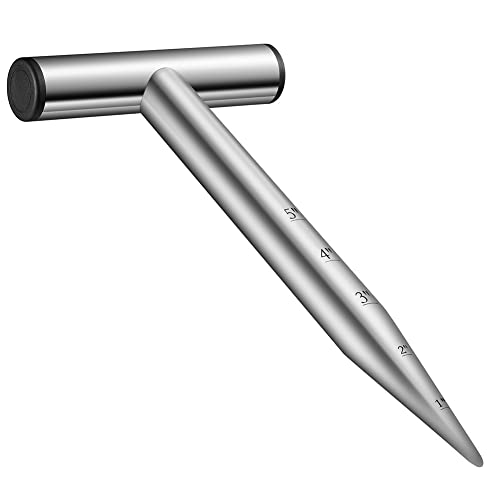
The Sukiise Hand Dibber runs through a stainless steel body with a roughly 4.6 by 10 inch footprint, and the brand positions it as a multi-hole tool for bulbs, plant labels, and self-watering stakes. The all-metal build shrugs off the kind of damp storage that eventually roughs up wood-handled tools.
Where the Berry&Bird dibber earlier leans toward seed work, this one spreads its purpose a little wider. You can use it for small bulbs, for sinking plant labels next to perennials, and for setting self-watering spikes into containers. The trade-off is the absence of soft grip material, so longer sessions may leave your hand wishing for a cushioned handle.
What Stands Out
- All stainless steel construction resists rust in damp sheds and outdoor storage
- Multi-purpose design covers bulbs, labels, and self-watering stake placement
- Light 4 ounce weight keeps arm fatigue low during repetitive tasks
Worth Noting
- Hard metal handle lacks cushioning during extended planting sessions
- Limited depth control compared to marked dibbers like the Eadwiella
Right Fit For
Container gardeners and label-tidiers who want one small tool for several around-the-garden jobs.
Look Elsewhere When
You mainly need depth consistency for tulips and daffodils, where the Haliaeetus 6-inch depth mark planter offers clearer measurement.
The Eadwiella Dibber folds a 5-inch measuring scale into a hand-held planting tool, and the brand calls out a 4-inch bulb planting sweet spot. You push and twist, and the etched scale lets you plant to a target depth without a separate ruler.
In real use, the depth scale pays off most when you are sowing rows of seeds at uniform spacing, or sinking a long drift of small bulbs across a border. The catch is that 5 inches tops out below the depth that larger daffodils prefer, so for deep bulbs you will still need a longer tool. Tilled, loose soil makes a noticeable difference here, since compacted ground fights the narrow point.
Practical Advantages
- Etched 5-inch scale removes guesswork from sowing and small bulb depth
- Hand-held size suits tight spaces, raised beds, and seed tray work
- Twist motion works well in previously loosened garden soil
Trade Offs
- 5-inch maximum depth limits use for larger bulbs that prefer deeper planting
- Narrow tip struggles in compacted or clay-heavy soil without prior tilling
Best Suited To
Home gardeners with prepared beds who want measured depth for seeds and small bulbs.
Reach For A Different Pick When
Your soil is heavy clay or your bulbs need deeper planting, where the Haliaeetus 37-inch planter handles both standing work and bigger cores.
The FLORA GUARD dibber is built around a thickened stainless steel spike paired with a wood handle, and the brand specifically markets it as resistant to bending when it meets hard obstacles underground. Depth markings on the shaft help you plant at consistent levels for better root development.
Where the Eadwiella excels in soft, prepared soil, the FLORA GUARD leans into rougher ground. You feel that extra steel thickness the moment you lean into a compacted corner of the bed, and the wood handle keeps the grip from getting slippery. The honest read is that for gardeners with clay patches or rocky edges, this one is less likely to deform over time.
Why It Works Well
- Thickened stainless steel spike resists bending in tough soil conditions
- Depth markings support consistent planting for seedlings and bulbs
- Wood handle offers a secure, warm grip during cool weather work
Points To Note
- Heavier build adds weight compared to lighter all-steel dibbers
- Still requires kneeling or crouching during use
Whose Shelf It Belongs On
Gardeners dealing with compacted beds, clay soil, or rocky edges who want a dibber that holds its shape.
A Better Fit Elsewhere
You want to stay standing during planting, where the Haliaeetus 37-inch long handle planter changes the whole working posture.
The Haliaeetus Bulb Planter carries a 6-inch depth marking on a hand-held body, and the brand claims a roughly tenfold speed advantage over a regular shovel for bulb planting. You push down, twist, lift out the core, drop the bulb, and backfill.
This lands in a useful middle ground. The 6-inch depth suits tulips and most daffodils better than the shorter 4-inch sibling reviewed just below, and the twist motion gives a cleaner core than a trowel. Soil moisture matters here: very dry ground resists the cutting edge, and a pre-watered bed will reward you with cleaner pulls. Compared to the FLORA GUARD’s strength focus, this one leans toward speed and depth precision.
What Works In Its Favor
- 6-inch depth mark covers typical tulip and daffodil planting requirements
- Twist-and-lift motion pulls a clean soil core with minimal effort
- Faster planting pace than a trowel for medium bulb runs
Honest Caveats
- Still a hand tool, so larger plantings mean prolonged kneeling
- Performance drops sharply in dry, unwatered soil
Who Should Grab It
Mid-scale bulb planters who want depth precision without moving up to a long-handle tool.
Swap It Out When
You plant hundreds of bulbs in a single session, where the Haliaeetus 37-inch long handle planter keeps you on your feet.
The 4-inch depth mark Haliaeetus planter is the shallower sibling of the previous pick, and it pairs naturally with smaller bulbs like crocuses, scillas, and snowdrops. The 1-to-4 inch etched scale makes shallow targets easy to hit without overshooting.
You will find this most useful in a rock garden, a lawn naturalizing project, or a front border where smaller bulbs dominate. The narrower depth range keeps the soil core smaller and easier to drop back in. The trade-off shows up the moment you want to plant larger daffodils, since 4 inches is at the shallow edge of their preferred depth range.
Notable Gains
- 4-inch scale suits crocus, scilla, and other small flowering bulbs
- Smaller core volume makes refilling fast and tidy
- Hand-held size handles detail work in tight garden pockets
Softer Spots
- Shallow limit excludes larger daffodil and tulip classes
Built With In Mind
Naturalizing gardeners and rock bed designers focused on small bulbs and shallow planting.
Not Your Match When
Your main bulbs are tulips or standard daffodils, which call for the 6-inch mark version reviewed just above.
The Haliaeetus 37-inch long handle planter is the only tool in this roundup that lets you work fully upright. You step on the top crossbar, push the stainless steel cylinder into the ground, twist, and pull up a soil core without bending past your knees.
The brand recommends pre-watering dry soil for cleaner cores, which lines up with what experienced bulb planters already know. For a fall tulip drop of 100 or more bulbs, this kind of tool pays for itself in saved knees alone. Where the 4-inch and 6-inch hand planters reviewed above limit how long you can comfortably work, this one opens up multi-hour sessions.
Positive Points
- 37-inch shaft removes kneeling and bending from bulb planting
- Stainless steel cylinder cuts clean cores with a step-and-twist motion
- Well suited to large drifts of tulips, daffodils, and bedding plants
A Few Limitations
- Long shaft can feel unwieldy in tight raised beds or narrow paths
- Pre-watering dry soil adds a step before planting begins
- Storage requires vertical space in a shed or garage
Feature Snapshot
Who Will Love This
Backyard gardeners with large bulb plantings or anyone whose knees and back push back against hours of crouching.
Where A Sibling Pick Shines
You mostly work in tight raised beds, where the FLORA GUARD hand dibber gives finer control in compact spaces.
The Garden Guru Eco Bulb Planter uses a 100 percent recycled stainless steel head and an FSC certified wood ergonomic handle, with a depth marker along the shaft for consistent planting. It is aimed at tulips, daffodils, and dahlias.
For gardeners who weigh material sourcing as part of a tool decision, this one tells a clear story. The polished steel head resists rust through damp fall storage, and the carved wood handle sits comfortably during a long planting run. The shape resembles a short, stout trowel rather than a cylinder, so the cores you pull look different from the Haliaeetus long handle model. Performance in rocky soil can vary because the cutting edge is shorter.
Everyday Perks
- Recycled stainless steel head with rust resistant finish
- FSC certified wood handle offers a comfortable, ergonomic grip
- Depth marker supports consistent placement across mixed bulb types
Points To Keep In Mind
- Short profile keeps you kneeling during use
- Rocker-style head behaves differently than twist cylinder planters in rocky ground
The Right Fit
Eco-conscious gardeners who value recycled steel and certified wood in a comfortable hand tool.
Where Another Pick Suits Better
You want to plant without kneeling at all, which is exactly what the Haliaeetus 37-inch planter is built for.
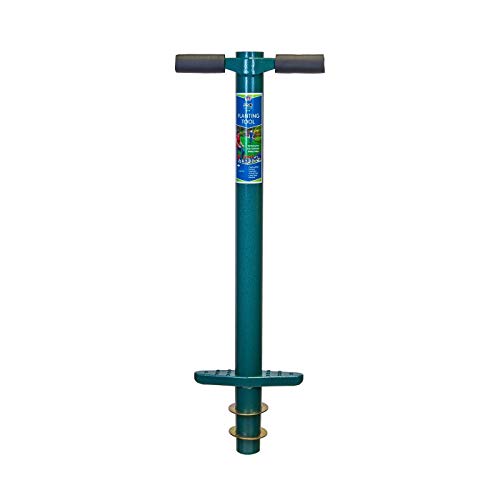
The ProPlugger 5-IN-1 is a long-handle planting tube that doubles as a bulb planter, sod plugger, weeder for deep taproot weeds, annual planter, and a soil test tool. The cylinder cuts a clean core you can drop directly into the bed, which makes lawn and border work feel like one connected workflow.
Where most picks on this list serve a single job, this one pulls its weight across the calendar. You can plant spring bulbs in fall, lift creeping grass plugs in summer, and pull dandelions in between. The brand notes it is not recommended for St. Augustine grass, which matters for southern lawns. For the gardener tired of a shed full of single-use tools, the consolidation alone is a real benefit.
The Good Stuff
- Five distinct functions replace several single-purpose tools in the shed
- Long-handle design saves knees and back across multiple garden jobs
- Cuts clean cores for transplanting, plugging, and bulb planting
Practical Considerations
- Not recommended for St. Augustine grass lawns
- Long shaft can feel heavy for gardeners with limited upper body strength
Feature Snapshot
Perfect Match For
Year-round gardeners who want one tool to handle bulbs, weeds, plugs, and seasonal planting without swapping equipment.
Skip It When
You only need a small hand dibber for seed trays, where the Berry&Bird tool is more proportionate to the job.
The TABOR Tools D123A set bundles a spring-loaded bulb planter with a depth marker and auto soil release, plus a metal dibber and a hand transplanter. The specially shaped handles are built for fatigue-free work across a full planting session.
This is the most complete workflow in the roundup. The auto-release handle is the headline feature, since it dumps the soil core back into the hole without a second hand on the tool. You also get a dibber for seed and a transplanter for seedlings in the same kit, so a new gardener can plant an entire border without buying more. The trade-off is the smaller tool sizes, which keep you kneeling rather than standing.
A Few Strong Suits
- Three piece set covers bulbs, seeds, and seedlings in one kit
- Spring-loaded auto release drops the soil core without manual emptying
- Ergonomic handle shapes support longer, less tiring planting sessions
Possible Compromises
- All hand tools, so larger plantings still mean kneeling
- Smaller tool sizes suit detail work more than big drifts
Who It Suits Best
New gardeners starting a full bulb and seed bed who want one kit rather than separate purchases.
Another Choice May Suit
You mostly plant large drifts of mature bulbs, where the Haliaeetus 37-inch long handle planter covers that workload faster.
What To Weigh Before Choosing a Long Handle Bulb Planter
Handle Length and Working Posture
The single biggest decision is whether you want to stand or kneel. Tools like the Haliaeetus 37-inch planter and the ProPlugger 5-IN-1 keep you upright and use your body weight to drive the cylinder into the ground. Hand dibbers and shorter bulb planters like the Berry&Bird or the TABOR Tools set keep the work close to the soil, which gives finer control but costs you in knee and lower back comfort during long sessions. Your bed size, your bulb count, and how your joints feel the next morning all push that choice in different directions.
Depth Range and Bulb Type
Different bulbs want different planting depths. Tulips and most daffodils prefer roughly 6 inches of cover, while crocus, scilla, and snowdrops are happy at 3 to 4 inches. The Haliaeetus 6-inch and 4-inch planters are built around those exact ranges, and the ProPlugger cylinder supports similar depth with a clear core. If your beds mix small naturalizing bulbs with larger showy types, a tool with a wider depth scale or a second matching tool covers the gap.
Soil Type and Moisture
Clay, compacted, or rocky soil changes how a planter behaves. The FLORA GUARD dibber’s thickened spike handles resistance well, and the Haliaeetus long handle planter’s twist motion works best after a watering pass. Dry summer-hard ground fights any hand planter, and pre-soaking the bed the night before is the single biggest upgrade to performance for both short and long handle models.
Smart Choices Across These Picks
Common Shopping Slip Ups
First-time buyers often grab the cheapest dibber and expect it to plant full-size tulip bulbs, only to find the core is too narrow or the depth too shallow. The honest move is to match the tool to your largest bulb first, then accept that smaller bulbs are easy with anything. Another slip is buying a long-handle tool for a narrow raised bed, where the shaft bumps the sides and slows you down. Measure your typical bed width before choosing a long handle planter.
What The Higher Tier Buys
Stepping up to a long-handle or multi-function tool adds standing posture, faster core cutting, and a wider depth range. The price difference is real, but so is the time saved across a fall planting weekend, and the reduction in knee and back strain tends to matter more with every passing year. For gardeners who plant bulbs every season rather than once, the upgrade usually pays for itself in comfort alone.
Frequently Asked Questions
How deep should most flower bulbs be planted?
A reliable rule is to plant bulbs at roughly two to three times their own height in soil. Tulips and most daffodils land around 6 inches deep, while crocus and similar small bulbs sit closer to 3 to 4 inches.
Do long handle bulb planters actually work in clay soil?
They can, but performance depends on soil moisture. Pre-watering the bed the night before softens the surface, and tools with a sharpened cutting edge like the Haliaeetus cylinder pull cleaner cores. In heavily compacted clay without pre-watering, even a strong long handle tool can struggle.
Can a hand dibber replace a bulb planter?
For small bulbs and seed starting, yes. A hand dibber like the Berry&Bird or Eadwiella handles crocus, scilla, and most seed work comfortably. For larger bulbs and high-volume planting, a cylinder-style bulb planter pulls cleaner cores faster and with less effort.
Is a 5-in-1 tool worth it over a single-purpose planter?
A multi-function tool like the ProPlugger pays off when you actually use the extra functions, including weeding, sod plugging, and soil testing. If you only plant bulbs, a dedicated planter keeps the design simpler and the price lower.
How do I clean and store a stainless steel bulb planter?
Rinse the cylinder or spike after each use, dry it off, and store it indoors to extend finish life. A light coat of oil on the cutting edge once a season helps prevent surface rust, especially in humid sheds or coastal climates.
Wrap Up
The right long handle bulb planter comes down to how many bulbs you plant, how your beds are laid out, and how much kneeling your joints can take. Short hand dibbers and the TABOR Tools set shine in detail work and small beds, while standing tools like the Haliaeetus 37-inch planter and the ProPlugger 5-IN-1 turn a fall bulb drop from a chore into a quick standing pass. Match the tool to your soil, your bulbs, and your body, and the planting season becomes something to look forward to rather than recover from.