Reaching across wide hedges and lawn borders without straining your back is the small daily win most gardeners underestimate. Long handled tools turn crouching, awkward bending, and overstretched arms into upright, controlled work that actually feels manageable. The trick is matching the right tool to the kind of cutting you do most, because a cordless pole trimmer solves a very different problem than a classic pair of long handled edging shears. Below, you will find nine picks that cover grass trimming, hedge shaping, and overhead reach, each with an honest read on what it does well and where it falls short.
An Overview Of The Picks

WORX 20V Cordless Hedge Trimmer 22″ WG261

WORX 20V Cordless Grass Shear & Shrub Trimmer WG801

Miracle-Gro 21″ Hedge Shears Carbon Steel
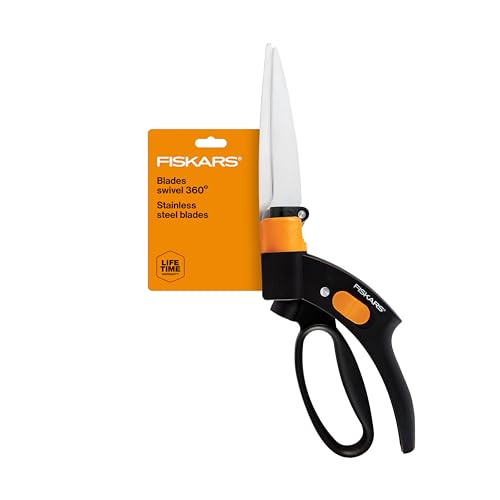
Fiskars 5″ Shear Ease Grass Shears

Spear & Jackson 4870RS Razorsharp Edging Shears

WORX 20V Cordless Hedge Trimmer 22″ WG261.9

WORX 20V Cordless Grass Shear & Shrub Trimmer WG801.9
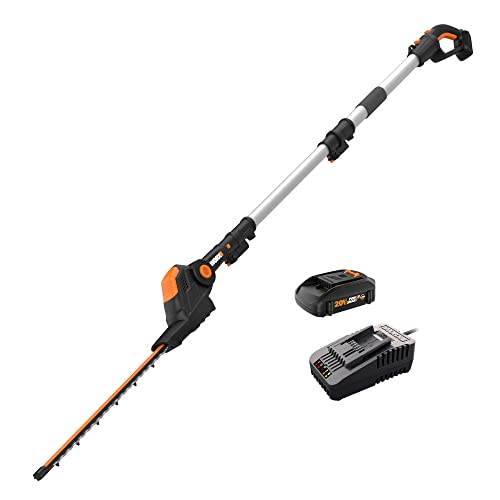
WORX 20V Pole Hedge Trimmer 20″ WG252

WORX 20V Cordless Shear with Extension Pole WG801.4
What Each Pick Brings To The Table
For most suburban yards with a few rows of privet, boxwood, or fast-growing ornamentals, the WORX WG261 lands in the comfortable middle of the cordless hedge trimmer world. The 22-inch dual-action blade (two blades moving in opposite directions, which cuts vibration and keeps cuts cleaner) handles anything from soft new growth to slightly woodier stems without bogging down. Compared with the compact WG801 covered next, this model is heavier but reaches further, so the trade-off is between portability and productivity.
At roughly 5.5 pounds and with a D-grip front handle, you can rotate it to vertical or horizontal positions without fighting wrist fatigue. That matters when you are cutting hedge sides two feet tall, because constant repositioning is where cheaper trimmers punish your forearms. For gardeners who want one cordless tool that covers most hedge shapes without breaking the bank, this is a sensible all-rounder.
Advantages To Know
- Dual-action blade reduces vibration and gives cleaner cuts on tender growth.
- D-grip front handle allows comfortable vertical and horizontal trimming angles.
- 22-inch reach covers medium hedges with fewer passes, saving time.
- Lightweight enough at about 5.5 lbs that overhead shaping remains manageable.
- Shares the WORX 20V platform with other tools in the line.
Worth Noting
- Not designed for thick woody branches, so heavy pruning may stall the motor.
- Battery and charger may be sold separately depending on the listing.
- Owners commonly report that keeping the blades wiped and lightly oiled extends cutting life noticeably.
Right Fit For
Homeowners with medium hedges, mixed ornamental shrubs, and a typical suburban lot who want cordless convenience without paying for pro-tier reach.
Where Another Pick Suits Better
Anyone trimming mainly tall privacy hedges six feet and up should look at the WORX WG252 pole trimmer instead, since it adds the overhead reach this model lacks.
The WG801 is the kind of tool you keep by the back door for the kind of yard work you keep putting off. At roughly two pounds with the battery, it swaps between a 4-inch grass blade and an 8-inch shrub blade so you can clean up lawn edges along a path, then tidy up a low boxwood, without firing up a full hedge trimmer. If the WG261 reviewed above is your weekend hedge machine, this is your Wednesday catch-up tool.
The soft-grip over-mold handle keeps it comfortable for users who struggle with heavier garden tools, including anyone with arthritis or limited grip strength. For a small city garden or a tidy townhouse patio, it covers the kind of micro-edging that string trimmers leave ragged. You will not reshape a six-foot hedge with it, but that is not the job it was designed for.
What Pays Off
- Two-in-one design swaps from grass blade to shrub blade in seconds.
- Lightweight at around 2 lbs, which lowers fatigue for casual sessions.
- Soft-grip handle makes it approachable for users with limited hand strength.
- Reaches spots a full-size trimmer cannot, like tight corners and narrow bed edges.
Trade Offs
- Small blades mean small jobs, so do not expect to clear a large hedge row.
- Runtime depends on battery size, and the smaller batteries sold in kits run shorter.
- For purely upright edging, the Spear & Jackson long handled shears give more leverage without bending.
Who Will Love This
Gardeners with small yards, container plantings, or anyone who wants a grab-and-go shear for the kind of midweek touch-ups that pile up.
Skip It When
If your main goal is upright lawn edging along long borders, the Spear & Jackson 4870RS long handled edging shears will save your knees more reliably.
There is a quiet case for going old-school with hedge shears, especially when shaping ornamental shrubs where a single stray blade stroke ruins the look. The Miracle-Gro 21-inch model uses carbon steel blades, a material harder than standard stainless, so it holds an edge longer and gives that satisfying clean snap on green wood. For gardeners who want silence, no batteries, and total control over the angle of every cut, this is a refreshing change from buzzing motors.
The trade-off is obvious: this is hand-powered work, so a long session will tire your forearms. The comfort grip handles help, and the lightweight design keeps fatigue down compared with heavier forged models. Where it shines is on topiary work, shaping a single specimen shrub, or maintaining a low decorative hedge where precision beats speed.
Bright Spots
- Carbon steel blades stay sharp through many trimming sessions with basic care.
- 21-inch reach covers decent hedge spans without overextending.
- Lightweight design makes overhead shaping less punishing than heavier forged shears.
- Comfort grip handles absorb some of the snap during repetitive cuts.
Soft Spots
- Pure manual effort, so large hedges will take noticeably longer than with any cordless trimmer.
- Carbon steel can develop surface rust if stored damp, so a wipe-down after use is wise.
- Not suited for branches much thicker than a pencil, where a powered tool wins.
Feature Snapshot
Made For
Gardeners focused on shaping ornamental hedges and decorative shrubs where quiet, precise cuts matter more than speed.
Look Elsewhere When
Anyone facing long, uniform hedge runs should consider the WORX WG261 cordless trimmer, which covers the same job at a fraction of the elbow grease.
The Fiskars Shear Ease grass shears solve a problem most string trimmers create: ragged grass left along a flower bed or walkway after the mower passes. The standout feature is the 360-degree swiveling blade, which lets you angle the cut without twisting your wrist into a knot. For edging along curved borders, it is hard to beat the control.
Where this tool differs from the rest of the list is the short-blade, hand-held format. You are on your knees or crouched over the bed, which is exactly why it pairs so well with the long handled edging shears later in the roundup. Use this for tight detail work along a path, then switch to the Spear & Jackson model for upright edging along a long border.
What Helps Most
- Swiveling blade angle lets you cut vertically or horizontally without awkward wrist positions.
- Shear Ease mechanism, a self-sharpening design that keeps the cutting action smooth over time.
- Non-slip grip handle gives secure control even with damp hands.
- Compact size stores easily in a small shed or garage hook.
Honest Caveats
- Short blades and no pole mean you will be crouched or kneeling for every cut.
- Not designed for hedge work, so it complements rather than replaces longer tools.
- Manual action, so extensive lawn edges will take a steady pace to complete.
Best Suited To
Gardeners who want tidy lawn edges along curved flower beds without firing up a string trimmer for ten minutes of detail work.
Consider Something Else When
Anyone needing upright, knee-friendly lawn edging across long straight borders will get more done with the Spear & Jackson 4870RS long handled edging shears.
If the article had to crown a true long handled lawn shear in the strictest sense, this is it. The Spear & Jackson 4870RS has long wooden handles designed for upright use, so you cut along a lawn edge or border while standing, which protects your knees and lower back. The 9-inch C50 carbon steel blades are hardened and tempered for durability, and the PTFE coating (a non-stick fluoropolymer layer) helps the blades glide through grass without gumming up.
Where it differs from the cordless picks above is the manual nature of the work. You supply the squeezing force, but the long handles give plenty of leverage so each cut lands cleanly. For gardeners with straight lawn edges along a driveway or path, the time saved on posture alone makes this tool a quiet favorite. Note that some listings ship from international warehouses, so warranty terms may differ from domestic versions.
The Upside
- Long handles allow upright cutting that protects knees and lower back.
- PTFE-coated carbon steel blades resist rust and slice through grass cleanly.
- Hardened and tempered blade treatment improves long-term edge retention.
- Classic design needs no batteries, fuel, or charging routines.
Some Limits To Know
- Manual effort means a long border will take a steady rhythm rather than a quick motorized pass.
- Long handles require more storage space than compact hand shears.
- International shipping on some listings may affect warranty coverage, so check terms before purchase.
Who Should Grab It
Gardeners with long, straight lawn edges along paths or driveways who want a quiet, no-fuss tool that keeps them upright while they work.
A Better Fit Elsewhere
Anyone trimming mostly tall hedges rather than lawn edges will get more value from the WORX WG261 cordless hedge trimmer.
The WG261.9 is essentially the same tool as the WG261 reviewed first, with one important difference: this is the battery-and-charger configuration rather than the bare tool. For shoppers who do not yet own any WORX 20V batteries, that distinction matters, because the bundle approach means you can unbox, charge, and trim without hunting down compatible batteries separately.
Beyond the battery inclusion, the trimming experience mirrors the WG261: 22-inch dual-action blade, D-grip handle, and roughly 5.5 pounds of weight to manage. If you already run other WORX 20V gear, the bare-tool WG261 makes more sense, but for first-time buyers, this kit version keeps everything simple.
Everyday Advantages
- Battery and charger included, removing guesswork for new WORX users.
- Same dual-action blade and D-grip as the original WG261, so trimming performance is consistent.
- Compatible with the wider WORX 20V battery ecosystem for future tool expansion.
Points To Keep In Mind
- Costs more upfront than the bare tool if you already own WORX batteries.
- Still limited on thick woody growth, so manage expectations on older hedges.
- Storage of a second battery adds small bulk to your shed or garage.
Quick Facts
Perfect Match For
First-time WORX buyers who want the trimmer, battery, and charger in a single purchase and plan to expand into more 20V tools later.
Reach For A Different Pick When
Anyone already invested in WORX 20V batteries will save money with the bare-tool WG261 covered earlier.
The WG801.9 is the tool-only sibling of the WG801 reviewed earlier. The trimming mechanics are identical: the same 4-inch grass blade, the same 8-inch shrub blade, and the same 2-pound operating weight that makes it disappear in your hand. What changes is the box, because this version ships without battery or charger, which is the whole point.
For households already running a couple of WORX 20V tools, this is the cheaper path to owning a compact trimmer. Drop in a battery you already own and you have an instant detailing tool for lawn edges and small shrubs. For shoppers without any WORX gear yet, the original WG801 bundle saves the hassle.
Where It Excels
- Tool-only pricing keeps the entry cost down for existing WORX households.
- Same lightweight 2-lb feel makes touch-up work quick and painless.
- Swappable blades handle both grass edging and small shrub shaping.
Worth Bearing In Mind
- Requires a separate WORX 20V battery and charger, so factor that in if you are new to the brand.
- Limited reach on tall hedges, where the WG252 pole trimmer covers ground better.
Built With In Mind
Existing WORX 20V households who want a compact shear without paying for a battery they already own.
Swap It Out When
Brand-new shoppers without any WORX batteries should pick the original WG801 kit version to avoid a separate battery purchase.
The WG252 is the tool that solves the awkward ladder problem. With a telescoping pole offering roughly 12 feet of reach and a 10-position adjustable head, it tackles tall hedges, deep hedge tops, and the sides of tall shrubs without anyone climbing anything. Compared with the WG261 covered earlier, the trade-off is a shorter 20-inch blade but vastly better overhead access, so the right pick depends on which job you face more often.
For gardeners with privacy hedges along a fence line or a tall hedge facing the street, this model pays for itself the first time you avoid a ladder. The 2-in-1 attachment-capable design also means the head may accept other WORX attachments depending on the version you choose, adding flexibility over time.
Strong Points
- Up to 12 feet of reach handles tall hedges without ladders or step stools.
- 10-position adjustable head angles the cut for top, side, and overhead work.
- Same 20V battery platform as the rest of the WORX cordless line.
- Attachment-capable design may accept other WORX heads for added versatility.
Practical Considerations
- Longer reach adds weight at the front, so arms can tire during extended overhead sessions.
- Shorter 20-inch blade means more passes on wide hedge tops than the WG261.
- Best results assume a fully charged battery, since high-reach work drains power faster.
Technical Highlights
Whose Shelf It Belongs On
Homeowners with tall privacy hedges, deep hedge tops, or any situation where ladders used to be the only option.
Where A Sibling Pick Shines
For low-to-medium hedges where overhead reach is not needed, the WG261 gives a wider blade and lighter handling.
The WG801.4 takes the compact WG801 platform and adds an extension pole, which transforms how it gets used. Instead of crouching to edge along a garden bed, you stand upright and reach down with the shear head at ground level. That sounds modest until your back and knees remind you how much they appreciate the change.
The 4-inch grass blade and 8-inch shrub blade stay the same as the original WG801, so trimming quality is unchanged. What you gain is posture, and what you trade is the slightly heavier feel of an extended tool at arm’s length. For gardeners who want compact shear precision without kneeling, this is the thoughtful compromise.
Reasons It Performs
- Extension pole lets you edge lawns and detail beds while standing upright.
- Same dual-blade design covers grass and small shrubs with one tool.
- Stays light enough at the head to control cuts without arm strain.
- Shares batteries with other WORX 20V tools.
Smaller Drawbacks
- Extension pole adds length that may feel awkward in very tight corners.
- Not designed for tall hedges, where the WG252 pole trimmer reaches further.
Feature Card
Right Fit For
Gardeners who want the precision of the WG801 but cannot or prefer not to kneel for every edging pass.
Where Another Pick Suits Better
Anyone cutting tall hedges overhead will still get more reach from the WORX WG252 pole hedge trimmer.
Choosing long handled lawn shears for the way you actually garden
Picking the right tool starts with honesty about what you cut most. Cordless hedge trimmers like the WORX WG261 shine when you face long runs of mid-height shrubs where speed matters. Long handled manual edging shears, like the Spear & Jackson 4870RS, win for upright lawn edging along paths where posture matters more than pace. Pole trimmers, such as the WORX WG252, solve the ladder problem on tall hedges, while compact cordless shears, like the WORX WG801, handle the touch-up work between bigger sessions.
Reach and handle length
Long handles exist to keep you upright and to extend the cutting surface into places you cannot easily get to. For edging shears, handle length determines whether you stand or kneel, and longer generally means better leverage. For powered pole trimmers, the stated reach includes the user’s arm span, so a 12-foot rating translates to roughly 12 feet from your hands to the blade. Shorter gardeners, in our view, benefit disproportionately from that extra pole length.
Blade type and cutting action
Dual-action blades move in opposite directions and reduce vibration, which matters on longer sessions. Single-action blades cost less but transmit more shake to your wrists. Manual carbon steel blades hold a sharper edge but ask for a quick wipe-down after use, since moisture on carbon steel encourages surface rust. PTFE coatings help grass slide past without sticking, which is genuinely useful during spring growth.
Power source and battery fit
Cordless models run on 20V platforms here, and the WORX ecosystem means batteries cross over between tools. If you already own a WORX battery, the tool-only SKUs (the .9 or .4 suffixes) save real money. For first-time shoppers, bundled kits include the charger you need and skip the guesswork. Manual tools, of course, sidestep the whole battery question, which is part of their quiet appeal.
Weight and storage
A two-pound shear lives in a kitchen drawer if you let it, while a pole trimmer needs wall space in the garage. Storage weight and footprint matter more than people expect, because a tool you cannot easily grab is a tool you stop using. Match the tool’s footprint to the space you actually have, not the space you wish you had.
Smart Picks And Honest Trade-Offs
Mistakes Worth Dodging
Picking a cordless trimmer without checking battery compatibility is a classic slip, because two SKUs that look identical can ship with or without a battery. Confirm the suffix and the listing before checkout. Buying a short-handled shear expecting it to solve knee pain is another common trap, since only true long handled models keep you upright. Finally, matching blade size to the wrong hedge size wastes time: a 20-inch blade on a six-foot-tall hedge means endless passes, while a 22-inch blade on a tidy topiary is overkill.
When Paying More Pays Off
Premium picks in this category tend to add reach, better blade coatings, or improved vibration control. For tall hedges, the upgrade to a telescoping pole trimmer is worth it the first time you avoid a ladder. For gardeners who trim weekly through summer, dual-action blades and ergonomic grips earn their keep in reduced fatigue. For anyone with a serious ornamental hedge, the carbon steel manual shears hold an edge far longer than entry-level stamped steel, which quietly saves time across a season.
Frequently Asked Questions
What is the difference between long handled lawn shears and hedge shears?
Long handled lawn shears are designed primarily for edging grass along borders and paths, keeping you upright while you cut. Hedge shears cover broader shrubs and bushes with wider, heavier blades suited to woody growth.
Can cordless hedge trimmers handle thick branches?
Most cordless models handle soft new growth and twigs up to about a pencil’s thickness comfortably. Anything thicker usually requires a dedicated pruning saw or loppers.
How long does a 20V battery typically last on these tools?
Battery life varies with workload, blade size, and the density of growth. Most gardeners get 30 to 60 minutes of intermittent trimming per charge, though heavy hedge work drains faster than light touch-ups.
Are manual hedge shears better than cordless for shaping?
For topiary and detailed ornamental work, manual shears give finer control and silent operation. For long, uniform hedge runs, cordless trimmers cover ground much faster with less arm fatigue.
How should I store long handled tools to prevent rust?
Wipe blades dry after use, store indoors or under cover, and a light oil coating on carbon steel blades helps prevent surface rust during off-season storage.
The Takeaway
Long handled lawn shears and their powered cousins solve different problems, and the right pick depends on whether you spend most of your trimming time edging grass, shaping shrubs, or reaching tall hedge tops. Match the tool to the chore, check the battery situation if you go cordless, and pick the handle length that matches your height and posture. With the right match in hand, the kind of yard work you keep delaying becomes a quick, comfortable job you actually finish.