Reaching into a tall hedge or a fruit tree canopy with a stubby pair of hand shears usually ends with bruised knuckles, a wobbly ladder, and ragged cuts that invite disease. Long handled pruners fix all three: extended reach without climbing, mechanical advantage without exhausting your forearms, and cleaner cuts at any angle. Below are ten options worth a serious look, from cordless electric setups to a tried-and-true manual lopper that orchard crews have relied on for decades.
The Leading Options At A Glance

SEESII 2-in-1 Pole Pruning Shears 1.6″ Cut Cordless

SEESII Electric Pruning Shears 1.6″ Cut Cordless

SEESII Electric Pruning Shears 2.2″ Cut Cordless

SEESII 2-in-1 Pole Electric Pruning Shears 2.2″ Cut

Felco F2 Pruning Shears Swiss-Made Bypass

TABOR TOOLS GG12A Anvil Lopper 30 Inch

SEESII Electric Pruning Shears 1.8″ Cut Cordless
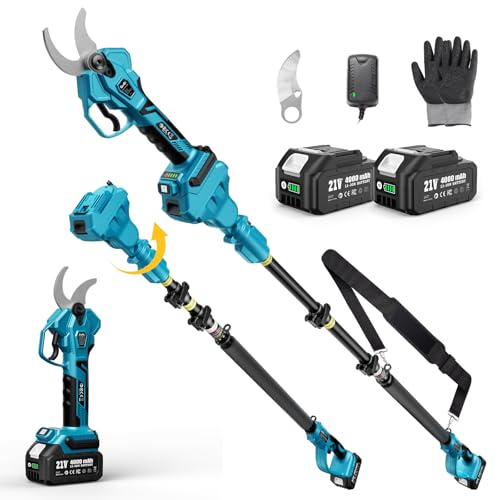
SEESII 2-in-1 Pole Electric Pruning Shears 1.8″ Cut

SEESII 4-in-1 Mini Chainsaw and Pruner Combo

SEESII Electric Pruning Shears 1.4″ Cut Cordless
A Closer Look At Each Pick
If you dread ladder work more than the pruning itself, this SEESII setup earns the top slot because it solves two problems at once. The brushless motor (a brushless motor uses electronic commutation instead of carbon brushes, lasting longer and running cooler) drives through 1.6-inch branches while the telescoping pole extends from 4.9 to roughly 9 feet, so you can reach canopy work without leaving the ground.
That dual-mode design matters for mixed yards where you handle roses at chest height in the morning and overhead limbs after lunch. In most suburban lots, the rotating head pivots 180° to land at awkward angles without contorting your wrists.
Where It Helps
- Telescoping pole reaches high branches from solid footing, removing most ladder setups.
- Switching between handheld and pole mode keeps one tool on the job all day.
- Dual 4.0Ah batteries (amp-hours measure how long a battery runs before recharging) extend runtime across longer sessions.
- Brushless motor runs cooler and tends to last longer than brushed designs under heavy use.
- Rotating cutting head lets you dial in the angle for vertical and side cuts.
Things To Consider
- Pole mode adds length and weight, so expect some forearm fatigue during extended overhead work.
- Owners commonly report sap buildup on the blade, so a cleaning rag after each session helps the cut stay smooth.
Key Specs
Who It Suits Best
Homeowners with mixed-height trees and shrubs who want one tool for ground-level and overhead cuts.
Consider Something Else When
Orchard owners managing dense, thick limbs may prefer the SEESII Electric Pruning Shears 2.2″ Cut Cordless, which trades pole reach for a heavier bite.
This handheld-only SEESII pruner is the friendlier cousin to the pole model above. You give up the telescoping shaft, but the trade shows up in noticeably lighter handling during long sessions, which matters once you’re tackling 200+ cuts in a row on a hedge or fruit tree.
For most homeowners with shrubs and small ornamental trees, the 1.6-inch cut handles the routine without the awkward weight overhead. Four cutting modes let you match the blade opening to branch size, reducing wasted motion.
Positive Takeaways
- Dual 4.0Ah batteries mean you can rotate packs and keep working through a full afternoon.
- Four cut modes trim motion, which adds up over hundreds of snips.
- Skip the pole weight if you mostly work at chest height or below.
- SK5 blade material (a high-carbon steel often used in professional cutting tools) resists dulling under steady use.
Honest Caveats
- You’ll need a separate ladder or pole tool for anything overhead.
- Charging both packs between sessions means planning around outlet access in the shed.
Right Fit For
Gardeners who spend most sessions shaping shrubs, roses, and small fruit trees at ground level.
Look elsewhere When
Anyone regularly trimming above head height should look at the SEESII 2-in-1 Pole Pruning Shears 1.6″ Cut Cordless instead.
Step up from the 1.6-inch handheld and the difference shows immediately: a 2.2-inch cutting diameter swallows limbs that would normally force you to grab a manual lopper. The 3.2-inch blade opening gives the jaw room to grab thicker growth cleanly, which matters on neglected hedges or older fruit trees.
For most homeowners managing one or two mature trees, this is where electric pruning starts replacing a small hand saw. The tradeoff is added bulk at the cutting head, which can feel awkward on tight interior cuts.
What Earns Its Place
- 2.2-inch capacity cuts through growth that smaller electric models leave behind.
- Wide blade opening clears the cut without twisting the tool mid-stroke.
- Four modes let you scale output to thin twigs or heavy wood.
Trade Offs
- The larger cutting head limits access inside dense canopies with crossing branches.
- Heavier front weight than the 1.6-inch model, so wrist fatigue builds faster during overhead reaches.
Made For
Landowners with mature fruit trees, neglected shrubs, or overgrown hedgerows that exceed standard pruner capacity.
Skip It When
Fine-detail work on roses or small ornamentals fits the SEESII Electric Pruning Shears 1.4″ Cut Cordless better.
Combine the pole configuration of the first pick with the heavier 2.2-inch bite of the third and you get the most ambitious SEESII in the lineup. This is the tool that wants to retire your orchard ladder for good, assuming your branches stay within reach of the extended shaft.
The honest read is that this much cutting power overhead gets tiring. For short bursts on tall limbs, it shines. For full-day pruning sessions, expect shoulder breaks.
The Case For It
- Best of both worlds: pole reach combined with the largest cordless cutting diameter in the roundup.
- Dual-function design swaps between handheld and pole without a second tool.
- Brushless motor handles repeated heavy cuts without bogging down.
Points To Note
- Combined weight of pole plus cutting head strains shoulders during long overhead runs.
- Storage gets awkward because the extended shaft needs more shed space than a compact handheld.
Best Suited To
Home orchardists trimming mature trees who want to retire their ladder for routine canopy work.
A Better Fit Elsewhere
For ground-level detail work on small ornamentals, the Felco F2 Pruning Shears Swiss-Made Bypass is lighter and quieter.
Among the cordless-heavy list, the Felco F2 stands out as the quiet, no-battery option that professional growers keep on their belt for decades. The forged aluminum body keeps weight down without sacrificing strength, and the bypass blade (a bypass blade works like scissors, with a curved upper blade passing a lower one, giving the cleanest cut on living wood) handles branches up to about an inch.
You give up reach, speed, and electric torque, but you gain a tool that sharpens, services, and lasts. In most home gardens, that calculus flips in Felco’s favor if pruning is a thoughtful weekend activity rather than a property-wide cleanup.
Everyday Advantages
- Replaceable blade, spring, and handle parts extend service life well past typical electric tools.
- Lightweight aluminum body reduces fatigue during detailed, hand-level shaping.
- Swiss-made tolerances mean consistent blade alignment out of the box.
Worth Noting
- Manual effort adds up across large jobs.
- No reach beyond arm’s length, so tall work still requires a separate pole or ladder.
Who Will Love This
Patient pruners who want a single hand tool to maintain for years rather than charge and replace.
Reach For A Different Pick When
Anyone managing thick limbs above head height will prefer the SEESII 2-in-1 Pole Electric Pruning Shears 2.2″ Cut for power and reach.
If the rest of this list is about batteries and motors, the TABOR TOOLS GG12A is the reminder that compound-action leverage still works. The 30-inch handles, paired with a geared pivot that multiplies hand force, let you chop through 2-inch branches with a clean squeeze rather than a chainsaw’s noise.
The anvil blade design (an anvil blade has one sharp edge that closes onto a flat “anvil” surface, best for dead wood rather than living stems) suits dry, woody growth more than fresh green shoots. For storm cleanup and dormant-season cuts, this lopper feels indestructible.
Strengths Worth Knowing
- Compound-action mechanism multiplies force, so a 2-inch cut feels manageable.
- Hardened carbon steel blade holds an edge through heavy sessions.
- Low-friction coating resists sap and helps cuts slide through cleanly.
- No batteries, no charging, no motor to fail in cold or wet weather.
Soft Spots
- Anvil design can crush living green stems rather than slice them cleanly.
- 30-inch handles add bulk that some gardeners find clumsy in tight hedging work.
Feature Snapshot
The Right Fit
Homeowners tackling dormant-season cleanup and storm-damaged limbs who want simple, reliable mechanical power.
Swap It Out When
For living green growth where clean bypass cuts matter, the SEESII Electric Pruning Shears 1.8″ Cut Cordless avoids the crushing action.
This middle child of the SEESII handheld lineup splits the difference between the 1.4 and 1.6 cuts on one side and the 2.2-inch monster on the other. The 1.8-inch diameter with a 2.6-inch blade opening handles the majority of garden chores without feeling oversized.
For mixed gardens that include roses, shrubs, and small tree limbs, the balance lands well. You won’t always use the full capacity, but knowing it’s there helps when you encounter an unexpectedly thick shoot.
What Pays Off
- Cut capacity sits in the sweet spot for typical residential pruning.
- Four adjustable modes tune blade opening to branch size.
- Lighter than the 2.2-inch model, easier on wrists during longer sessions.
Less Ideal Details
- Won’t reach as high as the pole-equipped versions for canopy work.
- Charging habits matter: leaving batteries drained shortens long-term capacity.
Technical Reference
Perfect Match For
General-purpose gardeners who want one electric pruner to handle the widest range of routine cuts.
Not Your Match When
Property owners with very tall trees will appreciate the SEESII 2-in-1 Pole Electric Pruning Shears 1.8″ Cut for added reach.
Take the 1.8-inch handheld from pick seven, mount it on a telescoping pole, and you get this flexible SEESII. The result suits gardeners who trim low shrubs in the morning and reach for overhead branches after lunch without switching tools.
Versatility comes at the cost of slightly heavier handling than a pure handheld. For shorter sessions, that compromise reads as convenient rather than cumbersome.
Points In Its Favor
- Pole plus handheld design covers full yard height range with one purchase.
- 1.8-inch capacity handles most living wood in residential settings.
- Two cutting configurations mean fewer tool changes across a session.
Where It May Fall Short
- Pole mode adds length that requires extra shed storage.
- Overhead use taxes shoulders faster than ground-level work with the same tool.
Whose Shelf It Belongs On
Homeowners with one or two tall trees plus typical garden shrubs who want one tool that adapts.
Where A Sibling Pick Shines
For thicker orchard limbs, the SEESII 2-in-1 Pole Electric Pruning Shears 2.2″ Cut offers more bite at the same reach.
This kit trades a single-purpose pruner for a yard-shaping bundle: a 6-inch mini chainsaw, a 12-inch hedge trimmer with grass blade, a pruner head, and shared batteries across all attachments. If you find yourself juggling clippers, shears, and a separate hedge tool every Saturday, the consolidated approach makes sense.
Each individual attachment does a competent job rather than excelling at one thing. For most homeowners, that balance hits the right note between capability and storage space.
Standout Benefits
- Four attachments cover chain, hedge, grass, and pruning with one battery platform.
- Shared batteries simplify charging and reduce spare cells cluttering the shed.
- Cuts down storage footprint compared with four separate cordless tools.
Small Caveats
- No single attachment matches a dedicated specialty tool’s performance ceiling.
- More parts to keep track of means more chances for a missing piece on a busy weekend.
Important Details
Built With In Mind
Homeowners who handle chainsaw, hedge, and pruning chores in the same afternoon and want fewer batteries to charge.
Another Choice May Suit
If pruning dominates your workload and chainsaw cuts are rare, the SEESII Electric Pruning Shears 1.8″ Cut Cordless is a more focused pick.
The smallest SEESII in the roundup handles roses, grape vines, and small shrubs without intimidating new users. A 1.4-inch cutting capacity covers the typical residential pruning job, and the lighter body means less fatigue during the learning curve.
You give up the ability to chew through thick limbs, but that’s the point. This is the tool that lets you build confidence before graduating to a heavier model.
Strong Points
- Lightweight build suits beginners and gardeners with smaller hands.
- 1.4-inch capacity fits the majority of rose, vine, and shrub cuts.
- Dual batteries extend runtime for typical weekend sessions.
Practical Considerations
- Stalls on growth that a 1.8-inch or 2.2-inch model would clear.
- Less reach than pole-equipped options, so tall work still needs a ladder.
Who Should Grab It
Newer gardeners maintaining flower beds, vines, and small shrubs who want a forgiving entry point.
Where It Is Less Suited
Owners with established fruit trees will appreciate the SEESII 2-in-1 Pole Electric Pruning Shears 2.2″ Cut for serious orchard work.
Choosing long handled pruners That Fit Your Yard
Reach, Power, and How You Actually Prune
Start with the height of your tallest regular job. Anything under 8 feet rarely justifies a pole model, while anything over 12 feet makes a ladder the bottleneck rather than the cut. For most suburban lots, a tool that handles both handheld shaping and modest reach covers the majority of weekend work without dedicated storage for two pruners.
Next, match cut capacity to your typical branch size. A 1.4 to 1.6-inch opening handles roses, vines, and most ornamental shrubs. A 1.8-inch capacity is the residential sweet spot for mixed gardens. Anything 2 inches or larger crosses into orchard and storm-cleanup territory, where a manual lopper like the TABOR TOOLS GG12A still earns its place beside the electric tools.
Battery Versus Manual, and Why It Matters
Cordless electric models trade weight and charging for speed and reduced hand strain. They shine during long sessions with hundreds of cuts, where repetitive motion would otherwise wear out your grip. Manual options like the Felco F2 reward careful, infrequent work with decades of service and zero battery anxiety. Cold weather, wet conditions, and remote gardens without easy charging favor the manual approach.
Blade Style and the Health of the Cut
Bypass blades cut like scissors and leave the cleanest wound on living wood, which helps plants heal quickly. Anvil blades crush against a flat surface and work best on dry, dead material where wound cleanliness matters less. Mixing both types in a shed is normal for gardeners who handle storm debris and routine shaping in the same season.
Picking Smart: Tradeoffs Worth Knowing
Common Shopping Slip Ups
Many shoppers grab the highest cut capacity available and end up with a tool that’s overkill for roses and vines. A heavier cutting head wears out wrists on small jobs faster than the extra capacity helps. Match the tool to the typical cut, not the largest branch you’ve ever seen.
Battery count matters more than most product pages suggest. A single-pack tool strands you once the charge runs out, while dual-pack kits let you rotate and keep working through a full afternoon. For any tool you’ll use more than an hour at a stretch, dual batteries pay back quickly.
Where The Extra Money Goes
Premium electric models add brushless motors, larger blade openings, and longer-lasting battery cells. Those upgrades matter for daily professional use but feel like overkill for monthly residential pruning. The honest read is that mid-tier SEESII models cover most home gardens without the price jump of orchard-grade hardware. Spend up only when you actually face the thick limbs or extended sessions the upgrade is designed for.
Frequently Asked Questions
How often should I sharpen or replace the blade?
Most electric pruner blades handle a full season of residential use before sharpening, and replacement blades are commonly available for the SEESII lineup. Inspect the cut quality each time: ragged edges usually mean it’s time for a touch-up rather than a full replacement.
Can cordless pruning shears handle wet wood?
They can, but wet branches take more motor effort and dull blades faster. Dry conditions give the cleanest cuts and extend runtime, so scheduling major pruning for dry days pays off in tool longevity.
What’s the real difference between bypass and anvil blades?
Bypass blades work like scissors with two curved edges passing each other, ideal for living wood. Anvil blades close onto a flat surface, best for dry or dead branches. Pick based on whether you’re trimming growth or removing debris.
Are pole pruners safe to use near power lines?
No. Standard residential pole pruners are not insulated for electrical work. Stay well clear of any wiring and call a utility crew for branches near lines.
How long does the battery last on a typical job?
Most residential SEESII models deliver enough cuts for a full afternoon on a single charge when rotated across dual packs. Heavy orchard work drains batteries faster, so plan charging breaks accordingly.
Final Verdict
The right long handled pruner depends less on specs and more on what your yard throws at you each season. Tall trees with thick limbs point toward the SEESII pole models, mixed garden work suits the 1.8-inch handheld or the Felco F2, and small ornamental beds thrive with the lightweight 1.4-inch option. Match the tool to your routine rather than the most impressive feature list, and pruning stops being a chore to dread.