Reaching into the middle of a flowering plum without a ladder, or slicing through a stubborn sucker’s base without exhausting your wrists, comes down to picking the right tool. Long pruning shears come in two broad flavors, manual loppers with extended handles for pure leverage, and cordless electric pruners (some with telescoping poles) that turn hours of squeezing into a clean pull of a trigger. This list walks through ten options that handle real backyard work, from light rose trimming to clearing overgrown branches along a fence line.
The Leading Options At A Glance

Hickok Heavy Duty Loppers for Tree Trimming 30-Inch

SEESII 2-in-1 Pole Pruning Shears Cordless 1.6″ Cut

TABOR TOOLS GG12A Anvil Lopper Compound Action 30-Inch

GARDENA Bypass Loppers 31-Inch Handle 1.65″ Max Cut

Fiskars PowerGear X Loppers Bypass L LX98

SEESII Electric Pruning Shears 1.6″ Cut Cordless

SEESII Electric Pruning Shears 2.2″ Cut Cordless

SEESII Electric Pruning Shears 1.8″ Cut Cordless
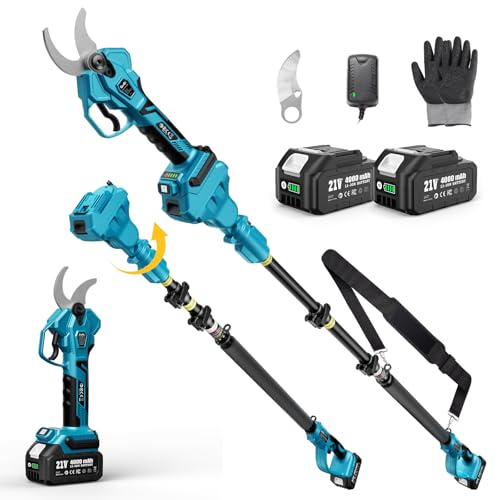
SEESII 2-in-1 Pole Electric Pruning Shears 1.8″ Cut

SEESII Electric Pruning Shears 1.4″ Cut Cordless
Why These Options Stand Out
Old-school lopper logic, done right. The Hickok pairs 30 inches of overall length with aircraft-grade aluminum handles that keep the weight manageable for overhead reaches into a backyard fruit tree. There’s no motor to charge, no trigger to squeeze, just hand leverage doing the work. For most homeowners pruning a few ornamental trees each season, that simplicity is the appeal.
The forged blade is built for clean cuts through established limbs rather than delicate new growth. Reach is the headline: at 30 inches, you can step a foot back from a thicket and still drop clean cuts deep into the canopy.
Strengths Worth Knowing
- 30-inch reach extends into the canopy without a ladder or pole setup
- Aircraft-grade aluminum keeps the swing weight low during long sessions
- Forged blade geometry handles mature, woody growth cleanly
- No batteries, fuel, or charging downtime, just grab and cut
Worth Noting
- Manual leverage means thicker limbs take real hand strength to close
- Open anvil-style cuts can crush green, sappy stems if you push too hard
Feature Snapshot
Made For
Homeowners managing established yard trees who want reliable manual leverage and no batteries to fuss with.
Skip It When
Anyone pruning large volumes of thick limbs will find less arm fatigue in the SEESII 2-in-1 Pole Pruning Shears, where the cordless motor does the cutting force for you.
Two tools in one frame. The SEESII 2-in-1 detaches from its telescoping pole so you can switch between close-quarters handheld trimming and overhead pole work, with the head rotating 180 degrees for angle cuts. The telescoping shaft runs roughly 4.9 to 9 feet, which puts a 10-foot ceiling well within reach.
Dual 4.0Ah batteries and a brushless motor keep the cutting consistent through a long afternoon. Where the Hickok asks for hand strength, this one asks only for a steady trigger pull and a stable stance.
Well-Handled Touches
- Switching between handheld and pole modes avoids carrying two separate tools
- 180-degree rotating head lines up awkward cuts without contorting your wrist
- 1.6-inch cutting diameter covers most backyard branch sizes
- Extra SK5 steel blade included in the kit extends working life
Trade Offs
- Telescoping pole adds noticeable weight once fully extended overhead
- Battery charging time between sessions requires some planning
Key Attributes
Perfect Match For
Property owners with tall fruit trees or overgrown hedgerows who want one tool that handles both ground-level shaping and overhead cuts.
Consider Something Else When
For pure handheld speed on rose bushes and grape vines, the SEESII Electric Pruning Shears 1.6″ Cut skips the pole and trims faster at waist height.
Where green-wood bypass blades shine, anvil loppers earn their keep on dry, dead, or woody material. The TABOR TOOLS GG12A uses compound-action gearing (a lever-and-pivot setup that multiplies the force your hands put in) to push a hardened carbon-steel blade through growth that would stall a simpler tool. Two-inch cuts are within spec, and 30 inches of handle gives you the leverage to actually close the cut.
This is a workhorse for cleanup work, removing storm damage, cutting back suckers, prepping orchard branches for the season.
Useful Strengths
- Compound action triples the hand force reaching the blade
- Hardened carbon steel holds up through repetitive dry-wood cuts
- 2-inch rated capacity handles substantial limbs most loppers can’t
- 30-inch handles bring real leverage into the equation
Honest Caveats
- Anvil design tends to crush live green stems rather than slice them
- Heavier than bypass loppers of similar length
Right Fit For
Anyone clearing storm damage, prepping dormant orchard trees, or cutting back heavy woody growth during winter cleanup.
A Better Fit Elsewhere
For live green wood and flowering shrubs, the GARDENA Bypass Loppers deliver cleaner cuts that heal faster on healthy plants.
German engineering shows up in the small details. The GARDENA EnergyCut 750 B runs an internal gear transmission that roughly triples your input force, all while keeping the tool under 2.4 pounds. Thirty-one inches of handle plus a soft-stop shock buffer means a long session of overhead cuts without the wrist punishment cheaper loppers hand out.
The double-edged bypass blades carry a non-stick coating and are precision-ground for clean cuts on fresh wood, the kind that heal quickly on healthy plants.
Notable Gains
- Gear transmission amplifies hand force, easing thick cuts
- Sub-2.4-pound weight reduces fatigue over hundreds of cuts
- Shock-absorbing stop buffer protects wrists and elbows
- Non-stick coated bypass blades resist sap buildup
Small Caveats
- 1.65-inch max cut sits below larger anvil-style loppers
- Premium build typically carries a higher price than basic options
Technical Highlights
Best Suited To
Gardeners who prune frequently and want a low-effort, clean-cutting tool that holds up across many seasons.
Reach For A Different Pick When
Tackling tall overhead branches calls for the SEESII 2-in-1 Pole Pruning Shears, where a telescoping shaft extends your reach beyond what any handheld lopper can offer.
Fiskars has been refining geared loppers for years, and the PowerGear X LX98 carries that lineage forward. The geared mechanism multiplies cutting force through the entire stroke, which matters on branches where simpler loppers stall halfway through. Lightweight aluminum handles keep the tool balanced for right- or left-handed use.
The non-stick coated bypass blade slices clean through green wood up to about 2 inches, with a textured grip that stays secure when your hands are sticky with sap.
A Few Strong Suits
- PowerGear mechanism delivers force smoothly across the full stroke
- Lightweight aluminum handles reduce arm fatigue
- Non-stick coating keeps sap from gumming up the cut
- Ambidextrous design works for left- and right-handed gardeners
Points To Note
- Designed primarily for fresh green wood rather than dry, dead branches
- International product variant may differ in labeling from domestic stock
Who Will Love This
Home gardeners who shape shrubs, trim hedges, and tackle routine pruning where clean cuts on living wood matter most.
Where Another Pick Suits Better
Anyone clearing thick, woody growth will find the TABOR TOOLS GG12A Anvil Lopper’s compound action better suited to dry, stubborn branches.
Pull the trigger and the blade closes itself. That’s the whole pitch of the SEESII 1.6-inch cordless pruner, and for gardeners dealing with hand fatigue or arthritis, it’s a real upgrade over manual shears. The 2.16-inch jaw opening accepts branches up to 1.6 inches thick, while four cutting modes let you dial in the right opening for smaller stems and conserve battery on light work.
Dual 4.0Ah batteries are rated for thousands of cuts per charge, so a full afternoon of orchard cleanup is realistic without scrambling for a wall outlet.
Useful Highlights
- Trigger-pull action removes hand strain during long sessions
- Four adjustable modes match blade opening to branch size
- Dual batteries extend working time well beyond a quick trim
- 1.6-inch capacity covers most routine pruning tasks
Small Limitations
- Battery and motor add weight compared to manual bypass shears
- Charging downtime between sessions requires some planning
Feature Facts
Built With In Mind
Gardeners with larger properties, recurring pruning tasks, or anyone who wants to skip the hand-squeeze fatigue of manual shears.
Not Your Match When
Quick touch-ups of small rose bushes may feel like overkill, the SEESII Electric Pruning Shears 1.4″ Cut handles those lighter jobs in a smaller package.
When the branches lean toward small-tree territory, this is the cordless pruner built for it. The 2.2-inch cutting diameter and 3.2-inch blade opening push well past typical hand pruner capacity, all from a handheld tool. It suits orchard work, heavy shrub renovation, and landscape cleanups where pulling out a lopper feels like overkill but a hand pruner simply won’t close.
Four adjustable modes again help dial in the right blade travel, useful when you’re switching between thin shoots and heavy limbs throughout the day.
Practical Pluses
- 2.2-inch cutting capacity tops the cordless category here
- 3.2-inch jaw opening swallows thick branches without pre-trimming
- Four modes adapt blade travel to branch size
- Cuts down on ladder time for medium-height orchard work
Things To Consider
- Heavier than smaller-cut electric pruners, tiring during extended use
- Overkill for rose bushes and small ornamentals
Whose Shelf It Belongs On
Orchard owners and serious landscapers managing mature fruit trees or overgrown shrubs where handheld reach matters more than overhead extension.
Look Elsewhere When
Tall overhead branches need the SEESII 2-in-1 Pole Electric Pruning Shears, which adds a telescoping shaft this handheld model lacks.
Sitting in the middle of the SEESII electric line, the 1.8-inch model handles the branches that fall between light ornamentals and heavy orchard limbs. A 2.6-inch blade opening accepts most growth you point it at, while the four-mode adjustment lets you size down for delicate stems and preserve runtime.
It’s a sensible middle-ground pick for mixed yards where you’ll alternate between shrubs, small fruit trees, and brushy perimeter growth.
What It Does Well
- 1.8-inch capacity bridges the gap between light and heavy pruners
- Four cutting modes optimize for branch variety
- 2.6-inch blade opening accepts typical yard growth without pre-trimming
- Cordless convenience trims fatigue during multi-hour sessions
Some Limits To Know
- Not designed for overhead work without a separate pole attachment
- Battery charging cycles can interrupt large pruning days
Who Should Grab It
Home gardeners managing a mix of shrubs, vines, and small trees who want one electric pruner that handles varied branch sizes.
Swap It Out When
Anyone regularly reaching above head height will find the SEESII 2-in-1 Pole Electric Pruning Shears a more practical fit for tall work.
This is the overhead specialist of the cordless category. Like its 1.6-inch sibling, the SEESII 2-in-1 Pole Electric Pruner detaches from a telescoping shaft so you can drop down to handheld mode for low shrubs, then extend the pole for high branches. The 1.8-inch cutting capacity pushes slightly thicker than the smaller pole model, giving you a bit more headroom for mature growth.
For tall fruit trees where climbing or ladder work feels like overkill, this tool trades a stable footing for a powered reach.
The Good Stuff
- Telescoping pole puts high branches within reach from the ground
- Detachable head converts to handheld pruner for low work
- 1.8-inch capacity handles thicker overhead growth
- Cordless electric cutting saves arm fatigue over hundreds of pulls
Worth Bearing In Mind
- Extended pole introduces noticeable swing weight overhead
- Requires charged batteries for each session
Feature Rundown
Right Fit For
Property owners with tall ornamental or fruit trees who want to skip ladder work for routine seasonal pruning.
Where Another Pick Suits Better
For pure manual simplicity and no charging, the Hickok Heavy Duty Loppers deliver long reach without any battery dependency.
The smallest of the SEESII electric pruners, and the most approachable. The 1.4-inch cutting capacity matches what you’d typically tackle with a sturdy pair of manual hand pruners, but the cordless trigger action removes the squeeze entirely. It’s a comfortable fit for rose bushes, grape vines, young fruit tree training, and general garden tidying.
Two 2000mAh batteries share the load, with the kit rating well over 2000 cuts per charge cycle for typical residential use.
Positive Points
- Compact size fits comfortably in smaller hands
- Trigger-pull cutting saves wrist strain on detail work
- 1.4-inch capacity covers most flowering shrubs and vines
- Lower weight than larger-cut cordless pruners
Things To Weigh
- 1.4-inch capacity won’t handle thick woody branches
- Battery system is smaller than higher-tier SEESII models
Made For
Gardeners focused on roses, ornamentals, vines, and detail pruning who want a lighter electric option without the bulk of heavy-duty models.
Another Choice May Suit When
Tackling thick branches pushes you toward the SEESII Electric Pruning Shears 2.2″ Cut, which triples the cutting capacity in a similar handheld form factor.
What To Weigh Before Choosing Long Pruning Shears
Cutting Capacity vs. Branch Size
The single most important spec is the maximum branch diameter each tool can handle. Manual loppers like the TABOR TOOLS GG12A rate around 2 inches for dry wood, while cordless pruners cluster between 1.4 and 2.2 inches. Matching the tool to the largest branches you realistically face keeps you from forcing cuts the blade wasn’t designed to close. For mixed yards with both thin shoots and thick limbs, you’ll likely want two tools, one for fine work and one for heavy cuts.
Handle Length and Reach
Long pruning shears earn their name from extended reach, but longer isn’t always better. Thirty-inch manual loppers offer a full extra foot of leverage over standard pruners, useful for hedge tops and overhead cuts. Telescoping pole pruners push reach to 9 feet or more for true overhead work without a ladder. Shorter handles feel nimbler in tight spaces between rose canes or in crowded shrub beds, so consider where you’ll actually be cutting.
Manual vs. Cordless Trade-Offs
Manual loppers deliver infinite runtime and zero charging, at the cost of real hand effort on thick growth. Cordless electric pruners trade a charged battery for trigger-pull cutting that anyone with hand fatigue or arthritis can appreciate. For small yards with light pruning, manual loppers stay simpler. For larger properties with hundreds of cuts per session, cordless tools earn their keep through saved labor.
Weight and Ergonomics
Overhead work punishes heavy tools quickly. Sub-3-pound manual loppers like the GARDENA EnergyCut 750 B feel noticeably easier across long sessions than heavier anvil designs. Cordless pruners add motor and battery weight, so check the balance with the head extended. Ergonomic touches like shock-absorbing buffers and soft-grip handles show up most clearly on tools you’ll use weekly rather than seasonally.
Key Considerations Across These Picks
Common Buying Slip Ups
Choosing by maximum cutting diameter alone misses the real story. A 2-inch anvil lopper handles dry wood beautifully but crushes live green stems, while a 1.6-inch bypass blade slices cleanly through the same green growth. Match the blade style (bypass for live wood, anvil for dead wood) to what you actually cut. Overlooking weight matters too: a 4-pound lopper feels fine for ten cuts and punishing for two hundred.
Where The Extra Money Goes
Premium picks like the GARDENA EnergyCut 750 B charge more for geared transmissions, replaceable blades, and longer product support histories. Cordless pruners at the higher tier pack brushless motors and dual-battery kits that stretch runtime significantly. The upgrade pays off for frequent pruners managing larger properties, while casual seasonal users often find mid-tier options cover their needs without the extra cost.
Frequently Asked Questions
What’s the difference between bypass and anvil pruners?
Bypass pruners use two curved blades that pass each other like scissors, giving clean cuts on live green wood that heal quickly. Anvil pruners use one straight blade that closes onto a flat surface, delivering more force on dry, dead branches but tending to crush living stems.
How long should the handles be for overhead pruning?
Manual loppers in the 30 to 32-inch range suit most adult users for reaching into tree canopies and topping hedges. For taller work beyond arm’s length, a telescoping pole pruner extending to 8 or 9 feet removes the need for a ladder entirely.
Are cordless pruning shears worth it for small yards?
For yards with a few rose bushes and the occasional shrub trim, manual pruners stay simpler and lighter. Cordless models earn their keep when you’re facing dozens or hundreds of cuts per session, where trigger-pull cutting saves real hand fatigue.
How do I maintain pruning shear blades?
Wipe blades clean after each session to remove sap, dry them to prevent rust, and sharpen periodically with a diamond file or whetstone following the original bevel angle. A light oil coat on steel blades before storage helps prevent corrosion during off-season months.
Can electric pruning shears cut wet wood?
Yes, though battery drain increases slightly when blades work through wet, sappy growth. Cleaning sap off the blade more often during wet conditions extends runtime and keeps cuts clean, since built-up sap gradually reduces cutting efficiency.
The Takeaway
Long pruning shears span a wide range, from straightforward manual loppers that lean on good handle leverage, to cordless pruners that do the cutting work for you. The right pick depends on the branches you face, how often you prune, and whether reaching high or saving your hands matters more on any given afternoon. Whichever direction you go, matching the tool to the job keeps both the work and the results cleaner.