A neglected hedge turns woody fast, and a dull blade tears bark in ways that invite disease. Choosing the right cutting tool matters more than most gardeners realize, since the right fit for your grip and your typical branches turns weekend yard work into a quicker, cleaner chore. This roundup covers nine picks across hand pruners, snips, and long-reach loppers, so you can match the tool to the task instead of forcing one pair to do everything.
The Leading Options At A Glance

DECERK Bypass Pruning Shears for Arthritic Hands

DECERK Bypass Pruning Shears & Garden Snips Set

Fiskars 28″ Garden Bypass Loppers

VOTREK Pruning Shears, Stepless Handle

DECERK 8.5″ Professional Pruning Shears

DECERK 8.5″ Premium Bypass Pruning Shears

TABOR TOOLS GG12A Anvil Lopper
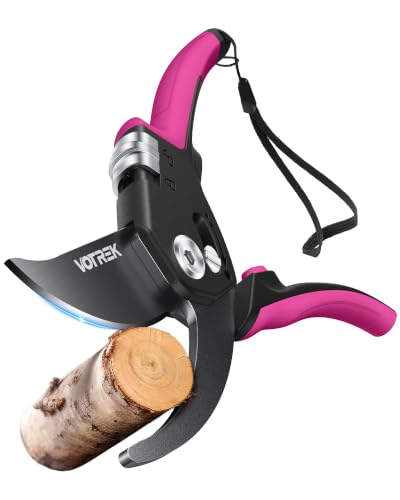
VOTREK Garden Shears, Stepless Handle

WOLF-Garten Telescoping Anvil Lopper RS900T
The Strengths Of Each Pick
Long pruning sessions punish joints long before the work is done, and a 5mm foam-cushioned grip spreads squeeze pressure across the palm instead of letting it dig into one spot. The bypass head on these DECERK shears slices fresh stems up to 3/4 inch with cleaner cuts than anvil-style jaws, since bypass blades work like scissors and leave less crushed tissue behind. You give up some raw cutting capacity compared with the longer-reach loppers further down this list, but the trade pays off in control for tight clusters of roses or repeat snipping through a hedge.
The foam sleeves do the quiet work of keeping the tool steady when your hands are damp or cold. Owners with arthritis commonly report that the wider grip lets them prune longer before fatigue shows up, and the cushioned surface keeps the shears from twisting mid-cut on tough spring growth.
Notable Gains
- 5mm foam grips reduce pinch pressure during extended use
- Bypass blade handles live wood up to 3/4 inch cleanly
- Secure hold even when hands are damp or gloved
- Lightweight enough for overhead cuts on small shrubs
Things To Consider
- Reach is limited compared to the long-handle loppers in this roundup
- Foam grips can wear or tear over multiple seasons
Who It Suits Best
Older gardeners, anyone with arthritis, and weekend pruners who want a hand-friendly tool for stems and small branches.
Where Another Pick Suits Better
Tackling higher branches calls for the WOLF-Garten Telescoping Anvil Lopper RS900T, which adds reach without forcing you to climb.
Most pruning jobs do not all call for the same tool, and pairing an 8.5-inch bypass pruner with a 6.5-inch precision snip covers both ends of the spectrum. The larger shear reaches an inch into green wood, while the smaller snip gives you the fine control needed for deadheading roses or trimming herbs without bruising softer tissue. For a kitchen gardener juggling tomato vines, basil, and a few ornamentals, the two-tool format means one tote and one trip outside.
Where the kit falls short is the same place every hand tool does: bigger branches and overhead cuts. Compared to a long-reach lopper like the Fiskars 28″ garden bypass lopper, this set trades raw power for finesse. You may find yourself reaching for a third tool on older woody growth.
A Few Highlights
- Two-tool kit handles everything from herb snipping to thicker stems
- Bypass head delivers clean cuts on live green wood up to 1 inch
- Compact snip works well for bonsai, deadheading, and vegetable harvest
- Single storage footprint, easy to keep in a garden bag
Worth Noting
- Two blades to maintain and sharpen over time
- Neither tool reaches overhead branches
Feature Snapshot
Made For
Home gardeners who split time between vegetable beds, flowering shrubs, and small ornamentals and want two tools in one purchase.
Skip It When
You mostly prune tall trees; the TABOR TOOLS GG12A anvil lopper reaches higher and cuts thicker wood.
Mid-size branches are the awkward middle of pruning, and a 28-inch bypass lopper reaches into them without dragging out a ladder. The steel head glides through growth up to 1.5 inches thick, and the low-friction coating keeps sap from gumming up the cut after dozens of strokes. For someone managing a small orchard or a row of established flowering shrubs, this length lands in the sweet spot between reach and control.
The non-slip grip helps when you lean into a stubborn cut, and the bypass design favors live wood over dry, dead branches. For purely dry growth, an anvil head like the TABOR TOOLS GG12A does the same job with more mechanical advantage. Compared to the 35.5-inch WOLF-Garten telescoping lopper, you give up reach but gain nimbleness around tight canopies.
Positive Points
- Steel bypass blade handles branches up to 1.5 inches
- Low-friction coating resists sap buildup
- 28-inch handles balance reach and maneuverability
- Non-slip grip stays secure through long sessions
Trade Offs
- Less leverage than an anvil-style lopper on dry wood
- Fixed-length handles cannot extend to higher limbs
Right Fit For
Suburban gardeners managing mid-height trees and shrubs who want a reliable bypass lopper without telescoping complications.
Look Elsewhere When
You face taller, hard-to-reach cuts; the WOLF-Garten Telescoping Anvil Lopper RS900T extends higher and handles dry branches too.
One-size-fits-all handles rarely fit anyone particularly well, so a thumb-driven slider that dials in handle span and blade opening across a continuous range is a meaningful upgrade. Small hands stop overstretching, large hands stop cramping, and you can narrow the opening when trimming fine stems so you do not over-cut. The SK5 high-carbon steel blade holds an edge and wipes clean thanks to its Teflon nonstick coating, which helps when sap starts to build up on a long afternoon of pruning.
For households where the same tool gets passed between a partner with smaller hands and someone with arthritis, the stepless adjustment replaces the usual compromise. The catch is that the slider introduces one more moving part to maintain; unlike the fixed-grip DECERK professional pruning shears, this one asks for an occasional check to keep the mechanism snug.
A Strong Showing
- Stepless thumb slider fits any hand size precisely
- SK5 high-carbon blade holds a sharp edge through heavy use
- Teflon nonstick coating reduces sap and friction drag
- Adjustable opening adapts to fine stems and thicker branches
Honest Caveats
- Adjustment mechanism adds a moving part that may need tightening
- No cushioned foam sleeves like the DECERK arthritic-hands model
Best Suited To
Households sharing one tool between gardeners with different hand sizes, plus anyone who wants fine control over blade opening.
Reach For A Different Pick When
You mostly tackle branches overhead; the Fiskars 28″ garden bypass lopper brings the leverage and reach a hand pruner cannot match.
When pruning shifts from weekend chore to regular routine, the materials in the blade and handle start to matter more than the color of the grip. A Japanese SK5 steel head with a titanium coating keeps its edge through hundreds of cuts, and the anodized aluminum handles shed corrosion during wet spring mornings. The cut capacity of 3/4 inch covers most live-wood work around the yard without forcing you to drag out a lopper.
Where this model earns its professional label is in the small details: high-hardness screws hold the pivot tight through repeated use, and the three-layer titanium coating extends blade life between sharpening sessions. You give up the cushioned foam grips of the arthritic-focused DECERK model, so on a multi-hour session your palm may feel more pressure than with foam-padded alternatives. Worth weighing if your hands are sensitive.
Good Reasons To Consider
- SK5 steel blade with titanium coating for long-lasting sharpness
- Anodized aluminum handles resist corrosion in damp conditions
- Bypass head handles live stems and branches up to 3/4 inch
- High-hardness screws keep pivot action tight over time
Points To Keep In Mind
- No foam grip padding, less comfortable for long sessions
- Reach limited to hand-tool distance
Feature Card
Who Will Love This
Active gardeners pruning several times a week who value edge retention and corrosion-resistant hardware over cushioned grips.
Swap It Out When
Joint pain is a regular issue; the DECERK arthritic-hands model trades titanium hardware for foam padding that reduces fatigue.
The gold titanium coating on this DECERK model is more than visual flair, since the harder finish reduces friction during the cut and helps sap slide off the blade instead of sticking. That translates to cleaner cuts on live wood and less time stopping to wipe down the head mid-session. The wood-grain handle wraps the same SK5 bypass steel used on the professional model, giving you consistent cutting behavior with a different grip texture.
You may find the wood-grain grip less grippy than foam sleeves on the arthritic-hands model when your hands are wet, so consider the climate you prune in most often. Compared to the VOTREK stepless-handle shears, this pair has a fixed opening, which keeps the build simple but removes the fine-tuning option.
Everyday Wins
- Gold titanium coating reduces cutting friction noticeably
- SK5 steel blade holds sharpness through regular use
- Wood-grain handle brings a more refined look and feel
- Same bypass geometry as the professional DECERK model
Points To Note
- Fixed handle opening, no adjustment for fine stems
- Wood-grain finish may feel slicker than foam in damp weather
Perfect Match For
Style-conscious gardeners who want a premium-feeling tool that performs comparably to the professional DECERK model.
Not Your Match When
You need a hand-size adjustment; the VOTREK Stepless pruning shears offer that flexibility at the cost of fixed handle material.
Dead wood is where bypass blades struggle and anvil designs thrive. The GG12A’s compound-action mechanism multiplies the force of your hand into roughly two inches of cutting power, and the anvil jaw supports the branch from below so the blade can punch through tough, dry growth without deflecting. For clearing storm-damaged limbs or winter-pruning an overgrown hedge, this is the heavy lifter of the roundup.
The trade-off shows up on live wood, where the anvil action can crush rather than slice. The Fiskars 28″ garden bypass lopper is the cleaner choice for green stems, while this TABOR TOOLS model shines on dry, woody cuts that other tools cannot handle. Thirty inches of handle give reasonable reach, though taller branches still require the telescoping WOLF-Garten model.
The Good Stuff
- Compound action adds leverage for thick, dry branches
- Anvil blade design supports woody growth during the cut
- Cuts up to 2 inches in dry wood, more than any hand pruner
- Carbon steel blade holds sharpness through heavy sessions
- 30-inch handles offer moderate reach without telescoping
Less Ideal Details
- Not ideal for live wood, anvil action can crush green stems
- Heavier than bypass loppers of similar length
Quick Facts
Built With In Mind
Homeowners clearing storm damage, managing overgrown hedges, and tackling dry, woody growth that bypass blades cannot cleanly cut.
A Better Fit Elsewhere
Mostly pruning live green branches; the Fiskars 28″ garden bypass lopper leaves cleaner cuts on live wood.
First-time pruner owners often grab a one-size shear and discover too late that the opening swallows their fingers or the grip fights their hand. The stepless thumb slider on this VOTREK model addresses that problem directly by letting you dial in handle span and blade opening to match your hand and the branch in front of you. SK5 steel with a Teflon nonstick coating handles the cutting, keeping sap from gumming up the head.
The trade-off versus the cushioned DECERK arthritic-hands model is comfort over adjustability: you get fine span control but no foam padding to spread squeeze pressure. For new gardeners still learning how much force to apply, that adjustment can be more valuable than cushioning. It pairs naturally with the Fiskars 28″ garden bypass lopper for higher branches once the lower work is done.
Standout Benefits
- Stepless thumb slider fits any hand size
- SK5 steel blade with Teflon nonstick coating
- Adjustable opening adapts from fine snipping to thicker cuts
- Forgiving for users still learning pruning technique
A Few Limitations
- No foam grip cushioning for sensitive hands
- Adjustment mechanism adds complexity versus fixed-grip shears
Whose Shelf It Belongs On
New gardeners, occasional pruners, and households sharing a tool between users of different hand sizes who want easy fine-tuning.
Consider Something Else When
Joint pain limits your grip strength; the DECERK arthritic-hands model offers foam padding that reduces squeeze pressure.
Hard-to-reach branches used to mean climbing or dragging a pole saw, and the RS900T sidesteps both. The telescoping handles extend to 35.5 inches while the German steel anvil blade handles growth up to roughly 1.97 inches, so you can stand on the ground and reach what was previously a ladder job. The lightweight build keeps your arms from tiring out before the work is done, which matters on bigger trees where dozens of cuts stack up.
Where this model trails the TABOR TOOLS GG12A is leverage: the telescoping shaft gives you reach but loses some of the mechanical advantage of a fixed-length compound-action lopper. You may find thick branches near the limit of capacity harder to push through than on a dedicated heavy-duty lopper. For taller cuts and dry wood, the trade is worth it.
The Value In It
- Telescoping handles extend to 35.5 inches of reach
- German steel blade handles cuts up to about 1.97 inches
- Anvil design supports dry, woody branches cleanly
- Lightweight enough for extended overhead use
- Stands in for ladder work on mid-height trees
Possible Compromises
- Less raw leverage than a compound-action fixed lopper at full capacity
- Anvil action less ideal for live green wood
Spec Overview
Right Fit For
Homeowners with mature trees who need reach without climbing and who mostly prune dry, woody growth.
Another Choice May Suit
You face shorter, thicker cuts where leverage matters more than reach; the TABOR TOOLS GG12A brings stronger compound action at a fixed length.
Picking The Right Pruning Tool For Your Yard
Bypass versus anvil is the first fork in the road. Bypass blades work like scissors and give the cleanest cut on live, green wood, which is why you see them on hand pruners and most loppers meant for healthy shrubs. Anvil blades have a single sharp edge that closes against a flat surface, crushing dry, woody growth with more force but less finesse. Live wood under an anvil gets bruised, while dead wood under bypass blades gets shredded instead of sliced.
Cutting capacity should match the thickest branch you expect to face, not the average. A pair of hand pruners rated for 3/4 inch will technically open further, but forcing them past their rated capacity strains the pivot and bends the blade over time. For branches above one inch, a long-handle lopper gives you both the jaw opening and the leverage to finish the cut cleanly.
Handle design matters more than people expect, particularly for anyone pruning more than a few minutes at a stretch. Foam-cushioned grips spread squeeze pressure, while a stepless adjustable opening lets you size the tool to your hand and to the branch. For overhead or extended sessions, telescoping handles trade a little leverage for reach that keeps your feet on the ground.
Key Considerations Across These Picks
Pitfalls Shoppers Hit
Reaching for the longest lopper first often backfires. Extra length adds weight and reduces control, and you may find the 35.5-inch WOLF-Garten unwieldy in tight shrubbery. Match the tool to the typical branch height and thickness in your yard rather than to the largest branch you can imagine.
Another common slip is assuming one tool covers every pruning job. Hand pruners excel at precision but lack leverage, and long-handle loppers handle thick branches but cannot deadhead a rose without damaging the cane. Pairing a hand pruner with a lopper covers nearly every scenario in a residential yard.
Why Top Tier Costs More
Premium pruners earn their higher price through blade steel, coating quality, and hardware that holds up over years rather than seasons. An SK5 blade with a titanium or nonstick coating keeps its edge longer and resists corrosion, and anodized aluminum or coated steel handles last through repeated wet exposure. For casual weekend use, a value model handles the work, but frequent pruners see the cost spread across many seasons of cleaner cuts and fewer replacements.
Frequently Asked Questions
What is the difference between bypass and anvil pruners?
Bypass pruners use two curved blades that pass each other like scissors, producing a clean slice ideal for live green wood. Anvil pruners have a single straight blade that closes onto a flat surface, applying more force on dry, woody branches but crushing softer live stems.
How do I choose between hand pruners and loppers?
Hand pruners give precise control for stems and branches up to about 3/4 inch and fit tight spaces in shrubs. Loppers add reach and leverage for branches from roughly 1 to 2 inches and are necessary when cuts go overhead or beyond arm’s length. Most yards benefit from owning both.
Are titanium-coated blades worth the extra cost?
Titanium coatings reduce friction during the cut and help sap slide off the blade, which keeps the head cleaner and extends time between sharpening. For gardeners pruning frequently or working with sappy species, the coating earns its keep over seasons.
How do I maintain pruning shears and loppers?
Wipe blades clean after each session, dry them before storage, and apply a light oil coating to prevent rust. Tighten any loose pivot screws periodically and sharpen the cutting edge with a diamond file or whetstone when cuts start to tear rather than slice.
Can loppers handle branches beyond their stated capacity?
You can sometimes push a lopper slightly past its rating on thinner wood, but forcing it on branches at or beyond the limit strains the pivot, dulls the blade, and risks bending the head. For oversized cuts, reach for a saw or a heavier-duty tool.
Wrap Up
The right cutting tool depends on what your yard actually throws at you: hand-friendly grip for aching joints, two-tool kits for mixed garden beds, or long-reach loppers for taller trees. Match the blade style to the wood you cut most often, and choose a length that keeps you working comfortably without overreaching. Your hedges, your hands, and your weekend schedule all benefit from the right fit.