Healthy plants start below the surface, but most gardeners still rely on guesswork to decide when to water or whether the soil is warm enough to plant. The Luster Leaf Rapitest line spans simple analog probes, dial thermometers, and capsule test kits built to take that guesswork off your plate. Each tool here focuses on a specific slice of soil science, so picking the right match comes down to what you actually grow and how hands-on you want to be.
The Essentials At A Glance

Luster Leaf 1630 Rapitest Dial Soil Thermometer (Stainless Steel)

Luster Leaf 1625 Digital Soil Thermometer

Rapitest Mini Moisture Tester

Luster Leaf 1612 Rapitest pH Soil Tester
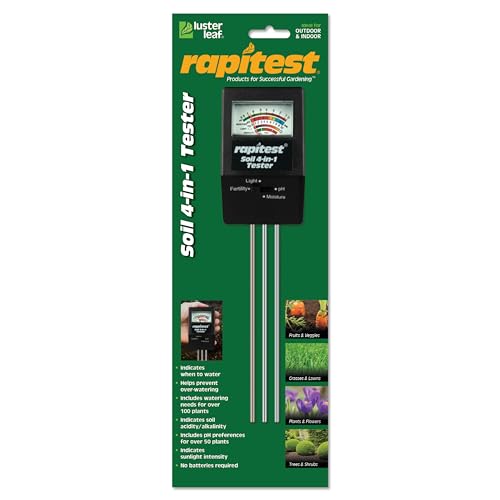
Luster Leaf 1818 Rapitest 4-in1 Soil Tester

Luster Leaf 1820 Rapitest Moisture Meter
A Closer Look At Each Pick
If you start seeds indoors or push cool-season crops out the door weeks before the last frost, soil temperature matters more than the calendar. The 1630 dial thermometer gives you a top-of-tool reading without bending over, which is helpful during repeated morning checks in a busy raised bed.
Unlike the digital 1625 below, this model runs on zero batteries and stays accurate through season after season. A stainless steel shaft also helps with corrosion through wet spring soil, though rinsing and drying after each session keeps the reading consistent.
Where It Delivers
- Top-facing dial, easy to read while standing
- No batteries or charging required
- Stainless steel build resists garden rust
- Comes with germination and transplanting temperature reference
Things To Consider
- Dial precision is harder to read than a digital readout in low light
- Probe tip benefits from a moist soil pocket for fastest response
Who Will Love This
Cool-season vegetable growers and back-yard transplanters who want a rugged, battery-free soil temperature check before sowing.
Look Elsewhere When
Growers who want a precise numerical readout at a glance will get more from the Luster Leaf 1625 Digital Soil Thermometer.
Transplanting tomatoes, peppers, or tender herbs into cold ground is a common springtime mistake, and the 1625 takes the guesswork out of the call. A digital readout gives you a clear number, no interpretation needed, which helps when you are comparing what the seed packet recommends with what your soil is actually doing.
Compare that to the analog 1630 above: you trade that battery-free simplicity for sharper, more precise readings. For gardeners working with sensitive warm-season crops, that precision often justifies the swap.
Advantages To Know
- Numerical LCD readout simplifies transplant timing decisions
- Compact form slips into a garden apron pocket
- Helpful when matching soil temp to crop-specific thresholds
Points To Note
- Requires a battery, so spares matter for long planting days
- Digital sensor can drift if left soaking in wet soil
Feature Snapshot
Built With In Mind
Vegetable gardeners transplanting warmth-loving seedlings and anyone who wants a quick numeric confirmation before moving plants outside.
Skip It When
You prefer zero-maintenance tools; the Luster Leaf 1630 Rapitest Dial Soil Thermometer runs purely mechanically.
Container gardens dry out unevenly, and the finger test only tells you so much. This mini moisture probe gives window boxes, hanging baskets, and grow bags a fast read on whether they actually need water today, which can save a struggling herb or hanging fern from a soggy week.
The trade-off shows up in scale: this probe is built for tight quarters rather than deep root zones. For a small balcony setup or a windowsill herb collection, it hits the sweet spot, but large veggie plots will feel under-served.
Why It Works Well
- Lightweight probe perfect for hanging baskets and grow bags
- Analog readout, no batteries to replace
- Helps prevent the most common container mistake: overwatering
- Compact enough to leave in the potting kit year-round
A Few Limitations
- Short probe limits use to shallow-rooted and small containers
- Analog meter takes practice to interpret across different soil mixes
Right Fit For
Apartment gardeners and balcony growers managing mixed containers who want a quick watering decision without hauling out a soil test kit.
Consider Something Else When
You are running a larger vegetable bed and need deeper readings; the Luster Leaf 1818 Rapitest 4-in-1 Soil Tester covers more ground in a single pass.
Soil pH quietly shapes whether your blueberries actually thrive or whether your tomatoes refuse to set fruit. The 1612 kit uses a capsule-and-color-comparator system to translate raw soil into a clear pH number you can match against plant preferences, even if you have never run a soil test before.
Same story with timing: ten tests per kit covers a full season for a small yard, but heavy testers will cycle through capsules quickly. The included reference list of over 450 plants is what turns this from a chemistry exercise into a practical gardening tool.
The Helpful Details
- Capsule system makes at-home pH testing approachable for first-timers
- Comes with a reference list for over 450 plant varieties
- Detailed step-by-step instructions included in the kit
- Compact box stores neatly on a potting bench
Where It May Fall Short
- Color matching is subjective and lighting affects the read
- Ten-test capacity means high-volume gardens will need refills
Best Suited To
New gardeners building their first vegetable bed and anyone curious whether acidic or alkaline soil explains stubborn plant problems.
Reach For A Different Pick When
You want instant pH readings without capsules; the Luster Leaf 1818 Rapitest 4-in-1 Soil Tester handles pH alongside moisture in a single probe pass.
A single probe that toggles between sunlight exposure, moisture, fertility, and pH is a tidy answer for gardeners who do not want four separate gadgets cluttering the shed. The 1818 reads each metric in turn, helping you spot whether yellowing leaves come from low light, dry soil, or missing nitrogen before guessing at fertilizer.
Compared with the single-purpose Rapitest Mini Moisture Tester, this device trades pinpoint accuracy for breadth. For mixed plantings where multiple variables interact, that breadth is usually the better trade.
Strong Points
- Four readings from one probe, less kit to keep track of
- Toggle switch lets you compare metrics quickly
- Helps prevent overwatering and over-fertilizing in the same pass
- Battery-free operation, ready when you are
Honest Caveats
- Each individual reading is less precise than a dedicated single-metric tool
- Probe tips benefit from cleaning between moisture and pH tests
Core Details
Made For
All-purpose gardeners managing mixed flower and vegetable beds who want broad diagnostics from a single tool.
A Better Fit Elsewhere
Tomato growers chasing precise soil temperature data will get more value from the Luster Leaf 1625 Digital Soil Thermometer.
Seed trays are unforgiving, since damping off and crusty soil both start with inconsistent moisture. The 1820 probe is built with that delicate early stage in mind, helping you keep cell trays and starter pots in the sweet spot between bone dry and soggy during germination.
Unlike the broader 1818 above, this one focuses on moisture only and stays out of the way during the busy weeks of sowing. For someone starting dozens of cell packs at once, that single-purpose focus tends to deliver more reliable daily decisions.
A Favorable Mix
- Slender probe reaches into narrow seed cells without disrupting roots
- Analog readout keeps the tool lightweight and simple
- Useful through both germination and early transplant stages
Practical Considerations
- Probe benefits from a quick wipe between cells to avoid cross-contamination
- Single metric means pairing with a pH test for full soil picture
Whose Shelf It Belongs On
Indoor seed starters managing trays of vegetables or flowers who want a moisture check that does not disturb delicate seedlings.
Swap It Out When
You want moisture, fertility, and pH together; the Luster Leaf 1818 Rapitest 4-in-1 Soil Tester bundles those reads into a single tool.
What Matters Most Before Choosing Luster Leaf Rapitest Moisture Meters
Probe Type And Reading Style
Analog probes are simple, battery-free, and inexpensive. They rely on a graduated scale and a quick visual match, which works well for moisture and rough temperature checks. Digital tools, like the 1625, give a numerical readout and tend to be easier to interpret precisely when matching soil conditions to crop-specific thresholds.
Use Case And Soil Depth
Container gardens, hanging baskets, and seed trays call for shorter, more delicate probes. Deeper raised beds and in-ground vegetable plots benefit from longer probes that reach past the surface crust and into the active root zone where moisture and temperature actually matter.
Single-Metric Versus All-In-One
Single-purpose meters, whether for moisture or temperature, give sharper, more reliable readings in their lane. Multi-function testers trade some pinpoint accuracy for breadth, which suits gardeners who want to troubleshoot several variables across mixed beds in a single pass.
Capsule Tests Versus Probe Reads
Capsule-based pH kits use color comparison and tend to suit gardeners who test occasionally and want a clear paper-trail result. Probe-based pH meters read instantly but need occasional cleaning and care to stay calibrated, so they suit frequent testers.
Smart Choices Before You Buy
Pitfalls Shoppers Hit
Picking a moisture probe without checking its length is a common slip, since short probes read surface conditions rather than root-zone moisture. Another trap is assuming every tester measures the same thing, since some read moisture only while others bundle pH and light.
Where The Extra Money Goes
Multi-function testers and digital readouts cost more because they add sensors, switches, and electronics. The upgrade usually pays off for gardeners managing mixed beds with several variables at play, while single-purpose analog probes cover the basics for tighter budgets and simpler setups.
Frequently Asked Questions
How Accurate Are Rapitest Moisture Meters?
Rapitest moisture meters give a reliable relative reading, which is enough to decide whether to water or wait. Absolute precision varies with soil type and probe contact, so consistent technique matters more than chasing lab-grade numbers.
Can You Leave A Soil Moisture Meter In The Pot?
Leaving a probe inserted long-term risks damage to both the probe and plant roots. Pulling it out between checks and wiping the tip keeps the readings consistent and the tool lasting longer.
What Is The Difference Between A Moisture Meter And A pH Tester?
A moisture meter measures how wet the soil is, while a pH tester measures acidity and alkalinity. Both tools answer different questions, and serious gardeners often end up owning one of each.
Do Rapitest Testers Need Batteries?
Analog Rapitest moisture meters and thermometers do not need batteries, which makes them travel-friendly and always ready. Digital thermometers like the 1625 do require a battery, so keeping a spare on hand avoids mid-season surprises.
How Often Should You Test Garden Soil?
Testing every two to four weeks during the growing season covers most gardener needs. More frequent checks make sense for moisture-sensitive crops or new transplants still establishing roots.
Wrap Up
The right Rapitest tool comes down to what your garden actually demands. A simple moisture probe covers container watering, a soil thermometer protects tender transplants, and a capsule pH kit or 4-in-1 tester opens up broader soil troubleshooting. Pick the one that matches your most common gardening question, and the rest of the season tends to fall into place.