Digging post holes by hand with a clamshell shovel is one of those jobs that humbles you fast. Twenty minutes in, your shoulders are barking and the holes look like rodent tunnels. The right auger changes the math entirely, letting you punch clean, consistent holes for fencing, deck footings, or a new run of saplings without renting a skid steer. This list walks through ten options across hand-powered, drill-bit, and gas-powered categories, so you can match the tool to your soil, your project size, and how often you’ll actually use it.
A Fast Comparison Of The Options

VASGOR Set of 3 Bulb & Bedding Auger Drill Bits

Power Planter 5″x28″ Auger Drill Bit Extension

DC HOUSE 1500W Electric Earth Auger 6″ Bit Set

Power Planter DIY Guru 3″x12″ Garden Auger

GardenTrax 52cc Dual-Spiral Earth Auger 8″

Prowoo 62CC Gas Auger Post Hole Digger

Oscorna 4″x44.5″ 2-in-1 Hand Auger
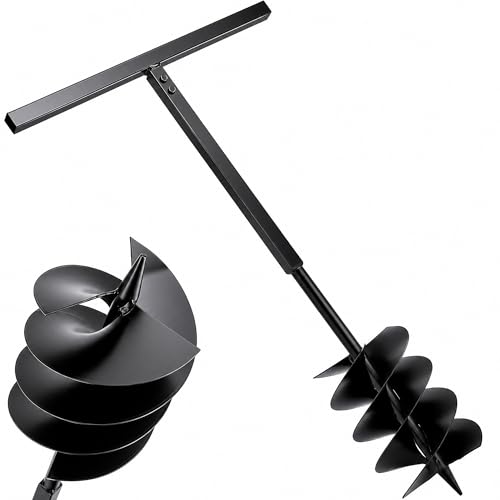
Oscorna 8″ Hand Drill Auger Post Hole Digger

Seymour S500 IWAN Auger 6″ with Hardwood Handle

Oscorna 6″x42.9″ 2-in-1 Hand Auger
A Closer Look At Each Pick
This three-piece VASGOR set leans into a problem most gardeners eventually run into: one auger size rarely fits every job. You get 1.6-inch, 2.6-inch, and 3.5-inch bits, all running 12 inches long, each designed to mate with any drill that accepts a standard 3/8-inch hex bit (a six-sided drive that clicks into a standard drill chuck). For a single afternoon planting two hundred tulip bulbs, that variety means you’re not stuck reaming a tiny hole wider or forcing a big bit through tight spots.
Compared with the more surgical drill augers further down this list, the VASGOR set trades raw cutting aggression for flexibility. If you mostly work bulb-sized tasks in loamy garden soil, the smaller two bits will probably see most of the action, and the 3.5-inch handles small bedding plants without complaint.
Real-World Strengths
- Three diameters in one purchase, which removes the need to buy separate bits for bulbs versus slightly larger starts
- Standard 3/8-inch hex drive fits most cordless drills already sitting on your workbench
- Compact 12-inch length keeps torque manageable in stiff soil without whipping your wrists around
- Useful for weed root extraction when the spiral catches the taproot and pulls it cleanly upward
Things To Consider
- Stock drill bits will burn out faster in rocky or heavily root-filled ground, so a brushless drill with a higher torque rating helps extend bit life
- None of the three sizes handles a true fence-post job, so this is a planting tool first and foremost
Who It Suits Best
Weekend gardeners planting bulbs, annuals, and small bedding plants in average soil who want one set instead of three separate purchases.
Where Another Pick Suits Better
The Power Planter DIY Guru Garden Auger is the better call for anyone wanting a single, more durable bit for repeated garden use rather than a multi-size starter set.
The Power Planter 5×28 is the deep digger of the drill-bit world. At 28 inches long and 5 inches across, it reaches past the topsoil layer to set 5-inch and 6-inch potted plants, and the doubled 10-gauge flighting (the spiraled steel ribbon welded to the shaft that pulls soil upward as it cuts) helps clear loose dirt faster than single-flight augers on tough jobs. The 1/2-inch non-slip hex drive fits heavier half-inch chuck drills, which matters when you’re pushing this much steel through clay.
Unlike the lighter VASGOR set above, this is built for repetitive, large-volume work where you’d otherwise be hauling a shovel and a post-hole digger around the yard. If you’ve got a row of three-gallon shrubs going in, the time savings stack up quickly.
The Helpful Details
- Doubled flighting moves excavated soil upward efficiently, reducing the bind-up that stalls smaller augers
- Reaches 28 inches deep in a single pass, which covers most nursery container depths without reaming
- 1/2-inch drive connection stays locked into higher-torque drills under load, preventing the bit from slipping in the chuck
- Steel construction tolerates abrasive soils that would wear down generic bits after a season
Trade Offs
- 28-inch length puts real torque demand on your drill and your wrists, so a corded or high-voltage brushless model is the safer pairing
- 5-inch diameter is overkill for bulbs and small annuals, which is why this lives in the shrub-and-tree category
Made For
Homeowners planting 5-inch and 6-inch potted shrubs or small trees who already own a strong corded or brushless drill.
Consider Something Else When
The DC HOUSE 1500W Electric Post Hole Digger is the smarter pick for full fence-post work where you need powered rotation rather than leaning on your own drill.
The DC HOUSE electric auger takes the drill-bit concept and bolts a dedicated motor on top. The 1500-watt motor delivers 90 ft-lb of torque (a rotational twisting force rating) at 270 RPM (revolutions per minute), which is enough to chew through the kind of clay that stalls a hand drill. You get a 6-inch bit plus 8-inch, 12-inch, and 20-inch extensions, so depth stops being the limit.
Where the drill augers above rely on your cordless tool’s stamina, this one shows up ready for a fence run. Compared with the gas-powered options later in the list, you trade a bit of raw torque for quieter operation, no fuel mixing, and a body you can store in a closet.
What Works In Its Favor
- Plug-and-play design skips the fuel-mixing and pull-starting of gas units
- Reverse function helps back the bit out cleanly when packed soil grabs the spiral
- Aluminum motor housing with a shock-absorbing nylon body keeps weight manageable on long jobs
- Standard 3/4-inch drive shaft accepts most aftermarket auger bits, so you aren’t locked into one supplier
Points To Note
- Needs a long heavy-duty outdoor extension cord, and runtime is capped by your outlet’s amperage rather than a fuel tank
- Single-spiral flighting moves less dirt per revolution than dual-spiral gas units, so very heavy clay still demands patience
Best Suited To
Homeowners installing fence posts, deck footings, or a run of small trees who want powered digging without gas-engine maintenance.
Look Elsewhere When
The GardenTrax 52cc Earth Auger Combo suits anyone working in remote acreage without easy access to a 1500-watt outlet.
The Power Planter DIY Guru is one of those tools that quietly earns its reputation. At 3 inches by 12 inches with a 3/8-inch non-slip hex drive, it slots into the same drill you already use for everything else and immediately starts making bulb planting feel less like punishment. It also stands in as a lighter-duty alternative to a traditional post-hole digger for short fence-post stubs.
Compared with the VASGOR multi-pack above, you’re trading size variety for a single, sturdier bit that handles more passes. The brand has been making augers long enough that the welding and steel gauge tend to outlast generic imports by a few seasons.
What Pays Off
- 3-inch diameter hits a sweet spot for bedding plants, small bulbs, and 4-inch potted starts
- Non-slip hex drive prevents the bit from spinning inside the chuck under heavy load
- Compact 12-inch length keeps control easy without forcing you to lean your full body weight onto the drill
- Reputation for durability means many gardeners keep the same bit for multiple seasons of heavy spring planting
Worth Bearing In Mind
- Not a substitute for a real post hole digger on full-depth 4×4 fence posts, so know the limits of a 12-inch reach
- Strain on smaller cordless drills can drain batteries faster than expected in dense soil
The Right Fit
Anyone who plants in volume each spring and wants one reliable drill auger that handles most backyard tasks short of full fence post holes.
Swap It Out When
The DC HOUSE 1500W Electric Post Hole Digger is the stronger pick when your project list includes actual fence post depth, not just planting.
GardenTrax leans into raw excavation with a 52cc two-stroke gas engine and an 8-inch dual-spiral bit. The doubled blade pulls roughly twice the soil upward per revolution, which translates directly to fewer stalls when you’re boring into compacted clay or rocky fill. The recoil starter is spring-assisted to take some of the shoulder strain out of cold starts.
Compared with the DC HOUSE electric auger above, this is louder, smellier, and heavier, but you also stop worrying about extension cords and breakers. For off-grid property work, that trade is usually worth it.
Real Benefits
- Dual-spiral flighting clears twice the dirt per rotation, cutting dig time on hard ground
- Two-stroke power reaches torque levels that 1500-watt electric units struggle to match in packed soil
- Anti-vibration foam grip handles reduce forearm fatigue during long fence runs
- Anti-shock patented spring starter smooths out the recoil pull for safer starts
Some Limits To Know
- Two-stroke engines require premixed fuel and oil, which adds maintenance steps electric users never see
- Engine noise and exhaust make it less neighbor-friendly for early-morning yard work
Key Specs
Who Should Grab It
Rural property owners and serious DIYers who need gas-level torque in clay, rocky fill, or root-heavy ground.
A Better Fit Elsewhere
The DC HOUSE 1500W Electric Post Hole Digger is the calmer choice for suburban fence runs where engine noise is the bigger concern.
The Prowoo 62cc package is built for someone who already knows they have a long day of holes ahead. You get a 62cc 2-stroke gas engine, 6-inch and 8-inch drill bits, plus a 60cm extension rod that pushes total depth into serious fence-post territory. The ergonomic handlebar with finger throttle and switch control keeps the controls within thumb’s reach instead of forcing a two-hand grip.
Compared with the GardenTrax above, this one bundles a second bit and an extension out of the box, so you’re not buying depth or diameter separately. For farm fencing or a deck foundation, that saves a few extra orders.
What Makes Sense
- 62cc engine output handles larger 8-inch holes without bogging down in mixed soil
- Two included bits (6-inch and 8-inch) cover most post diameters from garden stakes to 4×4 fence corners
- Finger throttle on the handlebar keeps speed control immediate, no reaching back to the motor
- Adaptable with most standard auger bits, so replacement parts are easy to source
Honest Caveats
- Two-person handling is recommended for larger bits, which is worth knowing if you usually work solo
- Fuel mix and oil ratios add routine maintenance compared with the DC HOUSE electric unit
Built With In Mind
Farm and acreage owners who need the depth and bit variety for livestock fencing, large deck footings, or orchard tree lines.
Another Choice May Suit
The Oscorna 4″x44.5″ 2-in-1 Hand Auger is the calmer pick for gardeners who don’t want gas engine maintenance for occasional planting.
The Oscorna 2-in-1 hand auger trades power for simplicity. No motor, no fuel, no battery: just a T-handle and a 4-inch spiral on a 44.5-inch shaft that breaks down into four stages with included wrenches. The same tool ships with both a post-hole auger head and a twist tiller head, so it pulls double duty in a small vegetable bed.
Compared with the drill-driven VASGOR set or the power augers above, this is slower per hole but quieter and cheaper. For someone planting a few tomato starts or setting a single mailbox post, the slower pace is the point.
Strengths Worth Knowing
- Four-stage connection breaks down for compact storage in a closet or shed corner
- T-handle height lets you work upright instead of bending, sparing your lower back
- Two heads included (auger and twist tiller) cover planting and light soil cultivation in one tool
- No fuel, batteries, or electricity required, which is handy for remote garden plots
Factors To Consider
- Hand-powered drilling is slow going in clay, so you may need to pre-soak dry ground the night before
- 4-inch diameter limits you to small plants and short post stubs rather than full fence work
Perfect Match For
Apartment gardeners, small-plot growers, or anyone setting a few short posts who values quiet, no-fuel operation over speed.
Skip It When
The Power Planter DIY Guru Garden Auger is the better fit if you own a strong cordless drill and want faster hole completion.
The wider sibling to the Oscorna 2-in-1 above, this 8-inch T-handle auger leans into broader coverage per hole. Total height of 44.5 inches keeps your back upright, and a 23.6-inch handle section lets you put body weight into the cut instead of just arm strength. The wider spiral means each pull grabs more soil, which speeds up bulb-row projects considerably.
Where the 4-inch version targets tight vegetable beds, this one steps up to bedding-plant prep and small post work. The honest read is that 8 inches wide is at the limit of what a hand-powered tool can handle comfortably in average garden soil without significant fatigue.
What Helps Most
- 8-inch bite cuts each hole in fewer passes, so a 20-bulb row finishes faster than with smaller augers
- 44.5-inch total height reduces the constant bending that turns short planting sessions into back pain
- Long handle section lets you drive the bit using leg and core strength, not just arms
- Stance stays upright, which improves hole verticality for consistent post alignment
A Few Limitations
- Wider spiral pulls harder in clay, so expect real arm fatigue on more than a handful of holes
- Single-purpose design (no twist tiller head) makes it less versatile than the 2-in-1 Oscorna above
Whose Shelf It Belongs On
Home gardeners running annual bulb or bedding rotations who want fewer passes per hole and don’t mind working manually.
Reach For A Different Pick When
The Power Planter 5×28 Auger Drill Bit Extension handles bigger planting jobs faster if you already own a heavy-duty drill.
The Seymour S500 IWAN is the throwback on this list. A 6-inch steel blade riveted to a pliable iron yoke, welded to a steel shaft, capped with a hardwood T-handle. No motor, no composite, no exotic steel. It’s the kind of auger that lives on a farm truck for thirty years and still gets used every spring.
Compared with the Oscorna hand augers above, this is heavier, sturdier, and priced accordingly. You give up the modular disassembly and lighter construction, and you get a tool that feels like it could survive being left outside in the rain.
Well-Handled Touches
- Hardwood handle absorbs vibration better than plastic grips during extended hand-digging sessions
- Steel blade riveted to the yoke, not welded, makes field repairs possible if the rivet ever fails
- General-purpose design handles a range of soils without specialty bit changes
- Made in USA construction typically signals tighter quality control on rivets and welds
Practical Considerations
- No extension capability, so depth is capped at whatever the single shaft length allows
- Hand-powered use still demands significant effort compared with any powered option in this list
Right Fit For
Traditionalists and small-property owners who want a no-fuss, repairable hand auger that outlasts trendier alternatives.
Not Your Match When
The Oscorna 8″ Hand Drill Auger Post Hole Digger is the friendlier pick for gardeners who want modular storage and a slightly wider bite.
Closing out the list is a second Oscorna 2-in-1 hand auger, this one sized at 6 inches by 42.9 inches with a two-stage breakdown instead of four. The shorter overall length compared to its 44.5-inch sibling makes it easier to maneuver in tight flower beds, and the wider 6-inch bite covers more ground than a 4-inch auger on the same number of rotations.
Compared with the Seymour S500 above, this is the modern, modular, mass-market alternative that favors lighter construction and storage flexibility over raw durability. For a suburban yard where the tool sees light seasonal use, that balance tends to land well.
Positive Points
- 6-inch diameter handles bedding plants and small post stubs in fewer passes than 4-inch augers
- Two-stage connection is faster to assemble than the four-stage Oscorna above when you only need partial reach
- Non-slip handle material keeps grip steady even when hands are dusty or damp
- Same dual-head versatility as the Oscorna 4-inch, giving you a tiller and an auger in one tool
Where It May Fall Short
- 6-inch hand-powered drilling demands more body weight per stroke, which adds fatigue on long sessions
- Shorter 42.9-inch reach may require kneeling for taller gardeners working deep holes
Key Specs
Who Will Love This
Suburban gardeners refreshing bedding annuals each season who want one compact tool that handles both digging and light tilling.
Where A Sibling Pick Shines
The Power Planter DIY Guru Garden Auger makes more sense for anyone with a strong cordless drill who wants faster hole completion without manual effort.
What Matters Most Before Choosing Manual Auger Post Hole Diggers
Match the Power Source to Your Soil
Hand augers like the Oscorna and Seymour models work best in soft, previously worked garden soil. Compacted clay, rocky fill, or root-heavy ground quickly turns a hand auger into an upper-body workout. Powered options (electric like the DC HOUSE or gas like the GardenTrax and Prowoo) cost more and add weight, but they keep digging speed consistent when the soil fights back.
Diameter and Depth Tell the Real Story
A 3-inch auger handles tulip bulbs; a 6-inch or 8-inch bit handles fence post footings. Depth is a separate calculation. Drill augers typically max out around 12 to 28 inches without extensions. Powered units with add-on extensions (like the DC HOUSE 8-inch, 12-inch, and 20-inch rods) reach proper footing depth for deck posts and 4×4 fence corners.
Drive Compatibility and Tool Ecosystem
Drill augers only work with drills that accept their hex drive size. A 3/8-inch hex fits most homeowner cordless drills, while a 1/2-inch drive (Power Planter 5×28) needs a beefier chuck. Confirm your drill has the torque rating to actually spin the auger; small 12-volt drills will stall in clay regardless of bit quality.
Storage and Maintenance Footprint
Hand augers disassemble into short sections and disappear into a closet. Gas units need fuel mix, two-stroke oil, and a stable storage spot. Electric units split the difference: heavy enough to need a shelf, but no fuel handling. Pick the maintenance level you’re actually willing to repeat each season.
Key Considerations Across These Picks
Pitfalls Shoppers Hit
The most common mistake is matching an auger to the wrong job. A drill auger meant for bulbs will frustrate anyone trying to dig 24-inch deck footings, and a heavy gas auger is overkill for a six-hole mailbox post project. Equally common is underestimating drill torque requirements. A small cordless drill spinning a wide auger in clay is a fast path to a burned-out motor, regardless of how good the bit is.
Where The Extra Money Goes
Higher-tier picks like the Prowoo 62cc, GardenTrax 52cc, and Power Planter 5×28 spend their added cost on torque, dual-spiral flighting, and extension capability. The trade is meaningful only if your soil or your project size actually demands it. For a few annual bedding holes, that extra power sits unused. For a 30-hole fence run in clay, it pays for itself in time and sanity.
Frequently Asked Questions
What size auger do I need for fence posts?
For standard 4×4 fence posts, an 8-inch auger bit gives you enough clearance to backfill and set the post without over-excavating. Smaller 6-inch bits work for 2×4 rails or mailbox posts, but leave less room to adjust post alignment during setting.
Can a regular cordless drill power a garden auger?
Smaller augers (under 4 inches and 12 inches long) work with most 18V homeowner drills. Wider or longer augers need a brushless drill with high torque output or a dedicated electric auger unit. Underpowered drills will stall in clay and can overheat quickly.
How deep can a manual auger dig?
A single-piece hand auger reaches its fixed shaft length, typically 42 to 48 inches, which covers most planting and shallow post needs. For deeper footings, look for modular augers with extension sections or step up to a powered unit with add-on rods.
Are gas augers worth it for occasional home use?
Gas augers earn their keep on projects with more than a dozen holes or in soil that stalls hand tools. For one or two holes a year, the fuel mix, recoil starting, and exhaust make them more trouble than they’re worth. Electric or hand augers cover occasional use with far less hassle.
How do I keep an auger from binding in rocky soil?
Work in short bursts, pull the auger out every few inches to clear loose material, and let the bit cool between holes in heavy clay. For consistently rocky ground, a pilot hole with a smaller-diameter auger can help a larger bit track straighter without grabbing stones.
Closing Thoughts
The right auger depends less on spec sheets and more on how often you’ll dig, how hard your ground is, and whether you already own a drill that can handle the load. Drill augers cover most gardening, gas augers cover real fence and deck work, and hand augers fill the gap for quiet, occasional jobs. Match the tool to the soil in front of you, and the post holes practically dig themselves.