You don’t need a noisy engine or a tangled cord to prep a bed. For a small plot, raised bed, or tight corner of the yard, a hand or compact electric tiller gets the soil loosened, weeds lifted, and amendments mixed without dragging out a wheelbarrow-sized machine. The picks below split into two camps: hand tools that rely on body weight and leverage, and corded or corded-free mini tillers that do the spinning for you. Both earn a place here depending on the soil, the bed size, and how often you tend to it.
How The Shortlist Stacks Up
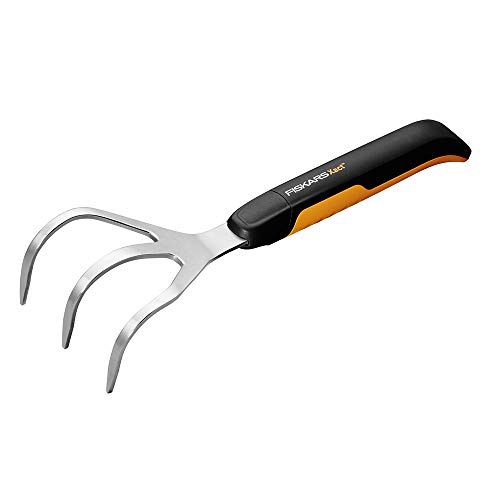
Fiskars Xact Hand Cultivator (Stainless Steel)

Garden Guru Hand Cultivator Rake Tiller Tool

Garden Hand Tiller Cultivator (4-Tine, Adjustable)

IncwBo 12″ 8.5-Amp Corded Garden Tiller

IncwBo 12″ 10.5-Amp Electric Roto Tiller

IncwBo 12″ 15-Amp Electric Roto Tiller

21V Cordless Mini Tiller (8.0Ah Batteries)

21V Cordless Mini Tiller (4.0Ah Batteries)

21V 2-in-1 Cordless Mini Tiller (1.5Ah Batteries)
21V 2-in-1 Cordless Mini Tiller (8.0Ah Batteries)
The Details Behind The Selections
The Fiskars Xact is the kind of hand tool that quietly earns a permanent spot by the back door. Its curved tines bite into loose topsoil and slice through shallow roots, which makes quick work of a flower bed that’s been rained on too many times. The weighted handle and SoftGrip finish keep your wrist from barking after a long afternoon of pulling chickweed from around the iris.
You’ll notice the difference the moment you sink the tines in. Where cheaper cultivators bounce off crusty ground, this one drives down with a steady pull, loosening the soil just enough to let air and water reach the roots below. For most backyard gardeners, that balance of weight and feel is the real prize.
Everyday Perks
- Curved tines reach into tight spots between perennials without uprooting neighbors.
- Stainless steel head resists rust through wet spring seasons.
- SoftGrip handle lets you shift your grip mid-stroke without hot spots.
- Weighted handle transfers effort into the soil, sparing your shoulders.
Things To Consider
- Best suited to soft, regularly tended soil; hard, compacted ground can be a workout.
- The longer handle takes some practice to control in close quarters.
Who It Suits Best
Anyone tending established flower beds and raised plots who wants a polished hand tool for routine weeding and aeration.
Where Another Pick Suits Better
The Garden Guru Hand Cultivator Rake Tiller Tool handles harder, rockier ground for gardeners tackling rougher soil.
Where the Fiskars leans refined, the Garden Guru leans rugged. Three large high-carbon steel tines give it the bite to push through heavier clay and the kind of compacted patch you find at the edge of a new yard. The head sits on a solid connection that holds up to the occasional rock without flexing in your hands.
You can feel the difference in the soil. The tines break up clods and turn compost into the top layer, which is exactly what you want when prepping a bed for tomatoes or root crops. For gardeners in newer developments where the ground has been compacted by heavy equipment, this is a sensible starting point.
Notable Upsides
- High-carbon steel tines stand up to rocky, clay-heavy ground.
- Rust-resistant finish keeps the tool looking presentable after damp mornings.
- Ergonomic handle absorbs torque so your hands stay comfortable.
- Three-tine design moves a meaningful amount of soil per stroke.
Worth Noting
- Slightly heavier than slim hand cultivators, which can tire out smaller gardeners on long sessions.
- Best used before weeds go to seed; mature roots can wrap around the tines.
Feature Snapshot
Right Fit For
Gardeners working with rocky or clay-heavy soil who want a sturdy hand tool that can take some punishment.
Not Your Match When
The Fiskars Xact Hand Cultivator is a better fit when the work is mostly light weeding in established beds.
The Coopvivi cultivator shows up with four tines instead of three and an adjustable long handle that lets you stand up straight while you work. If you’ve ever finished a bed and felt the ache in your lower back the next morning, you’ll appreciate the difference. The longer shaft multiplies the downward force, so the tines dig without you having to kneel or crouch.
Compared with the shorter Fiskars and Garden Guru models, this one trades some of that close-up precision for working comfort. The four-tine head breaks soil into a finer pattern in fewer passes, which helps when you’re prepping a whole row instead of a single plant.
What Pays Off
- Adjustable handle length lets you tune the tool to your height and posture.
- Four-tine head covers more width per pass than three-tine designs.
- High-carbon steel construction handles compacted ground.
- Reduces kneeling and bending for gardeners with mobility concerns.
Trade Offs
- Longer handle adds weight, which can be a factor during extended sessions.
- Less nimble between tightly spaced plants than shorter hand tools.
Built With In Mind
Taller gardeners and anyone with knee or back sensitivity who wants leverage without crawling on the ground.
Skip It When
The Fiskars Xact Hand Cultivator stays the better pick for tight, close-up weeding in crowded beds.
The IncwBo 8.5-Amp corded tiller is the gentlest entry into the powered side of the list. It spins a 12-inch swath, enough to chew through a small vegetable patch or open up a brand-new flower bed in a weekend. Plug-in power means you never wait for a battery to charge, and the corded motor delivers steady torque as long as you feed it current.
For gardeners with an outdoor outlet within reach, the trade-off is mostly about the cord. You drag it along as you go, and you’ll want an outdoor-rated extension cord. In return, the unit runs quietly enough that your neighbors won’t hate Saturday morning.
Points In Its Favor
- Steady corded power without runtime anxiety.
- 12-inch working width covers a meaningful patch in a single pass.
- Lighter motor than higher-amp siblings for easier handling.
- Push-button start avoids the pull-cord dance.
Things To Weigh
- Corded design limits reach to the length of your extension cord.
- Lower torque means hard, root-bound ground can stall the rotor.
- Tines may need cleaning after each use to prevent rust.
Whose Shelf It Belongs On
Small-home gardeners with access to outdoor power and modest beds that need regular turning.
Look Elsewhere When
The IncwBo 15-Amp Electric Roto Tiller is a stronger match for compacted or previously untilled soil.
The middle child of the IncwBo trio trades a few amps of extra muscle for noticeably better performance in denser soil. The rotor drives through ground the 8.5-Amp version would bog down in, which saves you from lifting and resetting the tiller mid-row. For most home gardens with a mix of turned and untilled patches, this is the comfortable middle.
You still get the 12-inch working width and corded convenience, but the extra torque shows up where it counts: in clay patches, around perennial roots, and in beds that haven’t been worked in a season or two. Setup stays simple, with no batteries to manage.
Everyday Wins
- Higher torque handles harder ground without stalling.
- Same 12-inch width as the smaller sibling for consistent coverage.
- Corded power eliminates downtime for charging.
- Compact enough to navigate between raised beds.
Honest Caveats
- Still tied to cord length and outdoor outlet access.
- Slightly heavier than the 8.5-Amp version.
- Working depth varies with soil moisture; dry ground resists the rotor.
Feature Snapshot
Best Suited To
Mid-sized plots where soil tends to be a bit stubborn, and gardeners who want corded reliability without going to the heaviest option.
Reach For A Different Pick When
The IncwBo 12″ 15-Amp Electric Roto Tiller earns its place if compacted ground is the rule rather than the exception.
The IncwBo 15-Amp is the strongest corded option in the lineup, and it shows up ready for the kind of ground that frustrates smaller motors. Four replaceable steel tines chew through compacted beds, and the 15-amp motor keeps them spinning even when you hit a patch of thick roots. If you’re breaking new ground rather than refreshing an old one, this is the corded tool to reach for.
The honest trade-off is weight and noise. It pushes through soil in fewer passes, but you’ll feel the extra mass on turns and at the end of a row. For larger plots where one good pass saves an hour of hand work, that balance pays off.
Useful Touches
- 15-Amp motor delivers the highest corded torque in this roundup.
- Replaceable steel tines extend the working life of the tool.
- 12-inch swath covers substantial ground per pass.
- Push-button start keeps things simple on cold mornings.
Points To Keep In Mind
- Heavier than the 8.5-Amp and 10.5-Amp siblings.
- Still corded, so outlet access sets your working radius.
- Wet, clay-heavy soil can clump on the tines until cleaned.
Made For
Gardeners with compacted or neglected beds who want corded power strong enough to tackle serious groundwork.
Another Choice May Suit
The 21V 2-in-1 Cordless Mini Tiller (8.0Ah Batteries) is a better match when reach, not torque, is the bigger concern.
The WTFOVOV cordless mini tiller trades raw power for freedom from cords and outlets. Two 4.0Ah batteries keep the rotor spinning at 235 RPM through longer sessions, so you can move from bed to bed without dragging a cable or waiting for a recharge. For a yard with multiple planting zones, that convenience is the headline feature.
It runs cooler and quieter than the larger IncwBo corded options, which makes it easy to share garden time with the rest of the household. The mini frame fits between raised beds and tight rows where a full-size tiller would be overkill.
Real-World Strengths
- Two 4.0Ah batteries provide extended runtime for multi-bed sessions.
- Cordless operation reaches parts of the yard no extension cord can.
- Compact frame works raised beds and narrow rows.
- Lower noise output suits early morning or evening use.
Small Caveats
- Less torque than corded options for breaking truly compacted ground.
- Mini frame means more passes for large open plots.
- Battery storage matters in cold winter months to preserve capacity.
Feature Snapshot
Who Will Love This
Gardeners running multiple beds who want cordless convenience and enough runtime to finish the job on one charge cycle.
Swap It Out When
The IncwBo 12″ 10.5-Amp Electric Roto Tiller makes more sense for big open plots that need stronger corded torque.
The smaller-battery sibling of the WTFOVOV cordless line trades some runtime for a lighter carry and a friendlier grip. Two 2.0Ah batteries keep the rotor humming through a small raised bed or a patio garden, and the lower mass makes it easier to lift onto a workbench for storage. If your gardening is measured in square feet rather than square yards, this is the cordless pick that doesn’t feel like overkill.
It’s noticeably less powerful than its 8.0Ah cousin, so going slow on the first pass pays off. Owners commonly report the best results in soil that’s been worked recently or amended with compost.
Bright Spots
- Lightweight cordless design is easy to carry and store.
- Lower price point than the higher-capacity battery version.
- Compact frame fits patios, balconies, and small raised beds.
- Quick battery swaps keep you moving without long charging breaks.
Factors To Consider
- Smaller batteries mean shorter runtime between charges.
- Not built for hard, untilled ground.
- 2.0Ah cells lose capacity faster if stored fully drained over winter.
Perfect Match For
Patio and small-raised-bed gardeners who want a light, untethered tool for quick soil refreshes.
A Better Fit Elsewhere
The 21V Cordless Mini Tiller (8.0Ah Batteries) handles larger jobs with longer runtime when you need to cover more ground.
The 2-in-1 WTFOVOV tilts between two working styles that solve different problems. Handheld mode keeps you close to the soil for precision work around delicate plants, while the included extension rod lets you stand upright for broader cultivation. That second option is a quiet gift for anyone with a bad back or a few too many raised beds to crouch beside.
The 4-inch working width is intentionally narrow, so this is a precision tool rather than a coverage tool. You’ll make more passes on a wide row, but you’ll also disturb fewer roots you wanted to keep.
Everyday Advantages
- Switchable handheld and long-handle modes fit different tasks.
- Extension rod reduces bending for upright cultivation.
- Lightweight build is approachable for less experienced gardeners.
- Compact 4-inch width protects neighboring plants.
Possible Compromises
- Smaller batteries mean shorter continuous runtime.
- Not designed for large open plots or compacted ground.
- Two-piece assembly adds a step before each session.
Right Fit For
Gardeners who want one tool that switches between close-up hand cultivation and upright bed work in raised beds or flower borders.
Consider Something Else When
The IncwBo 12″ 8.5-Amp Corded Garden Tiller is a better match for wide, open plots where runtime matters less than coverage.
The 8.0Ah version of the 2-in-1 WTFOVOV combines the flexibility of the handheld and long-handle modes with enough battery capacity to finish a session without swapping cells mid-row. The extension rod reduces bending, the 235 RPM rotor handles loose and amended soil, and the 4-inch working width respects the plants you want to keep.
It earns its place at the top of the cordless group by giving you the runtime of the larger battery model with the form factor of the smaller one. For most home gardeners, that’s the practical sweet spot.
The Practical Payoff
- Two 4.0Ah batteries support longer sessions across multiple beds.
- 2-in-1 design adapts to both precision and upright work.
- Cordless reach extends to far corners of the yard.
- Manageable weight for gardeners of varied strength levels.
Things To Weigh
- Still not a substitute for a corded tiller on hard-packed ground.
- 4-inch width means more passes on wide rows.
- Batteries benefit from off-season storage at partial charge.
Feature Snapshot
Who Should Grab It
Gardeners with raised beds and mixed plantings who want cordless convenience, runtime to spare, and the option to stand upright.
Where A Sibling Pick Shines
The IncwBo 12″ 15-Amp Electric Roto Tiller is the better fit for larger plots with compacted soil.
Choosing The Right Tool For Your Soil And Beds
A tiller is only as useful as the match between the tool and the ground it meets. Hand cultivators rely on body weight and leverage, so they shine in soft, regularly tended soil where the goal is to lift weeds and aerate without disturbing plant roots. Powered tillers bring rotation to the work, and the difference between a mini cordless unit and a full-size corded machine comes down to soil density, bed size, and access to power.
For a small backyard with amended soil, a hand cultivator often does more than people expect, especially around perennials where precision matters. For a brand-new bed or compacted ground that hasn’t been turned in years, a corded electric tiller with higher amperage saves hours of effort. Cordless mini tillers sit between those poles, trading torque for freedom and quiet operation.
Consider how far the nearest outdoor outlet sits from your beds. If it’s more than a hundred feet, dragging an extension cord quickly turns a peaceful Saturday into a cable management puzzle, and a cordless option earns its keep. If the outlet is right there, corded power gives you steady torque without runtime anxiety.
Think about storage too. Full-size tillers take up shed space and benefit from a dry spot over winter. Hand cultivators hang on a hook. Cordless tools live or die by battery care, so a spot at moderate temperature matters more than people expect.
Finally, consider how often you’ll actually use it. A tiller that’s perfect for spring prep can become overkill for a quick midseason weeding session. Pairing one powered tiller with a quality hand cultivator covers both bases without redundancy.
Picking The Right Match For Your Garden
Mistakes Worth Dodging
A common slip is buying the most powerful corded tiller on the market for a small raised bed that only needs a quick refresh. The motor ends up doing the work, but the extra weight makes the tool harder to control in tight quarters. Match the tool to the bed size, not the other way around.
Another misstep is underestimating cord length. A 50-foot cord plus a 25-foot reach still only gets you 75 feet from the outlet. Measure the distance to the farthest bed before settling on a corded model, or you’ll find yourself shopping for an outdoor-rated extension cord the day after delivery.
When Paying More Pays Off
Higher-tier tillers in this category earn their keep through better motors, replaceable tines, and longer-lasting batteries. The IncwBo 15-Amp model and the 8.0Ah WTFOVOV both reflect upgrades that show up over years of use: stronger components, longer runtime, and the kind of build that shrugs off a season of damp storage. Pay more when you till often, when soil is challenging, or when you want one tool to last several growing seasons without a midlife replacement.
Frequently Asked Questions
What is the difference between a hand cultivator and a powered tiller?
A hand cultivator uses your body weight and leverage to break up soil and pull weeds, while a powered tiller uses a motor-driven rotor to do the turning for you. Hand tools fit tight spaces and gentle work; powered tillers cover more ground in less time but need more clearance and access to power.
Are cordless mini tillers powerful enough for real garden work?
Cordless mini tillers handle loose, regularly tended, or amended soil well, especially in raised beds and small plots. For hard-packed ground or breaking new beds, a corded tiller with higher amperage is the stronger choice.
How deep do these tillers dig?
Corded mini tillers in this roundup reach up to about 8 inches, depending on soil conditions and how many passes you make. Hand cultivators work at the depth your wrist and arm are willing to push them.
Do I need to clean the tines after each use?
Cleaning tines after use is good practice. Soil and moisture left on steel tines encourage rust, and tangled roots can interfere with the next session. A quick brush and a dry storage spot go a long way.
Can a hand cultivator replace a powered tiller?
In small, well-tended beds, yes. In larger plots or compacted soil, hand tools become a workout and a powered tiller saves real time. Many gardeners end up using both, one for precision and one for coverage.
The Takeaway
The right tiller comes down to bed size, soil type, and how close an outlet sits to your garden. Hand cultivators cover precision and routine weeding; corded tillers bring the muscle; cordless mini tillers bring the reach. Pick the tool that fits the job you’ll actually do most often, and your soil will thank you all season.