Compacted soil suffocates grass roots, and a manual aerator is the most direct fix for small-to-mid lawns without renting a machine. Walk behind any suburban yard on a Tuesday evening and you’ll see the result: slow-draining puddles, thin patches, moss creeping into the shadier corners. A good hand-pushed or hand-driven aerator punches holes that let water, air, and fertilizer reach the root zone. The nine picks below cover spike, hollow-tine, and rolling styles, plus one specialist tool for tight row work, so you can match the tool to your soil and your back.
Your Options, Compared

WOLF Garten Aerator BIM 1345000

Landzie 42-Inch Spike Tine Aerator
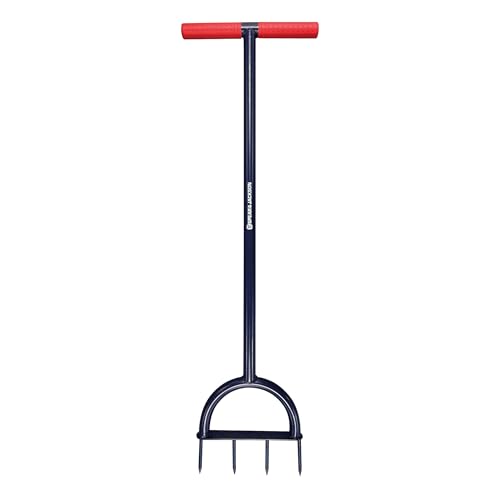
Spear & Jackson 4852LSA Spike Aerator

onoxouo Heavy-Duty Aerator Shoes

RAEOHE 4-Tine Hollow Core Aerator

Landzie 42-Inch Hollow Tine Aerator

Landzie 42-Inch Hollow and Spike Set

Seeutek 40-Inch Tow-Behind Spike Aerator

Seeutek 18-Inch Push Spike Aerator
A Breakdown Of The Leading Choices
The WOLF Garten Aerator BIM is the odd one out in this list: it’s a scarifying blade designed for narrow planted rows, not broad turf. If you keep a kitchen-garden strip between vegetable beds, the 3.5 cm working width slips between seedlings where a 16-inch push aerator would crush the crop.
Build quality leans on a hardened steel blade paired with a plastic housing, and it slots into the multi-star handle system, so you can swap the head for a hoe or cultivator when the season turns. For an open lawn, the picks below offer far more bite per step.
What It Does Well
- Slides through 3.5 cm row spacings without disturbing neighboring plants.
- Hardened steel edge cuts small weeds while it opens the soil.
- Modular handle system keeps storage compact and replaces dedicated long tools.
- Light enough for raised-bed gardeners with limited upper-body strength.
Points To Note
- Handle sold separately, a common gotcha for first-time multi-star owners.
- Plastic housing can crack if you lever against stones.
- Covering a full backyard lawn with this blade would take most of a weekend.
Best Suited To
Vegetable gardeners with tight rows who want one aerating pass between plantings each spring.
A Better Fit Elsewhere
Anyone managing open turf will reach deeper results with the Spear & Jackson 4852LSA, which is built for broad coverage.
The 42-inch Landzie spike aerator trades plug removal for raw penetration. Three solid stainless tines push straight into the ground instead of pulling cores, which means less cleanup on the lawn after you finish. The long handle keeps your back upright while the wide stance stops the tool from twisting sideways mid-push.
Where it shines is dry, baked clay that resists plug-style tools. You step, the spikes bite, and water has a channel to follow into the root zone. The trade-off is that solid tines compact soil sideways around the hole, so this is a maintenance pass rather than a rescue tool for heavily thatched lawns.
A Strong Showing
- Stainless tines resist bending and rust season after season.
- 42-inch handle keeps posture upright for less back strain.
- Leaves no plugs to rake up afterward, a real time-saver.
- Three-tine spacing balances bite and ease of stepping.
Small Caveats
- Spike aeration can compact surrounding soil in heavy clay, mildly reducing long-term benefit.
- Storage is bulky because the handle doesn’t fold.
Feature Snapshot
Whose Shelf It Belongs On
Homeowners with dry, hard-packed soil who want less cleanup than plug aeration leaves behind.
Skip It When
Your lawn is thick with thatch, where the RAEOHE 4-tine hollow corer pulls actual relief cores instead.
Think of the Spear & Jackson 4852LSA as the heirloom hand tool in this roundup. The all-metal body and wide T-handle with a non-slip grip feel closer to a commercial rake than a typical consumer spike. Carbon steel spikes drive into turf with very little foot stomping needed, which your knees will thank you for.
Compared with the long-handle Landzie above, this is the tool you grab for spot work along a compacted path or around a dog run. Coverage per step is much smaller, but control is excellent and you can target trouble zones without over-aerating the rest of the yard.
Why It Works Well
- Carbon steel spikes hold an edge and resist bending in rocky soil.
- Wide T-handle with non-slip grip transfers force from your shoulders.
- Secure footrest gives you a stable stepping platform.
- All-metal construction shrugs off shed moisture and rough handling.
Worth Bearing In Mind
- Slower coverage than rolling or long-handle tools, best for spot work.
- Smaller working footprint per step means more trips across the lawn.
The Right Fit
Traditional gardeners who like a hand-driven, foot-down feel and a tool they can hand down.
Not Your Match When
You want fast broad-lawn coverage, where the Seeutek 18-Inch push aerator rolls through in a fraction of the time.
Aerator shoes turn a lawn walk into a treatment. You strap them on, mow the lawn as usual, and the steel spikes underneath punch holes with every step. The 5 mm metal base on this pair is markedly thicker than the budget versions you find at discount stores, and the wider footrest helps you lean your weight into each stride without slipping.
For someone who already walks the yard daily, this is the lowest-effort entry into aeration. For someone whose lawn is genuinely compacted clay, you may find the spikes only dimple the surface, which is where heavier plug-style tools earn their keep.
The Helpful Details
- 5 mm metal base outclasses thinner shoe-spike designs in side-by-side comparisons.
- Wider footrest makes it easier to drive weight through each step.
- Strap-on design frees your hands and lets you multitask.
- Stores flat in a closet, no handle or rolling frame to find space for.
Where It Is Less Suited
- Spike depth is shallower than a foot-pressed core tool on hardpan soil.
- Straps can wear out faster than the spikes themselves, a common long-term issue.
Made For
Casual weekend gardeners who want light aeration while doing other lawn work.
Look Elsewhere When
Your soil is heavily compacted and needs genuine core removal, in which case the Landzie 42-Inch Hollow Tine Aerator pulls real plugs thatch-riddled lawns need.
Where the spike aerators punch holes, the RAEOHE hollow-tine tool pulls plugs. Four hollow tines extract cylinders of soil up to 3.94 inches deep, opening real channels for water, air, and seed. The side-opening tines shed soil as you lift, which keeps you from stopping every few steps to clear a clog.
This is the manual tool for homeowners who want plug-style results without renting a machine. You will rake up cores afterward, so budget a few extra minutes for cleanup or leave the plugs to break down naturally as a light top-dressing.
A Few Highlights
- Four hollow tines remove more soil per step than single-tine corers.
- 3.94-inch core depth reaches the upper root zone on most turf.
- Side-opening anti-clog design reduces stops during long passes.
- Manual operation means no fuel, oil, or extension cords to manage.
Practical Considerations
- Foot force is required on hard ground, so the wide footrest earns its place.
- Cleanup of cores adds a step to your lawn routine.
Who Should Grab It
Homeowners overseeding in fall who need actual core removal rather than spike compression.
Consider Something Else When
You want one tool that handles both dry clay and damp thatch: the Landzie 42-Inch Hollow and Spike Set swaps tines for the job.
The hollow-tine Landzie shares its 42-inch frame and stainless steel construction with the spike version earlier in this list, but the heads tell a different story. Beveled hollow tines pull cores cleanly and resist the clogging that plagues cheaper plug tools. Stepping pressure is meaningfully higher than a spike, though, so wet or well-watered soil is your friend here.
For most homeowners, hollow tines deliver more agronomic benefit than spikes because they actually remove material instead of compressing it sideways. If you overseed annually, the cores also serve as a free top-dressing as they crumble.
What Stands Out
- Beveled tine design sheds soil cleanly mid-step.
- Stainless construction holds up to repeated wet-soil use.
- Long handle reduces lower-back strain over a full-yard pass.
- Three-tine layout balances bite force and stability.
Factors To Consider
- Hard, dry soil makes hollow tines tough to drive without soaking the lawn first.
- Cores must be raked or broken up for a tidy finish.
Technical Highlights
Best Suited To
Homeowners who water their lawn the night before aerating and want genuine plug removal.
Another Choice May Suit
Owners of dry-soil lawns get better bite from the Landzie 42-Inch Spike Tine Aerator earlier in this list.
If you’re tired of choosing between spike and hollow tine at the store, this set solves the problem. The same Landzie 42-inch frame accepts interchangeable heads, so a dry-July pass uses spikes and a fall-overseeding pass uses hollow tines. One tool, two jobs, and one trip back to the shed.
Compared with the single-mode Landzie picks above, the swap adds a small step: you unbolt the head, swap it, and tighten. Owners commonly find that step takes about a minute once they get the hang of it, which is a fair trade for the flexibility.
Good Reasons To Consider
- Two tine systems cover dry-soil and thatch-heavy conditions.
- Shared frame reduces storage footprint vs. owning two tools.
- Stainless steel construction matches the rest of Landzie’s lineup.
- Long handle keeps posture neutral during use.
Points To Keep In Mind
- Head swaps require a wrench and a few minutes each time.
- Slightly heavier than the single-mode Landzie spike version.
Feature Snapshot
Made For
Homeowners whose soil shifts between dry summer and damp spring conditions across the year.
Reach For A Different Pick When
You want plug removal only and the RAEOHE 4-Tine Hollow Core Aerator does that job without the swap step.
This Seeutek model is the only pick in this roundup that hooks to a riding mower or ATV. Ten 8-inch galvanized 3D star tines rotate independently as you drive, each with 10 sharp points that slice into compacted soil up to 2 inches deep. The 330-lb weight tray turns the aerator itself into the downforce: load it with concrete blocks and the tines bite deeper without you lifting a finger.
For a one-acre yard, a tow-behind turns a full-afternoon manual chore into a 20-minute tractor pass. The trade-off is that you need a mower or ATV with a hitch and enough flat ground to make turning safe.
Benefits That Matter
- 330-lb tray capacity drives tines deep without operator effort.
- Galvanized steel resists rust through wet seasons.
- Independent star tines cover ground without missing turns.
- 40-inch width matches a standard mower pass.
Less Ideal Details
- Requires a riding mower or ATV with a hitch.
- Storage footprint is large compared to hand tools.
Feature Snapshot
Made For
Riding-mower owners with half-acre-plus lawns who want machine-paced aeration.
Skip It When
Your yard is too small to justify a tractor pass, where the Seeutek 18-Inch push aerator covers the same ground by hand.
The 18-inch Seeutek push aerator is the rolling middle ground. Five 3D star tines spin independently as you walk, each tipped with 10 sharpened points that pierce the soil up to 2 inches deep. The 220-lb tray takes cement blocks if you want to push deeper without extra body weight.
Compared with the 40-inch tow-behind above, this is the right size for a city lot. You trade coverage width for the ability to navigate tight side yards and around flower beds without backing up a tractor. The four-wheel design keeps the tool stable on uneven ground.
Reasons It Performs
- Independent 3D star tines keep biting even while turning.
- Galvanized steel resists rust through wet storage.
- Non-slip handle keeps grip secure when you lean in.
- 220-lb tray lets you add downforce on stubborn patches.
A Few Limitations
- Coverage per pass is half the width of the tow-behind Seeutek.
- Best results come after rain or irrigation, which adds a step to your routine.
Feature Snapshot
The Right Fit
Suburban homeowners with a quarter-acre yard who want push-paced aeration without renting a machine.
Consider Something Else When
You maintain a half-acre or more of open turf, where the Seeutek 40-Inch Tow-Behind Spike Aerator finishes in far fewer passes.
What Matters Most Before Choosing manual lawn aerators
Soil type drives the decision more than lawn size. Compacted clay resists plug tools, so spike-style picks like the Landzie 42-Inch Spike Tine Aerator or the Seeutek push aerator punch through where hollow tines would simply bend. Sandy or well-amended soil accepts hollow tines easily and benefits more from plug removal because the cores crumble back into the surface as natural top-dressing. The honest read is that spike and hollow tine tools aren’t interchangeable: spike aeration is a quick seasonal pass, and hollow-tine aeration is a deeper renovation you run before overseeding.
Lawn size dictates how much work your back can absorb. Anything under a quarter-acre is comfortable for foot-pressed or strapped-on tools, while anything over a half-acre argues for a rolling push aerator or a tow-behind if you own a mower with a hitch. The 18-inch Seeutek push model lands in the middle, and the 40-inch tow-behind version covers ground that would otherwise eat most of a Saturday.
Storage, handle length, and weight tray capacity round out the practical decisions. Long-handle tools save your back but need wall space in a garage. Rolling aerators fit along a side wall but can weigh more when loaded with concrete blocks, so consider how often you’ll actually need the full tray capacity. Beginners tend to under-use the tray, while pros load it on every pass for deeper penetration.
Key Considerations Across These Picks
Where Shoppers Go Wrong
Choosing a spike aerator for a heavily thatched yard is the most common misstep. Spikes compact soil sideways around the hole, which can make thick thatch layers feel worse a season later. For lawns with more than half an inch of spongy thatch, hollow tine or core-style tools pull the material out so water and seed can reach soil instead of decaying mat.
Another trap is buying a tow-behind aerator for a small, fenced yard. The turning radius eats time and the hitch becomes a storage problem. A push-style tool like the 18-inch Seeutek covers the same ground in more passes without requiring a mower.
When Paying More Pays Off
Premium aerators earn their keep through tine material and frame rigidity. Galvanized or stainless tines resist bending when they hit a rock, and a welded steel frame keeps the tool from twisting sideways under hard stepping. Cheaper units with stamped metal or plastic heads often fail at the tine-to-frame weld after a single season of hard use.
The upgrade also shows up in tray capacity and tine geometry. Independent 3D star tines like those on the Seeutek push and tow-behind models keep biting through turns, while fixed spike bars skip patches on every curve. For larger yards, those features save real time over the life of the tool.
Frequently Asked Questions
How often should I aerate a typical home lawn?
Most cool-season lawns benefit from one annual aeration in early fall, when grass is actively growing but heat stress has passed. Warm-season lawns often do better with late-spring treatment. Aerating more than twice a year can stress turf without giving roots time to recover.
Should I water my lawn before using a manual aerator?
Yes, watering the day before makes a meaningful difference for hollow tine and foot-press tools. Moist soil lets tines penetrate fully and pull clean plugs instead of bending at the surface. Spike-style push tools work fine on dry ground because they only need to dimple the surface.
What is the difference between spike and hollow tine aeration?
Spike aeration pushes solid points into the ground to make holes, which can compact surrounding soil in heavy clay. Hollow tine aeration removes small cylinders of soil, opening channels for air and water without compressing the area around each hole. Hollow tines generally deliver better long-term results but require more effort.
Can I use aerator shoes on heavily compacted clay?
Aerator shoes work for light maintenance on soft or sandy soils but tend to only dimple hard clay. For genuinely compacted clay, a foot-pressed core tool or a rolling push aerator with weight tray capacity will get deeper penetration with less effort.
Do I need to rake up the soil plugs after hollow tine aeration?
You can either rake and remove the cores or let them crumble naturally as a light top-dressing. Raking gives a cleaner finish and speeds recovery, while leaving the plugs in place saves time and adds a thin layer of organic material back to the lawn.
The Takeaway
The right manual lawn aerator depends almost entirely on your soil and your lawn size. Spike-style picks handle dry, hard-packed clay with the least cleanup, hollow-tine tools deliver deeper renovation for thatch-heavy turf, and rolling or tow-behind models finish the job faster when acreage grows. Match the tool to your ground, water the night before, and one well-timed pass each season will keep roots reaching deeper than they could through compacted soil alone.