A sturdy rake is the kind of tool you forget about until the leaves pile up, the soil hardens, or thatch chokes out your lawn. The right one cuts real work down to a manageable hour, the wrong one flexes, rusts, or leaves you bent over a cramped flowerbed. This list covers nine metal garden rakes that handle everything from tight perennial beds to full-lawn dethatching, so you can match the tool to the job in front of you.
The Main Contenders

Zhehao 2 Pcs Gardening Hand Rake Stainless Steel Hand Tiller

BARAYSTUS 4-Tine Garden Hand Tiller Cultivator, 55″ Adjustable Long Handle
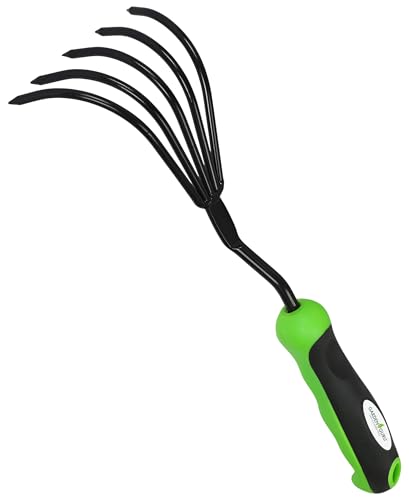
Garden Guru Hand Rake Cultivator Claw Soil Tiller (5 Tine, 2 Pack)

Garden Helper Japanese Hand Rake with Wood Handle (Made in Japan)

BARAYSTUS 16″ Wide Bow Rake, Adjustable Garden Rake

BARAYSTUS Thatch Rake, 15-Inch Wide Dual-Side Dethatching Rake

Feblomst Leaf Garden Rake, 9″ Narrow Head, 37″–79″ Adjustable Handle

Walensee 15-Inch Thatch Rake, 19-Tine Dethatcher, 70-Inch Handle

QWORK Buffing Wheel Rake, 15″ Polishing Rake with Wood Handle
More On The Choices That Made The List
Two rakes for one purchase sounds like a smart play for casual gardeners, and the stainless steel body keeps rust at bay through damp spring mornings. The short handle is meant for sitting, kneeling, or pulling close-up work in dense plantings where a long shaft only gets in the way. For folks tending patio containers or a small herb patch, that combination lands well.
Compared to the longer cultivators later in this list, these hand tools lean on wrist motion rather than leverage. A hanging hole at the end of each handle keeps them from cluttering a shed, which is a quiet win for anyone short on space. Most home growers find the size right for raised beds and container corners.
Features That Help
- Two-pack design gives you a spare or lets you outfit two gardeners.
- Stainless steel construction shrugs off the moisture that ruins cheaper carbon tools.
- Compact handle size works well for container gardens and tight perennial corners.
- Hanging-hole handle design stores cleanly on a shed wall or hook.
Things To Consider
- Short handle means more wrist strain on tough, root-bound soil.
- Less reach than full-length cultivators, so wide beds take longer to work.
Made For
Container gardeners and casual hobbyists who need a close-up tool for small plots.
Where Another Pick Suits Better
For deeper bed prep or longer reaches, the BARAYSTUS 4-Tine Garden Hand Tiller Cultivator trades a longer shaft for less bending.
Long-handled cultivators earn their keep when you want to break up soil without kneeling on damp ground. The four steel tines bite into packed earth, while the adjustable shaft lets you tune the length to your height. For most vegetable gardeners, that mix of reach and bite beats the hand rakes earlier in this list.
The carbon and stainless steel pairing gives the head enough heft to push through clay without feeling like a shovel. Owners commonly report the shaft holding up well across a full growing season, though tightening the connection joint at the start of each year is a smart habit. You may find the footrest a bit narrow for users with larger boots.
Notable Gains
- 55-inch adjustable reach keeps your back out of the dirt.
- Four-tine design slices through compacted or clay-heavy soil.
- Mixed carbon and stainless steel head resists flex under load.
- Versatile for turning compost, weeding, and breaking new ground.
Worth Noting
- Tines can clog in wet, sticky soil.
- Foot platform feels small for users who prefer to drive it with body weight.
Quick Facts
Best Suited To
Vegetable gardeners who want standing-height soil work without kneeling.
Reach For A Different Pick When
For detail work in tight perennial beds, the Garden Helper Japanese Hand Rake offers more precision in a shorter package.
The claw-shaped head turns, lifts, and breaks up soil in one twisting motion, which is why hand cultivators like this one have stayed popular for raised beds. Five tines spread the load across a wider footprint than the BARAYSTUS four-tine option above, so each pass covers more ground. The ergonomic grip is a real plus when you spend an afternoon prepping spring beds.
Military-grade steel in the head makes this one tough enough for rocky or root-filled soil, and the rust-resistant finish helps the tool survive a damp shed between seasons. You get two claws in the box, which suits anyone running multiple beds or sharing tools with a partner. The grip takes some pressure off the wrist during longer sessions.
Useful Strengths
- Five tines give you broader coverage than four-tine competitors.
- Military-grade steel handles clay and rocky conditions.
- Ergonomic grip design reduces hand fatigue on long sessions.
- Two-pack value covers multiple beds or gardeners.
- Rust-resistant finish survives damp storage.
Trade Offs
- Short handle keeps you close to the soil.
- Wider claw head is harder to maneuver in tightly planted rows.
Whose Shelf It Belongs On
Raised bed gardeners working clay-heavy or rocky soil who want hand-level precision.
A Better Fit Elsewhere
For standing-height work over a wider plot, the BARAYSTUS 4-Tine Garden Hand Tiller gives you the same soil work without the kneeling.
Small rakes earn their place in tight quarters where a full-size head just knocks things over. The slim Japanese steel head slips between perennials, while the wooden handle gives a warm grip that cold metal can’t match on a chilly morning. For clearing leaves and debris from narrow beds, the precision here is hard to beat.
Unlike the carbon steel construction of the BARAYSTUS models further down this list, the chrome-plated Japanese steel prioritizes wear resistance over brute force. You may find it less useful in hard-packed soil, but for surface cleanup in established beds, it earns its keep season after season. Made-in-Japan craftsmanship tends to show in the finishing details and tight tolerances.
Everyday Perks
- Slim profile reaches spots wide rakes cannot.
- Wood handle offers comfortable grip in cold weather.
- Chrome-plated Japanese steel resists wear and corrosion.
- Made in Japan, with tight manufacturing tolerances.
Points To Keep In Mind
- Less effective on compacted or clay-heavy soil.
- Higher cost per tool than mass-produced hand rakes.
Feature Snapshot
The Right Fit
Gardeners maintaining established perennial beds who value precision over power.
Look Elsewhere When
For breaking new ground or working heavy soil, the BARAYSTUS 4-Tine Garden Hand Tiller handles the rougher jobs.
Bow rakes (a long-handled rake with rigid tines perpendicular to the handle, built for leveling and breaking soil) earn their keep when the job calls for leveling gravel, spreading mulch, or breaking up clods. The 16-inch head covers a wide swath in each pass, which trims real time off large beds. For most suburban yards, that head size is the sweet spot between coverage and control.
The 16-tooth design is sharp enough to cut into packed ground, and the 3mm thick head prevents the flexing you get from cheaper stamped heads. Owners commonly report the triple-welded connection holding firm even when prying roots. The adjustable shaft suits a range of heights, though taller users may want the maximum setting.
A Strong Showing
- 16-tooth head covers wide swaths quickly.
- Triple-welded connection resists head separation under heavy work.
- 3mm head thickness prevents bending on tough soil.
- Anti-rust coating extends outdoor storage life.
- Adjustable handle fits varied user heights.
Honest Caveats
- Wide head is awkward between closely planted rows.
- Heavier than leaf rakes, which adds fatigue over long sessions.
Core Details
Who Should Grab It
Homeowners with mid-size beds who need to level, grade, or break up larger soil sections.
Skip It When
For dethatching a lawn rather than working soil, the BARAYSTUS Thatch Rake is purpose-built for that job.
Thatch (the layer of dead grass and roots that builds up between the soil and visible lawn) chokes water and nutrients out of your grass if it builds up too thick. A dedicated thatch rake pulls that layer up cleanly, and this dual-side head lets you switch between dethatching and cultivating without swapping tools. For lawn-care season, that versatility pays off.
The 19 curved tines on one side dig into the thatch layer, while the opposite side loosens topsoil for reseeding. You may find the adjustable head angle helpful for matching your working posture on long dethatching sessions. The heavy-duty head is on the heavier end of this list, so a steady pace beats a sprint.
Reasons It Performs
- Dual-side head handles two lawn-care tasks in one tool.
- 19 curved tines lift thatch effectively in fewer passes.
- Adjustable head angle reduces wrist strain during long sessions.
- Stainless steel handle resists weather exposure.
Soft Spots
- Heavier than standard leaf rakes.
- Curved tines can catch on uneven turf or sprinkler heads.
Built With In Mind
Lawn-care enthusiasts tackling spring dethatching on mid-size yards.
Not Your Match When
For pure soil cultivation in garden beds, the BARAYSTUS 16″ Wide Bow Rake is a more focused tool for that work.
Wide leaf rakes fan out across open lawn but get tangled in tight shrubbery. This compact 9-inch head slips under bushes and along narrow borders where bulky rakes simply won’t go. The 37-to-79 inch telescoping handle adjusts for short cleanup jobs or full standing-height work, which is why it doubles as a camping and shrub tool.
Eleven steel tines sit close enough together to grab leaves without clogging, and the anti-rust coating handles damp autumn piles. Owners commonly report the lightweight build reducing arm fatigue during long leaf cleanup sessions. You may find the narrow width makes large open lawns take longer, so it pairs best with a wider rake for big spaces.
Notable Upsides
- 9-inch narrow head reaches under shrubs and into borders.
- Telescoping handle adjusts from 37 to 79 inches.
- 11 closely spaced tines prevent leaf buildup between them.
- Anti-rust coating handles wet leaf piles.
Points To Note
- Smaller head means more passes on open lawn.
- Telescoping sections can loosen over time without occasional retightening.
At A Glance
Perfect Match For
Homeowners tackling leaf cleanup in shrub borders, narrow beds, and tight garden corners.
Consider Something Else When
For large open lawn cleanup, the Walensee 15-Inch Thatch Rake covers more ground with each stroke.
Dual-sided dethatchers earn their place on seasonal lawn-care checklists, and this 15-inch head covers meaningful ground with each pass. One side pulls up dead thatch, the other loosens topsoil for overseeding, so two jobs share one tool. For mid-size lawns that need yearly revival work, the combo design is a smart buy.
The 70-inch handle gives most users full standing-height work, which saves knees and lower back during spring cleanup. Twist-lock sections assemble quickly and disassemble for compact storage in a garage or shed. Owners commonly find the curved steel tines bite firmly into matted grass without gouging healthy soil underneath.
A Few Highlights
- 15-inch head covers broad lawn areas efficiently.
- Dual-sided head handles dethatching and cultivation.
- Twist-lock assembly breaks down for easy storage.
- 70-inch handle suits most users without bending.
Practical Considerations
- Curved tines work best on established turf, not new seedbeds.
- Twist-lock sections may need occasional retightening.
Who Will Love This
Homeowners maintaining mid-size lawns who want a seasonal revival tool without renting a power dethatcher.
Swap It Out When
For narrow shrub borders where a wide head is overkill, the Feblomst Leaf Garden Rake offers better maneuverability.
This one breaks from the garden category and steps into the metalworking shop. A buffing wheel rake (a metal rake designed to clean polishing wheels by removing caked-on compound) clears caked rouge and residual compound from polishing wheels, keeping abrasive surfaces clean and cutting efficiently. The stainless steel head stays rigid, while the beech wood handle gives a steady grip during shop work.
The 15-inch head matches standard polishing wheel diameters, so it sits naturally against the wheel face during cleaning. Unlike the soil-focused tools earlier in this list, this rake has no place in a flowerbed, but it earns a slot for anyone running a finishing station. The wooden handle ages well in a workshop environment where spills and grime are constant.
What It Does Well
- Stainless steel head resists compound corrosion in shop environments.
- 15-inch width matches standard polishing wheel diameters.
- Hard beech wood handle provides steady grip during use.
- Removes residual compounds efficiently without damaging wheels.
Less Ideal Details
- Specialty tool with no garden application.
- Wood handle requires occasional conditioning in dry shop air.
Who It Suits Best
Metalworkers and hobbyists running polishing stations who need to maintain buffing wheel surfaces.
Another Choice May Suit
For garden and lawn applications, the BARAYSTUS Thatch Rake is a more typical all-around raking choice.
What To Weigh Before Choosing metal garden rakes
Match The Tool To The Task
A bow rake with rigid perpendicular tines levels and breaks soil. A leaf rake with fanned flexible tines gathers debris. A dethatching rake pulls up matted thatch from lawn. A hand cultivator claws through soil in close quarters. Picking the wrong style for the work leads to frustration and tool wear.
Consider The Soil You Have
Clay-heavy ground demands fewer, thicker tines that won’t bend. Sandy or loamy soil handles broader multi-tine heads that move material quickly. Rocky soil benefits from thicker steel heads (3mm or more) to avoid flexing. Choosing a head designed for your soil type extends tool life and improves results.
Check The Handle And Connection
Adjustable shafts fit multiple users and storage setups. Welded or bolted connections determine whether the head stays put under heavy prying. Fiberglass handles dampen vibration but cost more. Wood handles absorb shock and feel warm but need occasional care. Match the handle to your storage space and physical comfort.
Size And Storage Matter
Long-handled rakes cover more ground but eat up shed space. Telescoping handles collapse for tighter storage but may loosen over time. Wide heads work faster on open lawn but struggle in narrow beds. Choosing the right size means balancing speed against maneuverability for your specific yard.
Key Considerations Across These Picks
Pitfalls Shoppers Hit
Choosing a wide bow rake for a tight perennial bed is one of the most common mistakes. Wide heads knock over plants and miss the narrow spaces between them. Skipping anti-rust coatings leads to surface corrosion within a single damp season. Buying the cheapest option often means thinner steel that flexes under load and fails quickly in clay soil.
Where The Extra Money Goes
Higher-tier rakes use thicker steel heads (often 3mm or more) that resist bending on tough soil. Better welds at the head-to-handle connection prevent the most common failure point. Adjustable shafts add manufacturing complexity but pay back in comfort. Specialized finishes like chrome plating extend tool life in damp conditions, which is the real long-term value.
Frequently Asked Questions
What is the difference between a bow rake and a leaf rake?
A bow rake has rigid perpendicular tines designed for leveling soil, spreading mulch, and breaking up clods. A leaf rake has flexible fanned tines that gather debris without disturbing soil. Choosing between them depends on whether you are moving material or clearing surface debris.
How do I prevent my metal rake from rusting?
Wipe the head dry after wet use, store it indoors or in a covered shed, and occasionally apply a light oil coat to the steel. Rakes with anti-rust or chrome-plated finishes last longer in damp climates. Surface rust can be removed with a wire brush and repainting if needed.
Can one rake handle both soil work and leaf cleanup?
Some dual-sided designs try to bridge both jobs, but most dedicated tools outperform compromise designs. A bow rake works poorly on leaves because rigid tines do not flex. A leaf rake cannot break soil because flexible tines lack the strength. Owning one of each is the practical answer for most yards.
What handle length is best for most adults?
Around 60 to 70 inches works well for users between 5’4″ and 6′. Adjustable designs let you tune the length to your height and the task. Shorter handles offer more leverage for prying, while longer handles reduce bending during broad passes.
How often should I dethatch my lawn?
Most cool-season grass lawns benefit from dethatching once a year in early spring or early fall. Warm-season grasses typically need it in late spring. Thatch thicker than half an inch is the practical signal to bring out the rake.
Closing Remarks
The right rake turns an afternoon of back-breaking work into a manageable hour. Match the head style to your most common task, lean into thicker steel if your soil is heavy, and don’t overlook the value of an adjustable handle. With any of these nine options, you should find a tool that earns its place in your shed for seasons to come.