Cordless outdoor tools have caught up with gas. Battery platforms push higher voltage every season, and brushless motors (motors with no carbon brushes, so they waste less energy as heat and run longer per charge) squeeze more thrust out of each amp-hour. Run time still matters, but raw air volume and wind speed have stopped being a gas-only club. This list rounds up eight of the strongest electric options available right now, from handheld cordless blowers to modular robot yard systems that handle leaves on autopilot.
A Snapshot Of The Selections

Makita XBU02PT1 36V LXT Brushless Blower Kit (5.0Ah, 4 Batteries)

MZK 3-in-1 Electric Leaf Blower Vacuum Mulcher, Corded

Makita XBU02PT 36V LXT Brushless Blower Kit (5.0Ah)

WORX WG547 20V Cordless Leaf Blower

WORX WG543 20V Cordless Leaf Blower

WORX WG545.1 20V Cordless Leaf Blower

YARBO 2-in-1 Robot Lawn Mower and Leaf Blower
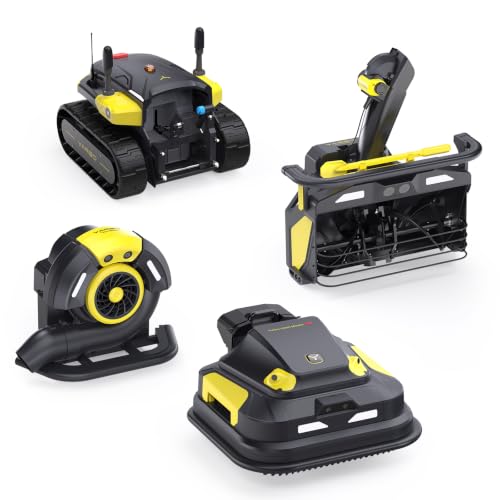
YARBO Pro Robot Mower + Leaf + Snow Blower
Inside Each Recommended Option
Two 18V LXT batteries stacked in series deliver 36V to a brushless motor, which translates to longer life per charge and stronger sustained thrust than most single-battery handhelds. The kit ships with four 5.0Ah packs, so a working pair charges while two stay on the blower.
Landscapers moving between job sites benefit most. Compared with the MZK corded pick further down, this Makita gives you freedom from outlets at the cost of higher upfront weight. For most residential yards, two batteries are honestly enough; the extra pair is insurance on bigger properties.
Notable Upsides
- Four 5.0Ah batteries mean almost continuous use across a long workday.
- Brushless motor design stretches runtime and extends tool life versus brushed alternatives.
- Zero emissions and quiet enough for residential neighborhoods with noise rules.
- LXT platform compatibility lets one battery family power other Makita OPE and drills.
Things To Consider
- Tubeless design means you must keep batteries warm in cold storage to preserve capacity.
- Heavier than the WORX handhelds on this list, so fatigue on long overhead sweeps is real.
Key Specs
Built With In Mind
Professional landscapers and homeowners with multi-acre properties who already own Makita LXT batteries benefit most from this kit’s redundancy.
Skip It When
The WORX WG545.1 is a smarter match when your priority is a featherweight blower for tight patios and indoor-style detail work.
This red corded unit switches between blower, vacuum, and mulcher without tools. Air volume (cubic feet per minute, a measurement of how much air the blower pushes) and wind speed land in ranges strong enough for dry leaves and pine needles, while the vacuum function pulls debris into a collection bag for bag-free disposal.
Suburban homeowners with mid-size lots near an outdoor outlet get the most from it. Unlike the Makita kits above, you trade cordless freedom for continuous power and a cheaper entry price, which suits casual seasonal cleanups.
Practical Advantages
- Tool-free mode changes cut downtime when switching from blowing to bagging.
- Corded power keeps airflow consistent without fade as a battery drains.
- Three functions replace a separate vacuum and mulcher in the shed.
- Compact frame suits smaller hands and overhead reaches into gutters.
Worth Noting
- Cord length limits reach; you may need an outdoor-rated extension cord for larger yards.
- Vacuum bag fills quickly on wet leaves and requires emptying mid-job.
- Heavier than the WORX WG547 due to the motor and mulching hardware.
Feature Snapshot
Right Fit For
Homeowners with a small-to-medium yard, an outdoor outlet within reach, and a dislike for raking benefit most from this all-in-one approach.
Reach For A Different Pick When
The Makita XBU02PT1 suits larger properties where dragging a cord around or stopping to empty a bag becomes a real chore.
The teal-bodied XBU02PT is the same brushless blower platform as the kit above, but with a leaner bundle. You still get two 18V LXT batteries combined for 36V output, just without the extra pair of spares.
Existing Makita owners who already stockpile 5.0Ah packs on the truck save real money stepping down to this version. Compared with the 4-battery kit, the practical difference is rotation, not raw power.
Where It Excels
- Same 36V brushless motor as the bigger kit, so no power compromise.
- Lighter shipping weight than the 4-battery configuration, easier to handle on a ladder.
- Cross-compatible with every 18V LXT tool in the Makita ecosystem.
Trade Offs
- Only two batteries mean you must plan charging breaks on extended jobs.
- Higher upfront cost than most 20V handhelds like the WORX WG543.
Who It Suits Best
Crews already running Makita 18V tools get the best value because spares are likely already on the shelf.
A Better Fit Elsewhere
Homeowners without an existing battery platform may find the WORX WG547 a friendlier entry point at lower cost.
The WG547 uses a turbine fan design (an axial fan inspired by jet turbines that pulls in more air per rotation than a standard impeller) to deliver high air volume for a 20V handheld. Two speed modes let you dial down for sweeping a porch and up for moving a wet pile.
Suburban homeowners handling weekly touch-ups get a comfortable balance of weight and thrust. Compared with the MZK corded model, you lose continuous runtime but gain true grab-and-go convenience.
The Case For It
- Lightweight enough for one-handed sweeping of steps and patios.
- Two-speed control adapts to delicate jobs versus heavy piles.
- PowerShare battery fits over 140 WORX tools, so expansion is easy.
Honest Caveats
- 20V platform cannot match the 36V Makita airflow for serious cleanup.
- Battery drains faster on the higher speed setting during long yard work.
Perfect Match For
Casual users who want a no-fuss cordless blower for a small yard and short sessions.
Look Elsewhere When
The WORX WG543 is the better target if your priority is maximum airflow at the 20V level.
The Nitro WG543 slides its nozzle out to switch from a focused airstream to a wider volume mode, a small mechanical change that meaningfully changes how leaves move. Maximum airflow reaches levels that handle heavier debris, even at the 20V class.
Homeowners with mature trees dropping dense leaf piles benefit most. Where the WG547 handles porch duty, this one tackles the lawn afterward. Versus the 36V Makita above, you give up sustained thrust for a much lighter grip.
Useful Strengths
- Variable nozzle expands the airstream for fast wide-area clearing.
- High CFM for a 20V platform moves stubborn leaves and grass clippings.
- Same PowerShare battery system as other WORX 20V tools.
Points To Keep In Mind
- Bigger battery drain on the highest setting than the WG547.
- Plastic housing feels lighter than the metal-bodied Makita tools.
Best Suited To
Homeowners wanting the strongest 20V option for fall leaf season on a small-to-medium yard.
Consider Something Else When
The Makita XBU02PT makes more sense for daily professional use where battery rotation matters more than absolute weight savings.
The WG545.1 is a compact blower with multiple attachments that convert it into a sweeper, inflator, and detail tool. It’s built around the same PowerShare battery as the rest of the WORX 20V family, so adding to your collection costs less.
Apartment dwellers and homeowners with mostly hardscape get the most out of it. Compared with the WG547, you trade raw air volume for versatility in a tight garage or workshop.
Reasons It Performs
- Multi-tool attachments cover jobs beyond leaf clearing.
- Compact body fits in a kitchen drawer or small shed hook.
- PowerShare battery powers 140+ WORX tools.
Small Caveats
- Lower CFM than the WG543 or WG547, so large lawns take longer.
- Plastic attachment nozzles are commonly reported to loosen over years of use.
Feature Card
Who Should Grab It
Anyone who wants one battery-powered tool to cover both yard and indoor detail jobs.
Where A Sibling Pick Shines
The WORX WG543 outperforms it when the goal is moving serious leaf piles fast.
YARBO’s modular robot swaps between a lawn mower module and a leaf blower module on the same tracked chassis. Tracked drive gives it grip on slopes up to about 70%, and the leaf module targets both dry piles and rain-soaked debris.
Acreage owners who already outsource or delay mowing benefit most. Compared with any handheld blower on this list, you trade the visceral punch of a focused airstream for a system that handles cleanup on a schedule without you being present.
Key Advantages
- Autonomous operation runs on a programmed schedule across multi-acre lawns.
- All-terrain tracks hold the line on steep grades other mowers slide on.
- Modular design lets one chassis serve multiple seasonal roles.
Practical Considerations
- Higher upfront investment than any handheld blower here.
- Snow blower modules are sold separately, so winter capability costs more.
- Charging dock placement requires planning and a level surface.
Made For
Owners of large rural properties with slopes and long driveways who would rather automate routine cleanup.
Swap It Out When
The Makita XBU02PT1 is the better fit for users who actually enjoy the physical work and want a tool they carry, not one they program.
The Pro version pairs dual 300W motors with straight cutting blades for heavier mowing and adds snow-blowing capability alongside the leaf module. Wire-free setup skips the buried boundary loop that older robot mowers require.
Estates and small businesses with three-season yard work get the most value. Compared with the smaller YARBO above, the Pro adds muscle and winter utility, which pays off if snow removal matters in your region.
Standout Benefits
- Three seasonal jobs share one chassis, saving shed space and tool cost.
- Wire-free boundary setup eliminates trenching the lawn.
- Heavy-duty mowing for thick grass and uneven terrain.
Things To Weigh
- Premium price over the entry YARBO model and every handheld blower.
- Modules are sold separately, so the full bundle is a multi-step purchase.
- GPS and wireless features require clear sky for reliable satellite lock during setup.
Whose Shelf It Belongs On
Property owners with year-round outdoor maintenance who want one platform replacing a shed full of seasonal machines.
Not Your Match When
The WORX WG543 is the right tool for anyone who just wants leaves cleared quickly without the operational overhead of a robotic system.
Picking The Right Electric Blower For Your Yard
Voltage And Airflow Real Talk
Voltage drives motor strength, and CFM drives how fast leaves move. A 20V blower like the WORX WG543 handles typical suburban piles without strain, while a 36V setup like the Makita XBU02PT1 sustains higher airflow for longer sessions. Run time drops as voltage climbs because the motor draws more current, so matching platform to yard size matters more than chasing the highest CFM.
Corded Versus Cordless Trade-Offs
The MZK corded model never runs out of battery mid-job, but you are tethered to an outlet and need an outdoor-rated extension cord for most yards. Cordless picks like the Makita and WORX handhelds trade that constraint for shorter run windows, though rotating charged batteries largely solves the problem for homeowners with two packs.
Handheld Versus Robotic Workflow
A handheld blower puts you in control of direction and pressure, which matters for stubborn wet leaves and tight edges. Robotic platforms like the YARBO models work on a schedule without supervision, but they handle open lawn areas best. Owners with mixed terrain and decorative beds typically keep both: a handheld for detail, a robot for the broad sweep.
Weight, Noise, And Battery Care
Brushless motors tend to weigh less than brushed equivalents at the same output, and they run quieter under load. Cold storage cuts lithium battery capacity noticeably, so storing packs indoors above freezing during winter extends their service life. For most homeowners, a 20V platform balances enough thrust to clear leaves in a single pass without overstressing smaller hands.
Avoiding Common Blower Buying Mistakes
Wrong Turns To Avoid
Chasing the highest CFM number often leads to a blower that is heavier than the job requires. A 460 CFM corded MZK is overkill for a small porch, while a 20V WORX WG547 will run out of breath on a three-acre lawn. Match the tool to the yard, not to the spec sheet.
Where The Extra Money Goes
Premium Makita kits and YARBO robotic platforms charge more for batteries, brushless motors, and modular hardware that lasts longer under repeated use. That upgrade pays off for daily contractors and large-property owners who put real hours on the machine. For seasonal light use, the cost gap rarely earns itself back in convenience.