Tired of stumbling up a dark driveway or hunting for keys by the porch light at 11 p.m.? Motion-activated solar lights solve that everyday nuisance with zero wiring and very little fuss. These six picks cover everything from soft garden ambience to serious security floods. Below is a curated roundup built around the layouts and use cases that actually show up in homes today.
A Fast Comparison Of The Options

Moodyfei Solar Wall Sconce Lights with Motion Sensor
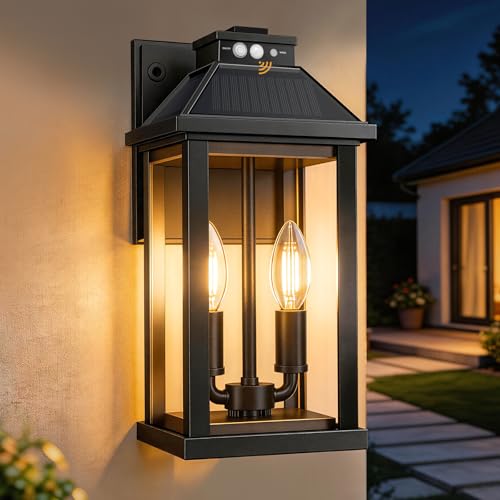
HelpLand Solar Wall Lantern with 3 Modes

Tuffenough Solar Security Flood Light with Remote

MIHANI Solar Flood Lights 2-Pack

MIHANI Solar Motion Deck Lights 2-Pack

VENSSTNOR Solar Flood Light with Smart Display
More Details On Our Top Picks
A porch sconce earns its place when it disappears into the architecture during the day and earns compliments at night. The Moodyfei solar wall sconce sits flush against siding or brick, kicks on at dusk, and brightens the moment a person walks into range. For most front entries, that one-two punch is exactly the experience you want: welcoming glow on approach, security flash if anyone lingers.
Where this one plays differently from the flood-style picks later in the list is the mood. Rather than lighting up a whole driveway, it focuses the output near the door. The result feels residential rather than industrial, which matters on craftsman homes or any facade where a chunky fixture would clash.
What Pays Off
- Three lighting modes cover motion-only, motion-burst, and a soft constant glow for late evenings
- Slim profile blends into most exterior trim without calling attention to the hardware
- Wire-free install: a couple of screws and the sun handles the rest
- Soft warm tone that flatters wood doors and brick walkways
Worth Noting
- Lower lumen count means a wide driveway will stay dim past the front steps
- Solar panel needs a clean swipe a few times a year to keep charging reliably
Who It Suits Best
Homeowners with a covered porch who want ambiance plus a gentle security cue, and renters who prefer no-wiring installs.
Skip It When
The Tuffenough triple-head flood light is a smarter buy for exposed driveways needing serious throw.
Lantern-style solar lights serve a different job than floods. They dress up a garden wall, give a side garage a finished look, and still pull security duty when the mode is set right. The HelpLand lantern reads as a traditional coach light from the curb, which suits older homes where a high-tech fixture would feel out of place.
The three-mode switch on this one is the practical bit. Mode 1 keeps a low ambient glow all night and snaps bright on motion, Mode 2 stays dark until movement triggers it, and Mode 3 stays on at a constant low level. The first option is the battery-friendliest for cloudy stretches, since the panel isn’t asked to power full brightness for hours on end.
Advantages To Know
- Coach-light styling that complements craftsman, colonial, and farmhouse facades
- Mode 1 stretches battery life through overcast days while still reacting to footsteps
- Handy near sheds where you want orientation light without firing up a flood
- Slim depth keeps it from looking bulky on narrow fence posts
Trade Offs
- Glass panels may need occasional wiping in dusty or coastal air
- Not built to flood big backyards: better as accents than primary security
Key Specs
Right Fit For
Anyone with traditional architecture who wants a decorative fixture that doubles as a discreet motion-triggered security cue.
Consider Something Else When
You need real flood coverage; the MIHANI twin-pack flood lights spread further across a wide yard.
The Tuffenough fixture is what you reach for when a porch sconce just won’t cut it. Three independently adjustable lamp heads aim 210 LEDs across a 270° arc, covering more of a driveway or backyard than the typical single-head competitor. For most detached homes with open lots, that spread removes the need to mount two or three separate lights.
The included remote is the sleeper feature. Mode changes from the ground, sensitivity tweaks without dragging a ladder out, and brightness drops on demand for late-night movies on the patio. Compared to the lantern-style picks above, this one announces itself as a security tool, so the visual vibe is utilitarian rather than decorative.
Useful Strengths
- Three lamp heads swivel to fill awkward corners and side yards
- Remote control means no ladder trips just to flip modes
- IP65 weather rating handles rain and dust without complaint
- Strong-light sensor mode bursts on motion, then powers down to save battery
Points To Note
- Bulkier body needs solid mounting on a wall or eave, not a fence picket
- High lumen output can feel harsh if it shines straight into a neighbor’s window
Feature Snapshot
Made For
Suburban homeowners wanting broad security coverage from a single fixture and the convenience of remote tweaking.
Reach For A Different Pick When
You need path or step lighting instead; the MIHANI deck lights handle low-level walkway glow better.
For properties with multiple dark corners, a single fixture rarely cuts it. The MIHANI twin pack solves that at the source: two triple-head flood units in one box, both rated for outdoor weather, both with a 270° arc. Mount one on the garage and another over the side gate, and you’ve covered the two zones that intruders actually use.
The PIR motion sensor (a passive infrared sensor that detects body heat and movement) reads up to 30 feet across a 180° field, which is enough to catch someone approaching from the driveway or the path. The trade-off versus the Tuffenough unit above is the lack of a remote; you set modes at the fixture itself, which most people do once and forget.
The Value In It
- Two flood heads in one box, ideal for symmetrical placements on either side of a garage
- 2500-lumen output punches through fog and overcast evenings
- Wide PIR range catches motion at the sidewalk, not just the doorstep
- Adjustable lamp heads handle sloped or off-center mounting surfaces
Things To Consider
- No remote means reaching the fixture on a ladder for mode changes
- Twin pack adds bulk to install; plan mount locations before opening the box
Best Suited To
Homeowners with bigger yards or two distinct dark zones that both deserve a flood fixture.
A Better Fit Elsewhere
Single-corner apartments and small patios; the Moodyfei sconce handles those without overlighting.
Low-level path and step lighting solves a different problem than a flood. You don’t want a thousand lumens blasting every time the dog walks past; you want a gentle cue that the third step is there. The MIHANI deck lights aim for that, with a tempered glass solar panel and a PIR sensor tuned for closer-range motion.
The tempered glass matters more than people expect. Plastic-covered competitors tend to cloud or scratch after a couple of seasons, which slowly kills charging efficiency. Glass holds up, and the larger panel area here reportedly pulls in energy faster on short winter days. For most shaded decks, that extra charging headroom is the difference between reliable glow all night and dim sconces by 9 p.m.
Well-Handled Touches
- Tempered glass panel shrugs off scratches and weather wear
- Sensitive PIR pickup catches steps and small animals without lighting up the whole yard
- Two-pack covers a typical stair run without buying extra units later
- Low-profile shape stays nearly flush with the deck surface
Some Limits To Know
- Mounting surface needs to be wood or composite; concrete installation takes extra hardware
- Best on steps and short walks rather than long driveways
Quick Facts
Whose Shelf It Belongs On
Anyone with stairs, raised decks, or pathway transitions where a stumble is the real concern.
Swap It Out When
You need broad yard coverage instead; the Tuffenough triple-head flood owns that use case.
The VENSSTNOR fixture brings something the rest of the list doesn’t: a built-in smart display that surfaces battery level and mode status without guesswork. For people who actually want to know whether the light will hold through a stormy week, that little screen replaces the usual trial-and-error of looking out the window at midnight.
Dual motion sensors widen the detection footprint so you don’t get those annoying gaps where someone walks past but the light never fires. Three charging methods, including solar and USB, give you a backup plan for cloudy stretches. Compared to the Tuffenough unit earlier, the VENSSTNOR trades a remote for richer on-board feedback.
Points In Its Favor
- Smart display removes the mystery around battery and mode status
- Dual motion sensors catch movement from wider approach angles
- Multi-source charging covers you through extended overcast periods
- High-capacity battery supports multi-night motion-sensing runtime
Potential Sticking Points
- More on-board features can mean more setup time on first install
- Display adds cost; budget shoppers may prefer the simpler Moodyfei sconce
Who Should Grab It
Tech-curious homeowners who want feedback on what their security light is actually doing, especially off-grid installations.
Not Your Match When
You just want a basic no-fuss porch light; the HelpLand lantern keeps things simpler at a lower entry point.
What To Weigh Before Choosing Motion Activated Solar Lights
Solar lighting splits into three real use cases. Decorative wall lanterns like the Moodyfei and HelpLand options set a mood, low-level deck fixtures guide footsteps, and triple-head floods like the Tuffenough and MIHANI units handle security. Mixing one of each around a property is the typical layout, since a flood alone leaves the path dark and a deck light alone leaves the driveway wide open.
Lumens and coverage tell you whether a fixture can actually light the space you care about. A wide driveway needs a 270° arc or multiple heads, while a porch step needs almost nothing at all. The PIR sensor range on most of these picks sits in the 25 to 30 foot range, which is plenty for residential approaches but starts to fall short for deep rural driveways.
Mounting surface and weather exposure matter more than people expect. Fence pickets and hollow siding flex under the weight of a heavy flood fixture, so choose solid wall or eave mounting for the bulkier options. IP65 ratings on the picks above handle normal rain and dust, though coastal salt spray shortens lifespan on any solar electronics over time.
Battery reserve and charging speed become critical if your climate runs cloudy for stretches. Larger panels with tempered glass, like the MIHANI deck lights, hold efficiency longer through seasons. Models with multiple charging options give you a fallback when solar alone won’t keep up.
Key Considerations Across These Picks
Common Shopping Slip Ups
One frequent mistake is picking a flood fixture for ambiance duty and finding it blasts the whole neighborhood every time a cat walks past. Reverse the mistake by matching lumen count to space. Another trap is ignoring the charging surface; mounting under a deep eave or behind a tree can starve the panel and leave you with a brick on the wall by week two.
Where The Extra Money Goes
Higher-tier models tend to spend the budget on panel quality, sensor tuning, and weather sealing rather than raw brightness. The tempered glass panels and dual sensors on the MIHANI and VENSSTNOR picks are exactly that kind of upgrade: quieter improvements that pay off over years of weather cycles rather than a single impressive night.
Frequently Asked Questions
How long do solar lights stay on after detecting motion?
Most motion-activated solar lights stay lit for 15 to 60 seconds after movement, then dim or shut off to preserve battery. Exact timing varies by model and mode.
Can solar lights work in winter or cloudy weather?
Yes, but runtime shrinks with shorter days and weaker sunlight. Larger or tempered glass panels like the MIHANI deck light handle low-light charging better than basic plastic-covered units.
Do these lights need direct sunlight to charge?
Direct sun gives the fastest charge, but most modern panels still top up in partial shade or overcast skies. Heavy tree cover or north-facing eaves will noticeably reduce performance.
Are solar security lights bright enough for driveways?
Triple-head flood fixtures rated around 2500 lumens, including the Tuffenough and MIHANI units, cover a typical driveway well. Smaller sconces are better near doors than across wide lots.
How are these lights installed without wiring?
Mounting is usually a couple of screws into wood, masonry anchors for brick, or adhesive pads for temporary placements. The solar panel and battery are built in, so no external wiring is needed.
Wrap Up
Motion-activated solar lights reward you most when they match the spot. A porch sconce, a step light, and a wide-angle flood each solve a different problem, and most homes benefit from a mix of two or three. Use the picks above as a starting point, match them to your actual layout, and you’ll skip the wiring without losing the security.