Sharp, well-balanced snips change how a garden or kitchen actually feels. The wrong pair chews through stems, tires your hand, and chips at coating or peel after a season. The right one disappears in the grip and leaves a clean slice on every cut, whether you’re trimming boxwood, snipping herbs, or harvesting fruit. Okatsune has built its reputation on that quiet, consistent quality, with simple steel-and-vinyl designs made in Japan for decades.
This shortlist covers the brand’s most useful models for gardeners, orchardists, and home cooks. You’ll find general-purpose bypass pruners, long-reach trim shears, fruit-picking snips, and a kitchen tool that shares the same blade pedigree. Each pick earns its spot for a specific reason, and a few clearly suit specific hands or jobs better than others.
How The Shortlist Stacks Up

Okatsune No. 231 Trimming Shears (Type 65)
Okatsune Pruning Shears No. 104 (210 mm)

Okatsune 103 Bypass Pruners General Purpose Medium (2020 Version)

Okatsune 103 Bypass Pruners General Purpose Medium
Okatsune 101 7-inch Bypass Pruners, Small

Okatsune No. 133 Pruning Skin Sack

Okatsune Onion Shears NO.306

Okatsune 7744ai Trimming Shears (Type 60)

Okatsune No. 307 Fruit Shears (180 mm, Boxed)

Okatsune No.301 Fruit Harvesting Shears (Anti-Blade)
Meet The Standout Selections
The Type 65 belongs to Okatsune’s trimming-shear family, a category aimed at precise shaping rather than heavy lifting. Short handles give you close control, useful when you’re tidying the top of a low hedge or edging a border. Compared to the longer No. 217 coming later in the list, this one trades reach for accuracy, and gardeners with smaller hands or tight beds tend to appreciate that trade.
Real-world fit shines when you’re working above your head or crouched in a flower border, where a shorter tool reduces fatigue. For most yards with mixed shrub work, the Type 65 handles soft new growth cleanly. Heavier woody stems fall outside its comfort zone, but that’s true of most trimming shears in this class.
Noteworthy Benefits
- Short handle layout supports close, controlled cuts in tight spaces
- Okatsune’s cutlery-grade steel holds a clean edge through regular trimming
- Light enough for overhead shaping without tiring the wrist quickly
- Clean slice on green stems helps plants heal faster than chewed cuts
Things To Consider
- Not built for thick woody stems, which can spring the blades apart
- Owners commonly report keeping a sharpening stone handy for season-long edge care
Right Fit For
Garden detailers who shape low hedges and topiaries more than they cut heavy wood.
Consider Something Else When
You mainly need reach into tall shrubs, where the Okatsune 7744ai Trimming Shears (Type 60) handles the job better.
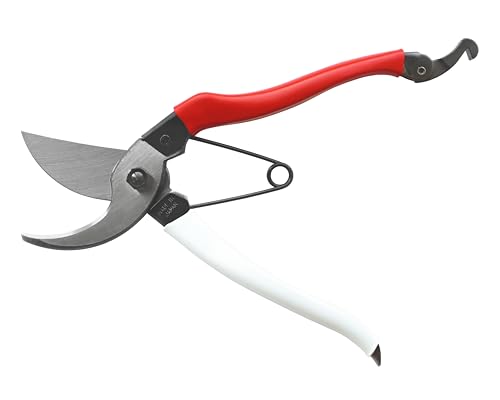
The No. 104 sits slightly longer than the popular 103 series at roughly 8.3 inches, giving a touch more leverage and reach. The blade uses Okatsune’s high-grade knife steel, the same lineage that runs through the rest of the catalog. If you find the standard 103 a touch short for the dense center of an overgrown shrub, the 104 reaches in without much extra weight.
For most gardeners, the 104 is a quiet upgrade: nothing flashy, just a longer handle and a slice that stays clean. The trade-off is a slightly narrower sweet spot for very small hands, so the 101 small model later on may suit better if your grip runs petite.
What It Does Well
- Longer 210 mm body reaches deeper into shrub interiors
- Cutlery-grade blade steel keeps a working edge through the season
- Slim profile slips between branches where bulkier pruners struggle
Trade Offs
- A bit much for purely one-handed deadheading at knee height
- Limited information on included accessories compared with boxed models
Key Product Details
Who It Suits Best
Mid-to-large handed gardeners managing taller shrubs and layered borders.
Look Elsewhere When
You mostly do small fingertip cuts on herbs and flowers, where the Okatsune 101 7-inch Bypass Pruners feel more natural.
Okatsune flags the 103 as its most popular model, and the 2020 refresh keeps the same general-purpose geometry with subtle refinements. Bypass pruners work like scissors: a curved upper blade passes a lower anvil-style jaw, leaving a clean cut on live wood. Total length around 200 mm and roughly 202 g of weight puts the 103 right in the medium-hand sweet spot for most adults.
For most backyards, this is the pair that quietly handles roses, young fruit wood, and overgrown perennials without complaint. A cut capacity near 25 mm covers the bulk of seasonal pruning without forcing you to reach for a lopper. Compared to the smaller 101 in this list, you get more leverage and a longer blade without much sacrifice in control.
Everyday Advantages
- Medium 200 mm length fits a wide range of hand sizes comfortably
- Bypass geometry leaves clean cuts that heal fast on live stems
- Light 202 g body reduces fatigue during long weekend pruning
- 55 mm blade covers most residential shrubs in a single motion
Points To Keep In Mind
- Maximum cut diameter around 25 mm, so thicker branches still need a saw or lopper
- Vinyl grip can feel slick in heavy rain until it breaks in
Best Suited To
Home gardeners who want one reliable pruner for roses, shrubs, and small fruit-tree work.
A Better Fit Elsewhere
You primarily harvest orchard fruit, where the Okatsune No. 307 Fruit Shears offer a purpose-built shape.
This is the standard-issue 103, the original general-purpose bypass pruner that made Okatsune’s name. The dimensions read close to the 2020 version above, around 7.9 inches tall and roughly 8.1 oz, with a vinyl-coated handle for grip. The high-grade blade steel does the same quiet job: cut green wood cleanly and resist chewing where cheaper pruners fail.
In a real backyard, the 103 earns its place on a wide variety of jobs, from fruit-tree selection to tidying roses after bloom. The vinyl grip is the practical difference: it stays comfortable through long sessions and sheds sap better than bare steel. Compared to the 2020 refresh just reviewed, the build and feel are nearly identical, so the choice often comes down to which listing you find available.
Real Benefits
- Vinyl-coated handle gives a non-slip grip even with damp gloves
- High-grade blade steel takes and holds a keen working edge
- Versatile enough for fruit-tree work and ornamental pruning alike
- Made in Japan under Okatsune’s traditional forging process
Possible Compromises
- Vinyl coating can wear where it meets the rivet after heavy seasons
- Not intended for branches beyond a finger’s thickness
Who Should Grab It
Pruners who want a traditional, well-made general-purpose pair for mixed garden duties.
Reach For A Different Pick When
Your pruning is mostly small fingertip work, where the Okatsune 101 7-inch Bypass Pruners stay nimbler.
The 101 is Okatsune’s small-format pruner, a 7-inch bypass that puts fingertip control ahead of reach. It uses the same blade lineage as the 103, just scaled down. The angled cutting head and easy-grip handle make it a natural fit for floral work, light fruit thinning, and any gardener who finds full-size pruners clumsy.
For most smaller-handed gardeners, this is the pair that actually gets used instead of left in the shed. The catch is reduced leverage on thicker stems, so a heavy-duty branch job still calls for something with more backbone. Compared to the 103 reviewed earlier, the 101 trades raw cutting power for control in tight spaces.
The Helpful Details
- Compact 7-inch frame suits smaller hands and detailed cuts
- Angled blade geometry slides into tight branch crotches easily
- Built-in locking mechanism keeps the tool closed in a pocket or apron
- Easy-grip handle reduces pinch during repetitive snipping
Honest Caveats
- Limited leverage on stems thicker than a pencil
- Smaller jaw opening means more bites per cut on bigger material
Feature Snapshot
Made For
Smaller-handed gardeners and anyone focused on detailed deadheading and flower work.
Not Your Match When
You’re routinely cutting mature wood above a finger’s thickness, where the Okatsune 103 Bypass Pruners General Purpose Medium handle it better.
The No. 133 is the only non-shear on this list, and it earns its place because Okatsune tools deserve proper storage. It’s a long protective sleeve, sized to fit the brand’s larger pruners and trimming shears. The dimensions read roughly 11.6 by 3.9 by 15.0 inches, so it accommodates both the 210 mm pruners and the longer 7744ai trimmer reviewed later.
For most collectors of quality tools, a skin or sleeve keeps the cutting edge from getting nicked in a garden bag or truck bed. The trade-off is that it adds bulk to your kit, so it’s more of a thoughtful add-on than a daily carry. If you already own a hard case or roll, this may feel redundant.
Well-Handled Touches
- Long protective sleeve fits Okatsune’s larger pruner and trimmer models
- Reduces edge damage during transport in buckets or tool bags
- Simple design adds little weight to a working kit
Worth Bearing In Mind
- Adds carrying length that may not suit compact tool belts
- Limited information on closure style beyond the listed dimensions
Whose Shelf It Belongs On
Anyone who owns longer Okatsune shears and wants to protect the edge between jobs.
Swap It Out When
You mainly use the compact Okatsune 101 7-inch Bypass Pruners, which fit easily in a standard apron pocket.
The NO.306 brings Okatsune’s blade pedigree into the kitchen, packaged as a dedicated pair of onion shears. Total length runs around 7.7 inches with a package footprint of about 7.1 by 3.9 inches, and the tool weighs roughly 4.1 oz. The blade is fine enough to slice scallion tops without bruising, and the handle stays light during repetitive herb prep.
For most home cooks, kitchen shears earn their drawer space when they replace a knife-and-board step entirely: snipping chives over a salad, trimming green onion ribbons, portioning bacon. The NO.306 covers that niche with steel sharp enough to feel closer to a knife than typical hardware-store shears. The trade-off is a thinner blade that you wouldn’t want to misuse on packaging or wire.
Where It Excels
- Fine kitchen-grade edge handles delicate herbs and aromatics
- Light 4.1 oz frame keeps hand fatigue low during long prep sessions
- Snips over a bowl, reducing cleanup versus a cutting board
Practical Considerations
- Hand-washing and drying recommended to protect the pivot from corrosion
- Not designed for tougher kitchen jobs like cracking poultry bones
Feature Card
Who Will Love This
Home cooks who reach for scissors more than a chef’s knife for herbs and green onions.
Another Choice May Suit
You need an outdoor harvesting tool, where the Okatsune No. 307 Fruit Shears stay sharper on tougher stems.
The 7744ai is Okatsune’s heavy reach trimmer, a Type 60 long-handle shear with a roughly 21.1-inch total length and a 6.9-inch blade. It weighs around 28.1 oz, a real working tool rather than a hand pruner. The special-steel blade and traditional square-bolt construction give it a feel closer to professional Japanese hedge tools.
For most gardeners with tall hedges or overgrown boundaries, this is the shear that turns a multi-hour job into a manageable one. It is overkill for small topiary work, where the shorter Type 65 reviewed first has more finesse. The catch is weight: long sessions overhead will tire you out faster than a compact pair.
Bright Spots
- 21-inch reach trims tall hedges without a ladder in many cases
- Long 6.9-inch blade clears wide sections in fewer strokes
- Square-bolt and Oddie-nut hardware allows field-tightening and maintenance
Some Limits To Know
- Heavier 28 oz frame can fatigue shoulders during overhead shaping
- Too long for precise work on small ornamental shrubs
Built With In Mind
Home gardeners managing long hedges, boundary shrubs, and bigger shaping projects.
Skip It When
Your trimming work centers on small topiary and detailed shaping, where the Okatsune No. 231 Trimming Shears (Type 65) feels more controlled.
The No. 307 is Okatsune’s dedicated fruit shear, sized at 180 mm with a short 35 mm blade designed for clean stem cuts on soft fruit wood. The handle uses carbon steel wrapped in PVC, which keeps weight low at roughly 105 g. The “boxed” presentation also means it arrives ready for gifting or storage.
For most orchard owners and berry growers, the No. 307 earns its place because it does one job well: cutting the stem without bruising the fruit. The shape lets you reach into the canopy and snip a single grape cluster or apple stem without damaging neighbors. Compared to general-purpose pruners, this is a focused specialty tool, and you’ll likely keep a separate pair for thick wood.
Everyday Perks
- Short 35 mm blade slips between fruit clusters without collateral damage
- PVC-wrapped carbon handle is light at 105 g for long picking sessions
- Boxed presentation suits gift-giving and protected storage
Less Ideal Details
- Small blade limits usefulness on branches thicker than a young stem
- Specialty shape means you’ll still want a general pruner for woody cuts
Perfect Match For
Orchard keepers and home growers harvesting apples, grapes, and similar soft-stemmed fruit.
Where A Sibling Pick Shines
You’re focused on citrus or grape harvesting specifically, where the Okatsune No.301 Fruit Harvesting Shears offer a purpose-built anti-blade shape.
The No.301 closes the list with Okatsune’s anti-blade harvester, a compact fruit shear sized at roughly 6.3 inches with a red and white grip for visibility. The warped blade edge is engineered to hold the cut fruit rather than let it fall, a small but real difference when you’re working high in a tree or reaching across a trellis.
For most citrus growers and vineyard keepers, this is the shear that solves the dropped-fruit problem. It is not a pruner in the traditional sense: the source explicitly warns against cutting woody branches with it. Compared to the No. 307 just reviewed, the No.301 leans harder into the picking function and lighter into general pruning.
A Few Highlights
- Warped blade cradles fruit during the cut, reducing drops
- Compact 6.3-inch frame fits well in a harvesting apron or pocket
- Red and white grip stays visible in dense foliage or low light
Where It Is Less Suited
- Not designed for woody branches, which can damage the warped edge
- Specialty focus means it cannot replace a general pruner in your kit
Whose Shelf It Belongs On
Citrus growers and vineyard keepers who want to pick fruit in one motion rather than catching falling pieces.
Where Another Pick Suits Better
You need a more versatile orchard shear, where the Okatsune No. 307 Fruit Shears cover both harvest and light pruning.
What To Weigh Before Choosing okatsune snips
The single biggest decision is blade type. Bypass pruners use two curved blades that pass each other like scissors, leaving the cleanest cut on live green wood and the best healing response on shrubs and fruit trees. Anvil pruners trap the stem against a flat surface and crush slightly more, which works for dead wood but can damage living tissue. Most of the picks on this list are bypass or single-bevel designs.
Blade Steel And Heat Treatment
Okatsune’s edge retention comes from its Izumo/Yasugi steel forging and tempering process. Cutlery-grade blade steel resists nicks and holds a working edge through hundreds of cuts between sharpenings. For most gardeners, that translates to fewer stops mid-job and a tool that still slices cleanly a year in. The honest trade-off: harder steel can be more brittle if you twist the blade sideways on a thick branch.
Size, Weight, And Hand Fit
Length drives leverage, while weight drives fatigue. The 7-inch 101 is nimble and friendly to smaller hands, the 103 sits in the everyday middle, and the 8.3-inch 104 and 21-inch 7744ai trade compactness for reach. For most pruning sessions, you’ll want one pair that disappears in the grip and another longer tool reserved for hedges and tall shrubs.
Intended Use Case
A pair of fruit shears is not a substitute for a hedge trimmer, and a long-reach shear is not a substitute for fingertip pruners. Match the tool to the job: 103 or 104 for general garden work, 101 for detail and small hands, No. 307 for orchard harvest, No.301 for citrus picking, NO.306 for kitchen prep, and 7744ai for tall hedge shaping.
Smart Angles Before You Decide
Where Shoppers Go Wrong
A common slip is choosing a pruner based on blade size alone. A long 8.3-inch 104 sounds capable, but in tight rose bushes the extra length works against you. Another frequent miss is using a general-purpose bypass on branches beyond its rated diameter, which springs the blade and dulls the edge in a single bad cut. Match the tool to your most common job and buy the rest later.
When Paying More Pays Off
Higher-tier Okatsune models cost more because the steel, heat treatment, and assembly tolerances are tighter. For most gardeners with a small yard, a standard 103 does everything they need. The upgrade earns its keep when you cut daily, work in wet conditions, or depend on a single tool for professional-grade output. For occasional home use, the basic model is plenty sharp and durable.
Frequently Asked Questions
What does bypass mean on Okatsune snips?
Bypass pruners use two curved blades that pass each other like scissors, leaving a clean cut on live wood with minimal crushing. That’s the design behind the popular 101 and 103 models in this list.
How often should okatsune snips be sharpened?
Owners commonly report a light touch-up with a whetstone every few weeks during heavy use, and a full sharpening once or twice per season. Wiping the blade clean and dry after each session noticeably extends edge life.
Are Okatsune snips made in Japan?
Yes, the products covered here are manufactured in Japan under Okatsune’s traditional steel-forging process. The brand is well known for keeping production domestic rather than outsourcing.
Can I use these snips on thick branches?
It depends on the model. The 103 and 104 handle branches up to roughly 25 mm in diameter, while the 7744ai trimmer suits thicker hedge growth. For true woody limbs beyond finger thickness, a saw or lopper is the better tool.
How do I clean and store Okatsune snips?
Wipe the blades dry after use, occasionally oil the pivot, and store in a dry place. The No. 133 Pruning Skin Sack reviewed above is a purpose-built sleeve if you carry shears in a bucket or bag.
The Takeaway
A good pair of okatsune snips feels less like a tool and more like a quiet helper. The right model depends on your hands, your yard, and the work you actually do. Start with the general-purpose 103 if you want one capable pair, narrow down by use case from there, and your garden, kitchen, or orchard will thank you for years.