Healthy soil decides everything in a garden, from how tomatoes set fruit to whether a fiddle leaf fig sulks or thrives. With aisles stacked high in coco coir, worm castings, and peat-based blends, choosing the right bag feels like guesswork. This list sorts the noise into ten solid options for raised beds, containers, and in-ground plots, so your next bag of organic choice garden soils does what it says on the label.
An Overview Of The Picks

Plantonix Coco Coir 650gm Bricks (10-Pack)

Wonder Soil 30 Quarts Compressed Coco Coir (3-Pack)

Plantonix Worm Bliss Organic Worm Castings (1 Qt)

Coast of Maine Cobscook Blend In-Ground Garden Soil (1 cu ft)

FoxFarm Ocean Forest Potting Soil (12 Quart)

Miracle-Gro Indoor Plant Care Bundle (6 qt)

Nutrifield Coco Mega Brick 5kg Coco Coir (Expands to 55L)
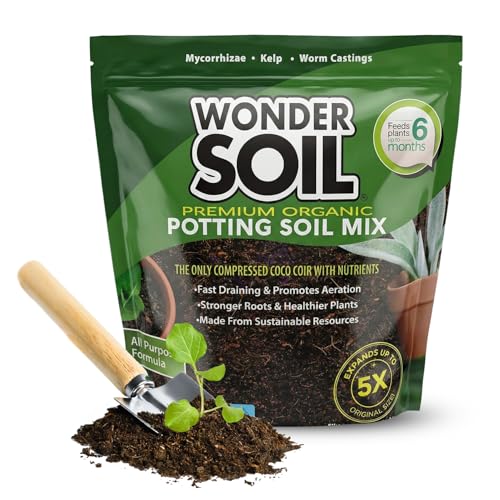
Wonder Soil Organic Potting Soil (12 Quarts, 3 lbs)

Wonder Soil 72 Quarts Compressed Coco Coir (10 lbs)

Urban Worm Coco Coir Soil Amendment and Bedding (2-Pack)
The Details Behind The Selections
Coco coir is the fibrous husks of coconut shells, shredded and pressed into bricks that rehydrate into a fluffy, peat-free growing medium. Plantonix’s ten-pack leans into that clean base: each 650-gram brick arrives triple-screened through a fine mesh to strip out stray fiber, sand, and grit, so what lands in your potting bench is closer to pure medium than filler. OMRI-listed, it qualifies for organic gardening standards and slips easily into seed-starting trays, raised beds, or hanging baskets.
Compared to Wonder Soil’s pre-amended bricks, this option is intentionally inert, which most experienced gardeners prefer as a base. You control the nutrients, add worm castings, kelp, or synthetic feed on your own schedule. The bricks store flat on a garage shelf, expand predictably with warm water, and break apart without the clumping you sometimes see in cheaper blocks.
Where It Delivers
- OMRI-listed certification supports organic gardening practices
- Triple-screened texture removes grit, sand, and stray fibers
- Ten-brick pack gives multi-season supply for most home growers
- Low bulk storage, since bricks ship compact and stack flat
- Peat-free alternative for gardeners trying to cut sphagnum use
Things To Consider
- No added nutrients, so seedlings need feeding within the first two weeks
- Bricks need soaking time and break apart easier with warm water than cold
- Lower water-holding capacity than peat, so plan for more frequent watering in summer containers
Key Specs
Who It Suits Best
Intermediate to experienced gardeners who want a clean, inert base to amend themselves rather than a pre-loaded mix.
Consider Something Else When
New gardeners who want a turnkey medium should reach for Wonder Soil 30 Quarts Compressed Coco Coir (3-Pack) instead, since it ships with worm castings already mixed in.
Unlike Plantonix’s blank-slate bricks, Wonder Soil ships pre-loaded with worm castings, mycorrhizae, and kelp, so seedlings hit a runway of slow-release nutrition the moment they break soil. The three-brick pack hydrates to roughly 30 quarts, enough to fill a half-dozen medium containers or a small raised bed. For anyone tired of mixing amendments into plain coir, the shortcut is built in.
The expansion ratio is the real trick here: a single brick in a five-gallon bucket becomes a workable pile of fluffy medium within minutes, and you can skip the measuring of separate compost bags. Mycorrhizae, beneficial fungi that colonize root systems and help plants pull water and phosphorus from the soil, give this blend a head start over inert coir. Most home growers will see the first month of growth covered without supplemental feeding.
A Strong Showing
- Pre-amended with worm castings, mycorrhizae, and kelp for early-stage feeding
- Three-brick format yields about 30 quarts, enough for several planters
- Expands quickly with water and breaks up without clumping
- Peat-free composition suits gardeners avoiding sphagnum
Worth Noting
- Added nutrients may be too rich for sensitive herbs like rosemary or thyme, so blend with plain coir for those
- Dry bricks need gradual water addition to fully hydrate without dry pockets in the center
Made For
Container gardeners and balcony growers who want a near-instant medium without buying separate amendment bags.
Look Elsewhere When
Large in-ground bed builders are better served by Coast of Maine Cobscook Blend In-Ground Garden Soil, which is sized for spreading across bigger plots.
Worm castings are the digested organic matter earthworms leave behind, often called “black gold” by gardeners for their dense nutrient profile. Worm Bliss arrives in a one-quart bag, OMRI-listed, and 100% vegan since the worms are fed plant-based material rather than manure. The castings are dark, crumbly, and mild-smelling, ready to either mix into potting soil or sprinkle as a top-dress around established plants.
Where the coco coir options give you a base, this product concentrates the biology. A little goes a long way: a few tablespoons stirred into a transplant hole, or a quarter-inch layer across a houseplant’s surface, is typically enough. Vegetables, flowers, and indoor foliage all respond to the slow nutrient release without the burn risk synthetic fertilizers can pose.
Key Advantages
- OMRI-listed organic certification for verified organic gardening
- Vegan and manure-free, so no odor or runoff concerns
- Rich in nitrogen, phosphorus, and potassium for steady feeding
- Versatile for soil mixing, top-dressing, or compost tea brewing
Trade Offs
- One-quart volume runs out fast on large beds, so plan to buy multiple bags
- Higher cost per cubic foot than bulk compost alternatives
Right Fit For
Vegetable gardeners and houseplant owners who want a concentrated organic boost to layer into existing soil.
Reach For A Different Pick When
Those filling fresh containers from scratch are better off starting with Wonder Soil 30 Quarts Compressed Coco Coir (3-Pack), which already includes worm castings in the mix.
Most of the picks on this list target containers, but in-ground beds need a different beast. Coast of Maine’s Cobscook Blend mixes sphagnum peat moss, compost, and aged bark into a loamy medium designed to be worked directly into native soil. One cubic foot goes a long way when forked into a new perennial bed or used to top-dress an established lawn. The texture is heavier and richer than the coco coir options, which is exactly what tired clay or sandy plots crave.
The aged bark content gives the blend structure that resists compaction, while the compost feeds the soil biology below. Coastal of Maine leans on renewable ingredients and is widely stocked in independent garden centers. For anyone rebuilding a neglected bed or repairing a lawn patch, this is the kind of bag that does the work of a wheelbarrow full of homemade compost.
Features That Help
- Sphagnum peat moss plus compost plus aged bark for balanced texture
- Works into sandy, compacted, or clay-heavy native soil
- Top-dresses established beds to suppress weeds and feed the surface
- Suitable for annuals, perennials, and lawn repair patches
Room For Improvement
- Heavier bag than compressed coir, so shipping costs may be higher in some regions
- One-cubic-foot volume suits small projects; larger beds need multiple bags
Best Suited To
Homeowners with in-ground flower beds, vegetable plots, or lawn sections that need real soil rebuilding rather than just a container medium.
A Better Fit Elsewhere
Container-only growers will find Plantonix Coco Coir 650gm Bricks (10-Pack) easier to store and lighter to lift.
FoxFarm built its reputation on rich, ready-to-use blends, and the Ocean Forest mix is the one most often recommended for serious container gardening. The 12-quart bag opens to a light, aerated texture laced with fish meal, crab meal, and earthworm castings, all sources of organic nitrogen and trace minerals. Aged forest products and sphagnum peat moss form the base, giving houseplants and edible starts a forgiving, well-drained home.
The blend is ready to use straight from the bag, so transplanting seedlings doesn’t mean a side trip to mix amendments. The “ocean” name nods to the crab and fish meals, both of which break down slowly to feed hungry plants. For growers who rotate between tomatoes, peppers, and leafy greens on a patio, the consistent quality is part of the appeal.
Where It Helps
- Pre-blended with fish meal, crab meal, and earthworm castings for early feeding
- Aerated texture supports drainage in standard nursery pots
- Ready to use without additional mixing for most seedlings
- Trusted among hobbyist and small-scale edible growers
Points To Note
- Strong organic smell on opening, which fades after a few waterings but can bother indoor growers initially
- Not a sustainable alternative to peat, so eco-focused gardeners may prefer the coco coir picks
Feature Snapshot
Who Will Love This
Container gardeners and edible-plant growers who want a ready-to-use, nutrient-dense blend and don’t mind paying a small premium for the convenience.
Swap It Out When
Peat-averse organic growers will get similar results with Nutrifield Coco Mega Brick 5kg Coco Coir, which is fully renewable and peat-free.
Not every gardener wants to assemble a soil strategy from separate bags. Miracle-Gro’s Indoor Plant Care Bundle packages the company’s indoor potting mix with a plant food and a protect product into a single starter kit. The six-quart soil volume is sized for a handful of medium houseplants, so the bundle makes sense for a windowsill herb garden or a small collection of foliage pots.
The indoor mix is blended for less gnats since it skips the compost and bark that often shelter fungus gnats indoors, a real-world benefit for anyone who’s dealt with the tiny black flies buzzing around overwatered pots. Adding the feed and protect products to the kit removes the guesswork for new plant parents who aren’t sure how often to fertilize or how to manage common houseplant pests.
Strong Points
- All-in-one kit removes the need to buy separate soil, food, and pest products
- Indoor mix designed to reduce fungus gnat issues
- Six-quart soil size fits most starter plant collections
- Beginner-friendly with clear usage instructions in the kit
Honest Caveats
- Six-quart volume runs out quickly with frequent repotting
- Not strictly organic, so gardeners seeking OMRI-listed inputs should pick another option
Built With In Mind
First-time houseplant owners who want one purchase that covers soil, feeding, and basic pest management.
Not Your Match When
Experienced indoor growers can save money by skipping the bundle and buying Plantonix Coco Coir 650gm Bricks (10-Pack) plus a separate organic fertilizer.
Nutrifield’s Mega Brick is a heavy-duty option aimed at growers who burn through coco coir by the bale. The 5-kilogram compressed block expands to roughly 55 liters of finished medium, which is enough to fill a large raised bed, several grow bags, or a steady rotation of hydroponic containers. Pre-buffered and triple-washed, the coir arrives with a low electrical conductivity (EC), a measure of soluble salt content, so sensitive roots and hydroponic reservoirs aren’t exposed to the salt spikes that plague cheaper bricks.
Hydroponic growers in particular appreciate the consistency, since unpredictable salt levels disrupt nutrient balance in recirculating systems. The brick hydrates fast in a large tote, breaks apart evenly, and stores compact until needed. For anyone running a small farm or a serious grow tent, the per-liter cost drops sharply compared to smaller bricks.
Notable Gains
- Expands from 5kg to about 55 liters, ideal for larger projects
- Pre-buffered and triple-washed for low salt content
- Consistent grade supports predictable hydroponic reservoir management
- Sustainable alternative to peat for indoor and outdoor use
Possible Compromises
- Heavy brick requires a sturdy container and effort to fully hydrate
- No built-in nutrients, so growers must feed from day one
At A Glance
Whose Shelf It Belongs On
Hydroponic hobbyists, microgreen growers, and anyone managing raised beds at a serious scale who wants bulk coir without skimping on quality.
Where A Sibling Pick Shines
Container-only herb gardeners will find Wonder Soil Organic Potting Soil (12 Quarts, 3 lbs) more manageable in a small apartment.
The 12-quart Wonder Soil bag is the apartment-dweller’s answer to the company’s larger formats. The 3-pound compressed bag rehydrates to about 12 quarts, just enough for two or three medium pots, a window box, or a small herb garden on a kitchen counter. Like the 30-quart and 72-quart siblings, it ships pre-mixed with worm castings, mycorrhizae, kelp, and perlite, so the medium is genuinely ready to plant straight from the bag.
Perlite is the small white volcanic pebbles you see in potting mixes, used to keep the medium loose and well-drained. Its inclusion here makes the bag especially well-suited to succulents, herbs, and Mediterranean plants that hate wet feet. For a first-time gardener testing the waters, the manageable size avoids the waste of buying a 72-quart block and only needing a corner of it.
What Stands Out
- Pre-loaded with worm castings, mycorrhizae, kelp, and perlite
- Compact 3-pound bag rehydrates to 12 quarts of finished medium
- Peat-free, family- and pet-safe formulation
- Lightweight to carry from car to balcony without strain
Some Limits To Know
- Small finished volume means multiple bags for any serious garden
- Perlite dust can be noticeable when first pouring the dry mix
Perfect Match For
Apartment and small-space gardeners growing herbs, succulents, or a handful of houseplants who want a ready-to-use bag in a manageable size.
Skip It When
Large raised-bed builders will get better value per quart from Wonder Soil 72 Quarts Compressed Coco Coir (10 lbs).
When a full raised bed is on the to-do list, the 72-quart Wonder Soil block earns its keep. The 10-pound brick hydrates to roughly 72 quarts of finished medium, enough to fill a 4-by-8-foot bed a few inches deep or several grow bags for a patio. Like the smaller Wonder Soil bags, it includes worm castings, mycorrhizae, and kelp, so the medium feeds plants for the first stretch of growth without supplemental feeding.
The compressed format keeps shipping manageable, since the 10-pound block stores flat in a garage until needed. Hydration does take some time and a large tub, so plan a dedicated afternoon for the work. Once expanded, the medium holds moisture well and stays loose, which suits both edible crops and ornamental plantings.
What Pays Off
- Expands from 10 pounds to about 72 quarts of finished medium
- Pre-amended with worm castings, mycorrhizae, and kelp
- Lower cost per quart than smaller bag formats
- Peat-free, family- and pet-safe blend
Less Ideal Details
- Hydration requires a large container and dedicated time
- Too much volume for casual container gardeners
Feature Rundown
Who Should Grab It
Raised-bed builders, community gardeners, and anyone planning a season’s worth of container planting in a single order.
Where Another Pick Suits Better
Casual patio gardeners will find Wonder Soil Organic Potting Soil (12 Quarts, 3 lbs) easier to handle and less wasteful for smaller projects.
Vermicomposting, raising worms to process food scraps into nutrient-rich castings, needs a bedding material that holds moisture without going soggy. Urban Worm’s coco coir bricks are sized and packaged for exactly that job, but they double as a general soil amendment. Each 1.4-pound brick absorbs about a gallon of water and breaks down into a fluffy, pH-neutral medium that mixes easily into garden soil or potting mix.
The two-pack format suits most small worm bin setups without overbuying. Rinsed repeatedly during processing, the coir keeps salt content low, so worms stay healthy in the bedding. Outside the worm bin, you can mix the hydrated coir into raised beds or use it as a water-retaining top-dress around thirsty plants.
The Helpful Details
- Each brick absorbs about a gallon of water for high water retention
- Low salt content and pH-neutral profile protects worm health
- Peat-free and sustainable alternative to traditional bedding
- Works as a soil amendment beyond just worm bin use
Practical Considerations
- Two-pack volume is small for full garden bed applications
- Hydration takes time and a deep container to fully expand each brick
The Right Fit
Vermicomposters and gardeners who want a sustainable, low-salt coir for both worm bins and soil mixing.
Another Choice May Suit
Raised-bed builders seeking bulk coco coir will get more volume for the cost from Nutrifield Coco Mega Brick 5kg Coco Coir.
Matching Soils To Your Garden Goals
Choosing the right organic choice garden soils starts with honesty about your project. Container gardeners on a balcony need something light and bagged small, while raised bed builders care more about volume and water retention than neat packaging. Match the medium to the plant’s needs first: heavy-feeding tomatoes want a richer, pre-amended blend like FoxFarm Ocean Forest Potting Soil or Wonder Soil 30 Quarts Compressed Coco Coir, while succulents and Mediterranean herbs prefer a leaner, faster-draining mix with perlite like Wonder Soil Organic Potting Soil (12 Quarts, 3 lbs).
Texture and weight matter more than most shoppers expect. Coco coir is light when dry and easier to carry, but it holds less water than peat-heavy blends, so summer watering schedules tighten. In-ground beds usually benefit from a denser loam like Coast of Maine Cobscook Blend, which adds structure to tired native soil. For hydroponic growers, the pre-buffered, low-EC consistency of Nutrifield Coco Mega Brick 5kg Coco Coir protects sensitive root systems and reservoir chemistry.
Storage and handling round out the practical side. Compressed bricks ship compact and stack flat, which matters for gardeners without a garage or shed for bulky bags. Pre-amended blends save time but cost more per quart, so weigh convenience against budget. Honest read: most home gardeners benefit from one or two specialty bags for specific projects rather than a one-size-fits-all purchase.
Quick Considerations Before You Click
Traps First Timers Fall Into
Picking the cheapest bag on the shelf often backfires in container gardens, since low-grade coir carries more salt and dust that stresses seedlings. Buying more volume than your space can use leads to half-expanded bricks sitting in bags for months, losing freshness. Skipping pH and drainage considerations means a “great soil” can still suffocate roots in the wrong pot.
Where The Extra Money Goes
Premium blends like FoxFarm Ocean Forest Potting Soil or the larger Wonder Soil formats include amendments that would otherwise need separate purchases, plus tighter quality control on salt and dust levels. Pre-buffered coco coir commands a higher cost because the rinsing and buffering process takes time and water. For most home gardeners, the upgrade pays off in faster plant establishment and fewer transplant setbacks.
Frequently Asked Questions
What Is Coco Coir And Why Use It?
Coco coir is a fiber made from coconut husks, used as a peat-free growing medium. It holds moisture well, drains freely, and resists compaction, making it popular for container gardening and hydroponic systems.
Are These Soils Safe For Vegetable Gardens?
The OMRI-listed options on this list meet organic gardening standards, and most are well-suited to vegetable beds. Always confirm the certification matches your local organic program if certification matters for your records.
How Much Soil Do I Need For A Raised Bed?
A 4-by-8-foot bed at 6 inches deep holds roughly 16 cubic feet of soil. For larger depths, double the volume, and remember that compressed coco coir expands significantly once hydrated.
Can I Mix Coco Coir With Native Garden Soil?
Yes, blending coco coir into native soil improves water retention and aeration, especially in sandy or clay-heavy plots. For best results, work it into the top 6 to 8 inches rather than layering it on top.
How Often Should I Replace Potting Soil?
Refresh container soil each season or two, since nutrients deplete and structure breaks down over time. Top-dressing with worm castings mid-season can extend the life of an existing mix.
The Takeaway
The right bag of soil quietly does most of the gardening for you, holding moisture, feeding roots, and giving plants a stable home through heat waves and cold snaps. Match the medium to the project, weigh convenience against cost, and don’t be afraid to combine a base coir with a concentrated amendment like worm castings for a custom blend. Your plants will tell you within a season whether the choice worked, and the bed will get better each year as you refine it.