A patchy, yellowing lawn pulls down the whole curb appeal of a house, and reaching for synthetic fertilizer to fix it usually means exposing kids, pets, and pollinators to a chemical cocktail. Organic lawn fertilizers feed the soil first, building long-term resilience instead of forcing a quick green flash that fades within weeks. The eight options below cover different lawn personalities, from depleted urban plots to established turf that just needs a steady mineral boost.
The Essentials At A Glance
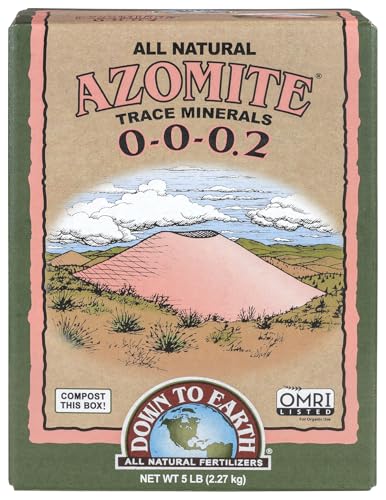
Down To Earth Organic Azomite Minerals Powder – 5lb
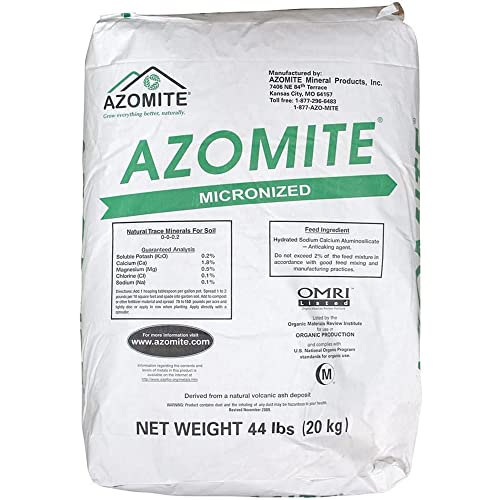
Azomite Raw Supply Organic Trace Mineral Powder 44LB Micronized
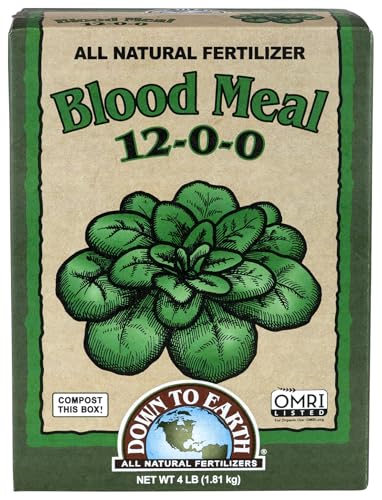
Down To Earth Blood Meal Fertilizer Mix 12-0-0, 5 lb

Smart Grower Sea-Kelp Fertilizer 2oz Makes 50 Gallons

Neptune’s Harvest Organic Crab & Lobster Shell Plant Food (5-3-0) – 4 LB
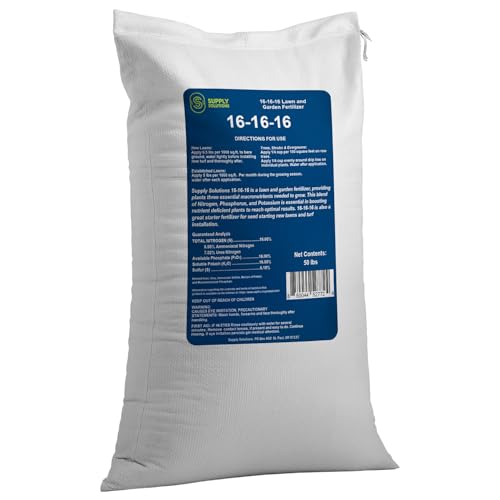
Supply Solutions 16-16-16 All Purpose Granular Fertilizer – 50lbs

Supply Solutions 10-10-10 Granular Fertilizer with Micronutrients – 50 lbs

Supply Solutions Urea 46-0-0 Nitrogen Fertilizer – 40 Pounds
More On The Choices That Made The List
If your lawn sits on soil that feels tired, sandy, or stripped from years of runoff, a mineral recharge often does more than any standard NPK blend. Down To Earth Organic Azomite Minerals Powder pulls from a volcanic ash deposit in central Utah that settled into an ancient seabed, creating a complex mineral profile that lawns in mineral-poor regions genuinely respond to.
The granulated form spreads cleanly through a standard drop spreader without the dust cloud finer powders tend to throw up. For homeowners who already feed with compost or a balanced fertilizer and want to top-dress with trace minerals, this fits naturally into an existing routine.
Key Advantages
- Broad trace mineral profile re-mineralizes depleted lawn soils over time.
- Granulated texture spreads evenly through standard lawn equipment with minimal dust.
- Blends easily with compost and dry amendments, so it layers into existing organic feeding programs.
- Five-pound size suits small-to-medium lawns without overcommitting on a first purchase.
Things To Consider
- Works as a soil conditioner, not a stand-alone nitrogen source, meaning you will likely pair it with another feed.
- The five-pound volume runs out fast on larger lots.
Who It Suits Best
Homeowners working with mineral-depleted or sandy soils who already use compost and want a targeted trace mineral top-up.
Where Another Pick Suits Better
Large acreage will outgrow this five-pound bag quickly, so the Azomite Raw Supply Organic Trace Mineral Powder 44LB Micronized is the more practical sibling.
The 44-pound bucket is the same Utah-mined mineral profile as the smaller Down To Earth bag, scaled up for anyone feeding more than a quarter acre. Micronized (ultra-fine) particles dissolve into water for foliar feeding or mix into soil drench applications, which opens up delivery methods that coarser granules cannot match.
For a rural homeowner with pasture, orchard, and lawn to feed from the same supply, this one container can stretch across the whole property through the year. Storage needs are real, though, so a dry spot matters.
Why It Works Well
- Ultra-fine powder mixes cleanly into liquid feeds for foliar or drench application.
- Same broad-spectrum mineral profile as granular Azomite, just in a more versatile particle size.
- Large container supports multi-zone feeding (lawn, garden, orchard) from a single supply.
Honest Caveats
- Micronized powder generates more dust than granulated forms and calls for a mask during mixing.
- The 44-pound bucket demands dry, secure storage to keep moisture out.
- Overkill for anyone working with a single small city lot.
Feature Snapshot
Made For
Owners of larger properties, small farms, or anyone wanting one mineral source across lawn, garden, and food crops.
Skip It When
A small city lawn that the Down To Earth Organic Azomite Minerals Powder can handle with far less storage commitment.
Blood meal is one of the oldest organic fertilizers around, and Down To Earth’s 12-0-0 mix concentrates entirely on vegetative push. The three numbers on any fertilizer label represent nitrogen, phosphorus, and potassium; this one’s nitrogen-only profile (12% nitrogen, zero phosphorus, zero potassium) makes it a targeted tool rather than a general feed.
For lawns that have gone pale, thinned out after summer stress, or need a fast pre-growing-season boost, blood meal delivers one of the quickest organic green-ups available. It also helps compost piles heat up and break down faster, which extends its usefulness beyond the lawn itself.
Real-World Strengths
- High nitrogen content produces one of the fastest organic green-ups on tired turf.
- Listed for use in organic production, which matters for gardeners growing food nearby.
- Doubles as a compost pile activator when you have more than the lawn needs.
- Granular form spreads through standard spreaders without special equipment.
Worth Noting
- No phosphorus or potassium means it cannot stand alone for balanced lawn nutrition.
- Over-application risks burning turf, so measured spreading matters.
- The strong scent may draw wildlife scavengers in some regions.
Right Fit For
Lawns recovering from heat stress or heavy-feeding turf grasses (rye, fescue blends) needing a focused nitrogen boost.
A Better Fit Elsewhere
Anyone wanting balanced year-round feeding will get more complete nutrition from the Supply Solutions 10-10-10 Granular Fertilizer with Micronutrients.
Sea-kelp fertilizers sit in a different category than granular feeds. Soluble potash is the form of potassium that dissolves in water and becomes immediately available to grass roots. Smart Grower’s seaweed-based formula, harvested from Maine, carries an NPK of 0-0-18, meaning zero nitrogen, zero phosphorus, and 18% soluble potash, all aimed at stress recovery and nutrient uptake rather than raw growth.
The two-ounce pouch is genuinely tiny, but it makes up to 50 gallons of ready-to-apply liquid, which suits homeowners with smaller lawns or those wanting a foliar supplement alongside a primary dry fertilizer.
Useful Touches
- Soluble potash feeds potassium for stress tolerance without forcing soft, rapid growth.
- Highly concentrated powder keeps storage footprint near zero.
- Liquid application gives faster visible response than granular feeds.
- Compatible with hose-end sprayers for fast lawn coverage.
Trade Offs
- Zero nitrogen means it must complement a nitrogen source for general lawn feeding.
- Requires mixing equipment and a sprayer for application.
Feature Snapshot
Best Suited To
Homeowners supplementing a primary dry fertilizer with a liquid potassium boost for heat or drought stress recovery.
Consider Something Else When
You want a one-step dry feed, in which case Neptune’s Harvest Organic Crab & Lobster Shell Plant Food covers more nutrient bases.
Crab and lobster shell meal has a long track record on the coastal Northeast, and Neptune’s Harvest brings that tradition inland in a resealable four-pound bag. The 5-3-0 analysis provides moderate nitrogen, low phosphorus, and trace minerals from a marine byproduct most homeowners wouldn’t otherwise access.
Shell-based meals feed slowly, so this is a soil-building fertilizer rather than a quick green-up product. Calcium and chitin (a fibrous compound from shellfish exoskeletons that supports beneficial soil microbes) help soil structure over multiple applications, which suits gardeners thinking beyond a single season.
Where It Helps
- Slow-release nitrogen supports steady growth without surge-and-crash cycles.
- Calcium and chitin improve soil biology and structure over time.
- Repurposes a seafood byproduct, which fits sustainable gardening priorities.
- Resealable bag keeps product fresh between applications.
Minor Gripes
- No potassium means pairing is needed for complete nutrition.
- Slower visible response than blood meal or urea-based options.
- Distinct shellfish scent at application, though it fades quickly.
Feature Snapshot
Who Will Love This
Long-game gardeners and coastal-region homeowners building soil structure across multiple seasons rather than chasing fast color.
Reach For A Different Pick When
You want faster greening power, in which case the Supply Solutions Urea 46-0-0 Nitrogen Fertilizer delivers more dramatic near-term results.
A balanced 16-16-16 fertilizer delivers equal parts nitrogen, phosphorus, and potassium, the macronutrients grass needs in roughly equal measure for sustained growth, root development, and stress tolerance. Supply Solutions’ 50-pound bag covers a substantial lawn without constant refills, and the granular form spreads evenly through any standard drop or broadcast spreader.
This is the option to reach for when you want one product feeding turf, ornamentals, berries, and vegetables with the same analysis. The trade-off is intensity: 16% of each nutrient is high for an established lawn and can push excessive top growth if applied mid-summer.
The Helpful Details
- Equal macronutrient profile handles lawn, garden, and food crops from one bag.
- 50-pound volume supports large properties or multi-season use.
- Granular format suits standard homeowner spreaders with no special equipment.
- Higher analysis means fewer applications needed annually.
Points To Note
- Higher nutrient concentration risks burn on young grass or during summer stress.
- Balanced NPK is overkill for lawns with known specific deficiencies.
- 50-pound bag demands dry storage space.
Perfect Match For
Homeowners feeding lawn, vegetable garden, and ornamentals with one product and willing to follow spreader settings carefully.
Look Elsewhere When
You want gentler, lower-analysis feeding for an established lawn that does not need aggressive nutrition.
The 10-10-10 sibling takes the same balanced approach as the 16-16-16 but at a more measured pace. Ten percent each of nitrogen, phosphorus, and potassium makes this a safer pick for year-round use without nutrient overload, which suits homeowners who want steady feeding rather than aggressive push.
The added micronutrients (boron, manganese, copper, iron, and zinc) address common trace deficiencies that pure NPK blends skip, particularly important in sandy or heavily leached soils. Granules are low-dust and uniform, which the manufacturer highlights through Nutripaction Technology, a low-dust compaction process that produces even particles.
Practical Pluses
- Lower 10-10-10 analysis reduces burn risk on established lawns.
- Added micronutrients correct common soil deficiencies in a single pass.
- Even, low-dust granules spread uniformly through standard spreaders.
- Compatible with compost for gardeners running layered feeding programs.
Some Limits To Know
- Requires soil testing for precise application rates, per the manufacturer’s guidance.
- 50-pound bag is bulky for homeowners with limited storage.
Feature Snapshot
Built With In Mind
Homeowners seeking balanced, year-round lawn feeding with micronutrient support and gentler application rates.
Swap It Out When
A nutrient-deficient lawn needing aggressive restoration will respond faster to the Supply Solutions 16-16-16 All Purpose Granular Fertilizer.
Urea is the most concentrated dry nitrogen source commonly available to homeowners, and 46% nitrogen is roughly four times stronger than most balanced lawn fertilizers. This single-nutrient profile is a tool, not a complete feed: it pushes green color and leaf growth hard while leaving phosphorus and potassium for other products.
For cool-season lawns (fescue, ryegrass, bluegrass) waking up in early spring and needing a quick color lift, urea works faster than any organic alternative. Warm-season lawns (bermuda, zoysia, St. Augustine) coming out of dormancy respond just as strongly.
Strong Points
- 46% nitrogen produces one of the fastest color restorations on tired turf.
- 40-pound volume covers large properties or multi-season use.
- Granular form works with standard homeowner spreaders.
- Suits both cool-season and warm-season grass types during their growth windows.
Possible Compromises
- Zero phosphorus and potassium mean pairing is required for complete nutrition.
- High burn risk on young grass or during summer heat demands careful calibration.
- Pushes top growth at the expense of root development, so timing matters.
Whose Shelf It Belongs On
Experienced homeowners comfortable calibrating spreaders and timing applications to grass growth cycles.
Another Choice May Suit
Beginners who prefer a gentler learning curve will find the Down To Earth Blood Meal Fertilizer Mix 12-0-0 easier to manage.
What To Weigh Before Choosing Organic Lawn Fertilizers
The right pick depends on what your soil actually needs, and guessing at that wastes money and effort. A basic soil test kit from a garden center reveals p-value (a measure of soil acidity or alkalinity, where 7.0 is neutral), existing nutrient levels, and organic matter percentage, which narrows the field considerably before any product goes in the spreader.
Reading The NPK Label
Those three numbers on every fertilizer bag tell you the percentage by weight of nitrogen, phosphorus, and potassium. A 12-0-0 blood meal pushes vegetative growth only, while a balanced 10-10-10 covers general feeding. Lawns dominated by cool-season grasses usually want a nitrogen-forward product during their spring and fall growth windows, while warm-season grasses prefer summer feeding.
Granular Versus Liquid
Granular fertilizers spread slowly through standard equipment and release over weeks, which suits routine seasonal feeding. Liquid concentrates like sea-kelp reach roots faster but require mixing and spraying. Combining both, dry for baseline nutrition and liquid for stress recovery, is a common strategy among serious gardeners.
Organic Inputs And Soil Biology
Organic fertilizers work by feeding soil microbes, which then make nutrients available to grass roots. That process takes longer than synthetic feeds but builds long-term soil structure. Homeowners in drought-prone or heavily compacted areas benefit most from this approach because improved soil holds water better.
Mistakes Worth Dodging And Where The Upgrade Pays Off
Wrong Turns To Avoid
Overapplying high-nitrogen urea in summer is a common mistake, since the resulting growth surge stresses grass during its weakest period. Skipping a soil test before choosing an analysis is another frequent trap, because feeding without knowing what’s already present creates imbalances that take seasons to correct.
The Upgrade Payoff
Higher-tier fertilizers cost more per bag because they add micronutrients, lower-dust granule technology, or organic certifications that cheaper blends skip. For large properties, the per-application cost difference matters less than the convenience of fewer refills and more even results, which is where the 50-pound Supply Solutions options earn their higher sticker.