Stocking a working plumbing kit means choosing tools that won’t quit halfway through a Sunday afternoon under a kitchen sink, and a service van needs a different mix than a homeowner’s drawer. Drain lines, supply valves, basin nuts, and old galvanized fittings all demand their own approach. The picks below cover a realistic range of plumbing situations, from precision work in tight cabinets to heavy cranking on rusted iron pipe, and each one earns its place for a specific reason.
The Shortlist At A Glance

KNIPEX Pliers Wrench, Chrome (86 03 180)
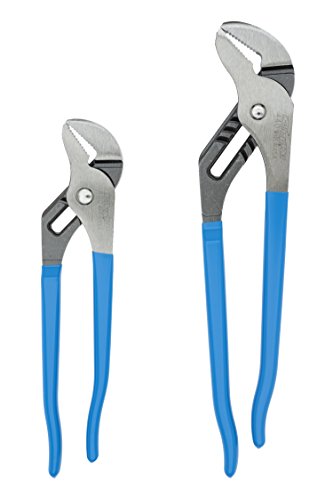
Channellock Tongue and Groove Plier Set TG-1 9.5 & 12 in

RIDGID 31100 Model 818 Aluminum Straight Pipe Wrench 18-inch

RIDGID 31000 Model 6 Heavy-Duty Straight Pipe Wrench 6-inch

RIDGID 31010 Model 10 Heavy-Duty Straight Pipe Wrench 10-inch

RIDGID 31305 Model E-110 9.5-inch Offset Hex Jaw Pipe Wrench

STANLEY Hex Keys Propeller Turner Set (22 Piece)
Luoyweiton Multifunctional Sink Wrench Set (A+B) Carbon Steel

Luoyweiton Multifunctional Sink Wrench (B) Carbon Steel
What Each Pick Brings To The Table
The KNIPEX pliers wrench sits in a class of its own for finish plumbing work, where a chrome escutcheon plate or a polished supply line can’t tolerate a single scratch. Rather than turning a hex nut with a traditional wrench, this tool grips parallel to the flats, the same way a pair of vise grips would, but with smooth jaws and a calibrated ratcheting adjustment. You slide it on, squeeze to grip, and turn.
Compared with the Channellock tongue-and-groove pliers reviewed next, which crush against round stock, the KNIPEX distributes force across flat surfaces and leaves decorative finishes untouched. Depending on your pipe material, the self-locking action does most of the holding for you, so hand fatigue drops on longer jobs. Most homeowners won’t reach for it weekly, but anyone who has marred a $40 faucet handle understands why it exists.
The Value In It
- Push-button jaw width adjustment means no fumbling while holding a fitting
- Smooth parallel jaws protect chrome, brass, and plated finishes from tool marks
- Self-locking grip reduces the squeeze force you need to hold a stubborn nut
- Hardened teeth (around 61 HRC) resist wear, so the grip stays consistent over years
- Doubles as a pipe wrench and an adjustable wrench in a single tool
Honest Caveats
- Priced well above a standard adjustable wrench, so value is harder to justify for one-off users
- Not designed for heavy cast-iron work, where a RIDGID straight pipe is a better match
- For very large-diameter pipe, the 180 mm body runs out of reach quickly
Feature Snapshot
Who It Suits Best
Finish-oriented plumbers, bathroom remodelers, and homeowners who work on visible chrome supply lines and don’t want tool marks on day one.
Look Elsewhere When
For heavy cast-iron drain work in a basement, the RIDGID 31010 Model 10 Heavy-Duty Straight Pipe Wrench delivers the brute grip this tool isn’t built to provide.
Tongue-and-groove pliers, sometimes called Channellocks even when made by other brands, anchor more plumbing service calls than almost any other hand tool. The TG-1 set ships the two most-used sizes: a 9.5-inch for supply stops and trap work, and a 12-inch for drain lines and larger fittings. Five positions of jaw width let you dial in the fit, and the lasertreated teeth bite into round stock without slipping.
You can think of these as the “do most things” pliers, and they pair naturally with the KNIPEX above: KNIPEX for visible finishes, Channellock for everything else. The high-carbon C1080 steel core keeps the jaws from spreading under heavy load. For most home plumbing jobs, a single 12-inch tongue-and-groove plier handles 80% of the work, and the smaller 9.5-inch finishes the rest.
The Case For It
- Two sizes cover the realistic range of residential pipe diameters
- Right-angle, heat-treated teeth grip securely on round and hex stock
- High-carbon C1080 steel holds its shape under hard cranking
- Adjustable jaw with five groove positions, no buttons to fuss with
Worth Bearing In Mind
- Jaw teeth can leave tooth marks on chrome supply lines, so use a rag or the KNIPEX on visible trim
- The 9.5-inch can feel short on 2-inch drain lines in deep cabinets
- No replaceable jaw, so heavy abuse eventually wears the teeth smooth
Made For
Service plumbers, handypeople, and homeowners who want one tool to handle supply valves, P-traps, and shower drains without switching constantly.
Skip It When
You mostly work on rusted galvanized or cast iron and need the dedicated jaw geometry of the RIDGID 31305 Model E-110 Offset Hex Jaw Pipe Wrench for that specific task.
For the long shifts, the 18-inch RIDGID 818 is the wrench plumbers reach for last, and the one their shoulders remember. Cast in aluminum rather than iron, the 818 sheds nearly 40% of the weight you’d find in a comparable heavy-duty model, which sounds modest until you hold a 4-pound wrench overhead for an hour. The I-beam handle still delivers the rigidity needed to seat a stubborn fitting, so you don’t give up cranking authority for the lighter feel.
The non-stick adjustment nut and self-cleaning threads keep the jaw free of debris that would otherwise jam on a worksite, and the hook jaw, heel jaw, and spring assembly are field-replaceable. You may find the lighter body a real benefit on a service van roof or while working from a ladder, where every ounce adds up by the end of the day.
Why It Works Well
- Aluminum body cuts weight versus iron wrenches, easier overhead
- Full-floating forged hook jaw adjusts smoothly and bites hard
- Self-cleaning threads shed grit, less downtime in the field
- Replaceable jaws, springs, and heel pin extend service life
Practical Considerations
- Aluminum body shows dents and scuffs more easily than iron
- Too large for under-sink work where a 10-inch or 6-inch wrench fits
- Heavier-handed users may prefer the iron feel of the RIDGID 31010 Model 10
Right Fit For
Commercial service plumbers, irrigation techs, and anyone running a long route of mainline or stack work who carries a wrench all day.
Swap It Out When
For tight under-sink repairs where an 18-inch handle simply won’t swing, the RIDGID 31000 Model 6 Heavy-Duty 6-inch Straight Pipe Wrench slips into the same toolbox with the same build philosophy.
The 6-inch RIDGID 31000 is the smallest straight pipe wrench in RIDGID’s heavy-duty line, and the most surprising tool in the kit. Most folks picture pipe wrenches as long, two-handed monsters, but the 6-inch model handles compression nuts, angle stops, and supply risers where a 10-inch or 12-inch wrench can’t fit, much less swing. Made in the USA from the same ductile-iron housing as its larger siblings, so the build quality doesn’t drop with the size.
For under-sink work, you may find this 6-inch wrench reaching fittings that the KNIPEX pliers wrench can’t quite grip, especially on rounded copper compression rings. It’s the kind of tool that lives in a kitchen drawer rather than a service van, used once a month but invaluable the day a supply line starts weeping.
A Few Highlights
- Fits where larger pipe wrenches physically cannot reach
- Same heavy-duty construction as the larger RIDGID models
- Ideal for compression fittings, angle stops, and small supply risers
- Made in the USA, common repair parts are widely available
Where It Is Less Suited
- Limited leverage on fittings larger than 3/4 inch
- Not a primary drain wrench: too small for stack or trap work
- Easy to misplace in a large toolbox, given its size
Whose Shelf It Belongs On
Homeowners who want a real pipe wrench in a small form factor, and plumbers who keep a “second tool” pouch for under-sink callbacks.
A Better Fit Elsewhere
For hex nuts and union collars on supply valves, the RIDGID 31305 Model E-110 Offset Hex Jaw Pipe Wrench offers a geometry better suited to that specific grip.
The 10-inch RIDGID 31010 sits in the middle of the straight pipe wrench family, and for many service plumbers it’s the most-used size in the bag. The ductile-iron housing and I-beam handle give the body a stiffness that heavier models have, without the extra length that makes the 18-inch awkward under a sink. The hook jaw floats on a separate pin, so it self-aligns to the pipe as you turn, and the bite stays consistent across the rotation.
This wrench complies with federal specification GGG-W65IE, the same standard most commercial jobs reference, so contractors and inspectors recognize the rating. You can also swap the hook jaw, heel jaw, and spring assembly in the field if the teeth round out, which makes the long-term cost of ownership reasonable. In a small shop, the 10-inch often handles 70% of pipe wrench duty on its own.
Useful Strengths
- Ductile-iron housing and I-beam handle resist flex under heavy load
- Floating hook jaw self-aligns to the pipe for consistent grip
- Self-cleaning threads keep the adjustment nut working smoothly
- Field-replaceable jaws, heel jaw, and spring assembly
- Meets federal specification GGG-W65IE for heavy-duty pipe wrenches
Possible Compromises
- Heavier than the aluminum 818 model, so overhead use tires the arm faster
- Still too long for very tight under-sink cabinets where a 6-inch fits
Best Suited To
Working plumbers, shop mechanics, and serious DIYers who need one reliable mid-size pipe wrench for daily use across a range of fittings.
Consider Something Else When
You mostly work on chrome supply stops where the smaller RIDGID 31000 Model 6 6-inch Straight Pipe Wrench offers easier access without sacrificing build quality.
The RIDGID E-110 isn’t a general-purpose pipe wrench, and that’s exactly the point. The jaw face is shaped to grip hex nuts, square nuts, unions, and valve packing nuts, the fasteners that a standard straight pipe wrench can’t hold without slipping or rounding. The jaw sits at an offset angle, so you can approach a fitting from the side rather than the top, useful behind a water heater or against a wall stub-out.
The thin, smooth jaw profile lets the wrench slide into spaces a heavier hook jaw wouldn’t fit, and the wide mouth handles pipe diameters from roughly 1-1/8 inch to 2-5/8 inch. Made in the USA, the tool is purpose-built for a specific set of problems. You may find the E-110 saves more time on a single valve replacement than a whole afternoon of improvising with the wrong tool.
The Upside
- Hex jaw geometry locks onto nuts and unions without slipping
- Offset head reaches valves and fittings from the side
- Thin, smooth jaws slip into tight gaps other wrenches can’t
- Wide capacity from 1-1/8 inch to 2-5/8 inch pipe
- Made in the USA with RIDGID’s standard replaceable-part support
Soft Spots
- Not suited to round pipe work, where a straight pipe wrench performs better
- Specialty tool: the geometry helps only on hex and square fasteners
Perfect Match For
Plumbers and HVAC techs who work on valves, backflow preventers, and meter unions where a standard pipe wrench either slips or rounds the flats.
Reach For A Different Pick When
You mostly work on round galvanized or black iron supply lines, where the RIDGID 31010 Model 10 Heavy-Duty Straight Pipe Wrench delivers the right grip pattern for that material.
Hex keys don’t make a list of “plumbers tools” until you remember how many plumbing components use an internal hex drive. Faucet handle screws, shower valve stems, supply line mini-valves, and a dozen other trim pieces all sit behind a small set screw, and the wrong size rounds the head in seconds. The STANLEY 22-piece propeller set covers the realistic range of sizes found in modern plumbing fixtures, and folds into a labeled plastic holder that fits in a palm.
The black-oxide finish adds a small measure of corrosion resistance, useful in damp service environments. You can grab a single key, flip out the right size from the labeled slots, and put the whole set back in a drawer without losing anything. For shop or van organization, the molded holder’s built-in hang hole also lets you mount the kit on a pegboard.
Benefits That Matter
- 22 sizes cover the realistic hex range in modern plumbing fixtures
- Labeled slots make it obvious which key is which at a glance
- Black-oxide finish resists corrosion in damp environments
- Molded holder with a hang hole suits drawer, shelf, or pegboard storage
Small Limitations
- Not a substitute for the long-arm T-handle hex keys used in deep recessed fasteners
- Plastic holder can crack if dropped on a hard surface repeatedly
Who Should Grab It
Anyone who services faucets, shower valves, or toilet fill valves, where a set-screw hex drive is the only thing between you and the next step.
Where Another Pick Suits Better
For the larger shutoff valves and supply risers in the same plumbing run, the RIDGID 31000 Model 6 6-inch Straight Pipe Wrench is the better reach for that size of fastener.
Replacing a kitchen faucet means lying on your back inside a cabinet, reaching up behind the sink basin to find two plastic wing nuts that hold the faucet in place. The Luoyweiton basin wrench is the tool built for that posture. A long shaft reaches up into the dark, a pivoting head grabs the wing nut from the side, and a ratcheting handle turns the nut without needing a second hand. The two-pack includes two head sizes (A and B), so common faucet hardware and supply locknuts both fit.
Carbon steel construction keeps the shaft rigid under load, and the spring-loaded jaws self-adjust to the nut size. The honest read is that this is a one-purpose tool, and on a kitchen or bath faucet replacement, the right purpose. Compared with the long reach of the RIDGID 18-inch pipe wrench reviewed earlier, the basin wrench trades raw torque for a geometry that actually fits where you need it.
Useful Highlights
- Long shaft reaches up behind a sink basin from inside a cabinet
- Pivoting head grabs hard-to-reach wing nuts and supply locknuts
- Two head sizes cover common faucet mounting hardware
- Spring-loaded jaws self-adjust to the fastener
Things To Consider
- Limited use outside faucet and sink installations
- The spring mechanism can wear over years of heavy service
Right Fit For
Homeowners and plumbers who swap kitchen or bathroom faucets regularly and need a tool that fits where a pipe wrench or pliers cannot.
Not Your Match When
For full under-sink supply work on valves and trap assemblies, the Channellock Tongue and Groove Plier Set handles the visible fittings more efficiently.
For someone who replaces a faucet once every few years, the two-pack basin wrench can feel like overkill. The single-piece Luoyweiton (B) gives you one head size, one shaft, and one job done well. The same long-reach, pivoting-head geometry that defines a basin wrench is here, with a carbon steel shaft and a ratcheting handle that turns under counter or sink.
The head is sized to common supply locknuts, so most residential faucets fall within its range. For most homeowners, the single wrench is enough to handle a kitchen or a bath swap, and the cost of entry is lower than the two-pack. If you end up needing the second head size later, you can always pick up the A version, and the two wrench bodies share the same handle design.
What Stands Out
- Lower entry cost than the two-pack, suited to one-off faucet jobs
- Pivoting head reaches wing nuts and locknuts from awkward angles
- Carbon steel shaft holds up under typical home use
- Single-tool footprint fits a kitchen drawer or small toolbox
A Few Limitations
- One head size only: if your faucet hardware falls outside its range, the two-pack covers more ground
- Light-use spring mechanism: not the right tool for daily commercial work
Built With In Mind
Homeowners who need a basin wrench on hand for occasional faucet replacements and don’t want to invest in a full two-size kit.
Another Choice May Suit
For frequent service work across different faucet brands, the Luoyweiton Multifunctional Sink Wrench Set (A+B) covers a wider range of mounting hardware in one go.
Choosing plumbers tools That Actually Fit The Work
Match The Tool To The Fitting, Not The Other Way Around
Plumbing work breaks into a few recurring grip situations: round pipe, hex nuts, flat-faced fixtures, and the recessed fasteners hiding under a sink. Pipe wrenches excel on round stock because the hardened teeth bite into the surface. Hex jaw wrenches like the RIDGID E-110 shine on nuts, unions, and valve collars. Pliers wrenches cover flat-faced chrome where you can’t afford tool marks. Buying tools by pipe diameter alone usually misses the fastener geometry, which is the more common reason a job goes sideways.
Size The Wrench To The Access, Not Just The Pipe
A longer wrench gives more leverage, but only if you can swing it. Most under-sink cabinets restrict the working arc to a few inches, so a 6-inch or 10-inch wrench fits where an 18-inch physically cannot. On overhead or vertical work, the leverage advantage of the longer wrench can outweigh the access loss. Matching the wrench size to the access path, rather than to the pipe size, is what separates a tool that gets used from one that sits in the van.
Materials And Build That Outlast The Job
Forged iron and ductile-iron housings resist flex and take abuse on worksites. Aluminum bodies, like the RIDGID 818, trade a bit of dent resistance for long-shift weight savings. Spring-loaded mechanisms on basin wrenches and the adjustment nut on RIDGID pipe wrenches are common wear points, so replaceable springs and parts extend the tool’s working life. Look for self-cleaning threads on adjustable wrenches, since grit jams the adjustment faster than wear does.
Read The Specs Sheet For Real Clues
Federal specifications, like the GGG-W65IE that the RIDGID 31010 meets, give a contractor-facing standard for heavy-duty use. Tooth hardness numbers (around 61 HRC on the KNIPEX) suggest wear resistance under repeated use. Country of manufacture can affect parts availability: a tool with field-replaceable jaws and springs is more serviceable than a sealed unit. None of these specs replace hands-on judgment, but they hint at how the tool will hold up two years in.
What These Picks Teach You Before You Commit
Where Shoppers Go Wrong
The most common slip is buying a single adjustable wrench and expecting it to cover every plumbing job. Adjustable wrenches slip on round pipe and round soft fittings, so the work gets harder, not easier, the more you force them. Another frequent miss is choosing a long pipe wrench for the leverage without checking the access path first. A wrench you can’t swing under the sink earns its place in the truck, not the cabinet. A third pattern is skipping a basin wrench entirely, then improvising with pliers and channel locks that gouge the sink or the nut.
What The Higher Tier Buys
Spending more on a tool like the KNIPEX pliers wrench or the RIDGID 31010 buys three things: tighter manufacturing tolerances, harder tool steel, and replaceable wear parts. The KNIPEX smooth-jaw geometry protects finishes that a standard pliers set would mark. The RIDGID 31010’s replaceable jaws and spring assembly mean a worn tool returns to service with a $20 parts kit, not a full replacement. On heavy-duty pipe work, that extended service life and lower long-term cost are where the higher tier earns its price.
Frequently Asked Questions
What is the single most useful plumbing tool for a homeowner?
A 12-inch tongue-and-groove plier, like the Channellock TG-1 set, handles the widest range of supply stops, traps, and small drain fittings. Add a 10-inch pipe wrench for any round-pipe work and a basin wrench for faucet replacements, and a homeowner can address most non-emergency plumbing issues.
Do I really need a basin wrench if I have pliers?
A basin wrench reaches up behind a sink to grab the wing nuts that hold a faucet in place, an angle that standard pliers and channel locks cannot reach without lying on the floor inside the cabinet. The tool is purpose-built for that one job, and it does the job faster than improvising.
How often should pipe wrench jaws be replaced?
Heavy daily use wears the hook jaw teeth in months; weekend DIY use can go years before the bite softens. The RIDGID 31010 and 31000 both have replaceable hook jaws, heel jaws, and spring assemblies, so the replacement parts cost is far less than a new wrench.
Is aluminum really durable enough for a pipe wrench?
Aluminum pipe wrenches, like the RIDGID 818, drop weight by about 40% compared with iron models of the same size while keeping comparable cranking strength. The trade-off is dent resistance: the lighter body can show cosmetic wear faster than cast iron, but the working parts are similar.
Can one pipe wrench size handle all residential plumbing?
A 10-inch or 12-inch pipe wrench covers most mid-range residential fittings, but a 6-inch model slips into under-sink spaces and an 18-inch model gives the leverage for mainline work. Many plumbers carry two or three sizes rather than relying on one.
Wrap Up
A working plumbing kit comes down to a few honest decisions: a quality tongue-and-groove plier for general gripping, a RIDGID straight pipe wrench sized to the access, a specialty wrench for the jobs that standard tools can’t reach, and a basin wrench for under-sink faucet work. The picks above cover those categories with options for both daily service work and occasional homeowner repairs, so the right choice depends less on price and more on the fittings you actually face. Pick the size and geometry that match your most common job, and the rest of the kit falls into place.