A small indoor watering can solves a problem most houseplant owners know well: a full kitchen sink run for a single thirsty pothos. The right vessel reaches the soil without splashing the leaves, holds enough to cover a windowsill collection, and stores somewhere a two-liter pitcher never could. Whether your plant count sits at three or thirty, the eight picks below cover the real-world trade-offs between capacity, spout length, material, and footprint.
The Essentials At A Glance

Fiskars 17oz Glass Watering Can (Clear)
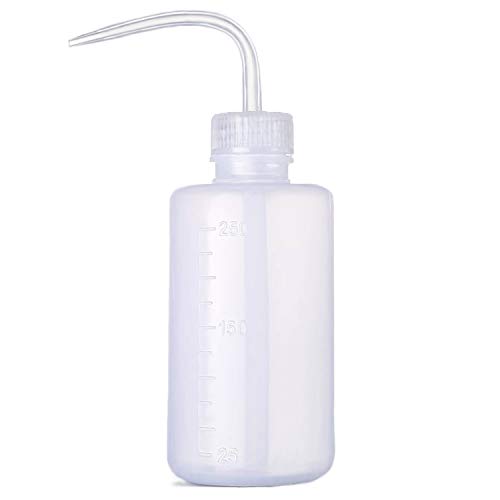
BEADNOVA Squeeze Plant Watering Bottle 250ml

Metal Indoor Watering Can 35oz Wood Handle
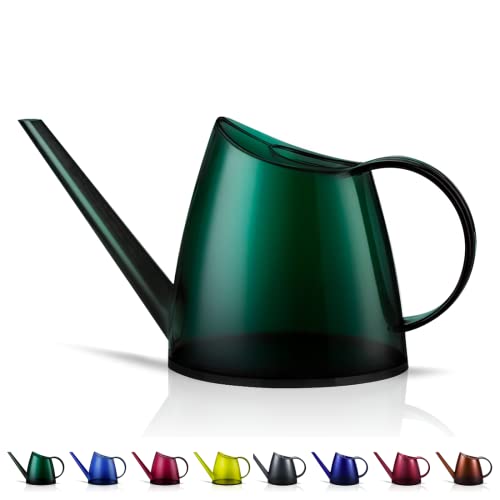
WhaleLife Indoor Watering Can 1.4L Dark Green

WhaleLife Long Spout Watering Can 1.4L Red

Qilebi 1.8L Watering Can with Long Spout

Qilebi 1.8L Indoor Watering Can Long Spout

WhaleLife Long Spout Watering Can 1.4L Blue
The Picks, Examined More Closely
The Fiskars glass carafe is the rare watering can that doubles as shelf decor. At 17 oz, it sits in the same size bracket as a small pitcher, which means it pours precisely where you aim without the weight fatigue that bigger metal cans can cause mid-watering session.
You see the water level through the glass, which solves the everyday guessing game of how much is left after three rounds. The wide-mouth opening makes refills from a bathroom tap painless, and the clear body lets the vessel fade into a bright windowsill until the sun catches it.
The Good Stuff
- Transparent glass shows remaining water at a glance
- Compact 17 oz capacity suits desktops and small shelves
- Wide-mouth top refills fast under any tap
- Glass body wipes clean with a damp cloth and soap
Soft Spots Worth Knowing
- Glass is breakable if knocked off a high shelf or tiled floor
- 17 oz means several refill runs for larger plant collections
- No long spout, so reach into hanging baskets is limited
Who Will Love This
Design-minded owners of three to ten small houseplants who want a vessel that earns its place on the shelf rather than hiding in a closet.
Skip It When
The HB Design Co. 35oz metal can suits you better when your collection spans tall floor plants that need more reach and volume per fill.
The BEADNOVA squeeze bottle flips the watering-can idea on its head. Instead of tipping and trusting your aim, you squeeze the flexible polyethylene body and watch a thin stream come out the narrow spout. For tight corners of terrariums or single-succulent pots, that control matters more than capacity.
The slim 6.7-inch profile slips into a kitchen drawer, and the transparent walls show how much liquid remains. A leak-proof cap keeps things tidy when the bottle rides in a tote to the office plant no one else remembers to water.
Key Advantages
- Squeeze-controlled flow prevents overwatering small pots
- Compact 250ml size fits on crowded shelves
- Visible fill markings help mix liquid fertilizer accurately
Things To Consider
- Squeezing over a dozen plants becomes tiring fast
- Plastic body can scratch and cloud with heavy use
Right Fit For
Owners of succulents, bonsai, and terrariums where every drop counts and gentle, targeted watering prevents root rot.
A Better Fit Elsewhere
The Qilebi 1.8L model suits you better when watering a full room of medium-size pots rather than micro-collections.
The HB Design Co. can feels like a tool, not a decorative object. At 35 oz in an 11-inch-tall steel body with a real wood handle, it bridges the gap between the tiny glass carafe and the bulky 1.4L plastic cans, hitting the sweet spot for most everyday plant routines.
The long spout reaches the back of a crowded shelf, and the wood grip stays comfortable when the can is full. For people who care about function but still want something that looks intentional on the counter, this is the middle-ground option that rarely disappoints.
Practical Advantages
- 35 oz covers roughly five to seven medium houseplants per fill
- Long spout slips behind grouped pots without splashing leaves
- Wood handle reduces heat transfer from sun-warmed metal
Honest Caveats
- Steel construction adds weight compared with plastic
- Wood handle benefits from occasional drying to prevent moisture wear
- No shower-head option for seedlings needing gentle rain
Feature Snapshot
Whose Shelf It Belongs On
Plant parents with a dozen or so medium-size pots who want one can that handles most rooms without refilling mid-run.
Look Elsewhere When
The BEADNOVA squeeze bottle suits you better when your collection is mostly tiny succulents that need drop-by-drop precision.
WhaleLife’s dark green can brings serious volume to a plant routine. The 1.4L reservoir tackles an entire shelf or two without forcing a refill, which is the kind of convenience that matters once your collection crosses about twenty pots.
The long spout reaches down into deep planters, and the angular shape makes the can easy to grip while pouring. The dark green finish blends with foliage-heavy corners rather than fighting them, which helps in living rooms where the can sits out between waterings.
Useful Highlights
- 1.4L capacity suits larger indoor plant collections
- Long spout directs water to soil without wetting leaves
- Dark green finish complements foliage-rich rooms
- Wide opening speeds refills from a kitchen tap
Points To Keep In Mind
- Full can is heavier than glass or squeeze options
- Larger footprint requires more shelf or counter room
Best Suited To
Anyone running a serious indoor jungle who would rather fill once and finish rather than refill mid-session.
Not Your Match When
The Fiskars 17oz glass carafe fits your style better when you water three or four statement plants and value aesthetics over capacity.
Same 1.4L WhaleLife profile, this time in glossy red. The function matches the dark green sibling exactly, but the finish turns the can into an accent piece for a room that leans warm, playful, or maximalist.
You get the same long spout and wide opening, plus a color that holds its own against patterned tile, terracotta pots, or wood shelving. In a kitchen with stainless appliances, a red can adds a punch of warmth the green version leaves alone.
Points In Its Favor
- Bold red finish doubles as intentional decor
- 1.4L capacity covers big watering rounds
- Long spout reaches back-row pots easily
Some Limits To Know
- Bright color shows water spots and dust between cleanings
- Larger footprint than the 35oz HB Design can
Made For
Owners who treat their plant corner as part of the room’s design and want a vessel that adds a confident splash of color.
Where A Sibling Pick Shines
The WhaleLife dark green version suits you better in minimalist or greenery-heavy interiors where a quieter finish reads more intentional.
The Qilebi 1.8L can is the most versatile option on the list. A detachable shower head switches between a direct stream from the long spout and a gentle rain pattern, which is genuinely useful once your collection includes seedlings, ferns, and larger floor plants in the same rotation.
The 1.8L reservoir handles roughly fifteen medium pots per fill, depending on soil thirst. Storage-wise, the long spout takes some shelf planning, but the watering flexibility is what makes this can feel less like a single-purpose tool and more like a real piece of equipment.
Everyday Advantages
- Detachable shower head switches between stream and spray
- 1.8L reservoir covers a large plant round per fill
- Long spout reaches into crowded shelves
- Suitable for both indoor and outdoor plants
Points To Note
- Two-piece design means the shower head can loosen over time
- Full 1.8L weight is heavier when reaching overhead baskets
Quick Facts
Perfect Match For
Plant owners juggling a mix of seedlings, ferns, and mature houseplants who want one tool that handles different watering styles.
Another Choice May Suit
The HB Design Co. 35oz metal can fits you better when storage space matters more than spray versatility.
This Qilebi sibling shares the 1.8L body and long-spout design with the previous pick but is positioned slightly differently on the spec sheet, giving shoppers a near-twin option to compare listings and finish. The detachable shower head switches between focused watering and a wider spray, which covers both delicate seedlings and thirsty ferns.
For households that move plants between indoors and a patio or balcony, the dual-mode head keeps one can doing the work of two. The trade-off is footprint and weight, both of which scale up with capacity.
What It Does Well
- Detachable shower head for flexible watering styles
- Generous 1.8L reservoir suits bigger plant rounds
- Long spout reaches deep into grouped pots
Trade-Offs
- Heavier than 17 to 35 oz options when fully filled
- Two-piece head needs occasional reseating to prevent drips
Built With In Mind
Shoppers who want the largest reservoir on the list and value a detachable spray head for switching between seedlings and mature plants.
Reach For A Different Pick When
The BEADNOVA squeeze bottle fits you better when your plants are mostly small succulents that need careful, drop-by-drop watering.
The blue WhaleLife rounds out the color trio with a finish that suits coastal, Scandinavian, and minimalist rooms. Functionally identical to the red and dark green siblings, the blue can slips into a neutral palette without disappearing entirely.
The 1.4L size handles a generous watering round, and the long spout keeps water directed at the soil. If you keep the can on display between waterings, the soft blue finish tends to read as a deliberate styling choice rather than a loud accent.
What Stands Out
- Calm blue finish fits neutral and coastal interiors
- 1.4L capacity covers a full plant round
- Long spout reaches grouped pots with control
Where It May Fall Short
- Larger footprint than 17 to 35 oz options
- Light finish shows mineral spots from hard water
The Right Fit
Owners with quiet, light-toned interiors who want a larger-capacity can that complements rather than competes with the room.
Swap It Out When
The Qilebi 1.8L model suits you better when spray-head versatility matters more than color coordination.
What Matters Most Before Choosing small indoor watering cans
Capacity Versus Footprint
The honest trade-off in this category is volume against storage. A 17 oz carafe fits in a drawer but demands refills for any routine over four plants. A 1.8L can handles fifteen in one fill but claims a noticeable corner of the shelf. Most shoppers land between 35 oz and 1.4L once they count their pots honestly.
Spout Length and Reach
A long, narrow spout is the single feature that separates indoor watering cans from kitchen pitchers. The spout decides whether water lands on the soil or splashes across leaves, and how far back into a crowded shelf you can pour without rearranging pots. Short-spouted glass carafes look elegant but force you to lift pots forward.
Material and Weight
Glass reads premium but breaks. Metal feels solid and lasts, though it adds weight and may show fingerprints. Plastic squeeze bottles are light and forgiving, but they scratch and sometimes flex oddly when full. Wood handles reduce heat transfer and add grip comfort on metal cans.
Spray Versatility
Detachable shower heads turn a single can into a two-mode tool: stream for deep watering, rain for seedlings and ferns. If your collection includes a mix of plant ages, the head-swap design earns its place. If every pot is a mature houseplant, a fixed long spout is plenty.
Key Considerations Across These Picks
Where Shoppers Go Wrong
Plenty of people buy on capacity alone and end up with a 1.8L can they cannot store. Others pick a pretty glass carafe and find the short spout splashes leaves every time they water a back-row pothos. The honest read is to count your pots, measure your shelf, and pick the can that solves the specific reach or volume problem, not the one with the most dramatic feature list.
Where The Extra Money Goes
Higher-tier cans in this category usually mean better material, a longer spout, or a detachable spray head. The Qilebi twins earn their premium through the dual-mode head and 1.8L reservoir. The HB Design Co. metal can earns it through steel durability and a real wood handle. For most households, those upgrades pay off only when the collection has grown past ten pots or includes mixed plant types that need different watering styles.
Frequently Asked Questions
How often should you water indoor plants with a small can?
Most houseplants do well with a soak every seven to fourteen days, though succulents prefer longer dry stretches and tropicals often want water twice a week. A small watering can supports either routine, since refilling takes under a minute at the tap.
What capacity works for a typical houseplant collection?
A household running five to ten medium pots usually finds a 35 oz can hits the sweet spot between fill frequency and storage. Once the count crosses fifteen pots, a 1.4L or 1.8L reservoir saves meaningful refill time per session.
Are long-spout cans really better than short-spout ones?
A long spout directs water to the soil line and reaches back-row pots without lifting them, which cuts splashing and speeds up watering. Short-spout carafes look elegant but require moving pots forward and aiming more carefully, which becomes tedious across a full shelf.
Is a metal watering can safe for indoor use?
Yes, metal cans are widely used indoors and hold up to years of regular use. The honest trade-off is added weight compared with plastic or glass, especially when the reservoir is full.
How do you clean mineral buildup from a watering can?
A monthly rinse with warm water and a small brush keeps most cans clear of mineral spots. For stubborn buildup, a diluted white-vinegar soak followed by a thorough rinse works on both plastic and metal interiors.
Closing Remarks
The right small indoor watering can depends less on feature count and more on your actual shelf, your plant count, and how often you want to refill. Match the can to your routine, and the rest of the watering habit tends to fall into place.