Cold corners and drafty home offices have a way of showing up right when you’re trying to settle in. Finding the right electric space heater for indoor spaces means matching the right wattage, size, and safety profile to where you actually live and work. Below are eight solid options that cover everything from compact deskside warmth to whole-room heating, each with a clear sense of who it’s made to serve.
A Side-By-Side Look
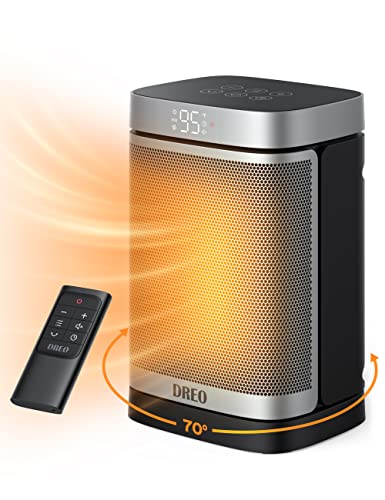
DREO Space Heater, Portable Electric Heaters for Indoor Use with Thermostat

DREO Quiet Space Heater, 1500W Portable Heaters for Indoor Use with Remote

DREO Space Heater, Portable Electric Heaters for Indoor Use with Thermostat | 2026 Upgraded, Gold

Windmill Space Heater for Indoor Use, Portable Electric Heater

DREO Space Heaters for Indoor Use with Thermostat, 1500W Electric Heaters

GiveBest 1500W Super Quiet Wall Heater, Convection Design Space Heater

DREO 25 Inch Electric Space Heater for Indoor Use, Large Room, Thermostat

DREO Space Heater for Large Room, 24” Electric Heaters for Indoor Use ECO
A Closer Look At Each Pick
This DREO model is the kind of heater you toss next to your desk in November and forget about until spring. The Hyperamics 1500W PTC system (PTC stands for Positive Temperature Coefficient, a ceramic element that self-regulates its heat output) pushes warm air out fast enough that you feel it within the first minute, not the third. Compared to the larger towers later in this list, the Atom One stays compact enough to slide under a side table without dominating floor space.
A built-in thermostat lets you set a target temperature rather than babysitting the dial all evening. Owners commonly report that it holds a comfortable reading in mid-size bedrooms once it cycles down. For renters and home office workers who want one flexible unit, this one earns its place at the top of the shortlist.
The Case For It
- 1500W PTC ceramic core heats a personal zone quickly, so you’re not waiting around in a cold room.
- Built-in thermostat cycles power automatically, trimming wasted electricity during long evenings.
- Compact tower footprint fits beside a desk or under a side table.
- Tip-over and overheat cutoffs add a layer of safety around kids and pets.
- Carry handle makes it simple to move between the bedroom and home office.
Worth Noting
- No remote included, so temperature changes mean getting up.
- Single-fan design struggles in open-plan spaces larger than about 200 sq ft.
- The plastic housing shows dust easily and benefits from a weekly wipe-down.
Quick Facts
Made For
Remote workers and apartment dwellers who want fast, directed warmth at a desk or beside a bed without paying for a full tower.
Swap It Out When
Pick the DREO Quiet Space Heater instead, since it adds a remote and runs even softer for nurseries and shift-sleeping households.
Where the Atom One trades convenience for size, the Heater 319 trades noise for everything else. DREO’s Hyperamics 1500W PTC system is paired here with a tuned fan profile aimed at bedrooms and nurseries, and a bundled remote that lets you tweak settings without leaving the covers. It pushes warm air out farther than older ceramic units, so it covers a larger floor footprint without needing oscillation.
If you’ve ever been wrenched awake by a fan clicking on at 3 a.m., this model is worth the upgrade. Compared to the GiveBest wall unit later on, it sacrifices the floor-space savings for a sturdier tabletop stance. Parents working from home with a napping toddler will appreciate the low hum most.
A Few Strong Suits
- Remote control handles mode and temperature changes from across the room.
- Low fan noise supports nurseries, light sleepers, and Zoom calls.
- Hyperamics 1500W ceramic core projects warm air across a wider room footprint.
Trade Offs
- The plastic shell scratches easily when moved between rooms.
- No oscillation, so heat stays aimed in one direction.
Right Fit For
Light sleepers, new parents, and remote workers who need quiet warmth during overnight shifts or recorded calls.
Look Elsewhere When
Pick the Windmill Space Heater if you want 70-degree oscillation to push heat across a larger living area with similar noise levels.
This 2026 Upgraded DREO brings more controls than most towers in its size class. The heat funnel design directs warm air out at an 11.5 ft/s pace while keeping the fan at around 34 dB, a level most people describe as a soft background hum. Five operating modes let you fine-tune output for sleep, work, or quick warm-ups, and the 12-hour timer is genuinely useful for bedrooms where you want heat to fade out before dawn.
The gold finish sets it apart visually from typical black or white heaters, which matters in design-led interiors. If you’ve been eyeing the Heater 319 above, this is the practical cousin: a few more modes, a longer timer, and tilt detection that cuts power if the unit tips. For shared spaces where multiple people adjust the heater, the extra flexibility pays off.
Benefits That Matter
- 34 dB operation keeps the heater present but not distracting during calls or sleep.
- 12-hour timer handles overnight schedules without manual shutoff.
- Five heating modes support everything from gentle background warmth to rapid preheating.
- Improved tilt-detection sensor adds peace of mind in busy rooms.
- Gold housing fits design-led interiors better than standard black units.
- Heat funnel design throws warm air farther than older DREO generations.
Points To Keep In Mind
- More modes mean a steeper learning curve for first-time owners.
- The glossy gold finish shows fingerprints and needs frequent wiping.
Feature Snapshot
Best Suited To
Shared homes and shift workers who want timer-based heating and don’t need a tower that takes up floor space.
A Better Fit Elsewhere
Grab the DREO Space Heaters for Indoor Use with Thermostat if you’d rather spend the upgrade on safety certifications and a longer flat power cord.
The Windmill leans into the visual side of home heating, with a retro-modern grille that doesn’t look out of place next to a credenza. Underneath, Ceramic+ Precision tech and 70-degree oscillation work together to spread warmth across a living room rather than a single seat. Three heating modes cover typical use cases, and the brushless DC motor drops fan noise to around 20 dB on low.
For anyone who hates the look of plastic tower heaters, this one changes the conversation. The DREO models above prioritize output and controls; Windmill prioritizes aesthetics and even heat distribution. Open-plan apartments where the heater sits in plain sight will benefit most from the design-first approach.
Reasons It Performs
- 70-degree oscillation spreads warmth across a wider seating area.
- Brushless DC motor keeps the fan near whisper-quiet at low settings.
- Distinctive grille design complements modern and mid-century interiors.
Honest Caveats
- Heavier than compact DREO units, so moving between rooms takes more effort.
- Higher price tier for a similar 1500W output compared to basic towers.
- Grille design collects dust and needs occasional vacuuming between the slats.
Perfect Match For
Apartment dwellers and design-conscious homeowners who want a heater that blends into a styled living room instead of hiding behind furniture.
Skip It When
Pick the DREO 25 Inch Electric Space Heater instead, since it covers larger square footage with a tower profile if aesthetics matter less than reach.
Safety tends to show up as bullet points on every heater box, but this DREO model backs it up with V0 flame-retardant materials, the highest rating in the UL94 plastics standard for self-extinguishing behavior. Add tip-over and overheat cutoffs, a 12-hour timer, a 24-hour automatic shutoff if you forget about it, and a 6-foot flat power cord that slides under furniture, and you have a unit designed for rentals and family rooms.
There’s no oscillation here, so the warmth aims in a single direction, and ECO mode trims power once the room hits the target. For households with curious toddlers or landlords who care about certification paperwork, this is the safer pick in the DREO lineup.
The Good Stuff
- V0 flame-retardant housing adds meaningful protection against thermal runaway.
- Tip-over and overheat sensors cut power in risky situations.
- 6-foot flat power cord tucks under rugs and baseboards without bulging.
- ECO mode reduces power draw once the set temperature is reached.
- 12-hour timer handles overnight heating schedules.
Some Limits To Know
- Not designed for use with extension cords, which limits outlet placement.
- 2-prong plug may not match older home outlets without an adapter.
Who It Suits Best
Family households, renters, and landlords who prioritize documented safety features over design flourishes.
Another Choice May Suit
Pick the DREO Space Heater, Portable Electric Heaters for Indoor Use with Thermostat instead, since it offers a similar safety suite in a more compact package.
GiveBest’s wall-mounted unit takes the floor-heater category in a different direction. Its “Stacked Convection” design uses natural air movement rather than a high-velocity fan, so noise drops to around 20 dB at idle, and the unit quiets further in sleep mode once it hits the set point. With a 41 to 95°F range, it covers everything from cool hallways to chilly basements.
The trade-off is installation. A wall unit requires drilling and a nearby outlet, so renters should check with landlords first. For homeowners with tight bedrooms or narrow hallways, freeing up floor space is worth the effort. Compare that to the portable DREO models above, and the difference shows up in placement rather than output.
Where It Delivers
- Wall-mounted convection frees up floor space in tight rooms.
- Sleep mode drops noise to 5 to 10 dB once the target temperature is reached.
- Wide 41 to 95°F range handles cool hallways and warm bedrooms alike.
Worth Bearing In Mind
- Requires wall mounting, which adds setup time and limits placement to stud or anchor locations.
- Not ideal for renters who can’t modify walls.
Built With In Mind
Homeowners with small bedrooms, nurseries, or narrow hallways who want wall-mounted heat that disappears into the room.
Reach For A Different Pick When
Pick the DREO Quiet Space Heater instead if you need a portable unit that travels between rooms without installation.
Tall format heaters have a real advantage in open-plan spaces, and the 25-inch DREO leans into that. The extended impeller and Hyperamics thermal layout move warm air at around 11.5 ft/s, which matters when you’re trying to heat a loft or a living room with high ceilings. Noise stays around 25 dB thanks to a redesigned airflow path, so it remains tolerable for movie nights.
Its physical size rules out cramped bedrooms, and you’ll want a clear corner near an outlet. For households replacing a noisy tower or supplementing a furnace in a large room, the extra reach justifies the footprint. The 24-inch DREO below takes a similar approach using dual motors instead of one extended impeller.
Bright Spots
- 25-inch tower profile projects warm air across taller rooms and lofts.
- 25 dB airflow path keeps noise reasonable for living areas.
- Hyperamics thermal layout heats up faster than shorter ceramic towers.
Points To Note
- Bulkier than compact DREO units and harder to fit in tight corners.
- Wide footprint may block walking paths in smaller rooms.
Whose Shelf It Belongs On
Homeowners with high-ceiling living rooms and open-plan layouts who want a single tower that handles a full floor zone.
Where A Sibling Pick Shines
Pick the DREO Space Heater for Large Room, 24” Electric Heaters for Indoor Use ECO instead if you want dual-motor heat aimed at rooms around 250 sq ft.
The closing pick brings dual DC motors to the table, doubling airflow to around 10 ft/s and adding a heating plate that’s 25% larger than standard DREO designs. The result is a unit that warms up in roughly two seconds and is rated for rooms up to 250 sq ft. ECO mode balances output against the set temperature, while child-lock and cool-touch housing round out the safety story.
It’s the most capable heater in the lineup for serious square footage, but it also costs more than the compact DREO units at the top. For a basement family room, finished attic, or open loft where one heater has to do the job of two, the dual-motor design earns its place. Compare it to the 25-inch tower above and the difference is engineering: dual motors versus a single extended impeller.
Standout Benefits
- Dual DC motors push warm air to 10 ft/s for faster room coverage.
- 25% larger heating plate targets spaces up to 250 sq ft.
- Child-lock setting prevents accidental mode changes.
- Cool-touch housing lowers burn risk around curious hands.
Where It Is Less Suited
- Heftier price than compact DREO units.
- Full-power operation draws significant current on a 15-amp circuit, especially alongside other appliances.
Key Attributes
Who Will Love This
Homeowners with finished basements, attics, or open lofts who need one tower to heat a 250 sq ft floor zone.
Consider Something Else When
Pick the DREO 25 Inch Electric Space Heater instead if you prefer a single-motor tower with a slimmer footprint and similar coverage claims.
What Matters Most When Choosing space heater indoor uses
Match The Wattage To The Room
A 1500W ceramic heater handles roughly 150 to 250 sq ft in a moderately insulated room. Going larger means longer run times and higher utility costs, while going too big means the unit cycles on and off awkwardly. Measure the room and pick a heater rated for that footprint, not the one with the biggest spec sheet.
Prioritize Real Safety Features
Look for tip-over sensors, overheat cutoffs, and V0 flame-retardant housings (plastics rated to self-extinguish within seconds of ignition). Cool-touch exteriors and child-lock modes matter in family homes, and ETL certification confirms the unit has been independently tested against electrical safety standards.
Think About Noise Before Sleep
Anything above 40 dB can interrupt light sleepers. Units advertised at 20 to 34 dB read as a soft background hum rather than a fan rattle. Bedrooms and nurseries benefit most from explicit noise ratings, while living rooms can tolerate a touch more output.
Decide Between Portable And Wall-Mounted
Portable towers travel with you and require no installation, which suits renters. Wall-mounted convection units free up floor space and run quieter, but require drilling and a nearby outlet. Homeowners with fixed layouts often prefer the wall option, while renters and shared households lean portable.
Key Considerations Across These Picks
Pitfalls Shoppers Hit
The most common mistake is choosing a heater by wattage alone. A 1500W ceramic unit in a drafty 300 sq ft basement will run continuously and never quite hit the target. The better approach is to match coverage area, insulation quality, and ceiling height. Another slip-up is skipping safety certifications, which only become important the day something goes wrong.
Where The Extra Money Goes
Higher-tier models typically add dual motors, larger heating plates, longer timers, and quieter brushless DC fans. You also pay for documented safety testing and material upgrades. The upgrade pays off in larger rooms and family households, while compact heaters cover most small-space needs without the premium.