Cold rooms, cold mornings, cold feet at a desk, that’s the reality for a lot of households every winter. Central systems often miss the mark in basements, nurseries, home offices, and converted garages where one good unit can solve the whole problem. The six options below cover small personal zones, family-sized living rooms, and app-controlled whole-room installs, so you can match your space instead of overspending on capacity you won’t use.
The Choices Worth Comparing
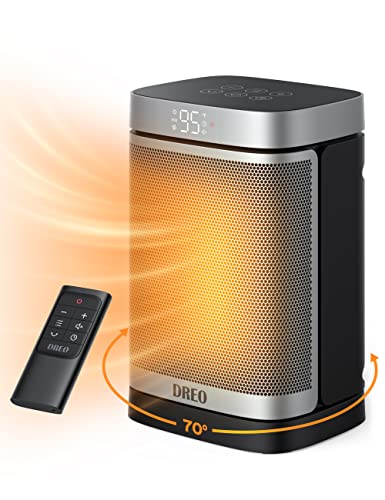
DREO Space Heater, Portable Electric Heaters with Thermostat

DREO Quiet Space Heater, 1500W Portable Heaters with Remote

Dreo Smart Wall Heater Large Room, Quiet Electric for Bedroom

DREO Space Heaters for Indoor Use with Thermostat, 1500W Electric
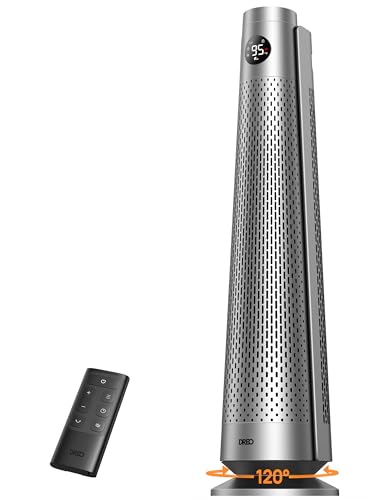
DREO Space Heater Large Room, 120° Oscillation, 30-Inch

DREO 25 Inch Electric Space Heater for Indoor Use, Large Room
More Details On Our Top Picks
The Atom One is the kind of small ceramic tower you tuck beside a desk or under a workbench and forget about until you notice the room feels reasonable again. DREO built it around a 1500W PTC (Positive Temperature Coefficient, a self-regulating ceramic element that warms air as it passes through) system, which means it pushes warm air out fast and dials down automatically once the room hits your thermostat target.
For a home office or a small bedroom, that’s the sweet spot: it heats quickly without cooking the air, and the carry handle makes it easy to shuffle from one cold spot to the next. Compared to the wall-mounted pick below, this one trades smart-home features for portability, which suits anyone who’d rather just grab the unit and move.
Real-World Strengths
- Compact tower footprint fits beside a desk or nightstand without dominating the room.
- Built-in thermostat helps avoid the on-off roller coaster of cheaper heaters.
- Carry handle and light weight make moving it between rooms painless.
- 1500W output suits small to mid-size rooms where you want fast recovery.
- Ceramic PTC design warms air quickly without a long warm-up window.
Worth Noting
- Not designed to heat a wide-open living area on its own, so you’ll want it zoned to one room.
- Owners commonly mention keeping intake vents clear of dust and packaging for steady output.
Who It Suits Best
This one suits remote workers, students, and anyone heating a single small room where central air struggles.
Consider Something Else When
If you want app control and scheduled heating, the Dreo Smart Wall Heater Large Room (Item 3) is a smarter fit.
The Heater 319 is the bedroom option in this lineup, aimed squarely at people who’d rather not hear a fan blade spinning all night. DREO redesigned the airflow path on this 1500W unit so warm air travels farther across the room without cranking up fan speed.
In real use, that means less white noise during a movie and a gentler hum during sleep. It’s the same general category as the Atom One above, but with a stronger focus on low-noise operation and a bundled remote that lets you adjust settings from the bed. For shift workers and light sleepers, the quieter output is often worth more than raw power.
Where It Helps
- Refined airflow channel keeps noise low enough for bedrooms and nurseries.
- 1500W PTC ceramic handles everyday heating without slow startup times.
- Included remote lets you tweak temperature and modes without getting up.
- Thermostat-driven cycling avoids constant fan noise when the room is already warm.
Honest Caveats
- Quieter output means a slightly slower heat-throw than louder tower fans, so placement matters more.
- Like most portable heaters, it works best in a single room rather than an open floor plan.
Quick Facts
Made For
Light sleepers, parents, and anyone who heats a bedroom where fan noise tends to keep people up.
Look Elsewhere When
If you want a permanently mounted solution with scheduling, swap to the Dreo Smart Wall Heater Large Room (Item 3).
The smart wall heater is the most “set it and forget it” option in this group. Instead of sitting on the floor, it mounts to the wall and uses a 120° oscillation pattern to push warm air top to bottom across a wider footprint than a tower can manage.
The DREO app, voice assistants, and weekly scheduling transform this from a simple heater into part of a home heating routine. For households already running smart speakers and thermostats, this is the cleanest fit. The trade-off, of course, is installation: it needs to be mounted, hardwired or plugged into a suitable outlet, and ideally placed where its oscillation isn’t blocked.
A Few Highlights
- 120° oscillation spreads warmth across a wide swath of wall area.
- App and voice control remove the need to walk over and press buttons.
- Schedule routines so the room is warm before you walk in.
- Wall-mount design frees up floor space in tight rooms.
Points To Note
- Installation takes more effort than a plug-and-tower, especially in older homes without a nearby outlet.
- Once mounted, moving it between rooms is not realistic, so placement matters from day one.
Right Fit For
Smart-home households who want scheduled, app-driven heating in a fixed location like a bedroom or finished basement.
Not Your Match When
Skip this one in favor of the DREO Space Heater Large Room, 120° Oscillation, 30-Inch (Item 5) if you prefer to move the heater around rather than mount it.
This model leans hard into safety and flexibility, which makes it a sensible pick for family rooms, kids’ bedrooms, and homes with pets underfoot. The 1500W PTC system pairs with a 70° oscillation sweep, ECO mode, and a 12-hour timer so the unit doesn’t run indefinitely when you forget about it.
Where it really separates itself from the Atom One above is on the safety side: V0-rated flame-retardant materials (a plastics classification meaning the casing self-extinguishes quickly under flame), smart tip-over protection, overheat cutoff, and a long flat power cord. You pay for those safeguards in a slightly bigger body, but the trade-off tends to be worth it in busy living spaces.
The Helpful Details
- ECO mode adjusts output to maintain a steady temperature without manual fiddling.
- 70° oscillation helps spread warmth beyond a single narrow column.
- 12-hour auto-off timer adds a layer of protection for forgetful users.
- Tip-over and overheat sensors suit households with kids or pets roaming around.
Trade Offs
- Direct wall outlet only, since extension cords aren’t recommended with this unit.
- The 6-foot flat cord is convenient but still limits where you can place it relative to the outlet.
Feature Snapshot
Best Suited To
Families and pet owners who want strong safety features and steady-room ECO heating without a smart-home hub.
A Better Fit Elsewhere
For smart-home scheduling instead of safety-first features, the Dreo Smart Wall Heater Large Room (Item 3) is the better direction.
The 30-inch tower is built for the room everyone keeps complaining about, the finished basement, the high-ceiling living area, the converted garage. It uses a tall body and a wide 120° oscillation to push warm air across bigger footprints than compact towers can reach.
Inside, DREO bumped up to a 308mm PTC element (roughly the diameter of the heating core inside the unit) and added what they call an upgraded thermal design, which translates to stronger heat-throw over distance. Compare that to the Atom One (Item 1), and the difference is more reach per minute rather than more raw wattage. You also get a remote, so you can sit on the couch and actually use it.
What Stands Out
- 30-inch tall body throws warm air further across larger rooms.
- 120° oscillation covers more ground than 70°-sweep units in this list.
- Remote control suits couch-and-movie-night routines.
- Larger PTC element helps recovery when the room loses heat quickly.
Some Limits To Know
- Tall tower takes up more visual space than a compact desktop unit.
- Like all indoor electric heaters here, performance drops in drafty rooms with poor insulation.
Feature Card
Who Will Love This
Anyone heating a large living room, finished basement, or open studio where a small tower would struggle.
Swap It Out When
If you need scheduled heating and wall-mounted permanence instead of a tall portable tower, head to the Dreo Smart Wall Heater Large Room (Item 3).
The 25-inch tower is the late-night companion in this group. DREO tuned the airflow to drop noise as low as 25dB in some settings, which lands in the same range as a quiet library, while still using an extended impeller to push warm air further than a compact tower would.
It’s shorter than the 30-inch model above but covers similar room sizes, so the choice is really about whether you value maximum reach (Item 5) or minimum noise over many hours (this one). For people who run a heater through entire workdays or sleep cycles, the lower noise tends to win.
What Earns Its Place
- 25dB-class low-noise output suits long sleep and focus sessions.
- Extended impeller doubles heat range compared to compact towers.
- Thermostat-driven cycles keep temperatures steady without manual resets.
- Mid-height body fits where a 30-inch tower feels oversized.
Practical Considerations
- Low-noise mode cycles more output at low heat, so very cold rooms may take longer to recover.
- Mid-tall profile still needs a clear floor area away from curtains and foot traffic.
Perfect Match For
Frequent-use households that heat one room for hours at a time, especially anyone sensitive to fan noise.
Another Choice May Suit
For louder but stronger heat-throw in a wide-open basement, the DREO Space Heater Large Room, 120° Oscillation, 30-Inch (Item 5) is a better direction.
What Matters Most Before Choosing Space Heaters Indoors
Room Size And Heat Throw
A heater that warms a 150-sq-ft bedroom will feel underpowered in a 400-sq-ft living room. Look for room-size guidance from the maker and pair it with oscillation: a 70°-120° sweep spreads warmth far more evenly than a fixed-angle unit, especially across wider couches and dining tables.
Noise Level And Daily Use
If the heater lives in a bedroom or a focus corner, low-noise airflow matters more than raw power. Quieter units often use larger impellers and slower fan speeds to push the same air, which keeps the hum from registering on a sleep tracker or podcast mic. For daytime living rooms, fan noise is less of a concern and you can lean into stronger output.
Safety Features You Shouldn’t Skip
Tip-over protection, overheat cutoff, V0-rated flame-retardant materials (plastics that self-extinguish quickly), and a timer are worth prioritizing, particularly in homes with kids, pets, or older flooring. Direct-outlet use is also a common-sense safeguard: extension cords can overheat when a 1500W unit runs for hours, so a reachable wall outlet saves real headaches.
Portability Versus Wall Mounting
A portable tower is easy to grab and move, which suits renters. A wall-mounted unit frees up floor space and looks cleaner, but ties you to one location. Picking between them usually comes down to how often you redecorate or rearrange rooms.
Key Considerations Across These Picks
Common Shopping Slip Ups
The biggest mistake is matching wattage to room size without considering insulation. A 1500W unit covers different square footage in a drafty 1920s bedroom versus a well-sealed modern condo. Also, watch for placement blind spots: putting a heater behind a sofa blocks airflow and forces the thermostat to overwork. Move it to a clear line of sight toward where you actually sit.
Where The Extra Money Goes
Higher-tier picks add scheduled app control, oscillation up to 120°, longer timers, and quieter impellers. You pay for engineering refinements rather than raw heat, so the upgrade only matters if you run the heater daily or you want wall-mounted convenience. For occasional weekend warmth, a balanced portable tower gives you most of the benefit.
Frequently Asked Questions
Are indoor space heaters safe to leave on overnight?
Most modern heaters include tip-over and overheat protection, plus a thermostat cycle, but running any heater unattended still carries risk. Place it on a hard floor, keep it away from curtains and bedding, and use the timer feature if your model has one.
How large a room can a 1500W heater actually warm?
Coverage depends on ceiling height, insulation, and outdoor temperature. In a well-insulated room with 8-foot ceilings, 1500W typically handles roughly 150-300 sq ft comfortably. Larger or draftier rooms may need a tall-tower model with wider oscillation.
Do ceramic heaters dry out the air?
PTC ceramic heaters don’t burn fuel, so they add less moisture loss than combustion heaters. That said, any heated air can feel drier in winter. A small humidifier nearby offsets the effect if your skin or sinuses react.
What’s the difference between oscillation angles like 70° and 120°?
A wider oscillation sweeps across more of the room per cycle, which helps in wide living rooms or L-shaped spaces. Narrower angles focus heat on a smaller zone, which can be efficient for a desk or bedside nook.
Can extension cords be used with indoor space heaters?
Manufacturers generally warn against it. A 1500W load through a thin cord is a real fire risk. Plug directly into a wall outlet whenever possible, and route the cord so it can’t be pinched under furniture or rugs.
Wrap Up
Pick the heater that fits the room you actually heat, not the biggest one on the shelf. A small ceramic tower handles a home office; a wall-mounted smart unit locks in a bedroom routine; a tall oscillating tower takes on the open living area. Match the form factor to your space, lean on the safety features that match your household, and you’ll stay warm without overthinking it.