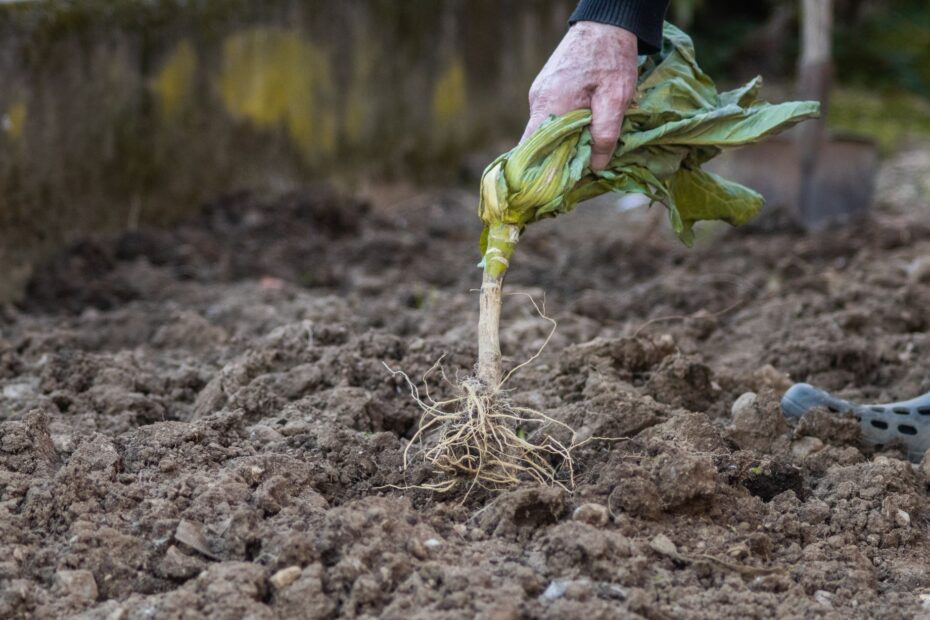
Dissolved mineral ions in soil water pass through selective root cells before entering xylem for upward transport. Your plant does not take in fertilizer granules or soil crumbs. It needs nitrate, potassium, phosphate, calcium, and other ions dissolved in water.
This explanation follows nutrients from damp soil pores to leaves and shoots, helping you link root health, watering, soil chemistry, and fertilizer use.
Nutrients Enter Roots as Dissolved Ions
A dry fertilizer pellet beside a root is not available food. Rain, irrigation, and moisture films dissolve mineral nutrients into the soil solution, the thin water layer around soil particles and inside small pores. Your plant absorbs ions from that water rather than intact compost, clay, or fertilizer particles.
That distinction explains why fertilizer can sit in a pot while leaves still show deficiency symptoms. For your roots to take up minerals, the nutrients must dissolve, reach active roots, and pass through living cells.
Mineral Elements Have Different Jobs
Nitrogen forms chlorophyll and proteins. Phosphorus supports energy transfer and root growth. Potassium regulates water balance, calcium strengthens cell walls, magnesium sits at the center of chlorophyll, and sulfur forms amino acids. Your plant also needs smaller amounts of iron, manganese, zinc, copper, boron, molybdenum, chlorine, and nickel.
| Element | Common ion form in soil water | What your plant uses it for |
|---|---|---|
| Nitrogen | Nitrate or ammonium | Your leaves use it for chlorophyll and proteins. |
| Phosphorus | Phosphate | Your roots and young tissues use it for energy transfer. |
| Potassium | Potassium ion | Your cells use it to regulate water and enzyme activity. |
| Calcium | Calcium ion | Your plant uses it in cell walls and growing tips. |
| Magnesium | Magnesium ion | Your foliage needs it to form chlorophyll. |
Electrical Charge Changes Nutrient Movement
Mineral ions carry electrical charges. Positively charged cations include potassium, calcium, magnesium, and ammonium. Negatively charged anions include nitrate, phosphate, and sulfate. Clay and organic matter hold cations on charged surfaces, leaving your soil with a reserve that root chemistry and water can release.
Stored nutrients are not always available nutrients. A root must reach wet pore space, draw ions close to its surface, and move them across cell membranes before your plant receives them.
Root Systems Reach Through Soil Pores
Branching roots search through separate pockets of soil water. Each lateral root reaches fresh pore spaces, giving your plant another chance to encounter dissolved minerals before drainage carries them deeper through the root zone.
Taproots and Fibrous Roots Reach Different Zones
| Root-system pattern | Growth pattern | What it means for your plant |
|---|---|---|
| Taproot system | One thicker central root grows downward with side branches. | Your plant can reach deeper moisture and anchor firmly. |
| Fibrous root system | Many fine roots spread through upper soil layers. | Your plant can capture nutrients near the surface after watering. |
Carrots and dandelions show a taproot pattern, while lawn grasses form dense fibrous mats. Neither pattern is stronger in every setting. Your planting depth, soil profile, and watering pattern shape the value of each root form.
Young Roots Do Most Direct Absorbing
New lateral roots carry growing tips and fresh root hairs. Older woody sections still anchor the plant and move fluids, but their outer layers lose much of the contact needed for rapid nutrient entry. Green leaves send sugars belowground, so low light can weaken your root system even in fertile soil.
- Keep pores open. Loose soil leaves air spaces that supply oxygen to your roots.
- Water with restraint. Steady moisture keeps ions dissolved without leaving roots submerged.
- Protect leaf area. Green leaves send sugars downward to fuel new root growth.
- Avoid hard layers. Compacted bands force roots sideways and limit soil exploration.
- Feed in moderation. Moderate fertility avoids salt stress around your active roots.
Fine branching brings roots close to mineral-bearing water, but a visible root is not the main absorbing surface. Thousands of fragile cellular extensions handle that close contact.
Root Hairs Touch Water Films Around Soil Particles
A root hair is one epidermal cell stretched into a narrow tube, not a small root branch. Thousands can cover a short area behind a growing root tip. Your plant uses these extensions to reach water films inside pores that thicker roots cannot enter.
Thin Extensions Expand Contact Area
Root hairs expand contact without forcing the plant to form a large, costly root. Their thin walls sit against soil particles and moisture films, shortening the distance ions travel. This is how root hairs absorb nutrients from soil that appears uniform at the surface.
Bean seedlings show the pattern clearly. A young bean can form a fuzzy band behind each white root tip, while the smooth tip pushes ahead through soil. Your plant receives much of its water and mineral supply through that fuzzy hair zone.
Root Hairs Need Stable Root-Zone Conditions
Freshly transplanted roots lose hairs easily. Keep surrounding soil evenly moist for several days, because rough handling, drying, and sudden fertilizer salts can strip away the active absorbing surface.
Compaction squeezes out air-filled pores. Waterlogging replaces oxygen with water, while drought breaks the moisture films that root hairs need. High fertilizer salt levels pull water away from root cells, leaving your plant wilted even while soil feels wet.
Close contact puts ions beside the root surface, but contact alone does not move them inward. Water and dissolved minerals reach roots through distinct physical processes.
Water and Mineral Ions Move Toward Roots in Different Ways
Water moving toward a thirsty plant carries dissolved nitrate, calcium, and sulfate. This route is called mass flow. Transpiration from leaves strengthens that movement by drawing water upward through xylem.
Mass Flow, Diffusion, and Osmosis Have Separate Roles
| Process | Direction of movement | What your plant gains |
|---|---|---|
| Mass flow | Water moves toward roots as leaves lose water. | Your roots receive mobile ions carried in soil water. |
| Diffusion | Ions move from higher concentration toward lower concentration. | Your root surface draws nearby ions through soil solution. |
| Osmosis | Water crosses a selective membrane toward higher solute concentration. | Your root cells gain water for firmness and upward flow. |
Diffusion matters for phosphorus and potassium because roots can deplete these ions in a narrow zone near the surface. As your root takes up ions, concentrations fall beside that root. Ions then move through the soil solution from nearby areas with higher concentrations.
Osmosis describes water movement, not mineral movement. Root cells contain sugars, organic acids, and ions that draw water across selectively permeable membranes. Your roots gain water pressure that feeds the upward stream through xylem.
Neither diffusion nor osmosis decides which mineral ions enter living root cells. Soil water can also hold excess sodium, aluminum, and chloride, so your plant relies on selective membrane proteins.
Cell Membranes Select Which Ions Enter Living Roots
Every living root cell has a membrane that controls movement molecule by molecule. Protein channels and carrier proteins recognize particular ions, giving your plant more control than a sponge-like surface could offer.
Passive Movement Follows Concentration Differences
Some ions move through channels from a more concentrated area toward a less concentrated area. This passive movement needs no direct ATP payment. Your roots still shape movement because channels can favor specific charged particles.
Active Transport Moves Ions Against a Gradient
| Transport route | Energy use | Example in your roots |
|---|---|---|
| Passive transport | No direct ATP use | Your cells allow an ion to move down its gradient. |
| Active transport | ATP powers proton pumps | Your cells take up an ion against its gradient. |
| Cation exchange | Root chemistry shifts local charges | Your roots release hydrogen ions near clay surfaces. |
ATP-powered proton pumps move hydrogen ions out of root cells. That outward movement changes electrical and chemical conditions around the membrane, helping nutrient ions move inward. Active transport explains how plants absorb minerals where the soil solution holds less of a nutrient than your root cell needs.
Roots also release sugars, amino acids, and organic acids into the rhizosphere, the narrow zone touching roots. Hydrogen ions can exchange with calcium, potassium, and magnesium held on clay or humus. Your soil chemistry shifts at millimeter scale around each active root.
Selected ions still face another checkpoint before they reach the transport tissues. An inner ring of cells directs them into the xylem stream.
The Endodermis Screens Materials Before Xylem Loading
Water can travel between outer root cells through cell walls for part of its route. That route ends at the endodermis, an inner cell layer around the stele, where xylem and other vascular tissues sit.
The Casparian Strip Blocks Unchecked Movement
The Casparian strip is a waterproof band in endodermal cell walls. It blocks movement through wall spaces and forces water and ions across a cell membrane. Your plant gets a final screening point before materials enter vascular tissue.
- Soil water dissolves ions. Pore water holds nitrate, phosphate, potassium, calcium, and other mineral ions.
- Root hairs make contact. Fine epidermal extensions touch water films around soil particles.
- Outer tissues pass materials. Water and ions move through or between cells in the root cortex.
- Endodermal cells screen entry. The Casparian strip directs materials through selective membranes.
- Xylem receives sap. Selected minerals enter the stele and join the upward water stream.
Xylem Moves Water and Minerals Upward
Long, hollow vascular cells carry water and dissolved minerals upward through the plant. Evaporation from leaf pores creates transpiration pull, like a steady tug on a water column. Your leaf growth, flowers, and fruit depend on that continuous supply line.
A tomato plant in hot sun can pull large volumes of water through xylem during daylight. Calcium travels with that water, which explains why uneven watering can contribute to poor calcium delivery in fast-growing fruit tissues.
Roots do not always work alone belowground. Mycorrhizal fungi can extend the absorbing network farther into narrow soil spaces.
Mycorrhizal Fungi Extend the Absorbing Network
Arbuscular mycorrhizal fungi grow threadlike hyphae from roots into narrow soil spaces. Their filaments are thinner than roots and reach phosphate ions that move slowly through soil water. Your plant gains access to soil beyond the immediate root-hair zone.
Hyphae Exchange Minerals for Plant Carbon
The partnership works through exchange. Fungal hyphae move phosphorus, zinc, copper, water, and other materials toward root tissues. Your plant sends carbon compounds from photosynthesis back to the fungus.
Phosphorus shows the value of this arrangement. It binds tightly to soil particles and moves slowly, leaving a depleted zone near active roots. A mycorrhizal network reaches beyond that zone, giving your plant access to a wider feeding area without forming the same amount of root tissue.
Soil Conditions Shape Fungal Benefits
Mycorrhizal fungi do not increase uptake in every setting. Heavy fertilizer use can reduce a plant’s reliance on fungal partners, while disturbed soil can break fungal networks. Corn, tomatoes, maples, and many native perennials form associations, while cabbage-family plants do not.
Rhizobium bacteria form a separate partnership with legumes such as peas and beans. They live in root nodules and convert atmospheric nitrogen into forms the plant can use. Your garden soil holds a biological community, not just a mineral storehouse.
Fungal reach still depends on a workable root zone. Soil pH, oxygen, water, temperature, and salts can block nutrient uptake before a shortage appears on a fertilizer label.
Soil Conditions Can Block Nutrient Uptake
A yellow leaf in fertilized soil can point to root-zone trouble rather than a lack of nutrients. Soil pH changes mineral solubility. At unsuitable pH levels, phosphorus can bind into poorly soluble forms, while iron, manganese, or aluminum can become scarce or overly soluble.
Oxygen, Water, Temperature, and Salt Affect Roots
| Root-zone condition | What changes underground | What you can observe aboveground |
|---|---|---|
| Waterlogged soil | Your roots receive too little oxygen for active transport. | Leaves droop, yellow, or stall despite wet soil. |
| Compacted soil | Your roots face fewer air pores and less branching space. | Growth stays small and dries quickly in heat. |
| Cold soil | Root metabolism and ion movement slow down. | Young leaves can show temporary deficiency signs. |
| High salt levels | Water becomes harder for root cells to absorb. | Leaf edges brown and plants wilt after feeding. |
| Unsuitable pH | Mineral ions shift into less accessible chemical forms. | Deficiency patterns appear despite nutrients in soil. |
Oxygen matters because active transport depends on ATP from respiration. Saturated soil blocks air exchange, while dense clay pressed around roots creates a similar shortage. Your watering pattern needs to fit pot size, season, plant type, and drainage speed rather than a fixed calendar.
A Root-Zone Check for Deficiency Symptoms
- Inspect the roots. Check for brown, mushy, circling, or dry roots before adding more fertilizer.
- Check drainage paths. Remove standing water and confirm excess irrigation can leave the container or bed.
- Test soil pH. Match the result to the crop or ornamental plant in your soil.
- Pause extra feeding. Flush container soil with plain water where salt buildup is suspected.
- Loosen compacted ground. Add mature compost around beds and avoid stepping on wet soil.
- Adjust watering timing. Rewater after the root zone has used part of its moisture.
More fertilizer cannot correct roots deprived of oxygen. Correct drainage, compaction, or pH before adding another nutrient source, or your plant can face a larger salt load with no better uptake.
Water-grown plants still need dissolved mineral nutrients, oxygen around roots, and a balanced solution. Soil-grown plants receive anchorage, air-filled pores, mineral reserves, and microbial partners. Your setup changes, but membrane selection, root respiration, and xylem transport remain central.
Root Health Determines the Full Nutrient Route
Your plant needs usable ions in soil water, fresh root hairs for contact, living cells for selective uptake, and xylem for transport to leaves. Healthy pore space, suitable pH, steady moisture, oxygen, and moderate salt levels shape how plant roots absorb nutrients from soil to shoot.
Start beneath the leaves when deficiency symptoms appear. Root damage, poor drainage, compaction, cold soil, or pH imbalance can block uptake even where fertilizer is present. Your next step is to inspect the root zone before adding another nutrient source.
FAQ
How do plant roots absorb nutrients?
Mineral ions dissolve in soil-pore water before entering root cells. Root hairs contact that soil water, membrane proteins move selected ions into living cells, and the endodermis screens materials before xylem carries them upward. Your plant uses passive movement and ATP-powered active transport.
How do plant roots absorb nutrients from soil?
Roots absorb dissolved mineral ions from the soil solution rather than solid fertilizer particles. Water carries ions toward root hairs through mass flow, while diffusion moves ions toward depleted areas near root surfaces. Your root cells then select ions through membrane proteins and active transport.
What role do root hairs play in nutrient and water uptake?
Root hairs expand the contact area between roots and soil water. Their narrow form reaches tiny pores beside soil particles, where dissolved ions collect. Your plant absorbs water and minerals through this close contact, especially along young roots with fresh hair zones.
Do roots absorb solid fertilizer particles or dissolved nutrients?
Only dissolved nutrient ions enter roots; solid fertilizer particles must dissolve first. Fertilizer granules must dissolve into soil water before ions such as nitrate, phosphate, potassium, and calcium can reach root hairs. Your watering and soil moisture affect whether those ions enter the soil solution.
What is the difference between osmosis, diffusion, and active transport in roots?
Osmosis moves water across a selective membrane toward higher solute concentration. Diffusion moves ions from higher concentration toward lower concentration. Active transport uses ATP to move selected ions against a concentration gradient, allowing your roots to take up minerals from dilute soil water.
How do nutrients travel from roots to leaves and other plant tissues?
After entering the stele, dissolved minerals join water in xylem. Transpiration from leaves pulls that stream upward through long vascular cells. Your plant moves water and minerals toward leaves, shoots, flowers, and developing fruit through this xylem pathway.