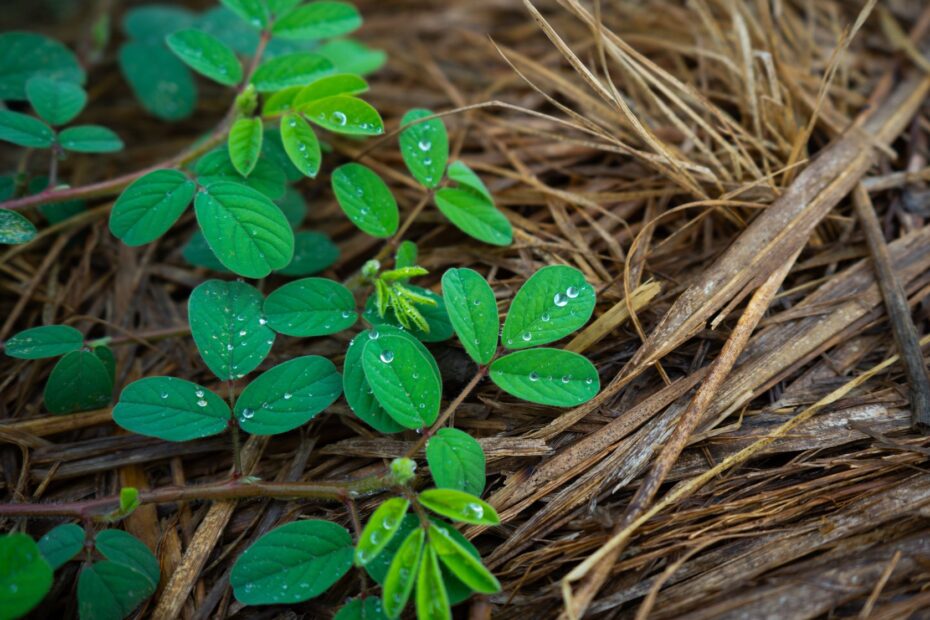
A loose surface layer shades damp ground, slows evaporation, moderates soil temperature, and limits weed demand. Water stays available longer in the root zone, even after a hot, windy afternoon dries the exposed surface.
This practical explanation covers materials, depth, watering, and placement for vegetables, flowers, shrubs, and trees. You can use these details to keep soil moisture steadier through dry weather.
Bare Soil Loses Water at the Surface
Water enters through soil pores after rain or irrigation, then moves downward and sideways through the ground. Sunlight heats exposed soil particles and turns liquid water into vapor. Your plants lose part of each watering before roots draw it from deeper soil.
Wind replaces humid air above the ground with drier air, which speeds evaporation. Raindrop impact also breaks apart fine soil and forms crusts that send later water sideways. Surface cover limits both problems, a point supported by University of Nebraska-Lincoln Extension guidance on water conservation.
Surface Dryness Does Not Always Show Root-Zone Moisture
A pale, dusty top half-inch does not always mean your active root zone is dry. Push a finger, trowel, or soil probe 2 to 4 inches below annual plants. Check deeper near shrubs and trees with established roots.
That lower layer gives you a clearer irrigation signal than sun-baked soil at the surface. Repeated evaporation pulls moisture upward through capillary action, especially in sandy ground. Covering the surface slows that upward loss before it reaches dry air.
A Loose Cover Slows Evaporation and Buffers Heat
Shade lowers the temperature of the top inch of soil within hours. Less direct heat reaches wet particles, so less stored water changes into vapor. This is how mulch keeps soil moist between deep waterings.
A loose layer also places fibers, chips, and still air between damp soil and dry air. Water vapor still moves through that layer, yet its route is longer and slower. Your bed loses less moisture during a hot afternoon.
Air Spaces Moderate Daily Soil Temperature Swings
Coarse straw mulch and wood chips hold small pockets of still air. Those spaces limit sharp daytime heating and slower nighttime cooling. Roots sit in steadier soil, which reduces heat-driven moisture loss.
| Surface condition | Midday soil response | Water result |
|---|---|---|
| Bare soil | Sun heats exposed particles directly | Fast surface evaporation |
| Loose organic mulch | Shade and trapped air limit heating | Slower moisture loss |
| Dark stone in full sun | Heat builds near the surface | Limited cooling for nearby roots |
Cooler soil also protects shallow feeder roots from rapid drying. In a tomato bed, a 2-inch straw layer leaves the soil beneath it darker and softer after a week of summer heat than an uncovered row. Your watering reaches the root zone rather than disappearing from the surface.
Rain and Irrigation Pass Through a Loose Layer
Loose organic mulch does not seal the ground. Rain and irrigation move through gaps between chips, stems, and leaf fragments, then enter soil below. Mulch for water conservation works after water infiltration, not by blocking water from reaching roots.
That same layer softens raindrop impact before drops strike loose soil. Straw mulch, shredded leaves, and bark reduce splashing and surface crusting. Your soil stays more open, allowing water to enter instead of running across a hardened crust.
Matted Material Can Send Water Away
Dense layers create a different result. Whole leaves pressed into a slick mat, compacted fine bark, dry peat-like material, and overly deep piles can shed water toward bed edges. Lift a corner during irrigation and inspect the soil beneath it.
Water running across the surface while the soil below remains dry signals a layer that needs loosening, thinning, or replacement.
Plastic mulch follows another pattern. It slows soil evaporation in field rows, yet rain does not pass through film. Place drip irrigation beneath plastic mulch so your crop receives water at the root zone.
Once water reaches the root zone, weeds and depleted soil can still drain that reserve quickly.
Weed Suppression and Organic Matter Extend Moisture Retention
Weeds use water that crops and ornamentals need. A shaded layer blocks much of the light needed by germinating weed seeds, leaving more root-zone moisture for peppers, roses, and young shrubs. Your hand pulling also disturbs less soil after weed growth drops.
The evaporation effect starts the day mulch covers bare soil. Organic matter changes soil more slowly as fungi and soil organisms break down leaves, straw, and bark over months and seasons. Fresh material protects moisture at once, while decomposition changes soil structure over time.
Soil Aggregates Hold Water and Oxygen
Decomposed organic matter helps soil particles form stable aggregates, or small crumbs with pore spaces between them. Those pores accept rainfall and hold water alongside oxygen. Your clay bed becomes less prone to crusting, while sandy soil holds moisture longer after irrigation.
- Day-one shade: Surface evaporation slows once the layer covers exposed soil.
- Week-one weed control: Reduced light limits new weed competition around established plants.
- Seasonal breakdown: Fine organic mulch settles and feeds soil organisms beneath the layer.
- Repeated renewal: Several seasons of decomposition strengthen aggregation and water infiltration.
Living mulch, such as low groundcover between perennial rows, shades soil and holds it in place. Its roots also use water, however. Reserve living covers for sites with enough rainfall or irrigation for both plantings.
Material Size Matches the Planting Area
Particle size shapes airflow, water movement, and mulch layer depth. Fine materials settle close to soil and suit annual beds. Coarse pieces leave larger air spaces and stay stable across tree and shrub root zones.
| Material | Moisture and temperature effect | Suitable location |
|---|---|---|
| Shredded leaves | Strong shade, quick breakdown, matting risk | Vegetable beds and annual flowers |
| Straw mulch | Light insulation, open texture, settles over time | Tomatoes, berries, and row crops |
| Compost | Fine cover, short-lived, adds organic matter | Newly planted beds and vegetables |
| Shredded bark | Moderate insulation and slower breakdown | Flower beds and shrubs |
| Wood chips | Large air spaces and slow decomposition | Tree and shrub root zones |
Organic mulch cools soil and breaks down over time, so you need to renew fine materials after they settle. Inorganic mulch, such as stone or gravel, lasts longer but adds no organic matter. Dark stone stores heat in full sun, making it less useful for hot planting beds.
Planting Style Guides Material Choice
- Annual vegetables: Use 1 to 2 inches of straw, compost, or chopped leaves around established seedlings.
- Flower borders: Spread 2 to 3 inches of shredded bark for steady coverage and moderate airflow.
- New shrubs: Place medium bark or chips across the full root zone instead of beside stems alone.
- Mature trees: Choose coarse wood chips that resist compaction across broad feeder-root areas.
- Container plants: Use a thin compost or fine-bark cover while leaving room around the crown.
Your best mulch for moisture retention depends on where plants grow. Straw suits vegetables, shredded leaves suit annual beds, and coarse wood chips suit established shrubs and trees. Match the material to the planting area before deciding depth.
Depth and Placement Protect Roots Without Trapping Moisture
A 2- to 3-inch layer supplies shade and insulation for garden beds while allowing soil oxygen exchange. Annual vegetables and small seedlings need 1 to 2 inches. Established trees and shrubs handle 3 to 4 inches of coarse wood chips.
Deep, wet, compacted mulch holds moisture against living plant tissue. That contact leads to sour odors, shallow surface roots, bark decay, and shelter for slugs or rodents. Your mulch depth should reflect particle size, drainage, and plant maturity.
The 3-3-3 Rule Keeps Wood Away From Bark
About 3 inches of mulch, kept 3 inches from the trunk and spread 3 feet outward, protects bark where space allows. A broad, level ring protects soil around woody plants. Your tree needs that ring, not a steep volcano mulching pile.
That open, level surface also lets irrigation soak in rather than shedding water away from the roots.
- Clear the trunk: Leave bare ground around bark so air reaches the root flare.
- Protect green stems: Keep mulch several inches from peonies, daylilies, vegetables, and new perennials.
- Level the surface: Spread material evenly instead of piling it into a cone around trunks.
- Check settled depth: Fluffy chips compress after rain, so measure after the layer settles.
A mulch volcano holds moisture against bark, conceals pests, and draws roots into the pile rather than the soil.
Deep Watering Gives Mulch Moisture to Hold
Soil needs moisture in the root zone before a surface cover has anything to conserve. Soak dry ground thoroughly before spreading mulch, then water slowly enough to reach active roots. Your mulch holds moisture in place; it does not fill dry soil from below.
Drip irrigation and soaker hoses fit well beneath loose mulch because water enters slowly with little surface loss. A tomato row benefits from a hose beside each plant under straw. Spray irrigation wets paths and foliage that do not need that water.
Moisture Checks Set the Watering Schedule
Pull back a small patch and feel the soil 2 to 4 inches down before adding water. Damp soil that forms a loose ball needs no extra irrigation. Dry, crumbly soil calls for a slow, deep soak.
How to water after applying mulch depends on the soil below it, not a fixed 24-hour rule. Light watering settles a new loose layer, while deep watering restores a dry root zone. Your concern is runoff from a dense mat, not the clock.
Seasonal Care Keeps the Layer Loose and Useful
Cool, rainy weeks change the same moisture balance that helps beds during July heat. Check beneath the cover before reducing irrigation, then inspect again during dry wind or heat waves. Your hand in the soil gives a clearer answer than a calendar.
Soggy soil, sour odors, fungal growth, shallow roots, and water skating across the surface point to excess depth or compaction. Rake apart dense material, remove excess, and restore drainage before adding fresh mulch. A loose layer protects roots; a packed layer limits oxygen exchange.
Seasonal Tasks Keep Water Moving Downward
- Spring cleanup: Rake apart winter-matted leaves before warm-season planting starts.
- Summer checks: Inspect soil under cover during hot, windy stretches instead of watering from habit.
- Fall renewal: Add a thin fresh layer after fine materials settle or break down.
- Rainy-period restraint: Pause extra irrigation where soil remains damp beneath the mulch.
- Trunk inspection: Pull material back from bark after storms, yard work, or seasonal topping.
How mulching helps retain soil moisture depends on soil texture, climate, irrigation, material, and depth working together. A loose layer in dry soil slows evaporation. A packed pile in poorly drained clay produces the opposite result.
Practical Moisture Habits Keep the System Working
Mulching benefits for plants begin with a simple sequence: water dry soil, spread the right material at the right depth, and check beneath the layer before watering again. Less sun reaches wet particles, vapor moves out more slowly, and weeds draw less water from the root zone.
Start with loose organic mulch around growing plants and keep it away from stems and trunks. Your garden does not need a thick blanket to hold moisture. It needs an even layer that lets rain, irrigation, oxygen, and roots move through the soil below.
FAQ
How does mulching keep moisture in soil?
Mulch shades the soil, lowers surface heating, and slows water vapor movement into dry air. Your root zone stays moist longer because less water evaporates between rain and irrigation cycles. Loose organic mulch also reduces weed competition for available water.
Does mulch stop rainwater from reaching the soil?
Loose mulch allows rainwater and irrigation to pass through gaps between chips, straw, and leaf fragments. Your soil receives water beneath the layer while the mulch slows evaporation afterward. Dense, matted, or compacted material can shed water across the surface.
What type of mulch retains soil moisture best?
Coarse wood chips, shredded bark, straw mulch, and chopped leaves all retain soil moisture well at suitable depth. Your planting area guides the choice: straw suits vegetables, bark suits beds, and wood chips suit established trees and shrubs.
How deep should mulch be to conserve water?
Use 1 to 2 inches around annual vegetables and seedlings, 2 to 3 inches in flower beds, and 3 to 4 inches of coarse chips around established trees and shrubs. Your layer should shade soil without staying dense and airless.
Should you water before or after applying mulch?
Water dry soil deeply before spreading mulch so the root zone begins with stored moisture. Light watering afterward settles loose material into place. Your next deep watering depends on soil moisture beneath the layer, not the date mulch went down.
What are the downsides of mulching?
Excess depth, compacted material, and mulch pressed against stems hold too much moisture near plant tissue. Your plants can face bark decay, rot, pest shelter, shallow rooting, or runoff where a dense layer sheds water instead of allowing infiltration.