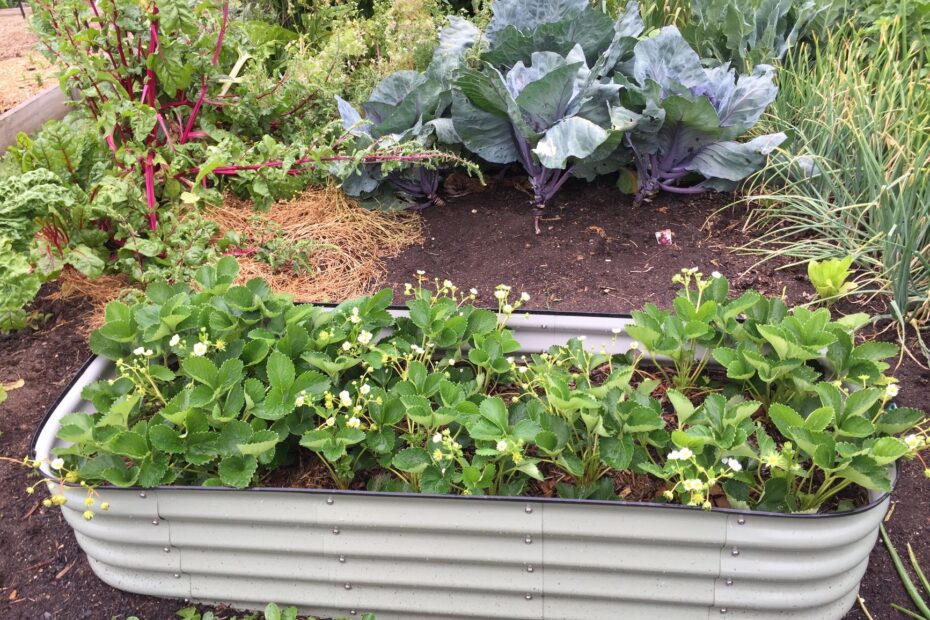
Raised bed vs. in-ground gardening is a choice between a contained root zone above grade and crops planted in native soil. Raised beds give you tighter control of texture, drainage, and access, while ground plots offer deeper rooting space and steadier moisture. Your clay, heat, budget, and mobility shape the fit.
The sections below cover soil behavior, climate, crop size, upkeep, access, and costs for vegetable gardeners choosing between two workable growing systems.
Two Growing Systems Start With Different Root Zones
A raised garden bed holds soil above the surrounding grade inside a frame or edged mound. An in-ground garden starts with native soil, improved through compost, cultivation, and targeted amendments. You choose the crop root depth and soil condition before selecting plants.
| Garden factor | Raised bed | In-ground garden |
|---|---|---|
| Soil control | You fill it with a chosen mix. | Your native soil sets the starting point. |
| Startup expense | Frames, fill, and hardware add expense. | You need fewer materials on usable soil. |
| Rooting depth | Depth depends on frame height and subsoil. | Roots reach downward through prepared earth. |
| Drainage | Water moves away faster in elevated soil. | Heavy clay can hold water too long. |
| Watering | Your beds dry faster in heat and wind. | Deeper earth holds moisture longer. |
| Weed pressure | Clean fill starts with fewer buried seeds. | Existing weed seeds can emerge after tilling. |
| Access | Higher soil reduces bending and kneeling. | Wide plots suit broad planting and machinery. |
Neither system wins in every yard. Raised beds fit tight urban spaces, poor soil, and painful knees, while in-ground gardening suits large plots with workable earth and room for wide-spreading crops.
That difference shapes every later choice. Soil drainage, soil compaction, irrigation and water retention, and bed size all begin with the root zone beneath your plants.
Soil Control and Rooting Depth Set the Main Trade-Off
Imported soil gives you a clean starting point
Bagged raised bed soil mix or a bulk blend gives you direct control over texture, compost content, and fertility. That control matters where native soil contains dense clay, construction rubble, shallow rock, or possible contamination near an older structure.
Working from paths keeps the planting surface loose. Soil compaction squeezes pore space, slowing air and water movement around roots. A 4-foot-wide bed lets you reach the center from either side without stepping on the soil.
Your root zone stays easier to work because foot traffic remains outside the frame. That advantage matters for lettuce, carrots, radishes, and herbs, which grow in the upper soil layer and respond poorly to crusted or packed ground.
Ground soil gives roots room to travel
Depth becomes the trade-off. A tomato in a 10-inch frame still sends roots into soil below the frame, yet compacted subsoil can stop that descent like a hardpan lid. Deeply prepared ground gives corn, squash, and tall indeterminate tomatoes far more room.
Yes, though a compost-rich mix stretches farther as an amendment than as sole fill for a large plot. Spread a 2- to 3-inch layer across native soil, then work it into the upper root zone.
Use a soil test before adding major nutrients. Your county cooperative extension office can show whether phosphorus, potassium, or pH needs correction instead of guessing from leaf color.
Soil test results keep amendments tied to an actual problem. Your carrots do not need the same soil depth or fertility pattern as tomatoes, and a test gives you a clearer starting point than adding nutrients blindly.
Drainage, Soil Temperature, and Watering Shift With Elevation
Elevation sheds water and gains spring warmth
After a cold rain, elevated soil drains faster because water exits through the base and sides. That trait helps seedlings avoid wet roots in heavy-rain regions, where clay soil can stay saturated for several days.
Soil temperature changes along with drainage. Raised beds expose more soil surface to sun and moving air, so you can sow peas, lettuce, and radishes sooner during a cool spring. Your planting date still follows local frost dates rather than bed height alone.
Plant Hardiness Zones describe average winter cold, not a daily planting calendar. Local frost dates, soil warmth, and spring rain matter more for a seed packet than the zone number printed on a map.
Fast drainage also means fast drying
Hot, dry wind pulls moisture from raised soil at a steady pace. A 12-inch bed filled with loose mix can need water sooner than a ground row after a 90-degree afternoon. Drip irrigation places water at the root zone and keeps foliage drier.
| Local pattern | Raised-bed adjustment | Ground-garden advantage |
|---|---|---|
| Heavy rain | Use 8- to 12-inch beds and open paths. | Plant on low mounds where drainage permits. |
| Dry climate | Use 3 inches of mulch and drip lines. | Deep soil offers stronger moisture retention. |
| Hot summers | Use shade cloth during harsh afternoon sun. | Broad rows buffer roots from surface heat. |
Mulch changes the water pattern. Straw, shredded leaves, or untreated wood chips slow evaporation, cool the root zone, and reduce soil splash during hard rain. Your irrigation schedule should follow soil feel 2 inches down rather than a calendar.
Raised beds need more watering than in-ground gardens in heat, wind, and low humidity because exposed sides speed evaporation. Sandy ground can dry quickly too, so your soil texture still matters more than the garden style alone.
Construction Costs Continue Through Seasonal Maintenance
Frames and fill shape the opening expense
A single 4-by-8-foot bed at 12 inches tall holds about 32 cubic feet of growing mix, or a little more than 1 cubic yard. Lumber or metal garden bed materials, screws, bulk soil delivery, compost, and drip parts raise the opening cost before a seed goes into the ground.
In contrast, an in-ground plot with workable soil may need compost, a garden fork, mulch, and basic irrigation. Your opening expense stays lower because existing earth supplies most of the planting volume.
Raised bed gardening costs rise fastest with tall frames and imported fill. A shallow 8-inch bed needs less volume than a 24-inch planter, while a taller planter brings herbs and greens closer to standing height.
Annual inputs do not disappear
Both systems need compost, mulch, and fertility management. Raised soil settles over time, so you add material each season. Wood frames also decay, while galvanized metal avoids rot but still needs stable corners and smooth edging.
- Frame materials: Your raised bed needs lumber, metal, stone, or composite edging before planting begins.
- Soil volume: Deep boxes consume far more mix than a narrow ground row needs.
- Water delivery: Drip tubing reduces hand-watering time in fast-drying elevated soil.
- Seasonal top-up: Compost restores settled beds and feeds the soil food web.
- Frame renewal: Untreated wood can rot where it contacts damp soil.
The added expense earns its place on contaminated ground, severe compaction, stubborn drainage, or a small high-value vegetable garden near your kitchen. You gain a controlled root zone where repairing the whole site would demand far more labor.
That controlled volume also determines which crops can thrive before it dries out or becomes crowded.
Vegetable Choices Depend on Soil Volume and Water Capacity
Leaf lettuce, spinach, radishes, herbs, bush beans, peppers, and compact tomato varieties grow well in beds with adequate depth and steady moisture. You can grow productive food in an 8- to 12-inch box, provided roots have loose soil beneath or enough volume around them.
Shallow frames expose the weak point in large crops. Full-size corn needs a broad block for pollination and substantial rooting room. Large winter squash sprawls beyond the box, while long carrots and parsnips fork in stones or dense layers.
Soil volume sets the crop limit
Vegetables that do not grow well in raised beds are not barred from elevated soil. They struggle in beds that are too shallow, dry too fast, or pack plants too closely together. An indeterminate tomato can thrive in a deep bed, yet it needs generous root volume, a sturdy trellis, and regular water.
Ground rows suit pumpkins, sweet corn, melons, potatoes, and sprawling squash where your space allows. Raised beds fit intensive crops harvested in handfuls, such as basil, salad greens, scallions, and peppers.
- Sweet corn: Plant corn in a wide block because wind pollination works poorly in a single narrow row.
- Winter squash: Give long vines open ground or guide them far beyond the bed edge.
- Long carrots: Use loose, stone-free soil so roots grow straight instead of splitting.
- Indeterminate tomatoes: Set deep roots, sturdy trellises, and steady irrigation for large vining plants.
Your crop spacing matters as much as frame depth. A crowded 4-by-8-foot bed loses airflow and water capacity quickly, while a spacious ground row gives large leaves and vines room to spread.
Weeds, Pests, and Routine Care Still Need Attention
Clean fill gives you fewer weed seeds at planting, but it does not seal a bed from wind, birds, or creeping roots below. Your mulch layer blocks light from new sprouts and keeps bare soil from crusting after rain.
Defined edges make kneeling, hand weeding, and compost top-dressing less awkward. An in-ground plot gives you room for a wheel hoe or broadfork. Both spaces need regular checks for aphids, hornworms, slugs, chewed leaves, and wilting stems.
Do not reuse diseased tomato or squash debris as casual mulch. Remove it from the bed, clean tools, and move crop families to a different space during the next season.
Neither setup solves poor sunlight, soil-borne disease, or crop-specific watering needs. Crop rotation changes where related plants grow, while sanitation removes places where pests and disease spores remain between seasons.
Fruiting crops such as tomatoes and peppers need six to eight hours of direct sun. Your bed style cannot make up for a site shaded by a house, fence, or mature tree canopy.
Sunlight alone will not make a garden practical when paths and working space are constrained.
Access and Open Space Can Outweigh Yield Potential
A clear path around a 4-foot-wide bed changes the physical work. You reach inward instead of kneeling in a long row, and a 24- to 30-inch-tall planter brings herbs and greens close to standing height. Your garden access can matter more than another planting row.
Patios, narrow side yards, and paved courtyards fit contained planters because they mark clean boundaries. Modular beds also fit rental homes, where digging up turf or changing native ground may not fit the lease.
Broad ground plots still fit open land with workable soil. A 20-by-30-foot in-ground garden gives you room for corn blocks, squash vines, cover crops, and long rows without filling hundreds of cubic feet with imported soil.
That open-space advantage matters for a raised bed vs in-ground vegetable garden decision. Your available square footage sets limits on crops that need broad spacing, deep roots, or vines that run 10 feet or farther.
Site Conditions Point Toward a Practical Layout
Your site gives the final answer. Raised bed vs. in-ground gardening becomes clearer after you inspect soil texture, drainage after rain, sun exposure, and the space each crop requires.
- Choose raised beds: Put them on compacted, rocky, contaminated, or poorly drained ground with defined access needs.
- Choose ground rows: Put deep-rooted crops in sound native soil with broad planting space and stronger moisture retention.
- Use a hybrid: Put salad crops and peppers in boxes, then place corn and squash in open ground.
- Match bed height: Use low frames for drainage and taller frames where bending causes pain.
- Plan water first: Run drip lines before dense crops leave little room for tubing.
A hybrid layout handles mixed conditions without forcing one method across the whole yard. You can reserve two raised beds for intensive vegetables near the door and use in-ground rows for deep roots, vines, and lower-cost bulk planting.
The pros and cons of raised garden beds become clearer after a hard rain or a hot afternoon. Water pooling on clay points toward elevation, while deep workable loam points toward an open plot.
Final Thoughts on Choosing a Garden Bed
Your growing system should fit the soil and the body doing the work. Raised beds give you control, drainage, and access, but demand filling material and closer attention to water. In-ground soil gives crops depth, room, and steadier moisture where the site drains well and has workable earth.
Start with the problem in your yard, then place each crop where its roots have the right conditions. A 4-foot-wide box can simplify salad greens and peppers, while open ground gives corn and squash the space they demand.
FAQ
How does raised bed gardening differ from gardening directly in the ground?
Raised beds hold selected soil above grade inside a frame or mound, while ground gardens rely on native soil improved with compost and cultivation. You gain more control over drainage and access in a bed, while ground soil offers broader rooting space and steadier moisture.
Is a raised garden bed better than an in-ground garden?
Poor drainage, compacted soil, limited mobility, or a small intensive planting area often favor a raised garden bed. An in-ground garden is better for large space, deep-rooted crops, usable native soil, and lower opening expense. Neither method outperforms the other in every yard.
What are the main advantages and disadvantages of raised garden beds?
Raised beds give you controlled soil, faster drainage, cleaner edges, and less bending. Their drawbacks include frames, imported soil, compost top-ups, and faster drying during hot or windy weather. Shallow boxes can also limit large crops without enough root volume.
What are the downsides of using raised garden beds?
Raised beds need frames, imported soil, compost top-ups, and more frequent watering in hot or windy weather. Your plants also have less contained soil volume in shallow boxes, which can limit corn, winter squash, large tomatoes, and long-rooted vegetables unless the bed is deep enough.
What vegetables do not do well in raised beds?
Full-size corn, sprawling winter squash, pumpkins, long parsnips, and indeterminate tomatoes struggle in shallow or crowded raised beds. Your bed can still grow these crops with enough depth, soil volume, trellising, and water, but an open ground plot gives their roots and vines more room.
Can you use raised-bed soil in the ground?
Spread as a compost-rich amendment, raised-bed soil can improve ordinary ground soil. Spread it over native soil and mix it into the upper root zone, rather than filling a large plot entirely with bagged mix. Your money stretches farther while the existing earth gains organic matter.