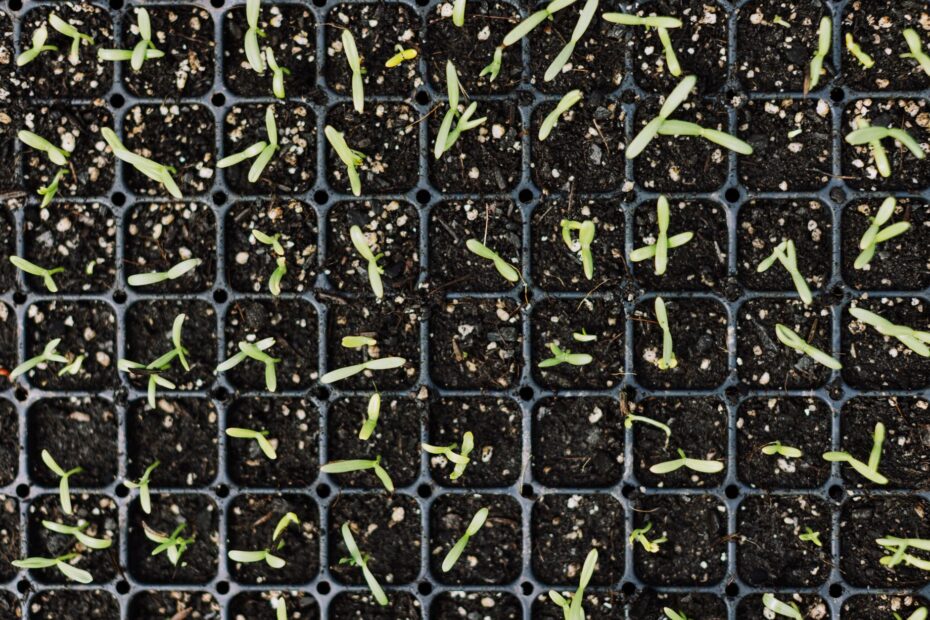
After absorbing water, a viable seed’s embryo resumes growth and pushes toward its first leaves. The seed swells, stored food becomes fuel, and the radicle pushes through the seed coat. Your planted seed can be alive below soil days before a green shoot appears.
This explanation covers seed biology, species cues, sowing choices, timing, and common failures for your tray, garden bed, or older seed packet.
Germination Begins Below the Soil Surface
A bean planted 1 inch deep can start growing without any sign above the soil. The embryo resumes growth, and the radicle, or embryonic root, breaks through the seed coat. Your seed has germinated at that point, even without a visible stem.
Germination, Sprouting, and Emergence Mark Separate Events
These words describe different points in early plant growth. Germination covers internal activity and radicle release. Sprouting is a casual term for visible new growth, while seedling emergence starts after the shoot reaches the surface.
| Stage | What happens | What you can see |
|---|---|---|
| Germination | The embryo absorbs water and the radicle exits. | Nothing above soil in many cases. |
| Sprouting | The shoot begins extending upward. | A bent stem or pale tip can appear. |
| Seedling emergence | The shoot breaks through the growing medium. | Cotyledons or a narrow leaf-like blade appears. |
| Seedling growth | True leaves open and photosynthesis takes over. | Leaves become greener and broader. |
Your tomato seed might send out a root on day 5, while its curved shoot does not appear until day 8 or 10. Digging through the mix too soon can tear that fragile root. Soil depth, temperature, and surface crusting shape the gap between germination and emergence.
Visible leaves mark a later stage, not the moment the seed woke up. Before the radicle moves, the seed needs a living embryo, food reserves, and a protective outer layer.
A Viable Seed Contains Living Parts and Stored Food
Inside a dry seed sits a compact plant structure smaller than a pencil eraser. The embryo includes the radicle, which becomes the root, and the plumule, which forms the shoot. Your seed also carries food because it cannot photosynthesize while buried.
Seed Parts Supply Protection and Fuel
| Seed part | Job before leaves function | Example you can observe |
|---|---|---|
| Seed coat | Limits injury, drying, and premature water entry. | A tough morning glory coat resists soaking. |
| Embryo | Contains the tiny root and shoot. | A split bean reveals a miniature plant axis. |
| Endosperm | Stores starch, protein, or oil for growth. | Corn retains a large starchy food store. |
| Cotyledons | Store food or lift it toward light. | Bean halves feed the young plant. |
Seeds from flowering plants package these parts in different proportions. Corn relies heavily on endosperm, while a bean stores much of its reserve in two thick cotyledons. Your corn and bean seedlings emerge in different forms because their food stores and shoot structures differ.
Dormancy Delays Growth Until Conditions Fit
Viability means a seed has the capacity to grow under suitable conditions. It does not mean each seed in a packet will emerge, because age, storage, injury, disease, and dormancy affect the result. Your germination rate is the share of planted seeds that start growing under stated conditions.
Dormancy is a built-in pause that blocks growth during an unsuitable season. A seed from a temperate tree can need weeks of moist cold before it responds. A hard-coated sweet pea can need scarification, a small scrape that allows water through the coat.
Some freshly harvested seeds also need after-ripening, a dry resting period that changes internal chemistry. That pause protects a seed from waking during a warm spell in late fall, then facing winter. Once the required cue arrives, water starts the chemical work inside the embryo.
Water Activates the Seed Interior
A dry seed can sit unchanged for years, yet its cells remain alive at a very low level. Imbibition starts as water enters through the seed coat and rehydrates those cells. Your seed swells because water moves into dry tissues like a sponge expanding in a shallow dish.
Rehydration Restarts Metabolism
Water shifts a seed from dry storage into active growth. Respiration resumes, enzymes become active, and stored materials become available to the embryo. Enzymes break starches into sugars, proteins into amino acids, and fats into smaller energy-rich compounds.
The embryo uses that fuel before green leaves can feed it. In peas, cotyledon reserves nourish the expanding root and shoot. Corn enzymes release sugars from endosperm, and your damp paper towel can reveal the radicle lengthening.
- Water entry: Dry tissues absorb moisture through the seed coat and expand.
- Cell rehydration: Cell membranes regain function and dormant enzymes become active.
- Respiration increase: The embryo uses oxygen to release energy from stored food.
- Reserve movement: Sugars and other compounds move toward the growing root and shoot.
- Coat opening: Expanding tissue opens a path for the radicle.
Moisture and Oxygen Work Together
Water starts growth, but the embryo also needs oxygen for respiration. Saturated potting mix fills pore spaces with water and limits the air supply. Your seeds can rot in a tray that looks well watered because the medium stays waterlogged rather than evenly damp.
Press the growing medium lightly after watering. It should feel moist throughout, but it should not release a stream of water or hold standing puddles.
Choose a seed-starting mix with air spaces and containers with drainage holes. A clear humidity cover slows drying, but vent or remove it after surface growth appears. Your goal is steady moisture around the seed without drowning the air spaces around it.
Temperature, Light, and Air Shape Early Growth
A radicle cannot keep extending in soil that is cold, airless, or dry. Most species need moisture, oxygen, and a temperature range suited to that plant. Your sowing setup works when those needs line up at the same time.
Temperature Sets the Germination Pace
| Plant group | Soil temperature pattern | Practical effect for you |
|---|---|---|
| Cool-season crops | Germinate in cooler spring soil. | Peas and lettuce can start before summer heat. |
| Warm-season crops | Need warmer soil for steady growth. | Beans, peppers, and basil stall in chilly beds. |
| Heat-loving plants | Respond faster with bottom warmth. | Tomatoes and peppers benefit from a heat mat indoors. |
| Perennials with dormancy | Need a seasonal cue before growth. | Milkweed can need cold, moist storage before sowing. |
Warm-season seeds placed in 50-degree soil can sit unchanged for days or weeks, even with enough water. Cool-season crops handle lower temperatures, though their pace still slows. Check your packet for a germination range rather than relying on a warm afternoon.
Light Requirements Set Planting Depth
Some tiny seeds need light at the soil surface to start growing. Lettuce and snapdragon are familiar examples, so press them onto moist mix rather than burying them. Covering these seeds deeply can block the light cue and leave your tray empty.
Other seeds respond better in darkness or show little response to light. Larger seeds such as beans and peas belong deeper because their food stores can push a shoot through more soil. Your packet’s depth instruction reflects the seed’s biology.
- Check soil warmth: Use a soil thermometer 2 inches deep before sowing heat-loving crops outdoors.
- Match planting depth: Cover seeds only as deeply as the packet directs.
- Water gently: Use a mist bottle or bottom watering for tiny surface-sown seeds.
- Keep pores open: Avoid pressing wet mix into a dense layer.
- Place light seeds: Set light-dependent seeds near a bright window or under a grow light.
These are the conditions needed for seed germination in most garden crops. The root then leads the visible sequence, followed by the shoot and cotyledons.
The Seed Germination Process Moves From Root to Leaves
The tiny white point that exits a seed is almost always the radicle. It grows downward in response to gravity, anchors the plant, and starts water uptake from the growing medium. Your handling matters here because a bend or tear can stop a newly started plant.
Root Growth Comes Before Shoot Growth
- Imbibition begins: Water enters the dry seed and tissues expand.
- Coat opens: Internal pressure splits the outer layer along a weak point.
- Radicle exits: The embryonic root enters the medium and takes up water.
- Shoot extends: The plumule grows upward through soil or potting mix.
- Cotyledons appear: Seed leaves rise or stay below ground, depending on species.
- True leaves form: Mature leaf shapes appear and photosynthesis supplies more food.
A radicle appears before the plumule because the new plant needs an anchor and water source before lifting its shoot. In a clear germination bag, your seed can send fine root branches into the moist towel. Soil hides this work, but it does not change the order.
Cotyledons Bridge the Gap to Photosynthesis
The plumule grows upward and forms the young stem and leaves. Cotyledons either rise with it or remain below the surface. Your bean seedlings can show two fleshy green halves above soil, while pea cotyledons stay underground and feed the shoot.
True leaves resemble the mature plant’s foliage rather than the rounded or narrow seed leaves. A tomato plant produces divided leaves, while a squash plant forms broad rough leaves. Your seedling depends less on stored reserves once those leaves capture enough light.
These stages of seed germination explain why a seed can germinate underground but fail to appear above the soil. Deep sowing, a crusted surface, rot, or physical damage can stop the shoot after the radicle has already emerged.
Dicots and Monocots Show Different Seedling Forms
Beans and corn follow the same core sequence below the soil, but they look different above it. A dicot has two cotyledons, while a monocot has one. Your ability to spot that contrast helps you avoid mistaking a healthy seedling for a damaged plant.
Two Cotyledons and One Cotyledon Produce Distinct Forms
| Feature | Dicot | Monocot |
|---|---|---|
| Cotyledons | Two seed leaves. | One seed leaf. |
| Examples | Bean, sunflower, tomato, squash. | Corn, onion, grass, lily. |
| Emerging shoot | Stem or hooked shoot pushes upward. | A narrow protective sheath leads. |
| Leaf pattern | Leaves tend toward branching veins. | Leaves tend toward parallel veins. |
Monocots such as corn protect the emerging shoot with a sheath called a coleoptile. That pointed tube reaches upward, then the young leaf emerges from it. Your corn will not show two broad seed leaves because its food reserve and shoot structure work differently.
Seed Leaves Can Rise or Stay Buried
Epigeal growth lifts cotyledons above the growing medium. Beans and sunflowers show this pattern, and their seed leaves can turn green in light. Your bean seedlings can carry the opened seed shell on their shoulders for a day or two.
Hypogeal growth leaves cotyledons below the surface. Peas use this pattern, sending the shoot upward while food remains protected underground. Buried reserves can give your pea plant another source of energy after light frost or mild shoot damage.
Seed structure explains the form above soil. Your packet then turns those biological details into choices about depth, warmth, water, and waiting time.
Seed Packets Turn Biology Into Sowing Decisions
A packet’s days-to-germination range assumes the stated temperature, depth, and moisture level. Count from sowing under those conditions, not from the day a tray sits in a cold garage or dry windowsill. Your timing becomes more useful once the growing medium matches the packet range.
Packet Directions Match Species Requirements
Use the stated depth and light directions before relying on a general rule such as planting twice as deep as the seed is wide. That rough rule fits some large seeds but fails for light-dependent lettuce. Your basil seed also responds to warmth that a pea seed does not need.
Planting too deeply drains stored food as the shoot stretches toward the surface. Shallow placement can expose roots or dry the mix around the coat. Firm seed contact helps water move into the seed, but hard packing removes pore spaces needed for oxygen.
A Sowing Routine Limits Avoidable Losses
- Label each sowing: Write the plant name and sowing date before moisture smears the container.
- Fill loose mix: Keep the surface level without compressing it.
- Space seeds apart: Give each sprout room to emerge without tangled roots.
- Cover at depth: Leave light-requiring seeds exposed at the surface.
- Water from below: Let the mix draw up moisture without washing tiny seeds aside.
- Check moisture daily: Add water before the surface turns pale and dusty.
Wait through the full packet range under suitable conditions before re-sowing. A slow crop in cool soil does not prove that the seed is dead.
Germination time varies within a packet because individual seeds differ in maturity, coat thickness, and stored reserves. Your tray can show sprouts across several days rather than all at once. A stalled tray needs symptoms, not guesswork, before you decide to wait or re-sow.
Viability Checks and Symptoms Point to the Next Step
A 20-year-old packet is not automatically useless. Cool, dry storage preserves viability far better than a humid shed or hot car trunk, yet each species declines at its own pace. Your older tomato seed can surprise you, while short-lived onion seed loses vigor far sooner.
A Damp Towel Test Estimates Viability
How to test seed viability starts with a counted sample rather than an entire uncertain packet. Ten seeds make the math simple, while 20 seeds give a clearer estimate for a larger packet. Your result is a germination percentage, not a promise that each seed in soil will respond the same way.
- Count the sample: Set aside 10 or 20 seeds from the packet.
- Moisten a towel: Wet a paper towel, then squeeze it until no water drips.
- Space seeds apart: Fold the towel so roots have room to emerge.
- Seal loosely: Place it in a labeled plastic bag with a small air gap.
- Warm the sample: Keep the bag near the crop’s stated germination temperature.
- Count rooted seeds: Divide sprouts by total seeds after the expected time range.
Seven rooted seeds from a sample of 10 equals a 70 percent result. Your next sowing can use closer spacing to account for that rate, or you can switch to fresher seed where spacing matters. A seed with a radicle counts as germinated before the shoot appears.
Symptoms Separate Common Germination Failures
| What you see | Likely cause | Practical response |
|---|---|---|
| No swelling or change | Nonviable seed, dry mix, or unbroken dormancy. | Check moisture, packet age, and required pretreatment. |
| Slow or uneven starts | Growing medium is too cold. | Move trays to a warmer site suited to the species. |
| Soft, dark, or sour seeds | Excess water limits oxygen and invites rot. | Use fresh mix, drainage holes, and lighter watering. |
| No shoots above soil | Seeds sit too deep or the surface formed a crust. | Re-sow at the stated depth and loosen the top layer. |
| Stems pinch and collapse | Damping-off organisms attack stressed young plants. | Improve airflow, avoid saturated mix, and discard collapsed seedlings. |
Damping-off appears at the stem line, where a seedling narrows, falls, and does not recover. It differs from slow germination because the seed has already emerged. Your clean containers, airy mix, and measured watering reduce conditions that favor this loss.
No-change seeds deserve patience through the stated germination window and any known dormancy requirement. Past that point, a damp-towel sample gives your clearer answer than repeated watering. Water uptake, oxygen, warmth, planting depth, and seed viability are the details worth checking.
Final Takeaways
A seed wakes through water, but it grows only where moisture, oxygen, temperature, and species cues work together. Your strongest habit is treating the packet as a map and watching the signs: a swelling coat, white radicle, emerging shoot, and true leaves. Seed germination becomes easier to judge once you separate hidden root growth from visible emergence.
FAQ
How do seeds germinate step by step?
Seeds absorb water through imbibition. Water restarts respiration and enzymes, stored food fuels the embryo, the seed coat splits, and the radicle emerges. The plumule then grows upward, cotyledons feed or rise with the shoot, and true leaves begin photosynthesis.
What triggers seed germination?
Water is the main trigger because it rehydrates the embryo and activates metabolism. Suitable temperature and oxygen allow growth to continue. Some species also need light, darkness, cold exposure, scarification, or a dry after-ripening period before the embryo responds.
What conditions do seeds need to germinate?
Most seeds need evenly moist growing medium, oxygen around the seed, and a temperature range suited to their species. Your packet can add a light or darkness requirement. Waterlogged mix blocks oxygen, while cold soil slows or stops growth in warm-season crops.
Why do seeds need water, oxygen, and the right temperature to germinate?
Water rehydrates cells and starts enzyme activity. Oxygen fuels respiration, which releases energy from stored food. The right temperature allows those reactions to move at a pace that supports root and shoot growth.
Do seeds need light or darkness to germinate?
Light requirements vary by species. Lettuce and snapdragon need light near the soil surface, while some seeds respond better in darkness. Your packet gives the planting depth and light direction suited to that crop.
How long does it take for seeds to germinate?
Timing depends on species, temperature, moisture, and seed age. Use the packet’s stated range as your reference and count from sowing under suitable conditions. Lettuce can start in several days, while peppers in cool conditions can take far longer.