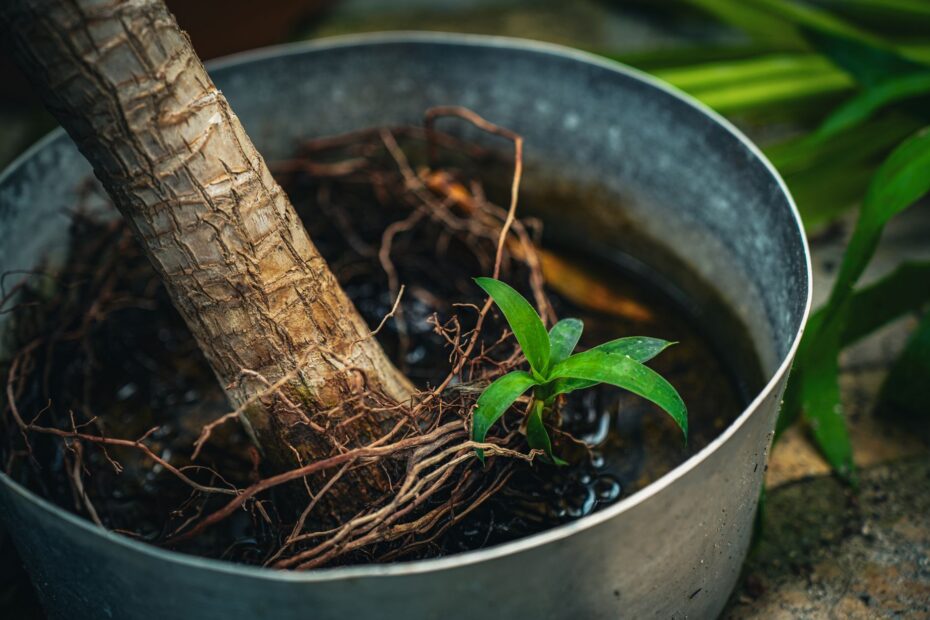
Healthy roots need a balance between moisture and air in the plant’s root zone. Watering too soon can leave roots short of oxygen, while long dry gaps cause drought stress. Your aim is soil that stays moist enough for roots without remaining saturated.
You’ll learn how soil, pot size, weather, drainage, and plant type alter watering needs. The practical steps below help you inspect moisture, identify stress, and adjust your routine.
Watering Timing Controls Root Conditions
Roots draw water from small spaces between soil particles, and those spaces also hold oxygen. Your watering rhythm decides how long the soil stays damp, how quickly it drains, and whether roots can keep taking up nutrients.
A plant does not follow a calendar. Soil moisture changes with sunlight, plant transpiration, pot material, root growth, and seasonal temperature and humidity.
Frequency, Duration, and Volume Work Together
Watering frequency is the time between watering events. Watering duration is the number of minutes a hose, faucet, drip line, or sprinkler runs. Water volume is the amount that reaches the soil, shaped by flow rate, runoff, and absorption.
A five-minute pour from a small watering can may soak a 6-inch pot. The same five minutes from a high-flow hose may send water across a dry bed and onto pavement. Your plant responds to moisture depth, not minutes alone.
Roots Require Both Moisture and Air
Healthy roots absorb water, dissolved minerals, and oxygen. Root respiration supplies energy for nutrient uptake and new root growth, so wet soil can still leave your plant thirsty when damaged roots stop working well.
Even root-zone moisture keeps leaves firm and supports steady growth. Repeated swings between soaked soil and bone-dry soil force your plant to slow growth, close leaf pores, or shed older tissue.
Drainage holes and airy potting mix reduce harm after a heavy watering, but they do not make constantly wet soil safe for your roots.
Excess Water and Dry Soil Damage Plants Differently
The same limp leaf can come from wet roots or dry roots, yet the damage starts in opposite ways. Excess water pushes air from soil pores, while dry soil leaves roots unable to replace water lost through transpiration.
Your response must match the cause. Adding water to a plant with wet soil deepens root stress, while withholding water from a dry root ball extends drought stress.
Frequent Watering Limits Root Oxygen
Soggy potting mix stays dark and heavy and can smell sour near drainage holes. Oxygen deprivation slows root respiration and nutrient uptake, so yellow leaves may point to root trouble rather than a fertilizer shortage.
Root rot develops as weakened roots break down in persistently wet soil. Soft brown roots, blackened stem bases, and stale odors signal damage below ground. Your plant then struggles to move water into stems and leaves.
Long Dry Gaps Lead to Drought Stress
Dry soil starts a different chain reaction. Leaves wilt as cell pressure falls, growth slows, and leaf edges turn tan or crisp. Your plant may drop older leaves to limit water loss.
Drought stress can interrupt flowering, fruit set, and seedling growth. Zea mays, or corn, research shows that irrigation timing affects development from early growth onward, though a crop field behaves differently from your windowsill pothos.
| Moisture problem | Below-ground effect | Visible symptoms |
|---|---|---|
| Watered too frequently | Soil air spaces fill with water and roots lose oxygen. | Yellowing, limp leaves, slow growth, sour soil odor. |
| Watered too rarely | Roots cannot replace water lost through transpiration. | Dry edges, limp leaves, leaf drop, stalled growth. |
| Deep watering at need | Moisture reaches roots while air returns during drainage. | Firmer leaves and steadier new growth. |
The right interval restores moisture before drought stress starts without leaving the mix saturated. Soil type, light, temperature, and container size shift that interval, so leaves alone cannot explain what is happening underground.
Leaf Symptoms Require a Soil Diagnosis
Yellow leaves are unreliable clues on their own. A thirsty plant and a waterlogged plant can both droop because each problem interrupts water movement between roots and foliage.
Your fingers, nose, and a close inspection of the plant root zone give stronger evidence than leaf color. Start with soil moisture at root depth before changing your watering schedule.
Root-Depth Moisture Gives the Strongest Clue
Press a finger into the mix instead of touching only the dry crust. Surface soil can look pale while deeper soil remains wet, especially in a large ceramic pot.
For how to check soil moisture before watering, inspect the depth where active roots sit. A 6-inch pot calls for a shallower probe than an established shrub with roots extending 12 inches or more.
| Clue | Overwatering | Underwatering | Poor drainage or look-alike cause |
|---|---|---|---|
| Soil feel | Cool, dark, sticky, or wet several inches down. | Pale, dusty, loose, and dry at root depth. | Wet lower soil despite modest watering. |
| Leaf texture | Soft, limp, yellowing leaves. | Thin, curled, papery, or crisp leaves. | Yellowing with wet soil or cold injury. |
| Growth pattern | New growth slows and stems soften. | New growth stays small or pauses. | Stalled growth despite damp soil. |
| Odor | Sour, swampy, or stale smell. | Little odor beyond dry soil. | Stale odor near blocked drainage holes. |
| Root condition | Brown, mushy, or peeling roots. | Pale, firm roots with dry surrounding mix. | Roots crowded against wet pot bottoms. |
Look-Alike Problems Need Different Fixes
Poor drainage can resemble overwatering even after modest watering. Compacted soil holds perched water near the pot bottom, while blocked drainage holes trap water beneath the root ball.
Your watering interval cannot correct a container that cannot drain. Empty saucers, clear blocked holes, and shift a dense mix into a looser medium suited to the plant.
Pests, nutrient shortages, cold drafts, hot pavement, and abrupt temperature shifts can also yellow or wilt leaves. Spider mites leave fine stippling and webbing, while nitrogen shortage tends to fade older leaves more evenly.
Once nonwatering causes are ruled out, drying speed determines how quickly the root zone changes.
Do not fertilize a plant with suspected root rot. Fertilizer salts add stress to roots already struggling to take up water.
Soil, Containers, and Weather Set the Drying Rate
Soil texture gives you the starting pace for moisture loss. Sandy ground drains rapidly after rain, while clay-rich soil holds water in tiny pores for days.
Your soil type matters before weather enters the picture. A plant in loose sandy soil and a plant in dense clay can receive the same amount of water yet dry at very different speeds.
Soil Texture Changes Water Storage
Sandy soil has large particles and wide pore spaces. Water moves through quickly, roots receive more air, and your tomatoes in a sandy raised bed may need closer moisture checks than plants in a loamy bed.
Clay has much smaller particles. It stores water well but compacts easily, slowing drainage and limiting oxygen around roots. Compost, leaf mold, or a suitable mineral amendment can loosen a dense bed before planting.
Containers Dry From Several Directions
Small pots hold less growing medium, so a sunny windowsill can dry them quickly. Terracotta loses moisture through porous walls, while glazed ceramic and plastic keep moisture longer.
Your container plants also require open drainage holes and empty saucers after watering. Standing water beneath a pot keeps the lower root zone wet long after the surface looks dry.
Pot-bound roots pull water quickly but can repel moisture after the mix becomes extremely dry. Water can rush down the gap between the root ball and pot wall, leaving the center dry.
Seasonal Temperature and Humidity Change Transpiration
Warm sun, wind, and low humidity speed plant transpiration. A hanging petunia basket on a breezy July patio can dry in one day, while that same basket under cloudy skies stays damp far longer.
Cool, dim, humid conditions reduce water loss. Indoor plants near a winter window can stay moist much longer than they did during summer, even inside the same room.
- Bright exposure: Inspect exposed containers closely because direct sun warms the root zone and speeds moisture loss.
- Windy sites: Expect greater water demand as moving air pulls vapor from leaves and soil surfaces.
- Large pots: Probe deeper because surface dryness does not reveal moisture near the pot bottom.
- Dense mixes: Extend intervals only after checking for trapped wetness around roots.
- Rainfall totals: Inspect beneath mulch because a brief shower may not wet soil deeply.
Root-Zone Checks Replace Calendar Watering
A calendar shows what happened seven days ago, not what your roots require today. Soil checks turn watering into a decision based on actual moisture, which reduces water poured into already wet soil.
For indoor and outdoor plant watering needs, choose a tool that reaches the right depth. Shallow seedlings need a light finger test, while deep pots and beds need a longer probe.
Simple Tools Reveal Moisture Below the Surface
Your finger works well for shallow pots and seedlings. A wooden chopstick or skewer reaches deeper into a 6-inch or 10-inch container, and the wood darkens where moisture clings to it.
- Clear the surface: Brush aside mulch or loose potting mix so you inspect soil rather than decorative material.
- Probe to depth: Insert a finger, chopstick, skewer, or hand trowel toward the main root area.
- Read the soil: Feel for cool damp soil, crumbly dryness, or sticky saturation around the probe.
- Lift the pot: Compare pot weight after a thorough soak with the weight of a dry container.
- Water at need: Add water slowly after the target dryness level has been reached.
A moisture meter can assist with a deep houseplant pot, but its metal probe measures electrical conductivity rather than water alone. Fertilizer residue, compacted mix, and isolated wet pockets can produce misleading readings.
Your skewer test and pot-weight check work as useful cross-checks. They show whether moisture reaches the center of the root ball rather than sitting only near the pot wall.
Plant Groups Have Different Dryness Thresholds
Drought-tolerant plants such as snake plants, jade plants, rosemary, and many cacti need a larger dry period between soakings. Let much of their mix dry before adding water again.
Your restraint matters with these plants because thick leaves, stems, or roots store water. Constant wetness raises the chance of soft roots and stem damage.
Moisture-loving plants such as basil, peace lilies, ferns, and young vegetable seedlings need moisture before their root zone becomes fully dry. Keep soil evenly damp rather than swampy.
For plants that tolerate partial drying, thorough watering avoids the shallow roots encouraged by frequent sips.
| Plant group | Moisture target before watering | Practical signal |
|---|---|---|
| Cacti and succulents | Most of the mix dry | Pot feels light and soil is dry well below the surface. |
| Common foliage houseplants | Upper 1 to 2 inches dry | Skewer shows moisture deeper in the pot. |
| Ferns and peace lilies | Surface beginning to dry | Mix remains cool and lightly damp below. |
| Vegetable seedlings | Surface barely dry | Small root zone still feels evenly moist. |
Deep Soaks Build Stronger Root Systems
Moisture found only near the surface keeps roots close to the surface. That shallow root system heats quickly, dries quickly, and leaves your plant dependent on frequent attention.
Deep watering versus frequent watering comes down to root distribution. A slow soak encourages roots to search through a larger volume of soil, while shallow daily sips keep roots in the top layer.
Water Depth Shapes Root Growth
In-ground plants benefit from water that reaches the lower part of their active root area. A young perennial with roots 6 inches deep needs less watering depth than an established shrub rooted 12 inches or more.
Your watering depth should match the plant’s current size, not its mature size. A recently planted shrub still relies heavily on its nursery root ball, even after planting in open ground.
Raised beds drain faster than native ground because their soil sits above grade with exposed sides. Water established vegetables slowly enough to wet 6 to 8 inches down.
Run Time Depends on Flow Rate
Twenty minutes is enough only where flow rate, soil absorption, slope, mulch, and root-zone depth line up. A low-rate drip line needs more run time than a hose set to a strong stream.
Your soil inspection decides whether the run time worked. A trowel shows whether moisture reached 6 to 8 inches into a vegetable bed or only darkened the top inch.
For containers, water until liquid drains from the holes, then empty the saucer after drainage stops. For beds on slopes, pause after a few minutes so water soaks in instead of running away.
Micro-sprinkler irrigation spreads water across a wider soil area and suits some landscape plantings. Drip irrigation places water near the root zone with less leaf wetting, yet both systems still require adjustment for weather and soil.
Deep watering does not mean flooding. Apply water slowly enough that your soil absorbs it, then stop after the active root zone is wet.
Plant Settings Need Different Starting Patterns
The depth check gives each setting a practical starting point. Containers, raised beds, woody plants, and houseplants lose water at different rates because their roots occupy different amounts of soil.
Your interval shifts with sun, wind, rainfall, root size, and active growth. Start with a moisture check, then revise the gap between waterings from what you find.
| Plant setting | Starting check pattern | Watering approach | Conditions that shorten the interval |
|---|---|---|---|
| Houseplants | Check every 3 to 7 days | Water through the root ball, then drain the saucer. | Bright windows, warm rooms, small pots, active growth. |
| Outdoor containers | Check daily during heat | Soak slowly until drainage begins. | Sun, wind, hanging baskets, porous pots. |
| Raised beds | Check 2 to 3 inches down | Wet 6 to 8 inches of soil. | Fast-draining mix, fruiting vegetables, hot weather. |
| Established in-ground plants | Check before long dry spells | Use a slow deep soak around the root spread. | Heat, drought, sandy soil, new growth. |
| New trees and shrubs | Check root ball and nearby soil | Water deeply around the planted root zone. | Wind, drought, recent planting, sandy sites. |
Weather Changes the Interval Quickly
Bright, hot weather raises leaf water loss, while cool cloudy weather slows it. Shorten the gap between checks during a heat wave, then lengthen it through humid or low-light periods.
Rain does not always count as a deep soak. Dense foliage, dry mulch, and compacted soil can keep rainfall from reaching roots, so your trowel check after a storm reveals whether the ground received a shallow sprinkle or a true root-zone soak.
New Trees and Shrubs Require Closer Attention
The three-year establishment rule is a broad reference for many trees and shrubs. During the first one to three growing seasons, roots are moving from the nursery root ball into surrounding soil.
Your regular deep watering helps that root expansion during dry weather. A tree in sandy soil on a windy slope can need closer attention longer than a shrub planted in moisture-holding loam.
Watering frequency and plant health meet in a simple daily reality: your plant needs enough water to replace transpiration and enough air in the root zone to keep roots working.
When that balance has already been lost, prompt changes can prevent temporary stress from becoming root damage.
Recovery Steps Limit Ongoing Root Stress
Damage from wet or dry soil does not disappear after one changed watering. Roots need time to resume normal work, and leaves already scorched or yellowed may not regain their former color.
Your next steps should stop the active stress without adding another problem. Start with the root zone, then watch for firm new growth over the following watering cycles.
Overwatered Plants Need Air Before Water
- Pause watering: Stop adding water until the root zone dries to the right depth for that plant.
- Empty saucers: Pour out standing water so the pot base does not remain submerged.
- Clear drainage: Open blocked holes and loosen compacted surface soil without tearing major roots.
- Inspect roots: Slide the plant from its pot and look for brown, soft, or foul-smelling tissue.
- Trim damaged tissue: Remove clearly decayed roots with clean shears, then shift into fresh airy mix where needed.
Move a struggling houseplant into bright indirect light instead of harsh direct sun. Strong sun raises water loss while impaired roots are still unable to keep pace.
Underwatered Plants Need a Slow Soak
Dry potting mix can repel water, so a fast pour may run down the pot edge without wetting the root ball. Water in two or three slow passes, waiting a few minutes between each.
Your pot should feel heavier after the mix absorbs moisture. A severely wilted outdoor plant also benefits from shade during intense afternoon exposure while roots rehydrate.
Keep water off hot leaves during peak sun, since droplets do not fix dry roots and evaporation loses much of the water. Your trowel can confirm that the soak reached below the surface.
A Short Routine Stops Calendar Habits
- Check root depth: Use a finger, skewer, pot lift, or trowel before adding water.
- Scan conditions: Heat, sun, wind, humidity, and rainfall alter water demand quickly.
- Read plant signals: Watch leaf texture, soil odor, firm growth, and fresh damage.
- Water slowly: Soak the active root zone instead of giving shallow daily sips.
- Inspect results: Look at soil depth after irrigation and adjust the next interval from what you find.
Water that reaches active roots serves a clear purpose. Runoff, overflowing saucers, and repeated watering into wet soil do not. Your notes about a heat wave, new pot, or changed window location can reveal patterns within a few watering cycles.
Final Thoughts
Your plant does not need a rigid weekly appointment. It needs root-zone moisture suited to its species, soil, container, and weather, followed by drainage that allows oxygen to return.
Check before watering, soak thoroughly at the right dryness point, and revise the interval as conditions shift. That habit protects root health better than any calendar.
FAQ
How frequently should I water my plants?
Your plants need water at different intervals based on root depth, pot size, soil texture, light, heat, and humidity. Check moisture at the active root zone before watering. A small sunny pot can need attention daily, while a large low-light houseplant can stay moist for more than a week.
What frequency is best for plant growth?
The right frequency restores root-zone moisture before drought stress starts while allowing air back into the soil. Your plant grows more steadily through this cycle than through constant saturation or repeated dry-downs. Deep watering at the right dryness point also helps roots occupy more soil.
Is watering for 20 minutes enough?
Twenty minutes has no universal meaning because hose flow, drip rate, soil type, slope, mulch, and root depth change the result. Your trowel or soil probe should show moisture at the intended depth after watering. Slow the flow or water in shorter passes to limit runoff.
How can I tell whether a plant is overwatered or underwatered?
Check the soil before judging the leaves. Overwatered plants sit in cool, wet soil and can have soft yellow leaves or sour odors, while underwatered plants have dry soil and papery or crisp foliage. Your root inspection gives the clearest answer in severe cases.
Should indoor plants be watered as often as outdoor plants?
Indoor plants tend to use less water because they receive less sun, wind, and temperature change than outdoor containers. Your indoor pot can still dry quickly near a bright window, heat vent, or sunny glass. Check the mix rather than copying an outdoor schedule.