Tomatoes are hungry plants, and the soil they grow in decides whether your harvest ends up bountiful or underwhelming. Choosing the right mix means thinking about drainage, organic content, and how much nutrient punch your containers or beds actually need. This lineup covers ready-to-use blends, compost amendments, and specialty additives that help tomatoes set strong roots, flower steadily, and ripen evenly through the season.
A Quick View Of The Lineup

Rosy Soil Organic Plant Food (4 Quarts)

FoxFarm Ocean Forest Potting Soil (1.5 cu ft)

Plantonix Char Bliss Biochar (8 Quarts)

PlantBest Coco Mulch Compressed Block (9.1 lb)

Back to the Roots Organic Premium Compost (1 cu ft)

Plantonix Worm Bliss Worm Castings (1 Quart)
FoxFarm Happy Frog + Ocean Forest Bundle

Vermont Compost Fort Vee Mix (40 Quarts)

PlantBest Coco Peat Concentrated Mix

PlantBest Coco Mulch Block (9.1 lb, 64 Qt)
More Details On Our Top Picks
Rosy Soil is positioned less as a bag of fill and more as a feeding medium you blend into your existing setup. The ingredient list leans on biochar (a charcoal-style soil additive that traps nutrients and moisture), kelp, worm castings, compost, and mycorrhizae (beneficial fungi that colonize roots and help them absorb minerals), with no peat or synthetic inputs.
For tomato growers working with smaller patio containers or a few herb-and-veggie pots, this gives a clean organic baseline without the bulk of a full potting soil. You may find it works best as a top dressing or as part of a 50/50 mix with a lighter coir-based medium.
Notable Upsides
- Completely organic ingredient list, no synthetic fertilizers included
- Contains mycorrhizae and biochar that support long-term root health
- Compact 4-quart bag is easy to store and carry to a balcony garden
- Versatile across indoor, outdoor, and container-grown tomatoes
Worth Noting
- Smaller volume than a traditional potting soil bag, so larger beds need multiple units
- Meant to amend existing soil rather than fill a bed on its own
Who It Suits Best
Balcony growers and small-space tomato planters who want an organic, additive-style product to enrich their current mix.
Look Elsewhere When
Backyard gardeners filling multiple raised beds should consider Back to the Roots Organic Premium Compost for larger volume.
FoxFarm’s Ocean Forest has earned its reputation as a ready-to-use container medium that doesn’t ask you to add fertilizer for the first several weeks. The light, aerated texture is built around earthworm castings, fish meal, and crab meal, giving tomatoes both quick nutrient access and slower-release organic matter.
For most home gardeners, this is the path of least resistance: open the bag, fill your pots or raised beds, and plant. Depending on your climate, the slightly moisture-retentive blend can stretch the gap between waterings during peak summer heat.
Standout Benefits
- Ready to use straight from the bag, no mixing required
- Light and aerated texture supports strong tomato root development
- Earthworm castings and ocean-sourced meals provide steady organic nutrition
- Versatile for containers, fabric pots, and raised beds
- Available in multiple pack sizes for project flexibility
Things To Consider
- Heavier and pricier per cubic foot than basic bagged mixes
- Some growers report occasional small twigs or bark pieces that need to be screened out
Feature Snapshot
Made For
Intermediate to experienced tomato growers who want a premium, low-effort potting mix that delivers consistent results across containers and raised beds.
Consider Something Else When
Heirloom seed-starters wanting a compost-first organic blend will find Vermont Compost Fort Vee Mix a richer starting medium.
Biochar is a slow-and-steady soil conditioner, and Char Bliss leans into that role rather than pretending to be a complete potting soil. The OMRI-listed (Organic Materials Review Institute) amendment is made from ethically harvested wood, designed to improve nutrient retention, water-holding capacity, and the long-term structure of your beds.
Tomatoes grown in heavily used garden soil often struggle because the original organic content has broken down over years. For those growers, mixing biochar into the top several inches gives the soil a sponge-like quality, helping roots access water and minerals more steadily through the fruiting season.
Positive Takeaways
- OMRI-listed for organic gardening use
- Improves nutrient retention and water-holding capacity in tired beds
- Durable in soil, so a single application continues to help season after season
Room For Improvement
- An amendment, not a standalone growing medium, so it must be mixed into existing soil
- Dusty when dry, so wearing a mask during application is widely recommended
Best Suited To
Long-term soil builders with established garden beds who want to invest in the underlying structure rather than a one-season feed.
A Better Fit Elsewhere
Container-only gardeners should skip this and go with FoxFarm Ocean Forest Potting Soil for an all-in-one medium.
Coconut coir (a fibrous material made from coconut husks, used as a soil additive or mulch) works as a mulch layer that helps tomato soil hold moisture and keeps weeds from stealing nutrients. PlantBest’s compressed block weighs 9.1 pounds and expands to roughly 64 quarts once hydrated, which makes hauling and storage far easier than wrestling with traditional mulch bags.
For gardeners covering several tomato beds or large containers, the math works out favorably: one block spreads across a meaningful area. The catch is the prep work, since you’ll need a large bucket and a few minutes to hydrate the block fully before laying it down.
Everyday Perks
- Compressed format saves shelf space and reduces shipping weight
- Expands to roughly 64 quarts of usable mulch per block
- Organic coconut material that helps tomato soil retain moisture between waterings
- Covers up to 17.5 square feet once laid out
Some Limits To Know
- Requires a separate container and water to rehydrate before use
- Not a soil on its own, strictly a top-layer mulch or mix-in
Who Will Love This
Gardeners managing multiple tomato beds who want to cut down on mulch bag weight and storage space.
Swap It Out When
Anyone needing actual soil rather than a surface mulch should reach for Back to the Roots Organic Premium Compost instead.
Back to the Roots keeps things approachable: a peat-free organic compost that works in pots, in-ground beds, and raised planters. The blend includes all-purpose plant food, dolomitic limestone (a mineral powder that adjusts soil pH and supplies calcium and magnesium) for pH balance, and yucca extract to help with moisture distribution through the root zone.
Tomatoes thrive when their soil holds moisture without becoming compacted, and the yucca-derived saponin in this mix is meant to keep water moving evenly through the medium. For most home growers, it’s a straightforward bag that doesn’t demand extra amendments before planting.
Everyday Advantages
- Peat-free composition supports more sustainable sourcing
- Dolomitic limestone included to balance soil pH for tomatoes
- Yucca extract helps distribute moisture through the root zone
- Flexible across containers, in-ground beds, and raised planters
- 25.7-quart size handles a small raised bed or several mid-size pots
Honest Caveats
- Lower volume than larger bulk bags, so bigger projects need multiple units
- Compost-based rather than a true aerated potting blend, so very large pots may benefit from added drainage material
Key Product Details
Right Fit For
Home vegetable growers planting a small raised bed or a handful of tomato containers who want a peat-free, organic blend ready to go.
Skip It When
Large-scale gardeners filling multiple beds should consider the FoxFarm Happy Frog + Ocean Forest Bundle for higher volume at once.
Worm castings are the natural byproduct of earthworm digestion, and a small amount goes a long way. Worm Bliss delivers a 100% organic, OMRI-listed, manure-free source of nitrogen, phosphorus, potassium, and trace minerals that tomatoes need during their heavy-feeding stage.
The 1-quart size is built for side-dressing (scattering fertilizer around the base of established plants) rather than filling containers, so it’s the kind of product you keep on hand through the growing season. Most growers work a handful into the planting hole at transplant and then refresh the surface every few weeks.
Where It Excels
- OMRI-listed organic certification for food gardens
- Manure-free and 100% vegan, no animal-sourced inputs
- Rich in macro and micro nutrients tomatoes need during fruiting
- Small footprint, easy to store in a garden shed or garage
Possible Compromises
- Only 1 quart, so a large garden requires several purchases across the season
- A supplement, not a standalone growing medium
Perfect Match For
Organic-focused growers who already have a base soil and want a clean mid-season nutrient boost for heavy-feeding tomatoes.
Not Your Match When
Anyone starting from scratch with empty beds would do better with Vermont Compost Fort Vee Mix as a complete fill.
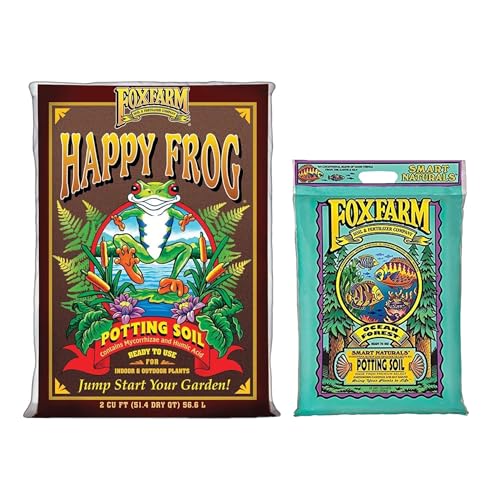
This bundle pairs a 2-cubic-foot bag of Happy Frog with a 12-quart bag of Ocean Forest, giving tomato growers access to two of FoxFarm’s most popular blends in a single shipment. Happy Frog leans into soil microbes, earthworm castings, bat guano (a natural fertilizer made from bat droppings, high in nitrogen and phosphorus), and aged forest products, while Ocean Forest delivers the lighter, fish-meal-fed blend we covered earlier.
For a mid-size tomato planting project, the combination covers both an established-bed scenario and a finer container mix. You may find Happy Frog is the right call for in-ground beds while the smaller Ocean Forest bag handles seedlings or fabric pots.
Real-World Strengths
- Two complementary FoxFarm blends in one purchase
- Happy Frog is amended with mycorrhizae and other soil microbes
- Ocean Forest provides a lighter texture for containers and seedlings
- Ships from a garden-center supplier with straightforward return support
Factors To Consider
- Total volume adds up to a heavier, bulkier delivery than single bags
- Some growers will only use one of the two blends and have leftover medium to store
Feature Rundown
Built With In Mind
Growers with a full planting weekend ahead who want to handle raised beds and starter pots without running out of medium.
Reach For A Different Pick When
Container-only tomato growers planting a few small pots will find a single bag of FoxFarm Ocean Forest Potting Soil more efficient.
Vermont Compost Company builds Fort Vee around real compost rather than peat or coir, which gives it a dense, biologically active profile that’s hard to replicate. The 2-pack format totals 40 quarts, enough for a sizable raised bed or multiple mid-size containers.
For heirloom tomato varieties and seed-starting work, that compost base provides a richer microbial foundation than typical peat-heavy mixes. Depending on your existing soil, you may use it straight or blend it with a lighter component for very large pots.
Points In Its Favor
- Compost-first formulation supports strong microbial activity
- Suited for both seed-starting and full-season vegetable growth
- Organic and chemical-free composition
- 2-pack format delivers 40 quarts of usable medium
Worth Bearing In Mind
- Heavier per quart than coir- or peat-based blends
- Higher price point than entry-level potting soils
Whose Shelf It Belongs On
Heirloom tomato enthusiasts and seed-starters who want a biologically rich, compost-based medium rather than a filler-heavy bag.
Where A Sibling Pick Shines
Bulk mulch needs across many beds are better served by PlantBest Coco Mulch Compressed Block for coverage at scale.
Coco peat (finely ground coconut coir) gives tomatoes a lighter, peat-free base that holds moisture without compacting. PlantBest’s 11-pound compressed block expands to roughly 79 quarts or 2.65 cubic feet, and the triple-washed, low-salt processing reduces the rinse step that some coir products demand before use.
For gardeners working in tight spaces, the compressed format is the real appeal: a single block slides onto a shelf where a 2.5-cubic-foot bag would never fit. Coir also tends to rehydrate cleanly, with minimal dust once it’s broken apart in water.
What Makes Sense
- Peat-free and sustainable coconut coir composition
- Compressed 11-pound block expands to roughly 79 quarts
- Triple-washed, low-salt processing reduces pre-planting prep
- Compact storage footprint compared to equivalent loose-fill bags
What To Weigh
- Neutral medium on its own, so tomatoes still need added nutrition from compost or fertilizer
- Hydration requires a sizable container and several minutes of soaking time
The Right Fit
Apartment and small-garage gardeners with limited storage who want a peat-free base they can rehydrate on demand.
Another Choice May Suit
Organic-focused gardeners who want nutrients already mixed in will get more out of Back to the Roots Organic Premium Compost.
This second PlantBest block follows the same compressed-coco-mulch approach as the earlier 9.1-pound option, designed for gardeners who want to cover larger garden rows without hauling heavy loose-fill bags. Hydrate once, fluff up, and spread across tomato rows or orchard-style plantings.
For growers managing a sizable vegetable plot, the block format eliminates the storage headaches of pre-bagged mulch. You’ll still need a wheelbarrow or large tub for rehydration, but the actual spreading work goes quickly once the coir is loose.
The Helpful Details
- Covers up to 17.5 square feet once hydrated and spread
- Compressed 9.1-pound block replaces several bulky loose-fill bags
- Coconut coir mulch suppresses weeds around tomato plants
- Lightweight format makes hauling to the garden easier
Practical Considerations
- Requires water and a large container to rehydrate before use
- Not a soil substitute, only a top-layer mulch or mix-in material
Who Should Grab It
Garden managers with multiple tomato rows who want one-time coverage without wrestling with several heavy mulch bags.
Not Your Match When
Balcony growers with a single tomato pot will find FoxFarm Ocean Forest Potting Soil a better match for their scale.
What To Look For In Potting Soils For Tomatoes
Tomatoes reward growers who match the medium to the container, the variety, and the feeding schedule. Drainage matters as much as nutrient content, since waterlogged roots quickly lead to blossom-end rot (a dark, sunken spot on the bottom of the fruit caused by inconsistent calcium uptake) and stem rot, even in the richest mix.
Drainage And Aeration Come First
A loose, crumbly texture lets roots push through easily while letting excess water drain away. Soils heavy on peat or compost alone can compact over a season, so look for blends that include perlite (a lightweight volcanic material that creates air pockets in soil), coco coir, or pine bark to keep the structure open. Container tomatoes suffer fastest in compacted soil because the limited root zone has nowhere to escape standing water.
Organic Matter And Nutrient Density
Tomatoes are heavy feeders, especially once flowers start forming. Compost, worm castings, fish meal, and kelp all contribute slow-release nutrition that keeps the plant steady through fruit set. A bag with mostly peat or coir and very little compost will need supplemental feeding right away, while a compost-forward blend can carry a plant through the first month or two on its own.
Match The Format To Your Project
Compressed blocks shine when storage space is tight or you want lighter hauling. Pre-mixed bags win on convenience for one-step planting. Amendments like biochar and worm castings work best as supplements layered into a base soil rather than as the only growing medium. The honest read is that most successful tomato beds combine a base mix with at least one targeted amendment.
pH Balance And Calcium Access
Tomatoes prefer a slightly acidic to neutral pH range, roughly 6.0 to 6.8, which is why dolomitic limestone shows up in many blends. Calcium availability ties directly to blossom-end rot prevention, so a mix that includes limestone, gypsum, or another calcium source helps the plant take up what it needs even through heat stress.
Smart Choices Before You Buy
Pitfalls Shoppers Hit
Going for the cheapest bag often means a mostly peat mix with little nutritional content, leaving tomatoes hungry from day one. Ignoring drainage specs leads to waterlogged containers and root rot by midsummer. Buying too much at once is a common trap, since compressed coir blocks store far more easily than pre-filled bags once the season ends.
Where The Extra Money Goes
Premium blends cost more because they layer compost, biochar, worm castings, and aeration materials in proportions you’d otherwise mix yourself. For a single small container, the premium may not be worth it. For raised beds you intend to plant every season, a richer blend saves time and produces more reliably through the harvest.