Cold mornings make a snow blower earn its keep, and the oil sitting in its crankcase decides whether that first pull fires or fights you. Most four-stroke snow blowers want a small-engine SAE 5W-30 or 10W-30 for winter, while older two-stroke models still call for a pre-mix oil blended at 50:1 or 40:1. Picking the wrong bottle leaves you with sluggish starts at 10°F, scoring on cylinder walls, and a carb that gums up before the second storm rolls through. This list breaks down ten options that genuinely suit snow blower duty, from OEM-spec Honda and Briggs & Stratton quart bottles to small 2.6-ounce two-cycle packs designed for pre-mixing a single gallon of gas at a time.
The Main Contenders

Honda 5W-30 Motor Oil, Model 08207-5W30

Briggs & Stratton SAE 5W-30 Synthetic

STP Premium Synthetic Blend 10W-30
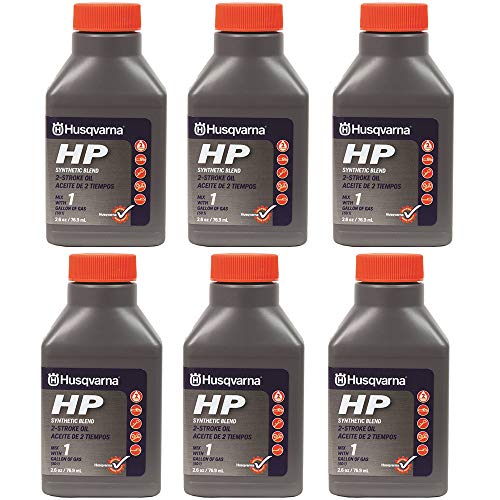
Husqvarna HP Synth 2-Cyc Oil 6-Pack

Lucas Oil 10058 Semi-Synthetic 2-Cycle Oil

Valvoline Extended Protection 5W-30 5-Quart

John Deere Turf-Gard 10W-30 Twin Pack

STP Premium Small Engine SAE-30

STA-BIL Full Synthetic 2-Cycle Oil
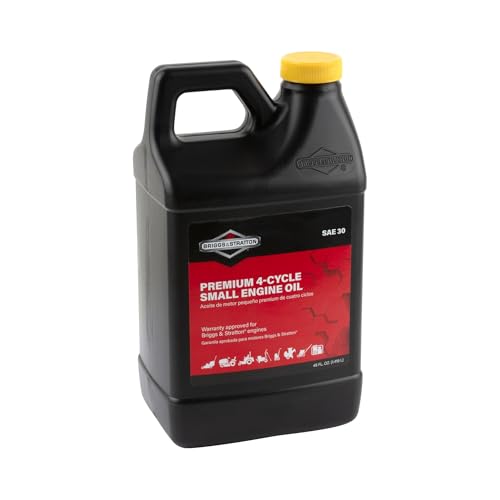
Briggs & Stratton 100028 SAE-30 48 oz
The Strengths Of Each Pick
Honda’s own quart bottle is the safest call for any Honda-branded snow blower, and model 08207-5W30 fills that slot. The 5W-30 viscosity (a measure of how the oil flows at cold and hot temperatures) stays fluid enough at single digits to coat bearings before the engine reaches full rpm, which matters on a 15°F driveway when most conventional oils have gone stiff.
Because it’s blended specifically for Honda’s overhead-valve four-stroke platform, additive levels are dialed in for the metallurgy Honda uses in its small engines. In our view, anyone whose snow blower has a Honda sticker on the cowl will sleep easier using the matching jug rather than a generic alternative.
Real-World Strengths
- Honda-specific additive package suits 4-stroke power equipment.
- 5W-30 rating keeps the oil pump primed on bitter mornings.
- One-quart size matches the oil capacity of most Honda snow blower crankcases.
- Wider dealer availability than some boutique small-engine oils.
Worth Noting
- Only one quart in the box, so multiple changes mean multiple bottles.
- Price per quart runs higher than generic 5W-30 motor oil.
- No listed synthetic content, so cold-flow claims rest on the viscosity grade alone.
Key Specs
Who It Suits Best
Honda snow blower owners who want factory-spec oil and minimal guesswork about warranty coverage.
Consider Something Else When
You run several different small-engine brands and would rather buy one jug that covers them all, in which case the Briggs & Stratton SAE 5W-30 is a more universal choice.
Briggs & Stratton’s 5W-30 ships as a 32-ounce bottle in a two-pack, which covers two full oil changes on most walk-behind snow blowers without making a second trip to the store. The full-synthetic formula is engineered for air-cooled four-stroke engines, the exact category most consumer snow blowers fall into.
Synthetic basestocks resist thermal breakdown better than conventional blends, which means the oil stays in grade even after a long run clearing heavy drifts. For cold-climate owners running their machine hard all winter, the extra film strength during warm-up is where you feel the difference.
Real Benefits
- Synthetic blend designed for air-cooled 4-cycle engines.
- Two-bottle pack means you keep a spare quart in the garage.
- Engineered to extend service life in outdoor power equipment.
- 5W-30 grade handles sub-freezing starts without choking flow.
Trade Offs
- Two-pack doubles the upfront cost compared to a single quart.
- Engine manual still dictates whether 5W-30 suits your specific model.
Made For
Snow blower owners in regions with prolonged sub-zero stretches who want synthetic protection without paying for premium-tier prices.
Skip It When
You only need one bottle for a single-season change, in which case the Honda 5W-30 quart or the John Deere twin-pack costs less per fill.
STP’s synthetic-blend 4-cycle oil is marketed for lawnmowers, generators, tractors, and snow blowers, which makes it a sensible single-jug option for anyone whose shed doubles as a small-engine museum. The 10W-30 grade gives a slightly thicker film than 5W-30 once the engine is warm, which can be useful for older equipment with looser bearing tolerances.
It runs as a 32-fluid-ounce bottle, so it handles a single oil change on most snow blowers with a little left over. For households rotating between summer mowing and winter plowing, keeping one jug for both seasons cuts down on shelf clutter.
Points In Its Favor
- Multi-equipment labeling removes any second-guessing at the shelf.
- Synthetic blend balances price and performance for casual users.
- All-season rating works in both summer and winter crankcases.
Points To Keep In Mind
- 10W-30 flows a touch slower than 5W-30 at single-digit temperatures.
- One bottle per change means no backup supply on hand.
Right Fit For
Homeowners running one oil change a year across several pieces of lawn and snow equipment.
Look Elsewhere When
You live where winter temperatures routinely drop below zero, in which case the Briggs & Stratton SAE 5W-30 offers better cold-pump priming.
Two-stroke snow blowers are rare today, but for those who run an older Husqvarna or Ariens-built two-cycle unit, this 6-pack of 2.6-ounce HP Synthetic bottles covers an entire winter’s worth of pre-mix without leaving you hunting for more mid-storm. Each 2.6-ounce bottle treats one gallon of gas at 50:1, which is the most common ratio for modern two-stroke outdoor tools.
The OEM Husqvarna formulation also replaces the older Low Smoke 610000135 reference, so anyone upgrading from legacy inventory gets a current spec. Stored sealed, the shelf life stays reasonable for at least one full season.
A Favorable Mix
- Genuine Husqvarna OEM oil for two-cycle equipment.
- Six bottles cover six gallons of mixed fuel.
- Each 2.6-ounce bottle is a single-gallon treatment.
Things To Weigh
- Only relevant if your snow blower uses two-stroke pre-mix fuel.
- Six-pack ties up more cash than a single 2.6-ounce bottle for casual use.
- Hand-mixing six gallons in winter means careful measuring in the cold.
Best Suited To
Owners of older Husqvarna two-stroke snow blowers who go through several gallons of mixed fuel each storm.
Not Your Match When
Your equipment runs on four-stroke engines, in which case any of the quart-bottle 10W-30 options above is the correct choice.
Lucas Oil’s 10058 semi-synthetic 2-cycle oil mixes cleanly with gasoline at any temperature, which matters when you’re filling a gas can in a 5°F garage and the last thing you want is oil sludging in the bottom. It is approved for use in air-cooled engines, including the two-stroke snow blowers that predate four-stroke dominance.
The product description mentions it surpasses Mercury, Evinrude, and Johnson outboard specs, which signals a higher detergent and lubricity baseline than bargain-bin oils. For households running a snow blower alongside a chainsaw or leaf blower, the same bottle handles multiple tools.
Where It Helps
- Mixes at all temperatures without separating in the gas can.
- Suitable for air-cooled two-stroke engines.
- Useful for chainsaws and trimmers alongside snow blowers.
Potential Drawbacks
- Smaller 2.6-ounce bottles mean measuring is part of the routine.
- Semi-synthetic rather than full-synthetic, so it costs less but also breaks down a touch sooner under extreme load.
Who Will Love This
Owners with a mixed fleet of two-stroke tools who want one oil for all of them rather than separate inventory.
Another Choice May Suit
You specifically run a Husqvarna two-stroke snow blower and want OEM-spec oil, in which case the Husqvarna HP Synth 6-Pack is a closer match.
Valvoline’s Extended Protection 5W-30 is a full synthetic passenger-car motor oil, and its five-quart jug is overkill for a single snow blower. The case for buying it anyway is multi-vehicle households where the same jug services a small engine and a car. It carries a stronger wear-protection additive package than industry baseline specs.
For a snow blower that runs long clearing a 200-foot driveway or rides along on a rural lot, the heavier additive load helps cushion bearings during sustained full-throttle operation. You may find the bulk size awkward if you don’t have another engine to use it on.
Good Reasons To Consider
- Full synthetic blend with strong wear-protection additives.
- 5W-30 grade flows well in winter cold starts.
- Single jug covers a small engine plus a vehicle oil change.
Some Limits To Know
- Five quarts is far more than one snow blower needs.
- Passenger-car oil lacks small-engine-specific additive tuning.
- Bulk jug requires storing leftover oil until next use.
Perfect Match For
Property owners running a snow blower and a vehicle who want one synthetic jug for both.
A Better Fit Elsewhere
You only own a single snow blower with no secondary engine, in which case the Briggs & Stratton two-pack is more size-appropriate.
John Deere’s Turf-Gard 10W-30 ships as a two-quart pack under part number TY22029, which lines up neatly with the oil capacity of John Deere-branded walk-behind snow blowers. It’s a four-cycle engine oil rated for gas engines only, so diesel applications aren’t in scope, but for the residential snow blower crowd, that’s not a concern.
Beyond the John Deere badge, this oil carries the same 10W-30 viscosity that’s factory-recommended for many small engines. The two-quart format means most owners get two changes from one purchase.
What Earns Its Place
- OEM-branded for John Deere walk-behind equipment.
- Two-quart pack covers two oil changes.
- 10W-30 grade suits moderate winter climates.
Less Ideal Details
- 10W-30 is thicker at sub-zero temps than 5W-30 alternatives.
- OEM branding carries a slight price premium over generic 10W-30.
Built With In Mind
John Deere snow blower owners who prefer factory-branded consumables and don’t deal with extreme cold snaps.
Reach For A Different Pick When
You face consistent deep-freeze conditions and want the easiest cold-start flow, in which case the Honda 5W-30 quart or Briggs & Stratton 5W-30 is the safer choice.
STP’s small-engine SAE-30 is a straight-weight oil, meaning it doesn’t carry a “W” rating for winter flow. It thickens up faster than multi-grade oils when temperatures drop, which is why most owners reserve it for shoulder-season storms and warmer climates.
The 32-ounce bottle ships in a single unit, and the anti-wear additive package helps reduce scoring on piston skirts during the high-load moments of wet-snow clearing. For a homeowner in zone 6 or warmer, the simpler straight-weight can actually deliver a stronger hot-temperature film than a multi-grade.
What Stands Out
- Strong anti-wear protection for hot operating conditions.
- Detergent additives help keep engine internals clean.
- Straight-weight simplicity suits older small-engine designs.
Honest Caveats
- Not recommended for winter use below about 20°F.
- SAE-30 viscosity doesn’t flow well for a frozen morning cold start.
The Right Fit
Snow blower owners in mild climates who occasionally run their machine during shoulder-season storms.
Where A Sibling Pick Shines
You live where winters regularly hit single digits, in which case the Honda 5W-30 or Briggs & Stratton 5W-30 is built for that environment.
STA-BIL’s full-synthetic 2-cycle oil is built around a low-smoke formula with built-in fuel stabilizer, so the mixed fuel stays fresh in the can for up to a year. For a two-stroke snow blower that gets used two or three times a winter, having stabilizer in the mix helps prevent the varnish buildup that ruins carburetors after a long sit.
Each 2.6-ounce bottle treats one gallon of gas at 50:1 or 40:1 ratios, and STA-BIL’s Multi-Mix technology covers both ratios without separate SKUs. For owners tired of buying separate pre-mix oils for different tools, that’s a quiet convenience.
Advantages To Know
- Built-in fuel stabilizer keeps mixed gas usable for up to a year.
- Full synthetic base reduces visible smoke on startup.
- Single 2.6-ounce bottle treats one gallon of fuel.
Practical Considerations
- Only suitable for two-stroke engines, not four-stroke snow blowers.
- Single-bottle pack means repeat purchases across a season.
Whose Shelf It Belongs On
Two-stroke snow blower owners who mix small batches at a time and want the fuel to stay fresh between uses.
Swap It Out When
Your snow blower uses four-stroke engine oil, in which case the John Deere Turf-Gard twin pack or STP synthetic blend is the appropriate pick.
Briggs & Stratton’s 100028 is a detergent SAE-30 oil formulated for the higher operating temperatures of air-cooled four-stroke engines, sold in a 48-ounce bottle. The larger size handles two snow blower oil changes plus reserve, which suits anyone who also services a lawn tractor or pressure washer from the same jug.
The detergent package helps prevent carbon and varnish deposits that build up when an air-cooled engine idles for long stretches, a common scenario during prolonged driveway clearing. Compared to the smaller 5W-30 two-pack from the same brand, this is the warmer-weather sibling.
Everyday Perks
- Detergent SAE-30 suits hot-running air-cooled engines.
- 48-ounce bottle covers multiple pieces of equipment.
- OEM fit and performance for Briggs & Stratton power equipment.
Where It May Fall Short
- Straight-weight SAE-30 thins poorly in deep cold.
- Larger bottle means a heavier pour jug for one-handed use.
Who Should Grab It
Owners of classic Briggs & Stratton snow blower engines who also service other air-cooled 4-cycle tools and live in moderate climates.
Where Another Pick Suits Better
You deal with hard winter freezes and want synthetic cold-flow protection, in which case the Briggs & Stratton SAE 5W-30 two-pack is the cleaner match.
Picking the Right Oil for Your Snow Blower
Choosing the right viscosity grade comes down to climate and engine design. A multi-grade oil like 5W-30 stays thin enough at 0°F to reach the bearings quickly, while straight-weight SAE-30 holds a thicker film once the engine warms up. For four-stroke snow blowers running in regions that see sustained sub-freezing weather, a 5W-30 full synthetic is the easiest call.
Two-stroke snow blowers are a different animal. They require pre-mixed fuel at ratios specified by the engine maker, typically 50:1 in modern equipment and 40:1 in older units. Mixing by hand in the cold adds friction to the routine, so picking a 2.6-ounce single-gallon treatment bottle simplifies measuring. OEM oils from the engine brand are a smart default, but proven aftermarket brands work fine when the oil carries the right API or NMMA certification for two-stroke use.
Oil capacity matters too. Most walk-behind snow blowers hold between 18 and 24 ounces of oil, so a single quart bottle covers one change. Larger two-stage machines may need a half-quart more. Always check the dipstick after filling rather than trusting the manual’s number alone, since overfilling causes foaming and blow-by past the rings.
Storage conditions shape shelf life. Sealed quart bottles keep for years on a cool shelf, while opened bottles should be used within one or two seasons. Storing oil in a garage that swings from 30°F to 90°F accelerates additive dropout, so a climate-stable spot like a basement corner is the better resting place.
Where Shoppers Slip Up
Pitfalls Shoppers Hit
The most common error is grabbing a passenger-car motor oil without checking the viscosity rating. Modern car oils often run 0W-20 or 5W-20, which are too thin to protect a small air-cooled engine under sustained load. Check the engine manual for the recommended grade before the brand.
A second slip is treating two-stroke and four-stroke oils as interchangeable. Adding four-stroke oil to a two-stroke fuel tank causes heavy smoke, plug fouling, and ring glazing. Conversely, putting two-stroke pre-mix oil in a four-stroke crankcase underfills the sump’s lubrication needs.
Why Top Tier Costs More
Synthetic small-engine oils cost more because their basestocks resist oxidation longer and hold viscosity across wider temperature swings. For snow blowers that sit in unheated sheds for months and then fire up cold, that thermal stability is where the extra money goes.
The premium tier also typically includes a stronger detergent package, which keeps internal surfaces cleaner during long idle periods. For occasional users with one short storm a season, the upgrade isn’t always worth the cost. For weekly winter use or commercial clearing, the longer drain interval and stronger wear protection tend to pay off over the life of the engine.
Frequently Asked Questions
What viscosity oil does a snow blower take?
Most four-stroke snow blowers call for SAE 5W-30 or 10W-30, with the exact grade listed in the engine manual. Cold-climate owners benefit most from 5W-30, while moderate climates can run 10W-30 without issue.
Can I use regular motor oil in a snow blower?
Yes, as long as the viscosity grade matches the manufacturer’s recommendation. Many people use automotive 5W-30 successfully in their snow blower, though small-engine-specific oils carry additive packages tuned for air-cooled engines.
How often should snow blower oil be changed?
A seasonal change before the first storm is a sensible rule, with a second change at mid-season for heavy users. Following the engine manual’s hours-of-use recommendation is the more precise approach.
What happens if a snow blower runs low on oil?
Running low on oil starves the bearings and piston of lubrication, which generates heat and causes scoring on cylinder walls. Most four-stroke snow blowers have a low-oil sensor that shuts the engine down before catastrophic damage occurs.
Is synthetic oil better for snow blowers?
Synthetic oil flows better at low temperatures and resists breakdown longer than conventional blends. For sub-freezing operation and infrequent oil changes, synthetic is the easier call. For warm climates and frequent changes, conventional oils work fine.
Final Verdict
Honda and Briggs & Stratton snow blower owners have the simplest decision, since OEM quart bottles line up directly with their engines. Climate is the tiebreaker: pick 5W-30 for cold snaps and 10W-30 or SAE-30 for moderate winters. Two-stroke owners should match the OEM 2-cycle oil or pick a stabilizer-blended synthetic for longer fuel storage.