Smoke gets old fast. The kind of clean, low-smoke burn that lets you stay outside without red eyes or a jacket that smells like a campfire the next day. That’s the bar the picks below clear, and they get there in two distinct ways: wood-fueled fire pits with clever airflow, and propane units that skip smoke entirely. You want a backyard centerpiece that actually invites conversation, or a portable option for the next camping trip. Either way, this shortlist maps the strongest smokeless fire pits on the market to the people and places they’ll serve best.
How The Shortlist Stacks Up

Solo Stove Yukon 2.0 + Stand | 27″ Smokeless Fire Pit, Silver
Ninja Fireside360 Fire Pit/Heater, Stone

Ninja Fireside360 Fire Pit & Heater, Black

Ninja Fireside360 Fire Pit & Heater, Steel
Ninja Fireside360 Fire Pit/Heater, Maroon
Solo Stove Ranger 2.0 15″ Smokeless Fire Pit with Stand

Outland Living Portable Propane Fire Pit, 19-inch, 58,000 BTU (893 Deluxe)

Outland Living Firebowl 24-Inch 58,000 BTU (883 Mega)
Outland Living Firebowl 870 Premium 19″ Auto-Ignition Propane Fire Pit
Solo Stove Bonfire w/Stand | 19.5″ Smokeless Wood Burning Fire Pit
Taking A Closer Look At The Options
The Solo Stove Yukon 2.0 is the largest wood-burning option in this roundup, and it earns that footprint. At 27 inches across, it pulls double duty as a backyard anchor and a heat source for a crowd, particularly when the temperature drops after sunset and you want everyone to stay outside longer.
It runs on the same airflow logic as the smaller Solo Stove models on this list, with a 360-degree intake pattern that re-burns smoke before it escapes the top. For people hosting large groups or simply wanting one fire pit that handles every gathering, the Yukon 2.0 is the obvious step up.
Positive Points
- 27-inch diameter easily seats a large group around the flame without anyone sitting in the cold.
- 304 stainless steel body holds up to repeated high-heat burns and the weather between them.
- The 360 Airflow system re-burns smoke, so most evenings end with clothes that don’t smell like a campfire.
- Included stand lifts the pit off decking, protecting surfaces from radiant heat.
- Larger fuel capacity means fewer mid-evening refuels compared to the smaller Ranger 2.0.
Things To Consider
- It is heavy and bulky, so storage and repositioning take two people on most patios.
- It burns wood, which means ash cleanup and sourcing dry seasoned logs.
- For a small balcony or two-person setup, the smaller Solo Stove Bonfire will serve you better.
Feature Snapshot
Who It Suits Best
Hosts with spacious backyards who regularly entertain groups of six or more and want a wood-burning fire pit that does the heavy lifting.
Skip It When
The Solo Stove Bonfire is a better call for smaller patios or households that want wood-burning ambiance without the Yukon 2.0’s footprint.
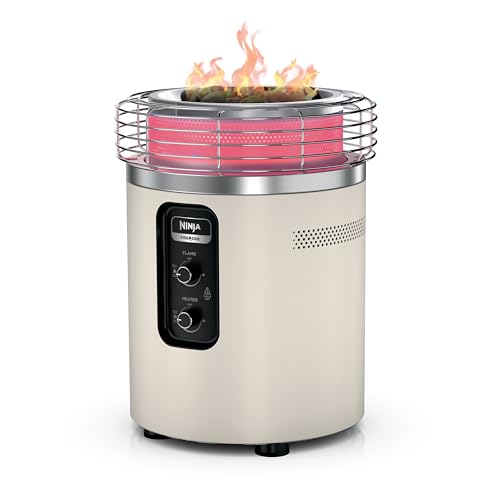
The Ninja Fireside360 in Stone swaps firewood and ash for a propane push-button start and a heat output that compares to a commercial patio heater. The 80,000 BTU rating is the headline number, and it pairs with three operating modes that let you pick your mood: flame only for ambiance, heat only for function, or both.
For people who want a fireside experience year-round without hauling logs, this unit is the closest thing to a plug-and-play fire pit on the market. It also leans into a softer stone-tone finish that blends with neutral patios better than black would.
The Upside
- Push-button ignition removes the matches, kindling, and waiting that wood-burning pits require.
- 80,000 BTU output delivers real warmth on chilly nights, not just visual ambiance.
- Three modes let you run flames with no heat in warmer months, extending usability beyond winter.
- Propane burns clean, so there is zero lingering smoke smell on clothes or furniture.
Worth Noting
- Propane tanks are sold separately and need regular refills or swaps.
- You lose the crackle and wood aroma that wood-burning purists value.
- You may find the flame less convincing than real wood if ambiance is your top priority.
Made For
Homeowners who want fireside ambiance and serious heat without the maintenance of firewood, and who like a stone-tone finish for a softer patio look.
Look Elsewhere When
The Outland Living Firebowl 870 Premium is a more portable propane pick for campers and tailgaters who need to pack it up and move it often.
The black-finish Ninja Fireside360 carries the same 80,000 BTU output and three-mode versatility as its stone sibling, just dressed in a more universally versatile color. Black tends to disappear into landscaping at night, which lets the flame become the visual focus instead of the unit itself.
If you’ve been waffling between this and the Stone version, the honest read is that the choice is purely aesthetic. Performance is identical, so it comes down to whether black or stone better matches your patio furniture and outdoor decor.
Bright Spots
- Black finish blends with most patio furniture and outdoor kitchens without clashing.
- Same 80,000 BTU output and three-mode system as the other Fireside360 variants.
- Push-start ignition means no matches, lighters, or kindling in storage.
- You get flame-only mode for warm-weather ambiance without overheating the seating area.
Trade Offs
- Black finish shows dust, water spots, and fingerprints more than stone does.
- Propane dependency means you’re tied to tank refills or a plumbed gas line.
- It is not the lightest propane unit on this list, so repositioning it on the patio takes effort.
Best Suited To
Style-conscious shoppers who want the Fireside360’s heat and convenience in a finish that disappears into a modern outdoor setup.
Reach For A Different Pick When
The Ninja Fireside360 in Stone makes more sense if your outdoor furniture leans toward warm neutrals or earthy tones that would clash with black.
The Steel-finish Ninja Fireside360 is the most industrial-looking option in the Fireside360 lineup, and it pairs naturally with modern outdoor kitchens, concrete patios, and minimalist furniture. Under the hood, it is the same 80,000 BTU, three-mode platform that the other Fireside360 variants share.
For shoppers who have already committed to a contemporary outdoor aesthetic, this finish ties the fire pit to the rest of the space better than black or stone would. The catch is that steel shows smudges and requires more frequent wiping than darker finishes.
What Makes Sense
- Steel finish complements modern, industrial, and minimalist outdoor designs.
- Push-start ignition and three-mode operation match the rest of the Fireside360 family.
- Propane burn keeps the seating area free of smoke drift and lingering odor.
Honest Caveats
- Steel finish shows fingerprints and water spots, so plan on wiping it down periodically.
- Same propane-tank dependency as the other Fireside360 variants.
- It is a stationary unit, not a portable one, despite sharing the Fireside360 name.
Perfect Match For
Homeowners with modern patios, concrete decking, or industrial-style outdoor furniture who want a fire pit that matches the aesthetic instead of fighting it.
Consider Something Else When
The Ninja Fireside360 in Maroon adds personality and warmth to a setup that feels too cold or gray with the steel finish.
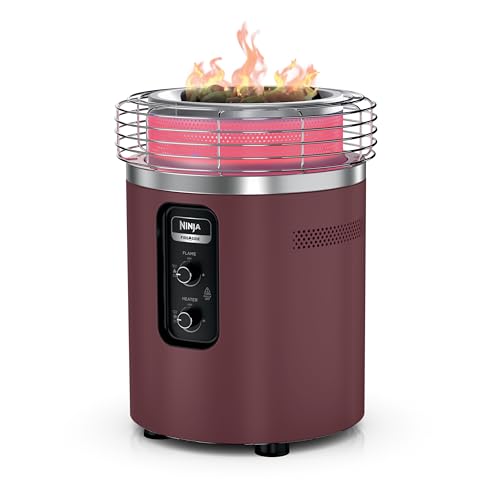
The Maroon Ninja Fireside360 is for people who treat the fire pit as a design element rather than a hidden appliance. The deep red finish is rare in this category, and it gives the unit the same presence as a piece of patio furniture when the burner is off.
Performance is identical to the other Fireside360 models on this list, so the choice here is purely about visual coordination. If your outdoor setup already includes warm-toned cushions, terracotta pots, or rustic wood furniture, the maroon finish will feel intentional rather than out of place.
Practical Pluses
- Maroon finish stands out as a deliberate design choice rather than a generic appliance color.
- 80,000 BTU output and three-mode operation match every other Fireside360 variant.
- Push-start propane ignition keeps setup quick and repeatable for weeknight use.
Small Caveats
- Maroon is a bold color, so it can feel out of place against cool-toned or all-white outdoor furniture.
- Same propane-tank logistics as the rest of the Fireside360 lineup.
- Like all the Fireside360 units, this one is not designed for portability.
Who Should Grab It
Design-forward shoppers with warm-toned patios who want a fire pit that doubles as a focal piece even when it’s not lit.
A Better Fit Elsewhere
The Ninja Fireside360 in Steel suits cooler-toned, modern outdoor spaces better than the maroon finish would.
The Solo Stove Ranger 2.0 is the smallest wood-burning option in the Solo Stove family covered here, and that is exactly the point. At 15 inches, it packs down small enough to bring on a tailgate, a cabin weekend, or a small patio where the larger Yukon 2.0 would feel oversized.
It still uses the 360-degree airflow design that re-burns smoke, so you get the same low-smoke experience as the bigger models. The trade-off is heat output and burn time, both of which scale down with the smaller fuel capacity.
The Value In It
- Compact 15-inch size fits in a trunk or back seat for travel.
- Same 360 Airflow re-burn technology as the larger Solo Stove pits.
- Included stand keeps the pit off ground surfaces and improves airflow underneath.
- Light enough for one person to carry, unlike the Yukon 2.0.
Points To Note
- Smaller fuel capacity means more frequent refueling during longer evenings.
- Heat output is modest, so it works best for small groups of two to four people.
- Wood-burning still requires ash cleanup and dry, seasoned fuel.
Feature Snapshot
Whose Shelf It Belongs On
Tailgaters, campers, and small-space dwellers who want a portable wood-burning fire pit they can pack into a car without a truck bed.
Swap It Out When
The Solo Stove Bonfire is the better wood-burning choice for permanent backyard setups where you want more flame presence and longer burn times.
The Outland Living 893 Deluxe is the traveling propane fire pit in this roundup, and it shows up to most adventures ready to run. At 19 inches across and 11 inches tall, it stows in a trunk or RV storage bay without drama, and the included cover and carry kit handle the rest.
For campers and tailgaters navigating fire restrictions, the 58,000 BTU propane setup sidesteps the bans that typically shut down wood fires. The trade-off is the propane tank itself, which adds bulk to an otherwise portable package.
Reasons It Performs
- 19-inch fire bowl with a 58,000 BTU output that throws real warmth for its size.
- Carry kit and cover included, so it travels without extra accessories.
- Approved for use during most campfire bans, opening up more camping destinations.
- No tools required for setup, which matters when you’re setting up at dusk in a campground.
Areas To Watch
- Propane tank is sold separately and adds carrying weight on trips.
- 19-inch diameter is cozy for four people but tight for larger groups.
- You lose the wood-burning crackle and aroma that traditionalists prefer.
Feature Snapshot
Right Fit For
Campers, RV travelers, and tailgaters who need a portable propane fire pit that can go where wood fires aren’t allowed.
Not Your Match When
The Outland Living Firebowl 883 Mega is the better call for stationary backyard use where you want a wider 24-inch flame.
The Outland Living 883 Mega is the wider sibling in the Firebowl lineup, jumping from 19 inches to 24 inches across the same 58,000 BTU output. That extra diameter spreads the flame into a wider ring that fits more people comfortably, which makes it a strong fit for backyards rather than tailgates.
For shoppers who want the propane convenience of the Outland line but need more seating around the flame, the Mega is the practical step up. It still uses the same CSA-approved setup that lets you run it during most campfire bans.
Strong Points
- 24-inch fire bowl accommodates a wider seating circle than the 19-inch models.
- Same CSA-approved propane burn that works under most campfire restrictions.
- Cover included, so it handles weather between uses without extra purchases.
- No tools required to set up, which keeps first-time use simple.
Factors To Consider
- Larger 24-inch footprint means it’s less trunk-friendly than the 893 Deluxe.
- Propane tank is sold separately, like the rest of the Outland line.
- At 13 inches tall, it sits lower to the ground than some competing units.
Who It Suits Best
Backyard hosts on a budget who want a wider propane fire bowl without moving up to the larger Ninja Fireside360 units.
Where Another Pick Suits Better
The Ninja Fireside360 in Black is the better fit for shoppers who want push-start ignition and the higher 80,000 BTU heat output.
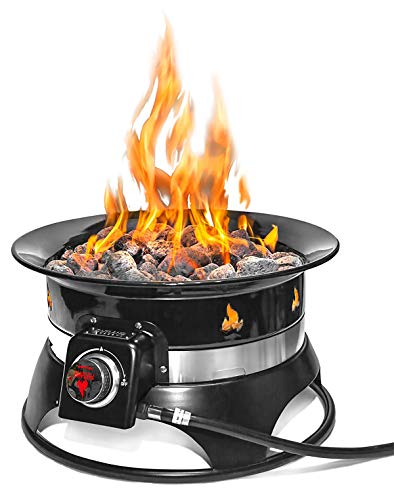
The Outland Living 870 Premium takes the same 19-inch fire bowl and 58,000 BTU output as the 893 Deluxe and adds matchless auto-ignition. That’s the meaningful upgrade: a turn of the dial lights the burner, with no lighter, no matches, and no reaching across the flame.
For households that use the fire pit often and want the fastest possible startup, the 870 Premium removes the small friction that the manual-ignition version still has. It carries the same CSA approval for use during most campfire bans.
A Favorable Mix
- Matchless auto-ignition lights the burner with a dial turn, no lighter required.
- Same 58,000 BTU propane output as the manual-ignition Firebowl models.
- Cover and carry kit included for travel between yard, campsite, or tailgate.
- Approved for most campfire bans, expanding the destinations you can use it.
Possible Compromises
- Auto-ignition adds a small mechanical layer that can fail over time with rough handling.
- 19-inch diameter still feels tight for groups larger than four.
- Propane tank is sold separately, as with the rest of the Outland line.
Built With In Mind
Frequent users who want the fastest possible fire pit startup, especially in cold weather when matches and lighters can be unreliable.
Another Choice May Suit
The Outland Living 893 Deluxe is a more budget-friendly alternative if auto-ignition isn’t a priority and you’d rather save on the manual version.
The Solo Stove Bonfire with Stand sits in the sweet spot of the Solo Stove wood-burning lineup. At 19.5 inches, it is large enough for a family-sized group but small enough to live on most patios without dominating the space.
It runs on the same 360 Airflow re-burn design as the Yukon 2.0 and Ranger 2.0, so you get consistent low-smoke performance in a more manageable package. For most households that want a wood-burning fire pit and don’t need the Yukon’s extra capacity, the Bonfire is the obvious daily driver.
Everyday Wins
- 19.5-inch size fits typical family gatherings without overwhelming the patio.
- 360 Airflow re-burn design keeps smoke to a minimum in calm weather.
- Stainless steel body holds up to repeated burns and outdoor storage.
- Included stand lifts the pit off decking, which protects surfaces from heat.
Where It May Fall Short
- Wood-burning means ash cleanup and sourcing seasoned logs.
- Smokeless performance drops in heavy wind, which affects all wood-burning designs.
- You may want the Yukon 2.0 if you regularly host groups larger than eight.
Feature Snapshot
The Right Fit
Families who want a wood-burning fire pit for regular patio use and don’t need the extra capacity of the larger Yukon 2.0.
Skip It When
The Solo Stove Ranger 2.0 is the better wood-burning choice for campers and tailgaters who need a more travel-friendly 15-inch footprint.
What Matters Most When Shopping For no smoke fire pits
Wood-Burning Versus Propane: The Core Trade-Off
The most important decision is the fuel itself. Wood-burning fire pits deliver real flame character, audible crackle, and that wood-fire aroma that defines the experience for a lot of people. They also ask more of you: seasoned firewood, ash cleanup, and weather sensitivity. Propane fire pits trade those traits for push-button ignition, zero smoke, and consistent performance in wind. If ambiance is your priority, lean wood. If convenience and clean operation matter more, lean propane.
Size, Heat Output, And Seating
Diameter determines how many people fit around the flame. A 15-inch pit works for two to four close friends. A 19 to 20-inch pit handles a family comfortably. Anything 24 inches and up suits larger groups. For propane, BTU output (the British Thermal Unit, a measure of heat energy) tells you how much warmth the unit throws: 58,000 BTU is solid for a small group, while 80,000 BTU pushes into commercial patio-heater territory.
Portability And Storage
A 27-inch steel fire pit does not move often, and that is fine if it lives on a permanent patio. A 15-inch pit fits in a trunk for tailgates and cabin weekends. Propane units split the difference, but remember the tank itself adds carrying weight. Match the unit’s footprint to how often you’ll actually move it.
Safety Approvals And Burn Bans
Some propane fire pits carry CSA approval, which means they meet safety standards set by the Canadian Standards Association, a recognized testing and certification body. That approval often allows them to run during local campfire bans that shut down wood fires. Check your area’s current fire restrictions before relying on any fire pit during dry seasons.
Key Considerations Across These Picks
Pitfalls First Timers Hit
A common misstep is buying the largest pit that fits the budget, then realizing it’s too heavy to move or too wide for the seating area. Measure the spot first, then choose the diameter. Another mistake is underestimating propane logistics: the tank, the hose, and the refill cycle all add steps that wood-burning doesn’t have. For first-timers, a smaller portable unit is often a smarter starting point than a permanent backyard anchor.
Where The Extra Money Goes
Higher-tier picks in this category typically earn the premium through heat output, build materials, and ignition systems. The Ninja Fireside360 line, for example, jumps from 58,000 BTU propane units to 80,000 BTU, adds push-start ignition, and layers on finish options like stone, steel, and maroon. If you use the fire pit year-round and want serious heat on cold nights, the upgrade path makes sense. If it’s mostly a summer visual feature, a value-tier Outland or mid-size Solo Stove will likely check every box without the extra spend.
Frequently Asked Questions
Do smokeless fire pits really produce no smoke?
No design is truly smoke-free. “Smokeless” pits use airflow to re-burn smoke particles before they escape, which dramatically reduces visible smoke, lingering odor, and eye irritation in calm conditions. Performance drops in heavy wind regardless of design.
Can you use a smokeless fire pit during a campfire ban?
Propane fire pits with CSA approval are typically allowed during most campfire bans, since they don’t produce sparks or embers. Wood-burning options, even low-smoke designs, are usually restricted. Always check your local fire restrictions before lighting anything.
How much firewood does a wood-burning fire pit use?
A 19.5-inch pit like the Solo Stove Bonfire typically burns through a small bundle of seasoned logs in roughly an hour of active flame. Larger pits consume more fuel per hour, and smaller portable units consume less. Plan on a few bundles for a typical evening.
Where should you place a smokeless fire pit?
On a non-combustible surface like concrete, stone, or packed earth, and ideally at least ten feet from structures, overhangs, and trees. For wood-burning units, the included stand helps protect decking. Never use any fire pit on a covered porch or enclosed patio.
How do you clean a smokeless fire pit?
Wood-burning pits need periodic ash removal once the fuel has fully cooled. Propane pits need far less maintenance, mostly a wipe-down of the exterior and occasional clearing of debris from the burner area. Always let any unit cool completely before cleaning.
The Takeaway
The right smokeless fire pit depends on whether you want the crackle of real wood or the convenience of propane. Wood-burning Solo Stove models handle ambiance and low-smoke performance, while the Ninja Fireside360 lineup trades firewood for push-start ignition and serious heat. The Outland Living Firebowl series splits the difference with portable propane that travels well. Match the fuel, size, and finish to your space, and the rest falls into place.