Healthy beds don’t start with fertilizer, they start with data. A soil test tells you whether the ground is too acidic, too chalky, or missing nitrogen before you waste money on amendments that won’t help. The Rapitest line from Luster Leaf covers a wide range, from a basic pH capsule kit to a smartphone-guided microbial test, so you can spend ten minutes sampling instead of guessing all season. This roundup walks through eight of the brand’s most useful options, explains what each one actually does, and matches the right tester to the right gardener.
A Closer Look At The Lineup

Luster Leaf 1630 Rapitest Dial Soil Thermometer, Stainless Steel, Pack of 1

Luster Leaf 1625 Digital Soil Thermometer

Rapitest Moisture Tester
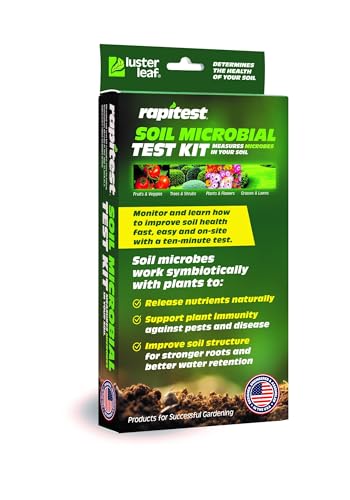
Rapitest® Soil Microbial Test Kit

Luster Leaf 1612 Rapitest pH Soil Tester
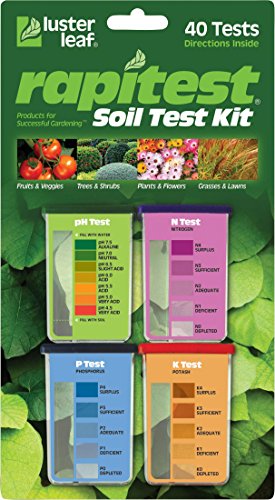
Luster Leaf 1601 Rapitest® Soil Test Kit
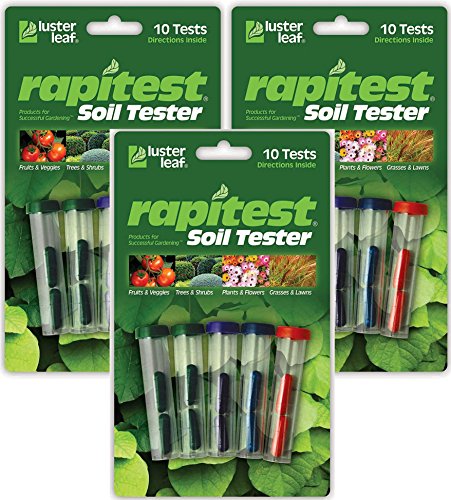
Luster Leaf Pack of 3 Rapitest Soil Testers
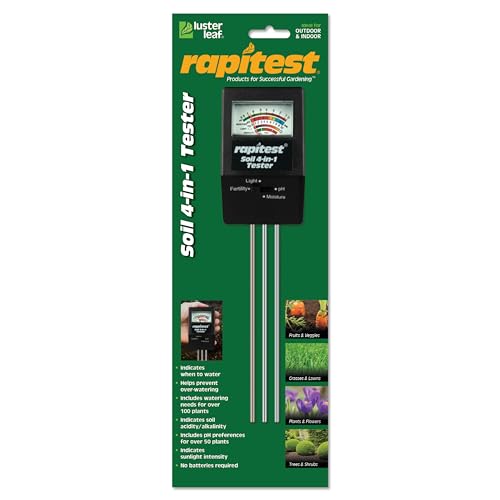
Luster Leaf 1818 Rapitest 4-in-1 Soil Tester
More Details On Our Top Picks
Soil temperature sets the clock for nearly every spring job, and this analog thermometer is built around that one task. A 6.5″ stainless steel probe reaches past the sun-warmed crust into the actual root zone, where the reading matters. The face includes germination and transplanting ranges for common crops, so you can plant tomatoes once the dial shows the right band rather than guessing from the calendar.
For most backyard beds, the dial format means no batteries to forget and no screens to fog up in wet soil. The tradeoff is that you read it from above, which can be slightly awkward in deep planters. Gardeners in cold zones who push the season early will probably find the most value here.
A Favorable Mix
- Long stainless steel probe reaches true root depth for accurate readings
- Built-in germination and transplanting guidelines printed right on the dial
- Top-down viewing angle means you don’t have to crouch to check
- No batteries required, so it works in any season
Small Limitations
- Dial can be hard to read at a glance in low light
- Glass lens owners commonly report needs careful handling in rocky soil
Right Fit For
Vegetable gardeners in northern zones who want to time transplants by ground temperature rather than the calendar.
Reach For A Different Pick When
You’d rather have an instant digital readout than interpret a dial, in which case the Luster Leaf 1625 Digital Soil Thermometer suits you better.
Same job as the dial model, but with a digital readout that settles in roughly ten seconds. The 1625 fits in a back pocket, which makes it easy to carry between beds or down to a community plot. Where the earlier 1630 relies on printed ranges, this one spits out a precise number you can compare against seed-starting charts on your phone.
It’s the right pick for people who check multiple spots in a session. The catch is that digital sensors can drift slightly in very wet or very cold soil, so most gardeners do a quick second probe as a sanity check. For most raised beds and in-ground rows, accuracy is more than adequate.
Reasons It Performs
- Digital display gives an exact number rather than a range guess
- Compact form factor slips into a garden apron pocket
- Quick response time means more samples in less time
Honest Caveats
- Requires battery power that you’ll want to check before the season
- Probe housing is less robust than the 1630’s stainless steel dial body
- Readings can fluctuate slightly in saturated soil
Key Attributes
Who It Suits Best
Bed gardeners who sample several spots in a row and want a quick digital answer over interpreting a dial.
Skip It When
You want a single thermometer that handles rough, rocky ground, in which case the Luster Leaf 1630 Rapitest Dial Soil Thermometer is the tougher build.
The Rapitest Moisture Tester is the smallest pick in the lineup and possibly the most useful for container gardeners. Stick the probe into a hanging basket or window box and it tells you right away whether the soil is wet, moist, or dry. That single judgment prevents the most common container plant failure, which is a well-meaning owner watering on schedule rather than on need.
It’s a no-frills analog meter, so there’s nothing to charge or calibrate. You can move it from the kitchen herb pot to the patio tomato without setup. For ground beds, though, the single-function approach feels thin, and you’d want a multi-function unit like the Luster Leaf 1818 Rapitest 4-in-1 Soil Tester instead.
A Few Strong Suits
- Tiny form factor is ideal for tight container plantings
- Instant moisture reading helps prevent chronic over-watering
- Works indoors and outdoors with no setup
Things To Consider
- Doesn’t measure pH, fertility, or light at all
- Single-probe length may be short for deep raised beds
Best Suited To
People tending window boxes, hanging baskets, or grow bags where over-watering is the main risk.
A Better Fit Elsewhere
You garden in-ground and want one tool that covers moisture plus pH and fertility, which is where the Luster Leaf 1818 Rapitest 4-in-1 Soil Tester earns its place.
Most soil tests stop at chemistry, and this one pushes into biology. The Microbial Test Kit is a smartphone-guided system that walks you through sampling and reads results through a free app, with no subscription required. It points toward amendments like kelp, mycorrhizae (beneficial fungi that form partnerships with plant roots), worm castings, or biochar when biology is weak.
It is the most involved kit in the line, and you’ll want a phone handy at the bench. For gardeners leaning into compost teas, cover cropping, or regenerative amendments, the data you get back ties directly to the next thing you add. For a quick seasonal check, the Luster Leaf 1601 Rapitest Soil Test Kit is a simpler route.
Where It Delivers
- Tests soil biology, an angle most chemical kits skip entirely
- Smartphone app provides guidance without a recurring fee
- Compatible with iPhone and Android devices
- Designed, engineered, and assembled in the USA
Practical Considerations
- Requires a phone and some daylight for accurate color reads
- Learning curve is steeper than capsule-style pH tests
Feature Snapshot
Made For
Soil enthusiasts who use conditioners, activators, and biology-boosting amendments and want to measure the impact of those additions.
Look Elsewhere When
You only need to track N, P, K and pH through the year, in which case the Luster Leaf 1601 Rapitest Soil Test Kit handles the basics more directly.
Acidity drives nutrient availability, so a basic pH test is the first thing most new gardeners should run. The 1612 uses a patented capsule system: you mix a soil sample with water, drop in a capsule, shake, and compare the color to the included chart. The kit comes with enough capsules for ten tests, plus a printed preference list covering over 450 plants.
Compared to the dial moisture probe reviewed earlier, this one is wet chemistry rather than a probe, and the result reads as a color, not a number. That trade-off keeps the cost low and removes the need for any electronics. For a single bed, a vegetable plot, or a few raised boxes, ten tests per box usually covers a full season.
Standout Benefits
- Quick at-home pH results without mailing samples or buying meters
- Capsule system is easier to read than liquid reagent drops
- Reference list covers 450+ plants, useful for mixed beds
- Includes ten pH tests per kit
Some Limits To Know
- Color matching can be tricky in dim light, near a sunny window is best
- Only measures pH, no nitrogen, phosphorus, or potash data
- Used capsules and test water need to be disposed of responsibly
Who Should Grab It
First-time gardeners and small-plot growers who want a low-cost, no-electronics way to confirm their soil’s pH before amending.
Not Your Match When
You need a full nutrient profile plus pH in one pass, in which case the Luster Leaf 1601 Rapitest Soil Test Kit covers the wider panel.
The 1601 is the most balanced entry in the capsule line because it tests the full quartet: pH, nitrogen (N), phosphorus (P), and potash (K). That wider panel matters for lawns and vegetables, where nitrogen deficiency and pH imbalance are equally common. Pull samples, mix with water, drop in a color-coded capsule, and compare against the chart.
For most home lawns, this kit does what people actually need in one session. Where the dedicated pH kit above only handles one test type, the 1601 keeps you from buying a separate kit for nutrients. The chart comparison is a little easier to misread on overcast days, so good lighting helps.
What It Does Well
- Tests pH plus the three macronutrients in one kit
- Color-coded capsules reduce mix-up errors during testing
- Affordable enough to use across an entire lawn in one pass
- No batteries or calibration needed
Points To Keep In Mind
- Test count per box is limited, so larger properties may need refill capsules
- Color matching takes practice for accurate results
Quick Facts
Whose Shelf It Belongs On
Homeowners managing a typical suburban lawn and garden who want one kit that covers both pH and the three primary nutrients.
Where Another Pick Suits Better
You only want a pH check and no nutrient data, in which case the Luster Leaf 1612 Rapitest pH Soil Tester is the simpler, focused choice.
Three kits, ten tests each, color-coded tubes. The multi-pack stretches across a season, multiple beds, or several gardeners in the same household. With 4 pH tests and 2 each of N, P, and K per kit, the math works out to 30 total tests for the bundle, which covers a lot of ground.
It’s the same chemistry as the 1601 reviewed earlier, just multiplied. The bundle is best when you actually need the volume, like a community garden or a large yard with separate zones. For a single raised bed, the smaller individual kit makes more sense.
Features That Help
- Bulk format brings per-test cost down noticeably
- Same color-coded capsule system as the single 1601 kit
- Ten tests per kit cover a small property or one full season
- Handy for sharing between household members or garden partners
Where It Is Less Suited
- Three kits take up more storage than a single box
- Excess capsules can expire before they’re all used
Who Will Love This
Multi-bed gardeners, family households, or community plot managers who test several zones over the course of a year.
Swap It Out When
You only need a few tests for a small yard, in which case the Luster Leaf 1601 Rapitest Soil Test Kit is the right single-box size.
The 1818 is the closest thing in the Rapitest line to an all-in-one probe. It measures soil pH, moisture, fertility, and light exposure using a triple-probe design with a switch to toggle between modes. No batteries are required, and you get instant readings rather than capsule color matching. For indoor plants especially, the light meter is the part that capsule kits can’t match.
Compared to the single-function moisture probe, this one trades a bit of precision for breadth, since analog probe meters are inherently less exact than lab chemistry. For day-to-day houseplant care, that tradeoff usually works in your favor. The probes do need to stay clean between uses to avoid carryover that throws off later readings.
Useful Touches
- Four readings from one tool covers most plant care decisions
- Light meter helps match houseplants to window conditions
- No batteries required for any of the four functions
- Toggle switch makes switching between modes quick
Where It May Fall Short
- Probe-based pH and fertility are less precise than capsule chemistry
- Probes need wiping between samples to avoid cross-contamination
- Not designed for very rocky or compacted garden soil
Feature Card
Perfect Match For
Houseplant owners and patio gardeners who want a single tool to check moisture, light, pH, and fertility without wet chemistry.
Consider Something Else When
You want more precise chemistry readings, in which case the Luster Leaf 1601 Rapitest Soil Test Kit uses the capsule comparator method for finer pH and nutrient data.
Factors To Consider When Choosing luster leaf rapitest ph soil testers
Match the test to the question
Start with the actual problem you want to solve. A vegetable bed that won’t grow has different needs from a lawn that yellows every summer. pH-only kits like the 1612 answer the question “is my soil too acidic or too alkaline?” without addressing nitrogen, phosphorus, or potash. Full-panel kits like the 1601 cover all four but use more capsules per session. Probes like the 1818 give quick moisture and light data, which matters most for indoor plants and containers. Choosing by question rather than by kit keeps you from buying a chemistry set when you really just need a thermometer.
Probe versus capsule format
Probe meters (the 1818 4-in-1 and the moisture probe) are fast and reusable, with no consumables to run out. The tradeoff is that analog probes give a relative reading, not a precise number. Capsule kits (the 1612, 1601, and the 3-pack) use color comparison, which is closer to a chemistry reading but takes longer and uses up materials. For one or two tests per season, capsules are fine. For frequent spot checks across many pots, a probe pays for itself in convenience.
Soil temperature as a separate job
A few picks in the line, including the 1630 dial and 1625 digital thermometers, only measure temperature. That sounds narrow, but ground temperature drives germination more than air temperature, and many transplant failures come from putting warm-season crops into cold soil. Vegetable gardeners in short or cool seasons usually want a thermometer alongside a chemistry test, not instead of one.
Reading the results without confusion
Every kit in this lineup assumes you can interpret a result and act on it. The capsule kits include plant-preference lists, and the microbial kit comes with an app that suggests amendments. Probe meters rely on you comparing readings to a chart on the packaging. Before you pick a tester, look at the included reference materials and make sure they match the kind of gardening you actually do.
Key Considerations Across These Picks
Mistakes Worth Dodging
A common misstep is testing only one spot in a large bed and treating the result as gospel. Soil pH and nutrient levels vary from one corner to another, especially in established yards where amendments were applied unevenly. Pulling samples from three to five spots and mixing them gives a far more useful average. Another trap is testing dry soil right out of winter dormancy, when readings skew acidic. Waiting until soil is workable and slightly moist tends to give numbers you can actually act on.
The Case For Spending Up
The cheapest kits in the line measure one thing, and that’s a strength, not a flaw, if you only need that one thing. Higher-tier picks, like the 1818 4-in-1 or the smartphone-guided Microbial Test Kit, add breadth or precision that pays off when you test across a whole property or track amendments over time. The upgrade is worth it for gardeners managing multiple beds, applying biological inputs, or working with houseplants that need quick, repeat checks. For a single raised box, the basic capsule kits cover the job without the extra spend.
Frequently Asked Questions
How accurate are Rapitest capsule tests compared to a lab?
Capsule tests use color comparison, so they are accurate within roughly half a pH unit, which is enough to act on for most home gardens. Lab tests offer tighter precision and trace minerals, but for general pH and NPK guidance the capsule kits are widely considered sufficient.
Can you reuse a Rapitest capsule?
No, each capsule is a single-use reaction. The included capsules are pre-measured, and you discard them after one test. Refill packs are sold separately for kits that support them.
Do the probe meters need to be calibrated?
Probe-based units in this line, including the 1818 4-in-1, are factory-set and don’t ship with a calibration routine. Wiping the probes clean between uses keeps readings consistent. For maximum precision, comparing a probe reading to a capsule result on the same soil is a good cross-check.
What is the best time of year to test soil?
Early spring before you amend, or fall after the season ends, are both strong windows. Avoid testing bone-dry midsummer soil or right after a heavy rain, since both conditions skew results. Soil that is damp but not waterlogged gives the most consistent readings.
Is the microbial test kit worth it for a small garden?
For a single raised bed with basic amendments, the chemistry kits cover what you need. The microbial test earns its keep when you’re actively working with compost, kelp, mycorrhizae, or other biological inputs and want to see whether those amendments are actually shifting the soil’s living activity.
Wrap Up
The right Rapitest tester depends on what you actually need to know: ground temperature for transplant timing, pH for acid-loving plants, full NPK for a struggling lawn, or microbial activity for a regenerative bed. Match the kit to the question, sample from several spots, and re-test each season. The data you collect in twenty minutes is the difference between guessing and growing.