Hydroponic gardening has grown up. What started as a hobbyist experiment in basements and spare closets now fills kitchen counters, garage walls, and small greenhouses with herbs, lettuces, and fruiting plants. The catch is feeding. Soil-less roots drink whatever is dissolved in the water around them, so the nutrient solution becomes the entire meal. Pick wrong, and the plants limp along with yellow leaves and stalled growth. Pick well, and the same setup that struggled for months suddenly looks lush.
I pulled together six options that span the main approaches to water-based feeding. Some are purpose-built hydroponic nutrients. Others are soil fertilizers that work well enough when diluted into reservoir water. A couple fit the in-between world of semi-hydroponics, where plants sit in a chunky medium and drink from a passive reservoir. The goal here is to help match the right fertilizer to the way you actually grow.
The Leading Options At A Glance

BuildASoil Worm Castings for Gardening – Premium Organic Earthworm Castings 2 Gallons
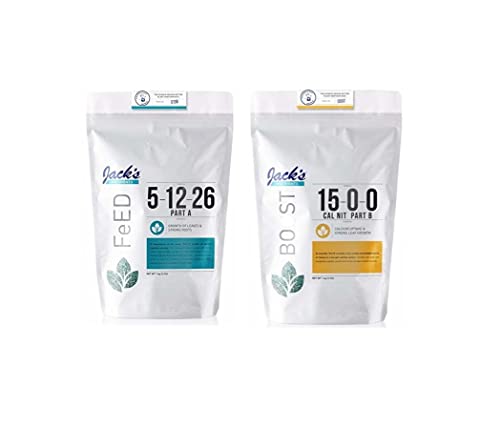
Jack’s Nutrients Part A 2.2lb & Cal Nit Part B 2.2lb Fertilizer Bundle

Fiddle Leaf Fig Plant Food, 3-1-2 NPK Liquid Fertilizer for Ficus, 8 oz

Bioactive Plant Fertilizer Granular Clean-Release, High Carbon Genius+ 200g

Plant Food for Houseplants Clean Easy Potted Plant Fertilizer Genius+ 8oz

Miracle-Gro 1013202 Watering Can Singles – 24 Pre-Measured Packets
Why These Options Stand Out
Worm castings are not a true hydroponic nutrient, but they earn a spot on this list because so many growers mix a small amount into reservoir water as a biological buffer. BuildASoil offers a screened, moist product in a generous 2-gallon volume that is ready to use straight out of the bag. Castings behave like a slow-release amendment, releasing nutrients as the beneficial microbes break them down.
For anyone running a passive or semi-hydroponic setup with plants in a chunky medium like LECA (lightweight expanded clay aggregate), a thin layer of worm castings gives the root zone something to work with between reservoir changes. Compared to the synthetic blends later in this list, the feeding curve is gentler and the risk of nutrient burn is lower.
Practical Pluses
- Organic nutrient source with a wide margin for error on dosing
- Supports a healthy microbial community in the root zone
- Large 2-gallon volume suits multi-plant setups and raised beds
- Versatile enough for soil, semi-hydro, or top-dressed reservoir systems
Worth Noting
- Not a complete hydroponic nutrient on its own, so heavy-feeding crops may stall
- Particles can cloud reservoir water and clog pumps in active recirculating systems
- Bag weight is noticeable, so storage in a dry, accessible spot matters
Key Specs
Best Suited To
Growers running semi-hydroponic or passive setups with houseplants and leafy greens who want a forgiving organic foundation.
Look Elsewhere When
Active hydroponic gardeners chasing rapid fruiting growth will get more from the synthetic two-part blend in Jack’s Nutrients.
This is the closest thing to a textbook fertilizer for plants growing in water. Jack’s Nutrients arrives as two separate 2.2-pound bags: Part A delivers micronutrients alongside phosphorus and potassium, while Part B is a calcium nitrate source that handles the calcium and nitrogen most hydroponic crops crave. The two-part split exists because calcium and sulfate forms do not play well together in concentrated form, so the grower mixes them into the reservoir at the same time.
I like this bundle for anyone scaling up to a real hydroponic setup with leafy greens, herbs, or even tomatoes. The numbers (Part A at 5-12-26 and Part B at 15-0-0) match what experienced growers expect from a balanced vegetative formula. Compared to the houseplant-specific liquids below, this is a working nutrient for serious production.
What Earns Its Place
- Two-part design covers the full nutrient spectrum hydroponic crops need
- Purpose-built for water-based growing rather than adapted from soil formulas
- Comes in powder form, so shelf life is long and shipping stays light
- Flexible enough for reservoir, NFT (nutrient film technique), and DWC (deep water culture) systems
Trade Offs
- Requires a small gram scale or measuring spoons to dose accurately
- Two-bag mixing adds a step that casual growers may find tedious
- Calcium nitrate is hygroscopic (it absorbs moisture from the air), so resealing matters
Who Will Love This
Active hydroponic growers managing their own reservoir mixes for greens, herbs, and fruiting crops.
Not Your Match When
Casual plant parents looking for a one-pour solution should consider Miracle-Gro Watering Can Singles instead.
The 3-1-2 NPK ratio is the standard prescription for ficus, and this liquid bottle keeps it simple. A small amount goes into the watering can, then into the soil or reservoir. For fiddle leaf figs and other ficus propagated or grown in water, the gentle, low-nitrogen formula avoids the leaf burn that stronger hydroponic blends tend to cause.
It sits in the awkward middle ground between casual houseplant feeding and active hydroponic nutrition. Compared to Jack’s two-part system, it is far easier to use but far less flexible. Anyone with a single large fiddle leaf fig sitting in a decorative cachepot with a passive water reservoir will appreciate the gentle, no-guesswork approach.
Notable Gains
- 3-1-2 NPK matches what ficus species actually use
- Liquid format drops straight into a watering can
- Low burn risk suits sensitive indoor plants
Honest Caveats
- Specialized for ficus, so it is not a multi-purpose hydroponic nutrient
- 8 oz bottle runs out fast on larger plant collections
- Not formulated for heavy-feeding crops like tomatoes or peppers
Perfect Match For
Fiddle leaf fig owners keeping the plant in semi-hydro or decorative water setups who want a gentle, tailored feeding.
Swap It Out When
Multi-plant hydroponic gardens with mixed species will get more value from Smart Grower Genius+ Houseplant Formula.
Where most hydroponic nutrients deliver chemistry, this granular formula leans into biology. The 6-5-6 NPK sits in the middle of the road for vegetative and flowering growth, while 24% active carbon and 5% humic acid (a natural compound that helps roots absorb minerals) feed the soil life that supports nutrient uptake. Mycorrhizal fungi (root-colonizing microbes that extend the plant’s reach for water and nutrients) round out the mix.
It works well in semi-hydro setups where the root zone has a substrate to colonize. Compared to pure synthetics like the Jack’s bundle, the slow-release granules trade speed for a steadier feed. In most cases, that means less risk of pH swings in the reservoir water.
Where It Helps
- Carbon-rich profile supports the biological side of plant nutrition
- Slow-release feeding reduces reservoir swings between changes
- Balanced NPK suits both leafy growth and fruiting transitions
- Granular format skips the measuring spoons step entirely
Points To Keep In Mind
- Granules need to sit in a substrate to release effectively, so pure water culture setups see limited benefit
- Smaller 200g container may run short on bigger gardens
Whose Shelf It Belongs On
Growers running semi-hydroponic systems with LECA, pumice, or similar substrates who want a low-maintenance biological feed.
Reach For A Different Pick When
Deep water culture or NFT setups where roots float bare in solution benefit more from Jack’s Nutrients Part A and B.
This is the sibling to the granular pick above, designed specifically for indoor use. The 8 oz liquid format is built for the watering can routine most houseplant keepers already follow. The “clean” framing points to a low-odor, low-residue formula that fits living rooms and bedrooms without complaint.
For countertop hydroponics and passive reservoir setups, the convenience is the real selling point. Compared to BuildASoil worm castings, this delivers a more predictable nutrient profile. It is not as concentrated as Jack’s two-part system, but it removes every friction point for someone who just wants their pothos to keep pushing new leaves.
Real Benefits
- Liquid format is ready to mix with no measuring powders
- Designed for indoor environments with low odor and residue
- Works for tropicals and everyday foliage houseplants in water or semi-hydro
Some Limits To Know
- 8 oz bottle is small for collections of more than a handful of plants
- General houseplant formula is not tuned for heavy feeders
- Will not replace a dedicated hydroponic nutrient in production systems
The Right Fit
Houseplant parents running small countertop or shelf hydroponic gardens who want minimal mess and a low learning curve.
A Better Fit Elsewhere
Anyone with a single dedicated fiddle leaf fig will get a more tailored NPK from Fiddle Leaf Fig Plant Food.
The simplest entry point on this list. Each packet is pre-measured for one watering can, so there is no scooping, weighing, or guesswork. Tear, pour, water. The formula is the same all-purpose blend many people already recognize from the blue box, just portioned for the no-mess crowd.
It is not a hydroponic nutrient in the strict sense, but it works in a pinch for water-propagated cuttings and lightly stocked countertop gardens. Compared to Jack’s two-part system, the convenience is unmatched for someone just dipping a toe into water-based growing.
A Strong Showing
- Pre-measured packets remove all dosing guesswork
- Compact storage fits easily in a small closet or gardening drawer
- Recognizable formula takes the anxiety out of trying something new
Potential Drawbacks
- Single-use packets cost more per feeding than bulk nutrients
- Not tailored to hydroponic crops, so heavy feeders may need supplemental feeding
Built With In Mind
New growers and casual plant parents who want the lowest possible learning curve before scaling up.
Skip It When
Growers running larger or more demanding setups should step up to Jack’s Nutrients Part A and B for better value and control.
Matching Nutrients To Your Water-Based Setup
The first call is figuring out what kind of water-based growing you are actually doing. Active hydroponic systems (DWC, NFT, or ebb and flow) circulate a nutrient solution continuously, so they need complete, water-soluble fertilizers like Jack’s two-part bundle. Passive and semi-hydroponic setups, where plants drink from a static reservoir or sit in a substrate that wicks moisture, can get away with gentler options like worm castings or the Smart Grower granular formula. The wrong match leads to either deficiencies or burned roots.
For hydroponic crops, the NPK ratio on the label tells most of the story. Vegetative crops like lettuce and herbs prefer higher nitrogen, while fruiting crops like tomatoes and peppers want a shift toward phosphorus and potassium once flowering starts. For houseplants in decorative water setups, lower-nitrogen formulas like the 3-1-2 fiddle leaf fig blend are usually safer. Beginners may find pre-measured packets easier to start with, then graduate to bulk nutrients once they learn the rhythm of reservoir changes.
Key Considerations Across These Picks
Where Shoppers Go Wrong
The most common mistake is grabbing any plant food off the shelf and pouring it into a reservoir. Soil fertilizers often contain slow-release coatings or organic matter that clouds water, clogs pumps, and feeds bacteria rather than plants. Another trap is ignoring pH. Even a perfect nutrient mix becomes unavailable to roots if the pH drifts outside the 5.5 to 6.5 window most hydroponic crops prefer.
Where The Extra Money Goes
Premium hydroponic nutrients cost more because they use chelated minerals (minerals wrapped in a protective coating that keeps them soluble and plant-available) and balanced micronutrient packages that cheap blends skip. The higher tier also tends to include calcium nitrate, which prevents the blossom-end rot (a dark, sunken decay at the base of fruits) that plagues tomatoes grown in incomplete nutrient solutions. For a single houseplant, premium is overkill. For a productive system, it is the difference between a steady harvest and a frustrating one.
Frequently Asked Questions
Can I use regular plant fertilizer for hydroponics?
Most regular plant foods are not designed for water culture and can leave residue, clog equipment, or feed bacteria instead of plants. Purpose-built hydroponic nutrients dissolve cleanly and stay available in solution.
How often should I change hydroponic nutrient solution?
Most growers refresh the reservoir every 7 to 14 days, depending on plant load and water temperature. Topping off with plain water between changes helps keep concentration stable.
Do houseplants growing in water need fertilizer at all?
Yes, but at much lower strength than soil-grown plants. A diluted liquid feed every 2 to 4 weeks keeps leaves green and growth steady without burning sensitive roots.
What NPK ratio works best for leafy greens?
Higher nitrogen supports leaf production, so something like a 5-12-26 vegetative formula works well. For fruiting crops, the nitrogen should drop once flowering begins to encourage fruit set.
Is worm castings safe in hydroponic reservoirs?
In small amounts and in passive setups, yes. In active recirculating systems, particles can clog pumps and stir up bacterial growth, so a screened, composted product matters.
The Takeaway
The right fertilizer for plants growing in water depends less on the brand and more on the system underneath. Match the format to the setup, keep an eye on pH, and refresh the reservoir on a steady schedule. From there, the plants tell you what they need.