Back pain is the silent tax on gardening, and long handled garden tools are the simplest way to stop paying it. Whether you’re turning soil from a seated position, reaching the middle of a deep raised bed, or just saving your knees on a long Saturday of planting, the right tool turns a chore into a comfortable rhythm. This list rounds up ten options that earn their place in a real shed, from hand tools with extended shafts to specialty implements that solve one problem very well.
The Shortlist At A Glance

Wilcox All-Pro 300S 22″ Long Handled Trowel
Wilcox All-Pro 202S 14″ Trowel

Haliaeetus Stainless Steel Soil Scoop

Fiskars Pro IsoCore 8 lb Splitting Maul

DEWALT 20V MAX Pruning Shears

Root Slayer Nomad Garden Spade (Red)
CobraHead Original Weeder & Cultivator
DeWit 5-Tine Hand Cultivator

Fiskars Ergo Garden Trowel
Felco F6 Pruning Shears
What Each Pick Brings To The Table
The Wilcox All-Pro 300S stretches a classic trowel shape to a 22-inch working length, which is a small change that pays off in real gardens. Reaching the middle of a 4-foot-wide raised bed without stepping in and compacting the soil becomes possible, and gardeners working from a seated bench gain genuine independence. The 3-inch-wide blade with a pointed tip still reads as a trowel, just one that comes to you instead of the other way around.
Built from 16-gauge stainless steel, the head feels substantial in the hand yet not punishing at the end of a long planting session. Owners commonly note that the longer shaft shifts weight distribution slightly, so wrist position matters more than on a standard trowel.
Strengths Worth Knowing
- 16-gauge stainless steel resists bending in clay-heavy or rocky soil
- 22-inch reach reduces how often you kneel or step into beds
- Pointed tip pierces hardpan and opens holes for deep bulbs
- Plastic-coated grip stays secure with damp or muddy gloves
- Single-piece steel construction avoids the wobble common in welded trowels
Things To Consider
- Longer handle changes leverage, so wrist and forearm fatigue can show up faster than with a standard trowel
- Stainless steel is heavier than aluminum, which matters during long planting days
Quick Facts
Built With In Mind
Home gardeners with deep raised beds, mobility-conscious planters, and anyone tired of stepping into the soil to reach the middle of a bed.
Consider Something Else When
Backpackers and campers will find the Wilcox All-Pro 202S 14″ Trowel easier to stash and lighter to carry on longer trips.
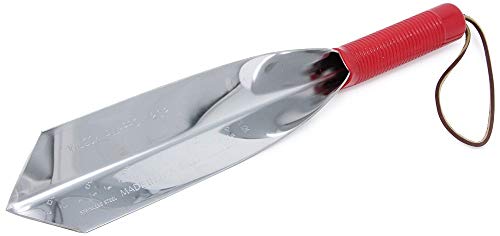
The Wilcox All-Pro 202S keeps the same single-piece steel construction as its longer sibling but compresses the tool into a 14-inch frame that disappears into a backpack pocket. For trail work, tent-peg holes, or quick soil checks at a campsite, this is the trowel you actually carry. Hunters and treasure hunters appreciate the leather wrist strap, which keeps the tool from disappearing into brush if you set it down to use both hands.
Compared to the 300S above, this version trades extended reach for packability. The trade-off is honest and intentional, and the pointed tip still bites into hard ground with the same confidence as the longer model.
What It Does Well
- 14-inch length stows in most daypacks and toolboxes without ceremony
- 16-gauge stainless steel holds an edge against roots and rocky grit
- Leather wrist strap keeps the tool close during scrambles or stream crossings
- Beveled edge cuts clean planting slots in hard-packed trail soil
Worth Noting
- Shorter handle means more bending over during extended garden sessions
- Single-piece steel lacks the cushioned feel of handled competitors on long jobs
Whose Shelf It Belongs On
Campers, backpackers, day-hikers, and preppers who want a serious digging tool that doesn’t take up pack space.
Skip It When
Backyard gardeners working wide raised beds will appreciate the extra reach of the Wilcox All-Pro 300S 22″ Long Handled Trowel more than the packable length here.
Repotting houseplants or filling a flat of seedlings becomes less of a mess with the Haliaeetus Potting Soil Scoop. The roughly one-cup capacity moves enough soil per scoop to make a real dent in a bag of potting medium, and a one-liter container takes around four scoops to fill, which is faster than a spoon or a cupped hand. The scoop body is stainless steel, and the scoop resists bending even when you’re prying into a compressed bale of peat.
Where the Wilcox trowels above focus on digging and cutting, this tool focuses on transferring. The longer handle and deep bowl mean less spillage on the way from bag to pot, especially over the lip of a tall planter.
The Helpful Details
- One-cup bowl fills a small nursery pot in just a few passes
- Stainless steel resists bending and corrosion from moist soil
- Wide opening accepts clumps and dry mix without clogging
- Long reach into vertical planters and grow bags without awkward angles
- Smooth interior sheds wet soil for quick rinses between pots
Honest Caveats
- Designed for moving material, not for cutting roots or breaking hard ground
- Larger bowl can feel awkward in tight indoor plant shelves
Made For
Indoor plant owners, balcony gardeners, and anyone repotting a steady rotation of seedlings or small shrubs through the year.
Reach For A Different Pick When
If the task is breaking new ground or slicing through roots, the Wilcox All-Pro 300S 22″ Long Handled Trowel is the better digging tool by a wide margin.
The Fiskars Pro IsoCore splits the difference between a hatchet and an axe, with an 8-pound maul head and a 36-inch handle that suits taller users or anyone who wants more swing clearance. Splitting medium and large rounds for a wood stove becomes a single-strike job for most pieces, and the longer shaft means you don’t have to fold yourself in half to put weight behind the swing. The IsoCore design routes shock away from the hands and wrists, which matters after a half hour of swinging.
Among the tools on this list, this is the most specialized. It does one thing, and it does it well. Compare it to the soil scoop above and the difference in intent is obvious: where the scoop feeds your garden, this maul heats it.
Where It Excels
- 36-inch handle suits taller users and offers longer swing arc
- 8-pound head delivers momentum that splits rounds on first contact
- Shock-absorbing handle geometry reduces fatigue over long sessions
- Reinforced blade geometry holds up against knots and twisted grain
Things To Consider
- 8-pound head is heavy for smaller-framed gardeners during repeated swings
- Too much tool for kindling; overkill for splitting pencil-thin rounds
- Requires storage space away from children and casual foot traffic
Best Suited To
Homeowners with wood stoves, off-grid property owners, and rural gardeners processing their own firewood from local trees.
Look Elsewhere When
Suburban gardeners with no firewood routine will find the DeWit 5-Tine Hand Cultivator a more daily-use match for bed maintenance.
The DEWALT 20V MAX Pruning Shears bring cordless convenience to a job that punishes hands. A non-stick coated bypass blade slices through stems up to an inch and a half across, which covers most rose canes, young fruit-tree suckers, and overgrown ornamentals. The onboard LED work light is a small touch that pays off when you’re trimming deep inside a shrub in the last hour of daylight.
Compared to manual pruners, the trade-off is battery weight and the requirement to stay within the 20V ecosystem. Compared to the CobraHead weeder reviewed below, the comparison is simpler: this is a power tool for cutting, the CobraHead is a hand tool for pulling.
What Works In Its Favor
- Non-stick coated blade resists sap buildup during heavy trimming days
- Battery platform integrates with existing DEWALT 20V tools many owners already own
- LED work light improves visibility inside dense shrubs and dusk sessions
- Quick-change blade system simplifies swaps when edges dull
- Around three pounds bare-tool weight keeps arm fatigue manageable
Trade Offs
- Bare-tool listing means battery and charger often need separate purchase
- Mechanical complexity creates more potential service points than manual pruners
Key Specs
Who Should Grab It
Homeowners with mature roses, overgrown fruit trees, and yards full of woody ornamentals, especially those already invested in the 20V tool ecosystem.
Where Another Pick Suits Better
Light, infrequent snipping around flower beds is better served by a manual classic like the Felco F6 Pruning Shears, with fewer moving parts and no charging routine.
The Root Slayer Nomad is the compact sibling to the original Root Slayer spade, sized for camping, hiking, and yard jobs where a full-size shovel is overkill. The serrated edge is the headline: it chews through small roots the way a knife edge cuts bread, which is exactly what you need when a tent pad is tangled with old tree roots or when a shrub sends a runner right where you wanted to dig. The red finish makes it hard to lose in leaf litter, a small but appreciated detail.
Compare it to the Wilcox 14-inch trowel above and the difference is intent. The Wilcox is a clean digger with a pointed tip; the Root Slayer is a root-aware cutter that wants to be swung like a small spade.
The Case For It
- Serrated edge slices through roots instead of bouncing off them
- Compact length fits in a vehicle trunk or daypack without dominating space
- Bright red finish helps locate the tool in tall grass or leaf cover
- Multi-purpose head design handles digging, edging, and root trimming
Points To Note
- Compact size means more body bending during extended garden sessions
- Serrated edge can snag on fabrics and gloves if carried loosely
Perfect Match For
Overlanders, car campers, and gardeners who deal with established root systems on a regular basis.
Swap It Out When
Potting bench work and seedling care are a better fit for the Haliaeetus Stainless Steel Soil Scoop, which moves material without cutting it.
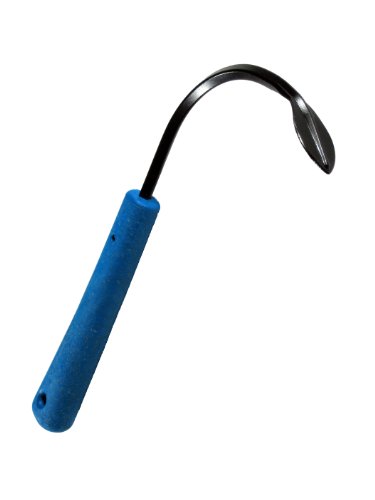
The CobraHead Original is one of those rare tools that earns its reputation honestly. The curved, forged blade plows through soil with the pointing confidence of a small talon, pulling weeds root and all, even in packed clay. The recycled-plastic handle is comfortable for either hand, which matters in households where the tool gets shared. Developed from seasons of hands-on gardening experience, the design reads as if someone actually solved the daily weeding problem rather than just sketching an idea.
Where the Wilcox trowels above are about moving volume of soil, the CobraHead is about precision. The blade acts like a finger that can reach under a weed crown without disturbing nearby plants.
Points In Its Favor
- Curved blade shape pulls weeds out by the root, not just the top
- Ambidextrous handle fits both right- and left-handed gardeners comfortably
- Works as both cultivator and weeder, so two chores share one tool
- Tempered steel blade holds an edge across seasons of use
A Few Limitations
- Short handle requires close, hand-on-knee work rather than standing reach
- Smaller blade moves less material per pass than a full trowel
Feature Card
Right Fit For
Vegetable gardeners, flower bed owners, and anyone fighting a daily weed battle in tight spaces between desirable plants.
Not Your Match When
Breaking new ground or moving large volumes of soil belongs to a longer tool like the Wilcox All-Pro 300S 22″ Long Handled Trowel.
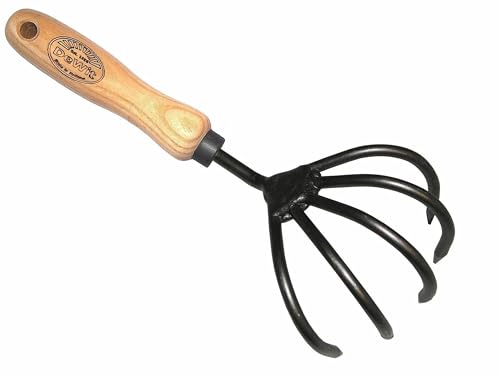
The DeWit 5-Tine Hand Cultivator is the kind of tool that gets passed down rather than replaced. The five tempered boron steel tines claw through compacted soil in raised beds and borders, loosening the top inch without flipping the bed the way a full-sized fork would. At 11 inches long with an ash hardwood handle, the tool fits neatly into tight spaces between perennials, where a wider cultivator would only stir up trouble.
Compared to the CobraHead above, the DeWit cultivator is broader and faster across open soil. The CobraHead wins on precision; the DeWit wins on coverage in a small bed.
Bright Spots
- Tempered boron steel resists bending in heavy clay
- Ash hardwood handle absorbs vibration and feels warm in cold weather
- Five-tine spread covers ground faster than single-blade weeders
- Compact 11-inch length reaches under established plants without damage
- Aggressive tine geometry pulls debris up as it aerates
Where It Is Less Suited
- Wood handle benefits from occasional oiling to prevent drying and splitting
- Smaller size means more passes per square foot than long-handled cultivators
Who It Suits Best
Heritage gardeners, raised bed growers, and anyone who values a tool built to outlast a decade of seasons.
A Better Fit Elsewhere
Quick weeding around delicate seedlings calls for the precision of the CobraHead Original Weeder & Cultivator instead of broader tilling action.
The Fiskars Ergo Trowel is the kind of tool that disappears into the routine. The polished aluminum head is light enough to forget you’re holding it, and the ergonomic handle keeps the wrist in a comfortable position during a long afternoon of transplanting. A hang hole at the end of the handle keeps it tidy on a shed hook rather than rolling around in a muddy bucket. Aluminum does not rust, so a forgotten wet tool at the bottom of a bucket won’t end its life.
Compare that to the Wilcox 300S above, which is heavier and more aggressive. The Ergo trowel is the everyday companion, the Wilcox is the heavy-duty weekend warrior.
The Good Stuff
- Lightweight aluminum head reduces fatigue during long transplanting sessions
- Ergonomic handle supports natural wrist position
- Hanging hole at the handle end simplifies shed storage
- Polished surface sheds dirt and rinses clean in seconds
- Rust-resistant build forgives occasional wet storage
Small Caveats
- Aluminum head is softer than stainless and can dent under rocky soil
- Shorter handle offers less reach than extended-shaft competitors
At A Glance
Who Will Love This
Container gardeners, weekend planters, and anyone who needs a light, no-fuss trowel for frequent small jobs.
Another Choice May Suit
Garden soil that’s heavy with rocks and roots will be handled better by the Wilcox All-Pro 300S 22″ Long Handled Trowel, which is built to take abuse.
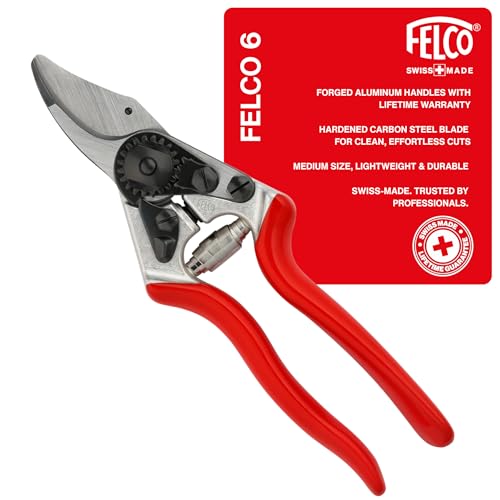
The Felco F6 is the pruner serious gardeners tend to land on eventually. Forged aluminum handles keep the tool light despite a sturdy build, and the hardened steel bypass blade makes a clean cut that heals well on living wood. At 7.7 inches, the F6 fits medium-sized hands comfortably, and the revolving handle softens the impact of repeated cuts through dense growth. The whole tool is designed around replaceable parts, which means a worn blade or spring can be swapped rather than forcing a replacement.
Compare that to the DEWALT cordless pruner reviewed earlier: the Felco asks for hand strength and rewards you with simplicity and longevity, while the DEWALT trades manual effort for battery power and blade speed.
Reasons It Performs
- Forged aluminum handles balance strength with low weight
- Hardened steel bypass blade leaves clean cuts that heal quickly on living stems
- Replaceable parts extend service life well beyond typical pruners
- Revolving handle reduces friction across many cuts in a row
- Cushioned shock absorber softens impact on tough wood
Things To Weigh
- Higher cost than disposable pruners, though the parts-replaceable design offsets this over time
- Best suited to medium-sized hands; larger or smaller grips may prefer other Felco models
Who Should Grab It
Experienced gardeners, orchardists, and serious rose growers who prune weekly and value a tool that can be maintained rather than replaced.
Not Your Match When
Occasional light trimming on thin stems is well-handled by the Fiskars Ergo Garden Trowel neighborhood setup, with a small hand pruner alongside, instead of a pro-tier investment.
Picking Long Handled Garden Tools That Earn Their Space
The first thing to clarify is what “long handled” means for your situation. Some tools in this list, like the Wilcox All-Pro 300S, extend a hand tool to a 22-inch reach. Others, like the Fiskars Pro IsoCore maul, are full-length implements with longer grips for leverage. A third category, like the Fiskars Ergo Trowel and CobraHead, are short-handled but worth considering alongside longer tools because they handle different tasks. Match the length to the job: deep raised beds and seated gardening favor reach, while tight borders favor compact heads.
Head material matters more than most people expect. Stainless steel and boron steel tolerate abuse and rocky soil without bending. Aluminum is light and rust-free but softer, so it suits everyday transplanting rather than breaking new ground. Wood handles, like the ash grip on the DeWit 5-Tine Cultivator, feel warm in cold weather and absorb vibration, but they benefit from occasional oiling. Plastic and recycled handles are weatherproof and consistent, with less tactile character.
Grip and ergonomics are where most gardeners feel the difference between a tool they reach for and one that gathers dust. The CobraHead and DeWit tools both use handle shapes that work across hand sizes. The Wilcox 300S shifts more weight forward because of its longer shaft, so wrist position matters more than on a standard trowel. Try to imagine a 30-minute weeding session in your own beds before committing to a longer handle.
Storage, maintenance, and lifespan are the quiet factors. Felco pruners earn their reputation through replaceable parts, which means years of service rather than a one-season replacement. The Wilcox and Haliaeetus stainless tools can sit in a damp shed without rusting. The DEWALT pruner adds battery management to your routine, which is a real consideration for gardeners who want simple, low-fuss gear.
Smart Shopper Notes For Long Handed Garden Tools
Wrong Turns To Avoid
The most common mistake is buying a tool for the wrong job. Long-reach hand tools like the Wilcox 300S are wonderful for reaching across beds, but they do not help when a single stubborn weed needs precise extraction, which is exactly where a CobraHead shines. Match the tool to the dominant task in your garden, not the most appealing description on a product page. The second mistake is ignoring handle material. A tool that feels great in a store can blister hands after an hour of real work. Soft, ergonomic grips and contoured shapes pay off over time, especially for gardeners with arthritis or limited grip strength.
Where The Extra Money Goes
Premium pricing in this category usually traces back to three things: steel quality, replaceable parts, and ergonomic design. Felco pruners cost more because the blades, springs, and handles can all be swapped, so the tool lasts decades. The Fiskars IsoCore maul commands its price through vibration-dampening geometry that protects wrists. The DeWit cultivator uses boron steel and ash wood that resist wear and weathering far better than basic alternatives. Spending up pays off when the tool will see weekly use for years; it makes less sense for an occasional-use shed that only sees action a few times a season.
Frequently Asked Questions
What length of handle is best for raised bed gardening?
Raised beds that are 3 to 4 feet wide benefit most from tools with 14 to 22 inches of reach, like the Wilcox All-Pro 300S. That range lets you reach the center of the bed without stepping in and compacting the soil, while keeping the tool controllable in tight quarters.
Are stainless steel garden tools worth the higher cost?
Stainless steel resists rust and bending, which matters for tools stored in damp sheds or used in clay-heavy soil. For gardeners in dry climates or those who store tools indoors, aluminum alternatives like the Fiskars Ergo Trowel offer similar everyday performance at a lower cost.
How do I keep wooden handles from splitting?
Light oiling once or twice a year with linseed oil helps ash and other hardwood handles resist drying and cracking. Wipe down the handle after muddy work and store the tool off the ground where air can circulate.
Should I buy cordless or manual pruners?
Cordless pruners like the DEWALT 20V MAX reduce hand strain during large jobs and cut through thicker stems easily. Manual pruners like the Felco F6 have fewer moving parts, no battery to charge, and tend to last longer with basic maintenance.
Can a single long-handled tool replace a whole set?
A well-chosen trowel or cultivator covers most daily tasks, but serious gardens usually need at least three tools: a digging tool, a weeding tool, and a cutting tool. Combining one from each category covers the vast majority of weekly chores without redundancy.
The Takeaway
Long handled garden tools earn their place by reducing strain, extending reach, and making daily chores faster. The right pick depends on your dominant task: reach across deep beds, precision weeding, soil moving, or stem cutting. Match the tool to the work your garden actually demands, and the tool will quietly disappear into the routine.