A north-facing apartment window rarely feeds enough photons to keep a fiddle leaf fig happy through January. Supplemental lighting fixes that gap, and the right setup depends on how many plants you keep and where they live. I pulled together six solid options covering tall floor stands, slim shelf panels, and a clip-on for tight corners, so you can match the form factor to your space without overbuying wattage you don’t need.
The Essentials At A Glance

GLOWRIUM 48W Full Spectrum LED Plant Light with Stand
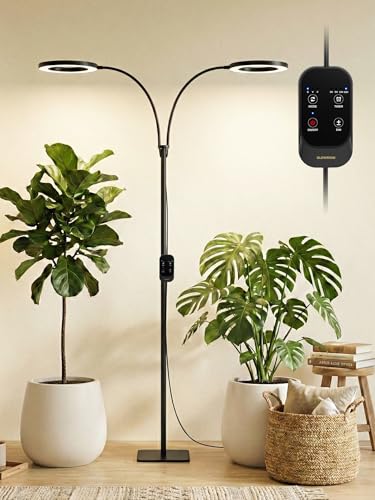
GLOWRIUM Tall Plant Grow Light Full Spectrum Dual-Head

DOMMIA Under Shelf Grow Light Daylight White

DOMMIA Under Shelf Grow Light Pinkish White

DOMMIA Under Shelf Grow Light Full Spectrum

VIIVUU Clip-On Grow Light for Indoor Plants
What Each Pick Brings To The Table
The first thing I notice about the GLOWRIUM 48W is how far it stretches. A four-section pole pushes the lamp head up to roughly 79 inches, which means it clears a tall fiddle leaf or a cluster of smaller pots on the floor without forcing you to stack books underneath. In a living room corner where the sofa blocks most of the natural light, that reach matters more than raw wattage.
Full-spectrum output covers the wavelengths plants use across seedling, vegetative, and flowering stages, and stepless dimming lets you dial intensity up for a mature monstera or back for a delicate seedling. Three preset modes take the guesswork out of switching phases. Compared with the taller GLOWRIUM listed next, this single-head unit trades dual coverage for a more compact floor footprint, so it suits tighter rooms.
Notable Gains
- Adjustable height up to about 79 inches fits floor-level groupings and taller specimens alike
- Stepless brightness control plus three stage modes simplify tuning for seedlings, leafy growth, and blooms
- Full-spectrum LEDs mimic daylight, reducing the purple-pink glow some growers dislike in living spaces
- Single-head layout keeps the base footprint modest in narrow corners
Points To Keep In Mind
- Single lamp head limits how wide an area it covers at once, so wide plant clusters may need rotation
- Floor stand requires stable flooring and some clearance around the base to avoid tip hazards
- Wipe-down cleaning around the joint sections can be a chore if the pole collects dust over time
Quick Technical Notes
Made For
Apartment growers with a small floor cluster of medium-light tropicals who want one adjustable unit instead of multiple panels.
Swap It Out When
Step up to the GLOWRIUM Tall Plant Grow Light if you keep seedlings and flowering plants at once and need two heads working side by side.
Where the previous GLOWRIUM focuses on height, this one doubles down on coverage. Two adjustable heads swing independently on a stand that reaches roughly 70.9 inches, so you can angle one beam across a seedling tray and the other toward a mature pothos at the same time. That flexibility shows up in any room where plants share space at different heights.
Around 268 LEDs deliver the full spectrum, and dedicated Seedling, Vegetative, and Flowering modes tailor the wavelengths to each phase instead of forcing one compromise setting. In a sunroom or open living area with mixed houseplants, that stage switching tends to matter more than extra lumens, especially for anyone who propagates and flowers in the same room.
What Pays Off
- Dual heads spread light across a wider footprint without needing a second fixture
- Three dedicated spectrum modes match wavelengths to growth phase rather than relying on one generic output
- Stand height near 70.9 inches clears floor-level groupings and most tabletop setups
- Full spectrum lets one unit cover propagation, foliage, and bloom stages back to back
Worth Noting
- Dual heads add weight to the top of the stand, so the base needs a stable spot away from foot traffic
- Adjusting both heads to hit different heights takes a few minutes of fiddling when plants rotate in and out
- Higher LED count means a bit more heat output near the lamp heads during long daily cycles
Right Fit For
Intermediate growers running mixed collections, including seedlings and bloomers, who want one stand to cover an entire propagation-to-finish workflow.
Look Elsewhere When
Pick the GLOWRIUM 48W with Stand instead if you only need to light a single small cluster and don’t want the extra mass of dual heads.
Bookshelves and narrow wall ledges rarely accept a floor stand, and that’s exactly where this DOMMIA panel earns its keep. The 4-inch square face is just 0.28 inches thick, so it slides under most standard shelves without forcing you to swap out the woodwork. Mount it above a row of small succulents and the daylight-white output blends with the room rather than announcing itself as a grow lamp.
A built-in smart controller handles the timer and dimmer duties, which removes the usual tangle of separate plugs. Six, twelve, and sixteen-hour cycles run on auto-pilot, and four brightness steps from 25 to 100 percent cover the range a low-light pothos or a brighter herb starter needs. Power-loss memory resumes the last setting after an outage, which is the kind of small touch that matters in a busy household.
Noteworthy Benefits
- Ultra-slim 0.28-inch panel slips under shelves where bulkier fixtures won’t fit
- Built-in timer and dimmer cut out a separate wall-plug controller
- Daylight-white output keeps shelves looking natural instead of purple-pink
- Power-loss memory restores the previous setting without manual reset
Honest Caveats
- Single small panel covers a narrow footprint, so wider shelves call for multiple units
- USB power requires a nearby outlet or a long cable run for faraway shelves
- Adhesive or mounting hardware may need replacement over time on textured walls
Built With In Mind
Renters and apartment dwellers with narrow shelving who want supplemental light without floor stands or visible hardware.
Reach For A Different Pick When
Switch to the DOMMIA Full Spectrum Under Shelf Grow Light if you want broader wavelength support for herbs and leafy greens rather than a daylight-only tone.
Bedrooms and living rooms tend to be sensitive to color temperature, which is where this pinkish-white DOMMIA panel changes the mood. The hue lands warmer than pure daylight but leans further into the red range than a regular warm white, supporting photosynthesis while reading as ambient light. Mounted above a trailing pothos on a wall shelf, it disappears into the decor instead of dominating it.
Same controller logic as the daylight sibling: auto cycles at six, twelve, and sixteen hours, four dim steps, and power-loss memory. The slim 4-inch panel is identical in size and thickness, so installation carries over if you already have the daylight version on another shelf. Together they handle a multi-shelf setup where some plants want warmer tones and others want whiter output.
Well-Handled Touches
- Pinkish-white tone softens the harshness of full-spectrum or daylight options in living spaces
- Built-in 6/12/16-hour timer runs on auto-pilot without extra wall hardware
- Four-step dimmer adjusts intensity from a gentle nightlight feel to a brighter growing beam
- Power-loss memory resumes the last setting after an outage
Things To Consider
- Warmer tone skews the spectrum away from peak blue wavelengths, so fruiting plants may want a full-spectrum option instead
- Single panel covers a narrow footprint, requiring multiple units for wider shelves
- Mounting adhesive can lose grip on painted drywall in humid rooms over time
Who It Suits Best
Plant parents decorating bedrooms or shared living rooms who want a soft, warm glow that supports growth without harsh blue light at night.
Not Your Match When
Skip toward the DOMMIA Full Spectrum Under Shelf Grow Light if you grow herbs or leafy greens that rely on cooler blue wavelengths.
Herbs, lettuce, and leafy greens pull from a wider wavelength range than decorative foliage, which is where the full-spectrum DOMMIA panel earns its place on a kitchen shelf. The 4-inch square format and 0.28-inch profile match the daylight and pinkish-white siblings, so it slots into the same mounting spots without rework. Run it across a row of basil starts and the output covers blue and red bands in roughly balanced measure.
The same controller stack handles auto cycles and dimming, which is helpful when herbs go through slow germination cycles followed by quick leaf production. Power-loss memory keeps the rhythm going after a power blip, and the four-step dimmer lets you ramp down for seedlings that scorch easily. Compared with the floor-standing GLOWRIUMs, this panel trades raw coverage for placement flexibility on wall-mounted shelves.
A Few Highlights
- Full-spectrum output supports herbs and leafy greens that need broader wavelength coverage
- Same slim 4-inch panel and built-in timer as the rest of the DOMMIA shelf lineup
- Six, twelve, and sixteen-hour auto cycles match germination through vegetative growth
- Power-loss memory resumes the last setting without manual reset
Trade Offs
- Single panel lights only a small shelf strip, so larger herb gardens need multiple units
- Full-spectrum output reads slightly purple-pink in person, which may not blend with all decor
- USB power requires cable planning to reach shelves away from outlets
Feature Card
Best Suited To
Kitchen gardeners running a small herb shelf who want full-spectrum coverage in a panel that disappears under a standard shelf.
Consider Something Else When
Choose the GLOWRIUM Tall Plant Grow Light if your herb garden lives on the floor and benefits from overhead stand coverage rather than shelf mounting.
Single pots on a desk or windowsill rarely justify a floor stand, and that’s the gap this VIIVUU clip-on fills. The clamp grips a planter rim or shelf edge tightly enough to stay put, and a hollow ring around the lamp head keeps the weight down so it doesn’t tug the fixture out of place. A soil-insertion stake option lets you anchor it directly into the potting mix when there’s nothing to clamp onto.
For one or two plants in a tight corner, the focused beam delivers light exactly where it’s needed without spilling across the entire desk. Compare that to the DOMMIA shelf panels, which spread light across a wider shelf strip: the VIIVUU trades area coverage for pinpoint placement. That distinction tends to matter most in dorm rooms, studio desks, and small office nooks.
Features That Help
- Strong clamp grips pot rims and shelf edges securely without slipping
- Optional soil stake anchors the lamp directly in the potting mix when clamping isn’t possible
- Hollow ring lamp head keeps the unit light enough for thin shelves
- Focused beam directs light at one or two plants instead of spreading thin
A Few Limitations
- Single small lamp covers only one plant at a time, so larger collections need multiples
- Clamp force can leave a mark on soft wood or finished shelves over time
- Tight beam pattern means plants outside the cone receive little benefit
Whose Shelf It Belongs On
Anyone lighting one or two desk plants, dorm-room specimens, or single windowsill pots who wants a minimal-footprint clamp instead of a stand.
A Better Fit Elsewhere
Pick the DOMMIA Under Shelf Grow Light Full Spectrum instead if you want broader coverage across a small shelf of multiple herbs or leafy greens.
Picking The Right Setup For Your Space
The first decision is form factor. Floor stands like the GLOWRIUM units make sense when plants live on the ground or on low plant stands, and you need height to clear tall foliage. Slim shelf panels from DOMMIA fit where floor space is tight, like bookshelves, kitchen ledges, and wall-mounted displays. Clip-ons like the VIIVUU work for single pots on a desk where footprint matters more than coverage.
Spectrum choice comes next. Full-spectrum LEDs cover wavelengths from blue (useful for vegetative leafy growth) through red (useful for flowering and fruiting), so they suit mixed collections. Daylight-white tones blend more naturally with indoor decor and work well for foliage-only setups. Pinkish-white output leans warmer and supports growth while reading as ambient lighting in bedrooms or living rooms. Herbs, lettuce, and other edible greens generally benefit from full-spectrum output, since they pull from the widest wavelength range.
Adjustability matters more than raw wattage for most indoor setups. Stepless or multi-step dimming lets you match intensity to a delicate seedling or a mature tropical without swapping fixtures. Built-in timers, like those on the DOMMIA shelf panels, remove the daily hassle of switching lights on and off. Auto cycles at six, twelve, or sixteen hours cover most photoperiod needs, from short-day herbs to longer-day tropicals. Look for power-loss memory too, especially in homes where occasional outages are common, so the rhythm resumes without manual reset.
Height and reach round out the practical checklist. Adjustable poles, like the four-section design on the GLOWRIUM 48W, follow a plant as it grows from seedling to mature height. Independent head angles, as on the dual-head GLOWRIUM, handle mixed groupings at different heights on the same stand. For shelf panels, a slim profile under 0.3 inches keeps the fixture hidden above your plants rather than dominating the shelf line.
Where Shoppers Slip Up
The most common misstep is chasing wattage. More watts don’t always mean better growth, and oversized fixtures can scorch seedlings or drive up energy use without adding usable light. Match intensity to the plant’s actual stage and the distance from the lamp head.
Another trap is ignoring spectrum. A cheap purple-only panel may grow seedlings, but it floods a living room with harsh color and limits flowering. Full-spectrum or carefully tuned white output covers more growth phases while staying livable as ambient light.
Mounting also gets underestimated. Shelf panels need a clean mounting surface, and adhesive pads can lose hold on textured or humid walls. Floor stands need stable flooring and a clear base radius to avoid tip hazards. Plan the location before ordering.
When Spending More Makes Sense
Higher-tier fixtures typically add three things: broader spectrum coverage, better adjustability, and longer LED life. A dual-head stand or a panel with dedicated stage modes pays off when you run mixed collections that include seedlings, foliage plants, and bloomers in the same room. Premium build quality also tends to mean better heat dissipation, which matters during long daily cycles in enclosed shelves.
For a single low-light plant on a desk, a budget clip-on handles the job without overpaying for features you won’t use. The upgrade is worth it when you scale up to a shelf of herbs or a floor cluster of tropicals where flexibility and spectrum coverage stop being nice-to-haves and start being essential.
Frequently Asked Questions
How many hours per day should I run a grow light? Most foliage houseplants do well on 12 to 16 hours of light daily, while seedlings often need 14 to 18 hours to fuel rapid growth.
Can I leave a grow light on 24 hours? Continuous lighting stresses most plants and can interfere with their rest cycle, so a timer-based cycle of 12 to 18 hours is healthier than round-the-clock output.
Do grow lights use a lot of electricity? LED grow lights draw modest power compared with older HID setups, and a single 48W panel running 14 hours daily adds only a small amount to a monthly bill.
How close should a grow light be to my plants? Most LED panels perform best at 6 to 12 inches above the foliage, though tall stand units can sit further away due to their higher output and broader spread.
Will a grow light work for flowering plants? Full-spectrum panels with strong red-band output support flowering, though fruiting plants may need higher intensity than decorative bloomers to set fruit reliably indoors.
The Takeaway
Match the form factor to where your plants actually live, choose spectrum around what you grow, and lean on built-in timers to keep the cycle consistent. The right setup quietly extends your growing season without dominating the room.