Healthy houseplants start with what goes on underneath. Most indoor pots run out of nutrients in a few months, and the soil gets compacted and tired. A refresh with the right compost or worm castings wakes roots up, improves drainage, and gives leaves something to work with. I put together this list for anyone growing indoor plants, succulents, or herbs on a windowsill, and looking for a simple way to feed the soil instead of constantly replacing it.
The Choices Worth Comparing

Wiggle Worm 100% Pure Organic Worm Casting Fertilizer, 4.5lb

Brut Organic Worm Castings for Plants 5 LB

Wonder Soil Compressed Coco Coir 30 Quarts
Wonder Soil Organic Potting Soil 12 Quarts

Wonder Soil Compressed Coco Coir 72 Quarts
Why These Options Stand Out
Wiggle Worm is a worm casting product, which means it is the digested waste that worms leave behind, and gardeners treat it like a slow-release soil amendment rather than a complete potting mix. The manufacturer describes the contents as OMRI-listed organic pure castings, harvested through a special process so the bag contains actual worm output rather than leftover bedding.
The tiny football-shaped particles help loosen compacted soil and create channels for water and air, which matters in old houseplant pots where the medium turns hard after a year. A handful worked into the top inch of soil or dropped into the planting hole during a transplant gives roots a softer, richer layer to push into.
Reasons It Performs
- Pure castings with no bedding filler, so a little goes a long way
- Loosens tight indoor soil and improves drainage in older pots
- Easy to top-dress: a handful three times a year is the recommended rhythm
- Recognized as a fertilizer, not just a soil conditioner
- Nutrient-rich profile that feeds roots without burning them
Things To Consider
- Not a full potting mix, so it needs to be blended with existing soil
- The 4.5lb bag runs out fast across a large indoor collection
- Dry castings can be dusty when poured; mixing in a bowl helps keep the mess down
Key Specs
Who It Suits Best
Anyone with a few established indoor pots who wants a clean, organic way to refresh tired soil without replacing it.
Skip It When
The Brut Organic Worm Castings 5 LB is a better match for someone tending a larger indoor collection who needs more volume per bag.
Brut Worm Farms offers a 5lb bag of worm castings built for both indoor houseplants and outdoor beds, which makes it handy if the same bag has to cover a kitchen window and a patio tomato planter. The castings come from worms raised indoors in containers, and the product carries an organic certification.
It functions the same way the Wiggle Worm product does, working as a soil additive rather than a complete medium. For someone who wants more volume for the same general purpose, this is a practical step up.
Where It Excels
- Bigger 5lb bag covers more pots than a smaller castings package
- Certified organic, raised in controlled indoor conditions
- Doubles as a fertility booster for both indoor and outdoor use
Points To Note
- Still an amendment, not a standalone growing medium
- No perlite or coir mixed in, so drainage improvement depends on the soil it joins
Made For
Plant owners with a mid-sized indoor collection who want one bag that can stretch across several pots and a small outdoor planter.
Consider Something Else When
Someone starting a new indoor garden from scratch may prefer Wonder Soil Compressed Coco Coir 30 Quarts, which arrives ready to plant on its own.
Wonder Soil takes a different route. Instead of pure worm castings, it is a compressed coco coir (coconut husk fiber) brick that arrives dry, then expands to roughly 30 quarts across three bricks once water hits it. The manufacturer pre-loads the coir with worm castings, mycorrhizae (beneficial fungi that attach to roots and improve nutrient uptake), and kelp, so it works as a ready-to-plant medium rather than an additive.
For someone who has never mixed their own soil, this is forgiving. You drop a brick into a bucket, add water, fluff it up, and start potting. No measuring, no separate amendments.
Useful Strengths
- Pre-loaded with worm castings, mycorrhizae, and kelp to feed plants from day one
- Three compact bricks expand to 30 quarts, which is helpful for storage
- Peat-free, so it sidesteps the sustainability questions tied to peat harvesting
- Reusable as a base for a custom blend if more drainage is needed later
Less Ideal Details
- Needs a large bucket for hydration since the expansion is dramatic
- Coco coir alone holds moisture well, so succulents and cacti may want extra perlite mixed in
Quick Facts
Best Suited To
First-time indoor gardeners who want a single bag that handles soil and feeding without buying separate amendments.
Look Elsewhere When
Apartment dwellers with just one or two pots on a shelf may find the Wonder Soil 12 Quarts size easier to store and finish before it dries out.
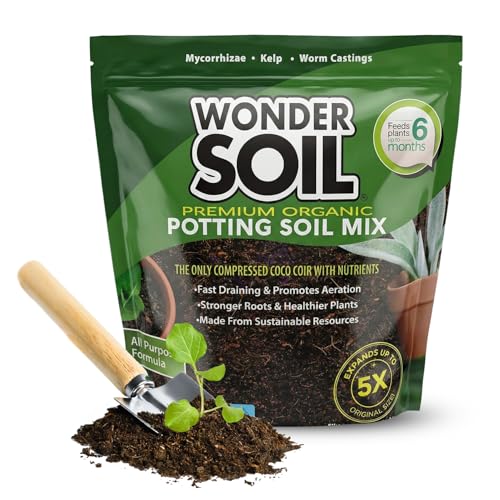
This is the smaller sibling in the Wonder Soil line. A 3lb bag of compressed coir expands to 12 quarts once hydrated, which suits a studio apartment with a handful of plants rather than a packed greenhouse shelf.
Like the 30-quart version, the mix is pre-amended with worm castings, mycorrhizae, kelp, and perlite, the last one being a volcanic mineral that lightens soil and keeps roots from sitting in water. That makes this version friendlier for plants that want faster drainage.
Where It Delivers
- Smaller brick is easier to store in tight closets or under sinks
- Perlite in the mix helps with drainage for herbs and leafy tropicals
- Stays light to carry up stairs or through narrow hallways
- Pet-safe and family-safe formula, per the manufacturer
Trade Offs
- 12 quarts runs out quickly across more than five medium pots
- Still coco coir-based, so very thirsty plants may need watered more often than peat-based mixes
Right Fit For
Renters and apartment dwellers with a small plant shelf who want a tidy, light bag they can lift one-handed and store without rearranging the closet.
A Better Fit Elsewhere
Someone repotting a whole room of plants at once should reach for the Wonder Soil 72 Quarts block to avoid running out mid-project.
The largest Wonder Soil block weighs 10lb dry and expands to 72 quarts of finished medium, which is enough to repot an entire indoor collection or fill a raised bed. The formula matches the smaller versions: coco coir with worm castings, mycorrhizae, and kelp already mixed in.
The honest read is that this is a bulk buy. The block needs a large tub or wheelbarrow to hydrate, and you’ll use the resulting volume within a few months if you have the plants to justify it.
A Strong Showing
- One block replaces multiple bags of standard potting mix
- Compressed format keeps storage footprint small until hydration day
- Pre-loaded nutrients feed plants for several months per the manufacturer
- Same peat-free, organic-friendly base as the rest of the Wonder Soil line
Practical Considerations
- Hydration requires a sizable container and a bit of patience
- 72 quarts is more than most casual plant owners can use before it dries between sessions
- Best value per quart only pays off if the volume gets used in time
Whose Shelf It Belongs On
Serious plant collectors and small nursery growers who repot often and want a single bulk purchase that stretches through a full season.
Swap It Out When
A casual indoor gardener with just a few pots will get more use out of Wiggle Worm Worm Casting Fertilizer as a top-dress rather than committing to 72 quarts of coir.
Picking The Right Blend For Your Indoor Garden
Start with the actual job you need done. Worm castings work as a soil booster, meaning they refresh tired dirt and add slow-release nutrients to whatever is already in the pot. Coco coir mixes replace the soil itself, which matters when old medium has gone compacted or when starting a brand-new plant in a fresh container.
Match the format to your routine. A pure castings bag suits someone who already has potting soil and just wants to feed it a few times a year. A pre-amended coir block suits someone who wants one product that handles soil and feeding together. Think about storage, too: a compressed brick keeps a closet tidy until you actually need it, while a loose bag takes up space the whole time it sits on a shelf.
Consider the plants themselves. Leafy tropicals and herbs handle rich, moisture-holding coir well. Succulents, cacti, and any plant prone to root rot want faster drainage, which is where perlite amendments or lighter castings-only applications help. For most households with a mixed shelf, a small castings bag plus an existing bag of potting soil covers the spread without overbuying.
Finally, weigh volume honestly. A bulk block only saves effort if the plants can use it before the next watering cycle dries it out. For a two-pot windowsill, that is a lot of medium to store hydrated. For a dozen pots, it is the right call.
Key Considerations Across These Picks
Common Shopping Slip Ups
The biggest mistake is treating worm castings like potting soil. They are an amendment, and dropping pure castings into a pot with no other medium leaves roots without the structure they need to hold the plant upright. The flip side also bites shoppers: buying a large coco coir block for two small pots means wasting most of it before it gets used.
Another trap is ignoring drainage. Coco coir holds moisture longer than peat-based mixes, so plants that prefer dry feet need perlite or a grittier mix blended in. Skipping that step leads to yellowing leaves and root issues that look like overwatering but actually trace back to the soil choice.
Where The Extra Money Goes
Premium castings cost more because of the harvesting process. Pure castings mean worms are separated from their bedding before packaging, which is why a 4.5lb bag feels small but lasts through many pots. Lower-priced options sometimes include bedding material that adds bulk without adding the same nutrient density.
Pre-amended coco coir blocks carry a higher price because the manufacturer has already mixed in worm castings, mycorrhizae, and kelp. The premium pays for convenience: no measuring amendments, no separate fertilizer bottle for the first few months. For a new gardener, that time savings is often worth more than the cost difference.
Frequently Asked Questions
How often should I add worm castings to indoor pots?
Most manufacturers recommend a light top-dressing three times a year, worked into the top inch of soil around the root zone. Heavy feeders may want monthly light applications instead.
Can coco coir replace regular potting soil entirely?
Coco coir works as a standalone medium for most houseplants, especially with the nutrients and perlite already mixed in. Succulents and cacti may need extra perlite or pumice added for sharper drainage.
Are worm castings safe around pets and children?
Worm castings are organic soil amendments with no synthetic chemicals, which makes them a common choice for households with curious pets or kids. Common sense still applies: keep bags sealed and out of reach.
How long does an opened bag stay good?
Dry castings and dry coir bricks keep for years in a sealed container, away from moisture. Once hydrated, coir should be used within a few weeks or allowed to dry out again to prevent mold.
Do I need to fertilize if I use a pre-amended mix?
Pre-amended coco coir feeds plants for several months per the manufacturer, after which a regular fertilizer routine resumes. Watch new growth for signs that nutrients are running low.
Closing Remarks
The right compost comes down to your plant count and your watering habits. Worm castings breathe life into old pots without much fuss. Coco coir blocks give you a clean slate and a fresh batch of medium in one step. Pick the format that matches how you actually tend your plants, and the rest tends to take care of itself.