A restless night in the backcountry usually starts at ground level, not in your sleeping bag. Side sleepers, cold-sensitive campers, and anyone who tosses and turns on uneven terrain all benefit from a pad that cushions hips and shoulders while blocking the chill radiating up from the soil. The seven pads below run the gamut from ultralight summer inflatables to thick four-season foam beds, so the right match depends on how warm, soft, or packable you need your setup to be.
The Shortlist At A Glance

Sea to Summit Camp Plus SI Tapered Regular

Sea to Summit Camp Plus SI Tapered Large
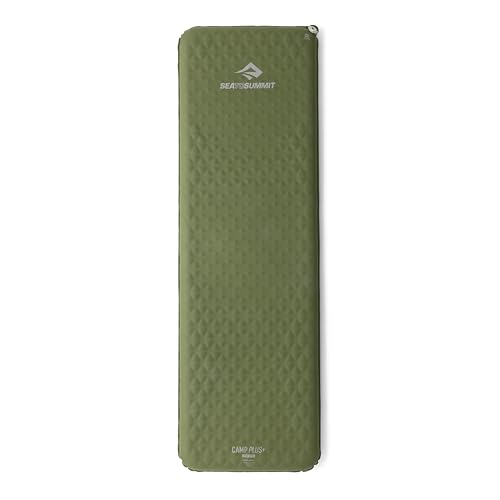
Sea to Summit Camp Plus SI Rectangular Large

Sea to Summit Camp Plus SI Rectangular Regular

Teton Outfitter XL Sleeping Pad for Cot

Exped Ultra Ultralight Inflatable Backpacking Pad

Elegear 4-Inch Insulated Sleeping Pad
The Picks, Examined More Closely
The Camp Plus SI in its tapered regular cut hits a middle ground that most casual backpackers will appreciate: thick enough to keep shoulders and hips off the ground, narrow enough at the feet to save pack space. Self-inflating foam pads (SI) work by opening the valve and letting the open-cell foam inside suck in air on its own, with a few breaths topping it off to your preferred firmness.
For shoulder-season trips where the temperature dips but never drops below freezing, this pad’s blend of cushioning and thermal performance is a sensible pick. Side sleepers in particular tend to notice the difference between a 1.5-inch pad and this one’s deeper stack of foam.
Everyday Advantages
- Open-cell foam core inflates on its own, cutting setup time at camp
- 2.6-inch depth gives side sleepers real shoulder clearance
- Tapered foot box trims bulk from your pack for shorter hikers
- Reversible valve lets you top off air without losing pressure
Things To Consider
- Heavier than inflatable-only pads, so long-distance hikers may feel the weight
- Self-inflating foam can feel firm on the first few nights before it breaks in
- Storage between trips benefits from being unrolled to preserve the foam’s loft
Key Specs
Made For
Three-season backpackers and car campers who want genuine cushion without hauling an air pump into camp.
Where Another Pick Suits Better
Distance-focused thru-hikers will prefer the Exped Ultra Ultralight Inflatable Backpacking Pad, which trims weight far below this foam-heavy option.
Stretching the tapered design to its large footprint, this Camp Plus SI variant addresses the most common complaint about mummy-shaped pads: not enough shoulder room. Taller campers and restless sleepers who roll onto their sides at night get the same 2.6-inch stack of foam, just laid across a longer, wider surface.
The trade-off is weight and pack volume, since this version takes up more space than its regular sibling. For folks over six feet, that compromise is usually an easy call.
Useful Touches
- Generous length and width fit taller frames without feet dangling
- Same reversible valve as the regular tapered model for consistent setup
- Foam core provides reliable insulation when nighttime temperatures drop
Honest Caveats
- Bigger packed size means less room in a 50-liter pack for cold-weather layers
- Larger surface area takes more breaths to top off after the foam self-inflates
Who It Suits Best
Side-sleeping campers over six feet who want foam warmth without giving up shoulder space.
Consider Something Else When
Pack-size-conscious travelers should look at the Exped Ultra Ultralight Inflatable Backpacking Pad, which compresses far smaller than this foam build.
Where the tapered versions trim the foot box for packability, the rectangular large goes the other direction. Flat edges mean the pad can sit flush against another pad to form a double-wide sleep surface, useful for parents camping with kids or anyone who treats the tent floor like a guest bedroom.
This is firmly a car-camping pad, given its bulk when rolled. Basecampers and weekend vehicle campers will appreciate the rectangular profile more than distance hikers will.
What Earns Its Place
- Full rectangular cut pairs with a second pad to create a queen-sized sleep platform
- Deep foam stack protects hips on rocky or root-covered tent pads
- Reversible valve speeds up inflation and fine-tuning during setup
Points To Note
- Bulky rolled size rules out long-distance backpacking trips
- More foam volume means a longer dry-out period if the pad gets damp
Feature Snapshot
Best Suited To
Car campers and basecampers who want a wide, plush surface and don’t mind the extra rolled size.
Look Elsewhere When
Backpackers counting every cubic inch of pack space should consider the Sea to Summit Camp Plus SI Rectangular Regular for a similar feel in a tighter size.
The regular-sized rectangular option leans into scout-troop and youth-camp territory, where durability and easy setup matter more than shaving ounces. Its Air Zone construction (a patterned foam layout that keeps insulation where your body presses and saves weight elsewhere) gives it a slimmer profile than the thicker Camp Plus variants.
For first-time campers or anyone buying a pad that needs to survive years of weekend use, the simpler spec sheet is actually a feature. Fewer variables mean fewer surprises.
Practical Pluses
- Lower-profile foam makes rolling and packing easier for younger campers
- Reversible valve handles inflation and deflation without fiddling
- R-value of 4.2 handles chilly spring and fall nights reliably
Small Caveats
- Thinner than the larger Camp Plus variants, so side sleepers may feel ground pressure
- Rectangular shape rolls larger than a tapered pad of equal length
Quick Facts
Right Fit For
Scout groups, youth camps, and entry-level campers who want a forgiving pad at a reasonable size.
Swap It Out When
Adults hunting more cushion should step up to the Sea to Summit Camp Plus SI Tapered Regular for a thicker stack of foam.
The Outfitter XL is a different breed of sleeping pad. It’s an open-foam slab wrapped in poly canvas, designed to lay across a camping cot rather than inflate on the ground. Slip-resistant loops hold the pad in place on the cot surface overnight, so you wake up where you fell asleep.
At 2 inches of foam, it brings a mattress-like feel to a vehicle-camping setup. Truck campers, basecampers, and anyone with a spare few minutes at takedown will appreciate not chasing a valve.
What Helps Most
- No inflation means no leaks to patch and no breath-counting at camp
- Poly canvas cover resists scuffs from cot hardware and rough ground
- Loops anchor the pad to a cot frame so it doesn’t slide around at night
Points To Keep In Mind
- Bundled size and weight make it impractical for anything but vehicle camping
- Open foam takes longer to dry if stored damp, so air it out before rolling
Whose Shelf It Belongs On
Truck bed campers, basecampers, and glampers using a cot who want bed-like comfort without any air pump.
Another Choice May Suit
Backcountry travelers will find the Exped Ultra Ultralight Inflatable Backpacking Pad a far better pack-down than this roll-up foam slab.
For thru-hikers, bikepackers, and anyone whose pack weight is logged in a spreadsheet, the Exped Ultra flips the usual tradeoff. It keeps three inches of cushion while tipping the scales below a pound, which is rare in this category.
The catch is that all that weight savings comes from dropping insulation, so this pad shines in summer and shoulder-season trips, less so in deep cold. For warm-weather distance adventures, though, it’s tough to beat on a per-ounce basis.
A Few Highlights
- Sub-one-pound carry weight keeps pack totals low on long trails
- Air-insulated chambers (the Airmat design, which uses baffled air pockets running head-to-toe) deliver stable cushion without foam bulk
- Three-inch profile gives side sleepers actual lift off the ground
Where It May Fall Short
- Lower insulation rating means winter use is risky without a second pad underneath
- Thin fabric demands careful site selection to avoid abrasion from sharp ground
- Inflatable-only design requires lung power or a pump sack
Perfect Match For
Thru-hikers, bikepackers, and fastpackers who need comfort without the weight penalty of foam.
Not Your Match When
Winter campers will find the Elegear 4-Inch Insulated Sleeping Pad’s much higher R-value a safer bet in freezing temperatures.
The Elegear goes big on the two numbers that matter most for cold-weather sleep: thickness and R-value. R-value measures how well a pad resists heat flowing from your body into the ground, with higher numbers meaning more warmth. An R-value of 9 puts this pad firmly in winter-camping territory.
The 4-inch loft also keeps side sleepers fully elevated from frozen ground, where a thin pad would let body heat escape almost as fast as it leaves a cold basement floor. Heavy packers and winter-only campers will appreciate the focus.
Useful Strengths
- High R-value handles freezing ground without stacking a second pad underneath
- 4-inch depth lifts hips and shoulders well clear of snow and frozen soil
- Multi-layer insulation construction spreads warmth evenly across the surface
Possible Compromises
- Bulky packed size makes it impractical for trips where pack space is tight
- Higher insulation makes summer use overly warm in mild climates
Technical Sheet
Who Will Love This
Winter campers, mountaineers, and cold-sensitive sleepers who camp through shoulder seasons.
Skip It When
Summer backpackers chasing low pack weight should reach for the Exped Ultra Ultralight Inflatable Backpacking Pad instead.
What Matters Most Before Choosing Light Sleeping Pads
Reading R-Values And Thickness Together
R-value and thickness aren’t independent decisions, since they both shape how a pad feels and performs. A thick pad with a low R-value still leaves cold spots where your body presses through to the ground, while a thin pad with a high R-value keeps you warm but lets hips and shoulders feel every rock. Most three-season campers land between R-values of 3 and 5, while winter trips typically need 5 or higher for reliable comfort.
Matching Pad Style To Trip Type
Self-inflating foam pads trade weight for ease of setup, since they need minimal breath-counting. Pure inflatable pads cut weight dramatically but demand lung power or a pump sack. Open foam pads work only on cots and vehicle camping. Picking the right family of pad usually comes down to whether you walk to camp or drive to it.
Sizing And Fit For Side Sleepers
Side sleepers put pressure on narrower points of the body, so thickness matters more than for back sleepers. A 2.5-inch pad or thicker is the practical floor for comfortable side sleeping on rough ground. Width also matters, since shoulders hang off narrower pads and bridge across the loft uncomfortably.
Storage And Care Habits
Foam-based pads store best unrolled or loosely folded, since compressing foam for long periods flattens the loft. Inflatable-only pads need valve checks and occasional seam inspections before trips. Whichever style you choose, drying the pad fully before storage prevents mildew in the foam or baffles.
Key Considerations Across These Picks
Common Shopping Slip Ups
The most frequent mistake is buying for the lightest number on the spec sheet without checking R-value for the climate you actually camp in. A sub-one-pound summer pad becomes a regretful night on frozen ground in October. The reverse also happens, where shoppers grab a 4-inch winter pad for summer trips and roast in their tent.
Where The Extra Money Goes
Higher-tier pads usually justify the cost in three places: better fabric that resists punctures, more sophisticated valve systems that speed up setup, and insulation layers that perform across a wider temperature range. For winter campers and frequent users, those upgrades tend to pay back in years of reliable nights rather than a single season’s comfort.