Finding the right gas grill turns weekends around. You want a unit that lights cleanly, holds steady heat, and feeds a small family or a backyard crowd without a fight. The picks below cover compact tailgating rigs, mid-size everyday workhorses, and full-feature stainless cookers, so you can match the grill to your space, your fuel preference, and how you actually cook.
Your Options, Compared

Weber Spirit® EX-325 Smart Gas Grill
Weber® Q 1200 Portable Gas Grill

Lodge Kickoff Cast Iron Grill

Weber® Spirit® E-325 Natural Gas Grill

Weber® Spirit® E-425 Propane Gas Grill

Weber® Spirit® E-210 Propane Gas Grill

Weber® Spirit® E-325 Propane Gas Grill

Weber Genesis S-415 Natural Gas Grill

Weber® Spirit E-425 Natural Gas Grill
Oklahoma Joe’s Canyon Combo Dual Fuel Grill
The Details Behind The Selections
The Weber Spirit EX-325 Smart is a three-burner propane rig built around connectivity rather than raw size. The included wired food probe talks to the Weber Connect app, so you can watch internal temps from a phone instead of hovering over the lid. For a household where one person handles prep and another handles the apps, that handoff is genuinely useful.
Compared to the Spirit E-325 propane model further down the list, this version adds the smart layer without changing the basic burner layout. The Sear Zone, a dedicated high-heat area in the middle of the grates, still anchors the design, and Snap-Jet-style one-handed ignition carries over from the rest of the Spirit line. You trade a tank swap for app upkeep, but the payoff is fewer overcooked steaks.
Good Reasons To Consider
- Wired probe with app alerts removes the guesswork on thick cuts of meat.
- Sear Zone delivers higher localized heat for fast browning.
- Three-burner layout handles a full meal, sides included, on one cook.
- Smartphone monitoring frees you to entertain guests away from the grill.
Things To Consider
- Propane owners still need to track tank levels and refills.
- App-dependent features add a small learning curve for first-time smart-grill users.
- Cast-iron or porcelain grates benefit from routine brushing after each session to prevent buildup.
Feature Snapshot
Who Should Grab It
Tech-forward backyard cooks who already manage a smart home and want remote temperature control without upgrading to a full outdoor kitchen.
Where Another Pick Suits Better
The Weber Spirit E-325 Natural Gas Grill fits households that prefer a permanent gas line and do not need app connectivity.
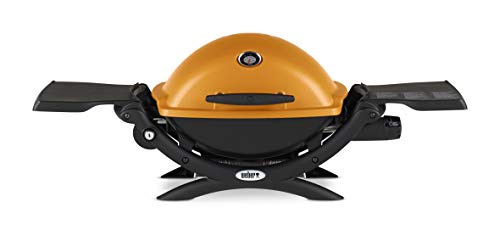
The Weber Q 1200 is a tabletop-style propane grill with a single stainless steel burner rated at 8,500 BTU. That single figure sounds modest until you see the porcelain-enameled cast-iron grates, which hold and radiate heat efficiently enough to sear thin cuts in a parking lot. For campers, condo dwellers, and tailgaters, it punches above its size.
Where the EX-325 Smart runs on connectivity, this Q leans into simplicity. The electronic push-button ignition, powered by a single AA battery, gets you from unboxing to cooking in a couple of minutes. It is not built for eight steaks, but it handles four burgers and a round of vegetables with no fuss, and folds down to fit in a sedan trunk.
The Value In It
- Porcelain-enameled cast-iron grates retain heat well for the size.
- Push-button ignition eliminates the lighter-and-hope ritual.
- Single burner with infinite control valve allows fine temperature tuning.
- Compact footprint fits balconies, truck beds, and picnic tables.
Points To Note
- Small grate area limits larger cuts and full meal spreads.
- Disposable 1-pound propane canisters run out quickly during longer sessions.
Who Will Love This
Campers, tailgaters, and apartment dwellers who need a grill that stores in a closet and cooks real food in the open air.
Skip It When
The Oklahoma Joe’s Canyon Combo fits households that want dual-fuel flexibility and a much larger cooking surface for home entertaining.
The Lodge Kickoff is technically not a gas grill at all, but it earns a spot for anyone who cooks outdoors without infrastructure. Two cast iron pieces, a 12-inch cooking surface on top and a base below, twist together to control airflow around a charcoal or wood fire. No assembly is required, and the whole thing weighs a manageable amount for short carries.
For context, the Weber Q 1200 needs a propane source, but the Lodge just needs fuel, a flat surface, and weather that isn’t raining sideways. It is the kind of grill that lives in an SUV during football season and a cabin closet during ski weekends, and you season it the same way you season any cast iron: with oil, heat, and patience.
What Works In Its Favor
- Two-piece cast iron design requires zero assembly or tools.
- Draft control lets you tune airflow without buying extra vents.
- Compact enough to pack alongside coolers and camp chairs.
Trade Offs
- Cast iron needs seasoning and careful drying to prevent surface rust.
- Charcoal or wood fuel adds prep time that gas owners avoid entirely.
Made For
Campers, cabin hosts, and tailgaters who want cast-iron sear marks without hauling a full-size grill to the site.
A Better Fit Elsewhere
The Weber Q 1200 Portable Gas Grill suits anyone who prefers push-button propane convenience over managing live coals.
The Spirit E-325 Natural Gas brings the line’s three-burner layout to households with a dedicated gas line. The Sear Zone, controlled by the red Boost Burner knobs, concentrates extra heat across a strip of the grate for fast browning on steaks and chops. Outside that zone, the remaining burners handle indirect cooking for chicken, vegetables, and whole fish.
For shoppers who already have a natural gas stub-out on the patio, this model eliminates tank swaps and propane storage. Compared to the EX-325 Smart earlier in the list, you give up app-based temperature tracking in exchange for always-on fuel. The trade-off makes sense for anyone who cooks four nights a week and hates the last-minute propane run.
What Pays Off
- Natural gas hookup removes the propane refill cycle from your routine.
- Sear Zone heat boost reaches higher temperatures for restaurant-style marks.
- Three independent burners allow true two-zone cooking setups.
- Snap-Jet-style individual ignition reduces fiddling with a long lighter.
Honest Caveats
- Requires a professional natural gas line installation if your patio lacks one.
- Fixed location limits portability compared to propane counterparts.
At A Glance
Best Suited To
Home cooks with an existing natural gas line who grill multiple times a week and want consistent fuel without managing tanks.
Consider Something Else When
The Weber Spirit E-325 Propane Gas Grill suits renters and households without a gas stub-out who still want the same burner layout.
The Spirit E-425 stretches the proven three-burner Spirit platform into four-burner territory, while keeping the propane tank format that most households already understand. The extra burner means more even heat across the grates, so you can run a main course, a vegetable tray, and a side of bread without rotating pans.
The Sear Zone works the same way as the smaller E-325, with two red Boost knobs directing extra heat to a narrow strip of grate. Where the E-210 covers a couple’s dinner and the E-325 handles a family, the E-425 starts to feel like a party grill. For most backyards, it is the point where capacity and footprint reach a balanced middle.
The Upside
- Four-burner layout cooks an entire meal across multiple temperature zones.
- Propane fuel keeps the unit portable and free of fixed-line installation.
- Sear Zone delivers intense browning without taking over the whole cooking surface.
Worth Noting
- Larger footprint demands a generous patio or deck space.
- Propane tank refills become routine during heavy entertaining seasons.
- More burners mean a slightly longer preheat to reach even temperatures.
Right Fit For
Households that host extended family cookouts and need parallel cooking zones without committing to a built-in outdoor kitchen.
Look Elsewhere When
The Weber Genesis S-415 Natural Gas Grill fits households with a natural gas line and stainless-steel preferences for long-term use.
The Spirit E-210 is the entry point in the Spirit lineup, with two burners in a chassis designed for small patios and townhouse balconies. The footprint is small enough to slide under a covered porch during a storm, yet the cooking surface still handles four chicken breasts or a pair of steaks with room to spare. It uses the same Snap-Jet individual ignition as its larger siblings.
Compared to the Weber Q 1200, the E-210 trades tabletop portability for a freestanding cart and a real warming rack. The trade-off makes sense for households that want a permanent-feeling grill but lack the space for a three- or four-burner setup. Two-burner cooking does require a little more attention during bigger meals, since you are managing zones on a tighter surface.
Useful Strengths
- Two-burner layout fits tight patios without sacrificing grilling surface.
- Propane tank format keeps installation simple.
- Individual ignition reduces reliance on a long-barrel lighter.
A Few Limitations
- Limited zone separation makes simultaneous high-heat and low-heat cooking trickier.
- Smaller grate area constrains larger roasts and whole birds.
Perfect Match For
Apartment dwellers and small-household cooks who want a freestanding Spirit grill without the footprint of a three- or four-burner model.
Reach For A Different Pick When
The Weber Spirit E-325 Propane Gas Grill suits households that want an extra burner and wider grate but stay on propane.
This Spirit E-325 in propane trim is essentially the workhorse middle child of the lineup. Three burners and a Sear Zone give you the same flexibility as the natural gas version reviewed earlier, while keeping the propane tank format that renters and most suburban households rely on. It cooks a week’s worth of Wednesday-night chicken without complaint.
Versus the EX-325 Smart that opened this list, you give up Wi-Fi temperature monitoring and the wired probe, and you keep the same basic burner geometry. For most households, that is a sensible trade, since the smart features feel like a bonus more than a daily necessity. The honest read is that this is the Spirit that most people should actually consider first.
What Stands Out
- Sear Zone with Boost Burner knobs delivers strong localized heat.
- Three-burner capacity handles a full dinner plus sides.
- Propane format avoids the installation step of a natural gas line.
- Side tables provide prep space without a separate kitchen cart.
Room For Improvement
- Propane tank placement inside the cart can interfere with larger grill covers.
- No built-in smart features means you monitor food by look and feel.
Feature Card
Whose Shelf It Belongs On
Households that want a versatile mid-size propane grill for family dinners and weekend cookouts without smart features.
Not Your Match When
The Weber Genesis S-415 suits shoppers ready to step up to stainless-steel construction and a natural gas hookup.
The Genesis S-415 moves up the Weber ladder with stainless steel construction and the PureBlu burner system, which uses tapered tubes to keep flame pressure consistent across the grill. The result is more uniform heat from front to back, fewer cold spots near the edges, and a noticeable jump in overall cooking consistency compared to the Spirit lineup.
Where the Spirit models cover everyday use, the Genesis is built for households that grill year-round and want a grill to last several seasons. The natural gas hookup assumes a permanent gas line, and the heavier chassis means you should plan its location before assembly. For buyers who treat grilling as a serious hobby rather than weekend fun, this is a logical step up.
Useful Highlights
- Stainless steel construction resists weather and simplifies surface cleaning.
- PureBlu burner system supports steady flame pressure and even heat.
- Four-burner layout plus side burner expands simultaneous cooking capacity.
- Natural gas format removes propane tank logistics from your routine.
Some Limits To Know
- Higher price point than Spirit models; stainless demands regular wipe-downs to prevent water spots.
- Requires a permanent natural gas line and a fixed location.
Built With In Mind
Serious home grillers with a natural gas line who cook frequently and want a longer-lasting stainless upgrade over the Spirit line.
Where A Sibling Pick Shines
The Weber Spirit E-425 Natural Gas Grill fits households that want a four-burner layout and Sear Zone on a tighter budget.
The Spirit E-425 Natural Gas pairs the four-burner capacity that big families appreciate with the always-on convenience of a fixed gas line. The Sear Zone still anchors the cooking surface, and the additional burner gives you three ambient zones plus a high-heat strip, which is plenty for a multi-course cookout.
Compared to the propane version of the E-425 covered earlier, this model swaps the tank for a hose to your gas stub-out. You lose the option to wheel the grill to a different spot, but you gain the kind of fuel reliability that makes weeknight grilling feel routine. For households that already have the gas line in place, the choice between this and the Genesis mostly comes down to materials and budget.
A Few Highlights
- Four burners plus Sear Zone serve a large household on a single cook.
- Natural gas hookup means no tank swaps or fuel level checks.
- Individual burner ignition keeps start-up simple.
Potential Drawbacks
- Permanent placement requires a natural gas line and a stable patio surface.
- Larger cart footprint reduces flexibility on smaller decks.
Who It Suits Best
Larger households with a natural gas line that want Spirit-level features at four-burner capacity.
Swap It Out When
The Weber Genesis S-415 fits shoppers who want stainless construction and a side burner beyond what the Spirit line offers.
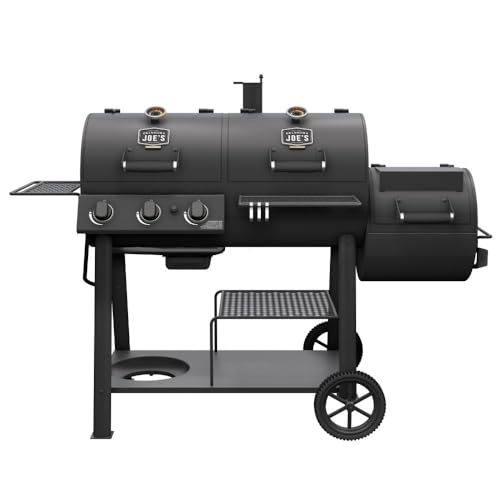
The Canyon Combo splits the difference between gas and charcoal, with a 750-square-inch charcoal chamber on one side and a 3-burner propane side on the other. You can run a low-and-slow smoke in the morning and flip to propane grilling for an evening cook without firing up a second rig. Owners commonly appreciate the flexibility once they settle into a rhythm.
Where Weber Spirit models stick to one fuel and a more polished finish, the Canyon Combo leans into utility. The total cooking area, spread across both sides, fits a couple of pork shoulders on the charcoal side while leaving the propane burners free for vegetables and quick-cooking cuts. The honest trade-off is footprint, since this is a larger cart than most single-fuel grills.
Real Benefits
- Dual-fuel design covers smoking and grilling in a single footprint.
- Large combined cooking area suits brisket-and-burger weekend cooks.
- Propane side lights fast for quick weeknight dinners.
Worth Bearing In Mind
- Charcoal side requires fuel management, ash cleanup, and longer preheats.
- Large cart footprint needs generous patio or deck space.
- Propane tank not included, so budget for a tank and hose at setup.
Best Suited To
Backyard cooks who want both slow-smoked barbecue and fast propane grilling on one chassis and have the space to host it.
Where Another Pick Suits Better
The Weber Spirit E-425 Propane Gas Grill fits households that prefer a single-fuel grill with cleaner lines and simpler maintenance.
Factors To Consider When Choosing natural gas grills
Fuel Type And Infrastructure
The first real choice is propane versus natural gas, and the answer usually lives in your backyard. Propane models are portable, work on any patio, and require only a tank swap. Natural gas models hook into a fixed line, which means no refills, but also a permanent spot and a professional connection if the line is not already run.
Cooking Capacity And Burner Layout
Burner count shapes what you can cook in one pass. Two burners cover date-night dinners, three handles a full family meal, and four or more earns its space once you entertain regularly. Pay attention to zone flexibility too, since dedicated Sear Zones, areas of concentrated heat, give you room to sear and roast simultaneously.
Build Materials And Long-Term Care
Porcelain-enameled cast-iron grates hold heat well and resist rust with simple brushing. Stainless steel hoods and carts weather the elements cleanly but show water spots without routine wipe-downs. For coastal or humid climates, owners commonly report that covered storage extends the life of every grill finish.
Size, Footprint, And Storage
Measure your space before you fall in love with a four-burner cart. Most mid-size grills need at least a few feet of clearance behind and above for safe venting, and a grill cover fits best when the cart dimensions match the cover size. Apartments and small balconies often call for compact Spirit or Q models instead.
Key Considerations Across These Picks
Pitfalls Shoppers Hit
A common mistake is picking the largest grill that fits the budget, only to discover it crowds the patio and cooks more food than the household actually eats. Another is assuming any propane grill converts to natural gas, since most models are built for one fuel or the other. Run a tape measure across the proposed spot, and confirm fuel type against your existing setup before you click.
Where The Extra Money Goes
Higher-tier grills like the Genesis S-415 earn their premium through stainless construction, more refined burner systems, and longer expected service life. You pay for materials that survive weather and burners that hold consistent flame patterns over years of use. For households that grill weekly, the upgrade often pays back in durability. For monthly summer cooks, a Spirit model delivers plenty of cooking performance at a friendlier entry point.
Frequently Asked Questions
How do natural gas and propane grills differ in daily use?
Natural gas grills connect to a fixed line and never need refills, while propane grills run on a swappable tank. The cooking experience is essentially the same once each is running, so the choice usually comes down to whether you already have a gas stub-out on your patio.
Can a propane grill be converted to natural gas later?
Some manufacturers offer conversion kits, but they must match the exact model. Converting a grill without the correct kit can create safety issues, so always verify compatibility with the manufacturer before attempting any fuel change.
What size grill fits a family of four?
Three burners typically cover a family of four with room for a main course and one or two sides. Smaller households often do well on two burners, while frequent entertainers benefit from four burners plus a Sear Zone.
How often should grill grates be cleaned?
Brushing the grates while they are still warm after each cook prevents buildup, with a deeper clean every few uses. Routine brushing keeps flavor carryover in check and extends grate life on porcelain-enameled cast iron.
Is stainless steel worth the extra cost?
Stainless steel hoods and carts resist weather and clean up easily, which suits year-round outdoor setups. For grills that live under cover and only see summer use, painted steel finishes hold up fine at a lower entry point.
Bottom Line
The right grill comes down to fuel type, space, and how often you cook. Match those three to a size that fits your patio, and the rest is just preference between smart features, extra burners, or dual-fuel flexibility. Start with a Spirit model for everyday use, step up to a Genesis for stainless longevity, or grab a Q or Lodge for portable adventures off the patio.