Yard cleanup has changed. A decade ago, “cordless blower” meant a toy that could barely nudge a pile of dry leaves, and gas still ruled anything serious. Today, battery tech caught up: brushless motors (motors with no carbon brushes, so they spin cooler and last longer) deliver real airflow, runtime stretched past a few minutes, and the whole tool no longer drags on your shoulder or tangles you in an extension cord. For homeowners with a small-to-medium yard, decks, or a workshop that doubles as storage, the right cordless blower clears the path in minutes.
This list rounds up seven options across price tiers and power classes, from compact homeowner picks to pro-grade 36V kits. Each entry covers what it does well, where it stretches, and the kind of yard work it’s built for.
A Snapshot Of The Selections

Makita XBU02PT1 LXT Brushless Blower Kit (5.0Ah)

Makita XBU02PT LXT Brushless Blower Kit (Teal)

LAZYBOI 21V Cordless Leaf Blower with 2 Batteries

WORX WG547 20V Cordless Leaf Blower
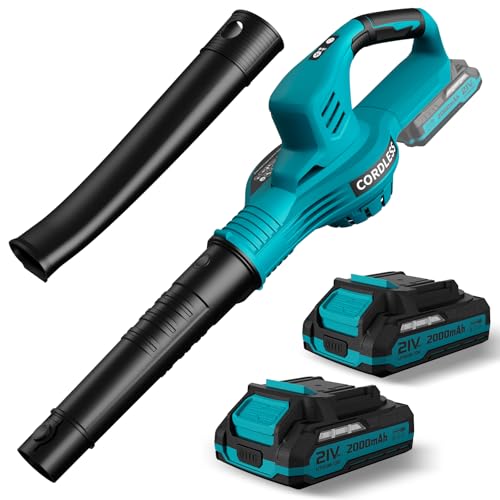
LAZYBOI 21V Cordless Leaf Blower

WORX WG543 Nitro 20V Cordless Blower

WORX WG545.1 20V Air Blower Kit
Meet The Standout Selections
The XBU02PT1 is the kit landscapers reach for when “good enough” no longer covers the workload. It runs on Makita’s 18V x2 platform, meaning two 18V batteries combine to deliver 36V of total power to a brushless motor, which is the same trick that lets it rival older gas units without the noise or fumes. The kit ships with four 5.0Ah packs, so a half-day of property work becomes routine rather than a battery-rotation puzzle.
Where it earns its keep is on large lots where one charge isn’t optional. If you’re maintaining a multi-acre property or juggling several small yards back-to-back, that extra battery capacity pays for itself fast. It does feel heavier than compact picks, and you’ll want a sturdy shoulder strap for long sessions.
Why It Works Well
- Four 5.0Ah batteries included, so a backup pack is always on hand
- Brushless motor extends tool life and reduces heat buildup
- Zero emissions and quieter than gas for residential noise rules
- 36V power rivals older gas blowers without the maintenance cycle
- Compatible with the wider Makita 18V LXT tool ecosystem
Points To Keep In Mind
- Heavier than compact homeowner units, so arm fatigue matters
- Full kit price sits higher than single-battery alternatives
- Bulkier battery packs add width to the grip
Key Product Details
Who It Suits Best
Professionals and acreage owners running multi-hour cleanup sessions who already use Makita’s 18V LXT platform.
Where Another Pick Suits Better
For a small patio or single yard, the LAZYBOI 21V Cordless Leaf Blower with 2 Batteries is a lighter, less expensive fit.
The XBU02PT shares the same 36V brushless foundation as its four-battery sibling, but trims the kit down to two 5.0Ah packs. For most homeowners with a quarter-acre lot, that’s plenty of runtime per session and a noticeably lighter upfront investment. The teal Makita colorway is a visual cue that you’re holding a serious piece of gear, not a casual sweeper.
The trade-off is real but workable: you’ll charge between jobs instead of swapping. Property owners with bigger yards will hit that limit fast, but weekend warriors clearing leaves once a week probably won’t. Asurion protection plans are available for accidental drops and breakdowns on top of the manufacturer’s warranty, which is a small comfort for a tool you’ll rest against tree trunks.
Strong Points
- 36V output from twin 18V batteries delivers pro-grade airflow
- Two 5.0Ah packs give solid single-session runtime
- Brushless motor cuts maintenance compared to brushed units
- Quieter and emissions-free compared to gas blowers
Worth Bearing In Mind
- Half the battery capacity of the XBU02PT1 kit
- Higher weight than 20V homeowner models
- Best value realized if you stay on the Makita 18V LXT platform
Made For
Landscapers and serious DIYers who want pro power without paying for four batteries they may not rotate through.
A Better Fit Elsewhere
Homeowners cleaning a smaller yard benefit more from the WORX WG547 20V Cordless Leaf Blower’s lighter grip.
This LAZYBOI model is the kind of tool you grab for a fifteen-minute patio sweep without thinking twice. It runs on a 21V battery platform, ships with two 2.0Ah packs, and weighs in at the handheld end of the spectrum. Two-speed control keeps the noise and airflow in check for light debris like dry leaves, grass clippings, or sawdust on the driveway.
You won’t confuse it with a contractor blower. Wet leaves, pine needles matted into the lawn, or a driveway full of gravel will all test its limits, and you’ll see the motor bog down. For covered decks, garage entries, and small lawn patches, though, the dual-battery inclusion makes it a genuinely practical entry point. Owners commonly report the second battery saves them when the first runs dry mid-job.
Useful Touches
- Two batteries included, useful when one runs out mid-cleanup
- Lightweight handheld design for quick top-off sessions
- Two-speed control balances power and runtime
- Affordable entry into cordless leaf cleanup
Small Caveats
- Struggles on wet or heavy debris compared to 36V units
- 2.0Ah packs deliver shorter continuous runtime
Quick Facts
Best Suited To
Homeowners with small yards, patios, and garages who want a grab-and-go tool rather than a pro-grade machine.
Not Your Match When
For multi-acre properties or commercial cleanup, the Makita XBU02PT LXT Brushless Blower Kit offers the airflow you need.
WORX’s WG547 sits squarely in the sweet spot for everyday yard work. It uses a Turbine fan design, which is a fan blade geometry that pulls in more air per rotation than a standard propeller, to push its 20V motor into territory where it competes with bigger units. Max airflow is rated at 360 cfm (cubic feet per minute), which means the air volume pushed out per minute of operation, enough to clear a driveway’s worth of leaves without breaking a sweat.
The lighter weight and PowerShare compatibility make it a sensible choice if you already own other WORX 20V or 40V tools. Swapping batteries between a drill, trimmer, and blower cuts down on charging downtime. You may find it a touch short on power against deep, wet leaf piles, but that’s where its bigger sibling, the WG543, takes over.
Real-World Strengths
- Turbine fan technology boosts airflow without a bigger motor
- 360 cfm output handles everyday lawn debris
- PowerShare batteries swap across 140+ WORX tools
- Lightweight enough for one-handed operation
Trade Offs
- Less powerful than the WG543 for wet leaves
- Single-battery runtime limits longer sessions
The Right Fit
Homeowners maintaining a small-to-medium yard weekly who already use or plan to add WORX 20V tools.
Look Elsewhere When
Heavier fall cleanup with wet leaves calls for the WORX WG543 Nitro 20V Cordless Blower instead.
The slimmer of the two LAZYBOI entries focuses on one-handed portability. Its narrower body and shorter nozzle make it feel less like a leaf blower and more like a powered dust wand, which is exactly the point when you’re clearing a screened porch, a workshop floor, or a car’s interior vents. The 21V platform stays consistent with the larger LAZYBOI model, so you don’t sacrifice power for compactness.
Where it shines is in tight spaces where the bigger blowers feel clumsy. The narrower intake path is great for corners and crevices. For wide lawn sweeps, you’ll be working harder than you would with a longer barrel. It’s a secondary-tool purchase for most people, useful alongside a more powerful blower for detail work.
What Pays Off
- Compact form factor for tight indoor and outdoor spaces
- Lightweight grip reduces wrist strain
- Same 21V power family as the larger LAZYBOI model
- Affordable backup tool for detail jobs
Honest Caveats
- Shorter nozzle means more passes on wide areas
- Not built for heavy yard debris
Whose Shelf It Belongs On
Apartment dwellers, workshop owners, and detail-oriented homeowners who want a blower for corners and crevices first.
Swap It Out When
For wide driveway sweeps, the WORX WG545.1 20V Air Blower Kit’s nine-piece attachment set adapts better.
The Nitro WG543 is WORX’s answer to homeowners who keep finding the WG547 short of breath. Its variable air-control nozzle slides between two modes, reaching up to 410 cfm in volume mode, which is plenty for shifting wet leaves and heavier debris that a basic 20V blower can’t touch. The dynamic nozzle is a small detail that pays off when you’re switching between tight corners and open lawn.
The trade-off is battery draw. Higher cfm pulls power faster, so a single charge won’t run as long as on the WG547. Most users find the extra airflow worth the runtime cost during fall peak season. Asurion protection plans are available for accidental damage on top of the manufacturer’s warranty, useful for a tool that lives outdoors.
Positive Points
- 410 cfm volume mode tackles wet leaves and debris
- Sliding nozzle switches between volume and precision
- Nitro brushless motor for longer tool life
- PowerShare battery compatibility across WORX tools
- Quieter than gas-powered alternatives
Factors To Consider
- High mode drains the battery faster than the WG547
- Heavier in the hand than compact homeowner units
Feature Snapshot
Who Should Grab It
Homeowners with mature trees and heavy fall leaf drop who need real cordless power without jumping to 36V kits.
Consider Something Else When
For lighter weekly tidying, the WORX WG547 20V Cordless Leaf Blower offers similar ergonomics with longer runtime.
The WG545.1 is the most versatile blower in WORX’s 20V Air lineup, and arguably on this whole list. It ships with nine attachments that re-task the basic blower for jobs you’d never associate with leaf cleanup: vacuuming seat cracks, sweeping behind the fridge, deflating pool toys, detailing the car. The narrow nozzle design that makes it a leaf blower also makes it a precision dust tool.
The catch is that none of those attachments turn it into a heavy-duty yard blower. It handles patio leaves well, but a mountain of wet maple debris will humble it. Where it wins is households that want one cordless tool for both yard and garage duty. PowerShare compatibility means the same battery covers all 140+ WORX tools, an underrated ecosystem perk for cordless tool households.
Where It Excels
- Nine attachments convert it from blower to vacuum to inflator
- Narrow nozzle reaches tight spaces other blowers can’t
- PowerShare battery works across the WORX 20V, 40V, and 80V line
- Lightweight design for indoor and outdoor use
Possible Compromises
- Less raw airflow than the WG543 for heavy yard cleanup
- Multiple attachments mean more parts to store and track
Built With In Mind
Multi-purpose homeowners who want a single cordless tool for yard, garage, workshop, and detail cleaning.
Reach For A Different Pick When
For a yard-first priority with serious leaf volume, the WORX WG543 Nitro 20V Cordless Blower offers more muscle.
What Matters Most Before Choosing lightweight cordless leaf blowers
Power System and Voltage Class
Cordless blowers split into three loose tiers. Compact 20V and 21V units cover light yard work, patios, and single-handed operation. Mid-tier 36V models, like the Makita XBU02PT1, use dual-battery setups to deliver gas-comparable airflow. Higher voltage doesn’t always mean better for your yard, but it does mean heavier and more expensive. Match the tier to your lot size rather than chasing maximum airflow.
Battery Capacity and Runtime
Ah (amp-hour) is the unit that measures how much charge a battery holds, and higher Ah means longer runtime per pack. A 2.0Ah battery may run 15–20 minutes on low, while a 5.0Ah pack can stretch past 45 minutes under similar load. For most homeowners, two batteries is the practical sweet spot: one in use, one charging, with swap-and-go workflow that keeps cleanup continuous.
Weight and Ergonomics
Heavier blowers wear out your wrist and shoulder faster, especially during overhead work like clearing gutters or roof edges. A handheld unit under 5 pounds suits one-handed use, while a 36V pro model benefits from a shoulder strap. Consider whether you’ll be doing five-minute touch-ups or hour-long sessions, and pick the weight class accordingly.
Airflow Ratings in Context
Cfm (cubic feet per minute) measures air volume, while mph measures air speed. Both numbers tell part of the story. A blower pushing 400 cfm at lower mph moves wide leaf piles well. A blower pushing 300 cfm at higher mph concentrates force on stuck debris. Variable-speed nozzles, like the one on the WORX WG543, let you tune the balance on the fly.
Key Considerations Across These Picks
Mistakes Worth Dodging
The most common slip is buying a blower that’s either too small or too big for the actual workload. Compact units under 20V look like a bargain until they can’t shift wet leaves, while 36V pro kits feel like overkill until you’ve used one. Match voltage and battery count to yard size, not aspiration.
Another trap is ignoring the battery ecosystem. WORX, Makita, and similar brands run tool families where one battery powers dozens of products. If you already own a brand’s 20V tools, sticking with that platform saves money and shelf space.
What The Higher Tier Buys
Premium 36V kits, like the Makita XBU02PT1, buy you brushless motor longevity, dual-battery runtime, and gas-comparable airflow. The upgrade is worth it for large lots, multi-day projects, or anyone who already lives inside the brand’s ecosystem. For a small patio, the premium tier spends money you won’t recover in saved effort.
Frequently Asked Questions
How long do cordless leaf blower batteries typically last per charge?
Most cordless leaf blower batteries run 20 to 45 minutes per charge depending on the Ah rating and speed mode. Higher-capacity 5.0Ah packs stretch toward the upper end, while compact 2.0Ah batteries land closer to 20 minutes.
Can lightweight cordless blowers handle wet leaves?
Lightweight 20V and 21V units generally struggle with wet or matted leaves. Mid-tier 36V blowers and high-cfm units like the WORX WG543 handle wet debris better, though even premium cordless models don’t match gas blowers on soaked piles.
Are brushless motors worth the extra cost?
Brushless motors run cooler, last longer, and extract more runtime per charge than brushed equivalents. For frequent use, the upgrade usually pays for itself in tool longevity and reduced maintenance.
What maintenance does a cordless leaf blower need?
Cordless blowers need very little. Keep air intakes clear of debris, store batteries at room temperature rather than in extreme cold or heat, and wipe the housing down after heavy use. No oil changes or spark plugs to worry about.
Can one battery work across different tool brands?
Only if the tools share the same battery platform. WORX PowerShare, Makita 18V LXT, and similar ecosystems share batteries within their own product lines, but cross-brand compatibility is rare. Pick a brand with the tool range you actually plan to own.
Wrap Up
The right cordless blower depends on the size of your yard, the type of debris, and how often you actually fire it up. Compact 20V and 21V picks cover light weekly tidy-ups without weighing you down. Mid-tier 36V kits take on larger lots and wet debris with confidence. Pick the tier that matches your workload, lean into the brand ecosystem you already own, and you’ll spend less time dragging cords and more time with a clean yard.