If your spring routine means wrestling a packed-down vegetable bed or fighting weeds along a narrow border, a full-size tiller feels clumsy. Compact garden tillers slide into raised beds, between rows, and around perennials where bigger equipment tears everything up. The category runs from hand-sized electric cultivators to gas-powered mini tillers with real bite, so the right pick depends on your soil, your plot, and how much noise and maintenance you’re willing to take on. These nine options cover the spread, from a child’s first hand tool to gas models that chew through established ground.
An Overview Of The Picks

MZK 20V Cordless Tiller Cultivator 8.5″ Steel Tines

Eurogarden Kids 3 Tine Cultivator Lightweight 35″

Saker 22V Cordless Garden Tiller Adjustable Speed
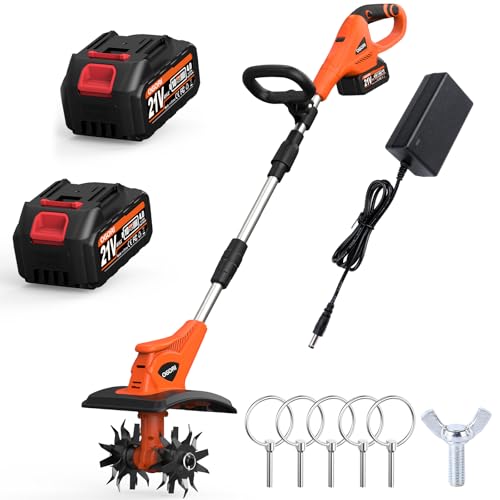
OGORI Cordless Electric Garden Tiller with 2 x 4.0Ah Batteries

Garvee Cordless Electric Tiller with 2×2.0Ah Batteries

GARDTECH Cordless Tiller Cultivator 235RPM 4″ Width
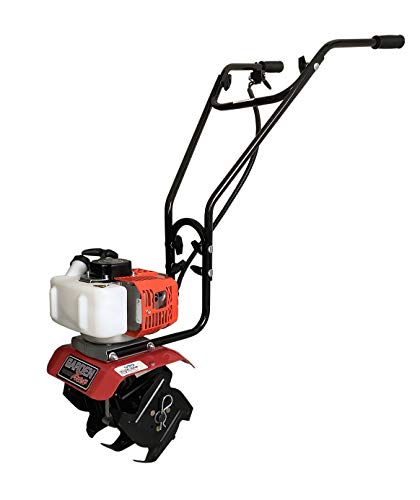
GardenTrax Mini Tiller Cultivator 33cc 2-Cycle Engine

Earthquake 12802 MC440 Mini Cultivator 40cc 4-Cycle Viper

Earthquake 31635 MC33 Mini Tiller Cultivator 33cc 2-Cycle
Inside Each Recommended Option
The MZK sits in the sweet spot where cordless tools meet first-time gardeners. Twenty volts of battery power spins 24 steel tines at 360 RPM through an 8.5-inch swath, which means one slow pass through a previously turned bed leaves a tidy seedbed without the sore shoulders of a shovel. You get into a raised bed, flip the switch, and let the tines do the work.
Compared to the bulkier Earthquake gas models covered later, this one trades raw torque for portability. For weekend gardeners prepping a few square feet at a time, that trade-off tends to land in the right place.
Everyday Advantages
- Lightweight cordless design means no extension cord to drag across a patio or lawn.
- Eight-and-a-half-inch working width suits narrow vegetable rows and tight borders.
- Steel tines break up clumps and aerate without requiring significant downward force.
- Quieter than gas tillers, so early-morning gardening won’t wake the household.
Things To Consider
- Battery life limits how much unbroken tilling you can finish on a single charge.
- Hard-packed or never-tilled soil may stall the tines, which is common for small electric units.
Key Product Details
Right Fit For
New gardeners with small raised beds and previously turned soil who want cordless convenience over gas muscle.
Look Elsewhere When
Your plot includes compacted, never-tilled earth, in which case the Earthquake 12802 MC440 Mini Cultivator has the torque to chew it open.
The Eurogarden is the only manual tool in this roundup, and that is exactly the point. Three steel tines on a 35-inch hardwood shaft give children and smaller adults a properly proportioned grip, without the awkward overreach that makes adult-sized hand cultivators frustrating. You push it between seedlings, twist, and pull clods loose.
It cannot compete with any motorized model on speed, but it costs almost nothing, never needs charging, and stores in a closet. For teaching kids how soil actually moves under a tool, nothing beats the feedback of doing it by hand.
What Stands Out
- Properly sized for small hands, so kids build real technique instead of fighting oversized equipment.
- Hardwood handle is solid in the grip and should survive years of backyard use.
- Zero noise, zero fuel, zero charging, which makes it ideal for quick weeding sessions.
Worth Noting
- Three-tine width is great for weeds but slow for preparing an entire bed from scratch.
- Steel tines may eventually collect rust if stored outdoors, which is common with unprotected hand tools.
- Not appropriate for breaking new ground; expect a workout in heavy clay.
Best Suited To
Parents teaching kids to garden, or adults who prefer lighter manual tools for small weeding jobs.
Swap It Out When
You want to prep an entire bed in one session, in which case the MZK 20V Cordless Tiller Cultivator gets the same chore done with far less effort.
The Saker stands out in a field of look-alike cordless tillers by offering three usable speed settings. A 22V battery drives four steel tines at 200, 270, or 360 RPM through a 9-inch wide, 6.3-inch deep path. Lower speeds let you work around shallow-rooted herbs without throwing dirt sideways, while top speed chews through pre-worked beds in a hurry.
Versus the single-speed GARDTECH coming up next, you get finer control over how aggressively the tines engage. Gardeners with several bed types often appreciate that flexibility.
Where It Excels
- Three-speed selection matches the work, instead of forcing one rotation rate for everything.
- 9-inch working width covers more ground per pass than narrower hand tillers.
- 6.3-inch tilling depth suits most annual vegetable root systems.
Trade Offs
- More speed options can feel like overkill for gardeners who only need one mode.
- Like most cordless tillers, runtime depends heavily on which setting you spend most of your time in.
Feature Snapshot
Made For
Gardeners juggling different beds and crops in the same yard who want one tiller that adapts.
A Better Fit Elsewhere
If your plot is uniform and small, the GARDTECH Cordless Tiller Cultivator keeps things simpler with a single focused speed.
The OGORI leans toward the workhorse side of this roundup, pairing a 360 RPM motor with two 4.0Ah batteries in the box. Four steel tines carry 12 cutting blades across a 9-inch by 6.3-inch zone, which is more aggressive contact area than most battery tillers in this size class offer. You can finish a medium bed on a single battery and keep going on the second.
Compared to the lighter Garvee model with smaller batteries, this one is built for longer sessions. The trade-off shows up in weight, since dual batteries and a beefier motor add up.
A Few Highlights
- Two 4.0Ah batteries extend runtime for larger plots and one rotation mode.
- High-torque motor handles firmer ground than typical 20V-class tillers.
- 9-inch working width finishes larger beds in fewer passes.
Honest Caveats
- Heavier than smaller cordless units, which may tire out some gardeners during long sessions.
- Larger battery pack adds bulk that may not suit tight storage spaces.
Who It Suits Best
Home growers with medium-sized plots who want cordless convenience without babysitting the charger mid-job.
Reach For A Different Pick When
Storage and lightness matter more than runtime, in which case the Garvee Cordless Electric Tiller stays compact and easy to haul.
The Garvee keeps things straightforward: a cordless 4-tine tiller running up to 360 RPM, covering a 9-inch width and 6-inch depth, and two 2.0Ah batteries in the box. No app, no settings dial, no learning curve. You grab it, click the battery in, and pull the trigger.
It is a logical step up from the basic MZK for gardeners who simply want more battery capacity per session. The trade-off is that those 2.0Ah packs deliver less sustained power than the OGORI’s larger 4.0Ah units.
Advantages To Know
- Compact form factor makes it easy to carry from shed to garden and back.
- Cordless design works in raised beds far from any outlet.
- Two batteries in the box extend total session time when one runs low.
Points To Note
- Smaller battery capacity than the OGORI, so heavy days may require recharge pauses.
- Single-speed operation leaves less finesse for delicate weeding between seedlings.
Feature Card
Perfect Match For
Backyard gardeners who want a no-fuss cordless tiller with backup battery capacity for occasional sessions.
Consider Something Else When
You till large plots every weekend, in which case the OGORI Cordless Electric Garden Tiller with bigger batteries handles longer jobs.
The GARDTECH trades width for precision. Four hardened 65Mn steel tines rotate at 235 RPM through a 4-inch wide, 4-inch deep path, which is exactly the right size to slip between lettuce rows or along the base of a raised bed wall. The lower RPM is gentle on roots of nearby crops while stirring the top layer where weeds germinate.
It is not built for breaking ground or the size of plot the wider OGORI handles in two passes. Where it wins is in the tight, awkward corners other tillers cannot reach.
Real Benefits
- Narrow 4-inch profile works between vegetable rows without damaging nearby roots.
- 2.0Ah battery keeps the unit light and easy to maneuver one-handed.
- Lower rotation speed gives finer control around delicate plantings.
Less Ideal Details
- Small working width means more passes for larger beds, which is a real time cost.
- Compact motor is best reserved for already-loose soil, not for breaking new ground.
Feature Rundown
Who Will Love This
Gardeners with narrow rows, tight raised-bed layouts, or mixed plantings that need precise cultivation.
Skip It When
You need to open up a big plot, in which case the Earthquake MC440 brings real gas-engine torque to the job.
The GardenTrax is the first gas-powered model in this roundup, and it earns its place by handling the work the cordless units cannot. A 33cc 2-cycle engine paired with a worm-drive transmission (a geared setup that turns the engine’s rotation 90 degrees down to the tines, multiplying torque) chews through established ground instead of skating over it. A 10-inch working width and 4-inch depth cover a meaningful patch per pass, and a U-turn handlebar absorbs vibration so your hands do not.
Compared to the Earthquake MC33 that follows, this model shares the same displacement class but adds worm-drive gearing for smoother ground engagement.
Useful Strengths
- Worm-drive transmission delivers strong torque for breaking new ground.
- 10-inch working width covers larger patches than most cordless units in this roundup.
- Vibration-dampening handlebar reduces fatigue during longer sessions.
Points To Keep In Mind
- 2-cycle engine requires mixing oil and fuel, which adds a maintenance step.
- Heavier and louder than any cordless option in this list, which is common for gas tillers.
Built With In Mind
Home growers reclaiming neglected beds or starting new plots where cordless tillers stall out.
Where A Sibling Pick Shines
If mixing fuel feels like a hassle, the Earthquake 12802 MC440 Mini Cultivator uses a 4-cycle engine with no fuel mixing.
The Earthquake MC440 is the largest, most capable option in the lineup, built around a 40cc 4-cycle Viper engine. Unlike the GardenTrax and Earthquake MC33 covered elsewhere, this 4-cycle runs on straight gasoline with no oil mixing. Stand-up starting and a balanced frame let you walk behind it the way you would a small rototiller, except at a fraction of the weight.
Where cordless units stall on compacted ground, this one keeps turning. The trade-off is engine maintenance: oil changes, spark plugs, and air filter cleaning are all part of ownership.
Everyday Perks
- 4-cycle engine runs quieter than typical 2-cycle garden tillers.
- No fuel-oil mixing simplifies the startup routine for less mechanically inclined gardeners.
- Compact frame is maneuverable around established plantings and fence lines.
Practical Considerations
- Gasoline engine requires periodic oil changes and air filter attention.
- Larger and louder than every cordless option, so it is not for noise-restricted neighborhoods.
Whose Shelf It Belongs On
Serious home growers with established plots who want gas muscle without the maintenance dance of a 2-cycle engine.
Not Your Match When
Storage space is limited, in which case the OGORI Cordless Electric Garden Tiller folds into a closet without fuel cans.
The Earthquake MC33 sits in the middle of the gas-powered options, pairing a 33cc 2-cycle Viper engine with a solid bronze gear drive for smooth power transfer. Height-adjustable wheels let you control how deep the tines dig, which is a real advantage when you are switching between weeding mode and full cultivation. An overhand handlebar allows both forward and backward operation, so working around delicate plants feels natural.
Compared to the heavier MC440, this model trades some raw power for lighter handling. In tight garden layouts, that is often the right call.
Everyday Wins
- Bronze gear drive (a metal-geared transmission known for durability) outlasts typical plastic gearing under load.
- Adjustable wheels give control over tilling depth without tools.
- Overhand handlebar allows both forward and reverse operation around obstacles.
Small Caveats
- 2-cycle engine requires oil-fuel mixing, which is one extra step at every fill-up.
- Less torque than the larger MC440 for breaking truly compacted ground.
The Right Fit
Home gardeners with established plots who want gas reliability without committing to the heaviest model in the category.
A Better Fit Elsewhere
If you regularly tackle compacted soil, step up to the Earthquake MC440 with its bigger 40cc displacement.
What To Weigh Before Choosing a Mini Cultivator
The first fork in the road is power source, and it shapes every other decision. Cordless electric cultivators handle previously turned beds, soft soil, and routine weeding without fuel, noise complaints, or engine upkeep. Battery life, charging cycles, and replacement packs are the recurring cost, and runtime gets shorter as soil gets firmer. Gas-powered mini cultivators bring real torque for breaking ground, but they trade that for fuel mixing (on 2-cycle units like the GardenTrax and Earthquake MC33), oil changes, spark plug service, and the noise and exhaust that come with any small engine.
The second fork is working width and depth. Narrow tillers like the GARDTECH slip between plantings where wider units tear up neighboring roots. Wider units like the GardenTrax and Earthquake MC440 finish larger patches in fewer passes. Match the tool to the smallest space you realistically need to work in, since oversized tillers in tight beds create more rework than they save.
Build and ergonomics matter more than spec sheets suggest. Steel tines hold up to rocky soil; plastic gears wear out faster than bronze. Handlebar height, vibration damping, and wheel adjustability decide whether a session ends comfortably or with sore wrists. For raised bed work, lighter cordless units often feel better in use than heavier gas models, even when the gas has more torque on paper.
Finally, think honestly about your soil and your storage. Clay-heavy or compacted plots push you toward gas power and worm-drive or gear-drive transmissions. Soft, regularly turned beds reward the cordless path. And if your tiller lives in a small shed or garage, weight and noise at startup become real daily factors.
Key Considerations Across These Picks
Pitfalls Shoppers Hit
The most common mistake is choosing a tiller that is too small for the actual job. Cordless cultivators are appealing at first glance, but they stall in never-tilled ground, and a stalled motor is what wears out a battery fastest. Match the tool to the soil, not the marketing photo. Another trap is overlooking fuel and storage needs for gas models. A 2-cycle engine requires mixing oil and gas at every fill, and leftover mixed fuel goes stale in the can, which is a small recurring chore that catches first-time gas tiller owners off guard. Finally, ignore handlebar height at your own peril. A tiller that forces you to hunch creates back pain faster than the tines break soil.
When Paying More Pays Off
Higher-tier models earn their keep through durability, not raw power. Bronze gear drives outlast plastic gearing. Steel tines resist bending where mild steel folds. 4-cycle engines spare you fuel mixing forever. For gardeners who till every spring, those construction differences matter more than a slightly faster RPM. Paying up also brings thoughtful touches like adjustable wheels and vibration-dampening handlebars that turn an annual chore into a tolerable one.
What Width Of Cultivator Should You Choose?
Pick a working width that matches your narrowest typical pass, not your widest bed. Raised beds and tight rows reward 4 to 8-inch cultivators like the GARDTECH and MZK, while open plots benefit from 9 to 10-inch working widths on models like the Saker or GardenTrax. Buying wider than you need means more plants get tilled by accident.
How Long Do Cordless Tiller Batteries Last?
Runtime depends on soil resistance, tine speed, and battery capacity (measured in amp-hours, where higher numbers mean longer sessions). A 2.0Ah battery handles short weeding sessions on loose soil. Heavier work in firmer ground drains packs faster. Owning a second battery, like with the Garvee and OGORI, eliminates mid-job charging pauses.
Can Mini Cultivators Break New Ground?
Only the gas-powered models in this roundup reliably break new ground. Worm-drive and gear-drive transmissions on the GardenTrax, Earthquake MC33, and Earthquake MC440 deliver the torque needed to chew into compacted earth. Cordless units work best in previously cultivated soil, which is a meaningful distinction worth noting before purchase.
Are Mini Cultivators Noisy?
Cordless tillers are quiet enough for early-morning use in most neighborhoods, since they produce only motor and tine noise. Gas models are louder, with 2-cycle engines typically louder than 4-cycle units like the Earthquake MC440. Noise ordinances and neighbor relations are worth considering, especially in close-quarter housing.
How Do You Maintain A Mini Cultivator?
Cordless units need almost nothing beyond keeping batteries charged and tines clean after use. Gas tillers need air filter cleaning, spark plug checks, oil changes on 4-cycle models, and fresh fuel mixtures on 2-cycle units. A quick post-use wipe-down extends tine life on every model, which is a small habit that pays off across years of ownership.
Bottom Line
The right mini cultivator tractor is the one that matches your soil, your bed layout, and your tolerance for engine maintenance. Cordless models like the MZK and GARDTECH keep things light and quiet for soft soil, while gas units like the Earthquake MC440 bring serious torque for breaking new ground. Pick the smallest tool that does the actual job, and your future self will thank you every spring.