When a Murray rider finally coughs, sputters, or refuses to turn over mid-season, most owners hit the same wall: finding the right part for a model that has been around long enough to outlast its paperwork. The picks below cover that exact pain point, from a genuine Murray lower bearing to a couple of modern remote-control mowers that step in if your old rider has truly retired. Each option here is judged on fit, real-world usefulness, and how it actually helps a weekend mechanic get back to cutting grass.
Your Options, Compared

Murray 94124MA Lower Bearing
Cub Cadet 683-0128B-0637 Pivot Bar

1722887SM PTO Clutch Switch
Mowrator S1 4WD 21-Inch Remote Mower
Mowrator S1 2WD 21-Inch Remote Mower

Honda HRX-BE 21-Inch Battery Mower
Why These Options Stand Out
This little bearing is the part most Murray owners never think about until the deck starts rattling or the spindle (the vertical shaft that drives the blade) throws a wobble. The 94124MA is a genuine factory replacement for Murray part 94124, which means it drops into the same bore as the original without any shimming or filing.
For someone restoring an older rider in the garage, the appeal is simple: no guesswork on dimensions. You press out the old race, press in the new one, and the blade spins true again.
The Value In It
- Genuine Murray part, so fitment matches the original 94124 spec exactly
- Lowers deck vibration and noise when spindles start wearing
- Compact and inexpensive compared with replacing the whole spindle housing
- Common across multiple Murray riding mower decks from past model years
- Restores smooth blade rotation without replacing the entire assembly
Things To Consider
- Requires a bearing press or carefully sized socket to install cleanly
- Not visible in the listing photo, so verify your deck model before ordering
- A rusted spindle shaft may need replacing alongside the bearing itself
Key Specs
Who It Suits Best
Garage mechanics reviving an older Murray rider whose deck has developed a wobble or rumble at the spindle.
Look Elsewhere When
If the noise comes from the steering or front axle rather than the deck, the Cub Cadet pivot bar is the more relevant replacement.
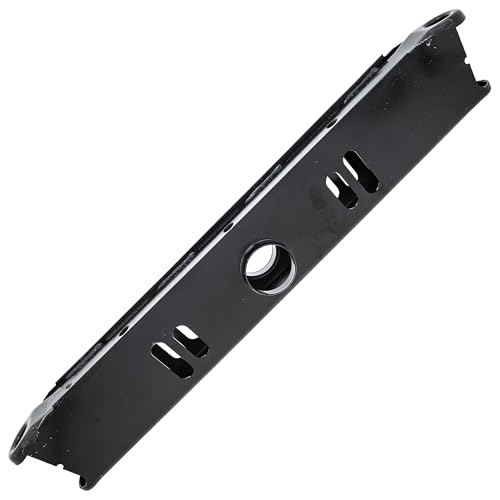
The pivot bar is one of those invisible parts that holds a riding mower together: it links the front axle to the frame and lets the whole front end pivot over bumps. Cub Cadet’s 683-0128B-0637 ships as a powder-coated (factory-finished with a baked-on protective coating) black bar that supersedes the earlier 683-0128B-4062 and 683-0128B-0709 numbers.
Murray riders rarely share this exact part, but the reason it earns a spot here is the broad fitment list across older MTD-built (a large parent manufacturer whose brands share common chassis) decks, including ACE, Agway, Columbia, and Yard-Man models. If your mower shares MTD bones with a Cub Cadet, this bar is often the right call.
Noteworthy Benefits
- OEM (original equipment manufacturer) replacement, so hole spacing and length match the factory part
- Powder-coated finish helps resist rust in damp garages and wet grass
- Cross-compatible across several MTD-family riding mower brands
- Replaces multiple superseded part numbers
Worth Noting
- Cross-brand fit requires confirming your chassis, not just the Murray badge on the hood
- Hardware such as bushings and pivot bolts is typically sold separately
Right Fit For
Shoppers with a Murray or MTD-family rider whose front end clunks over uneven ground and needs the OEM-style pivot bar.
Skip It When
If your problem is electrical, the 1722887SM PTO switch is a more direct fix than chasing a steering noise.
The PTO (power take-off) switch is the small toggle or push-button that tells the mower’s electric clutch to engage the blades. When it fails, the engine runs fine, but nothing spins underneath. This replacement switch carries part number 1722887SM and is rated at 10 amps, the same spec Simplicity and Ferris used in their original units.
What makes it useful for Murray owners is the broad cross-reference: it also fits Bad Boy, Snapper, Ariens, Craftsman, and MTD machines. If the same Murray model rolled off the same assembly line as a Simplicity, the switch often fits both.
Why It Works Well
- Restores blade engagement when the deck mysteriously refuses to spin
- 10-amp rating matches Simplicity and Ferris factory spec
- Cross-compatible across multiple riding mower brands, including Murray-adjacent models
- Compact switch installs with standard wiring connectors
Minor Gripes
- Requires basic electrical diagnosis first to confirm the switch, not the clutch itself, is at fault
- Connector style may need a light adapter on some non-original applications
Who Should Grab It
Owners troubleshooting a no-spin deck on a Murray or sibling-brand rider who has already ruled out belts and the clutch coil.
Consider Something Else When
You want a complete replacement mower, not a repair part. The Honda HRX-BE battery mower offers a fresh start instead of a parts swap.
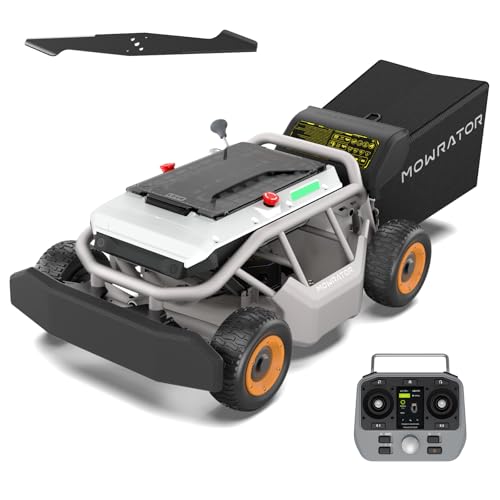
Not every Murray owner wants to keep patching a 20-year-old rider. The Mowrator S1 4WD is a remote-control mower built for the kind of terrain that scares traditional riders: a 37-degree slope rating (roughly 75 percent grade) thanks to its four-wheel-drive drivetrain and beefy 18Ah battery pack.
You drive it from a handheld remote instead of sitting on top, which keeps your feet on flat ground while it climbs the hill. For properties with sharp banks, drainage swales, or terraced edges, that swap from sitting to standing can be the whole point.
Key Advantages
- 37-degree slope capability handles terrain a rider typically refuses
- 21-inch cutting deck covers ground efficiently for a robotic-class mower
- 4WD traction on soft or uneven turf
- Optional snow plow, mulching blade, and tow hitch expand seasonal use
Points To Note
- Remote operation requires line of sight and a learning curve for steering inputs
- Heavier and more expensive than a basic push mower
Quick Facts
Best Suited To
Hillside property owners who want mower capability without riding into sketchy terrain on a traditional seat.
A Better Fit Elsewhere
Flat-lawn owners get the Mowrator S1 2WD, which trades slope rating for a lighter footprint.
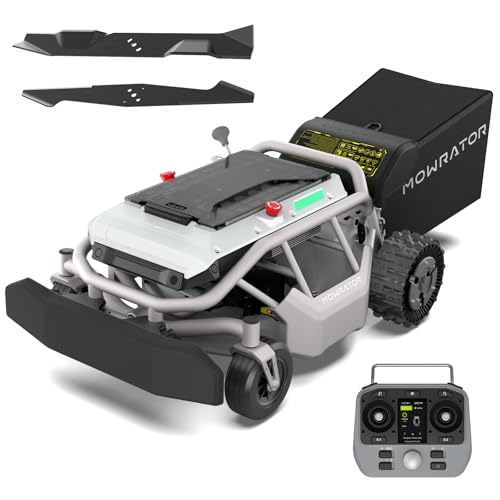
The 2WD version of the Mowrator S1 drops the four-wheel-drive system for a lighter, simpler package rated to 24-degree slopes (about a 45 percent grade). It still uses a 21-inch deck and the same remote-control layout, so the operating feel is familiar.
The pitch is straightforward: if your lawn is mostly flat with a few gentle grades, you save weight and complexity without losing the core benefit, which is cutting grass without walking behind a push mower or riding a seat.
Positive Points
- Lighter than the 4WD sibling, easier to store and maneuver
- 21-inch deck matches the larger Mowrator for cut quality
- Compatible with the same mulching blade and trailer hitch accessories
- Quieter operation than a gas rider
Trade Offs
- 2WD traction will slip on the steeper banks the 4WD model handles
- 12Ah battery is smaller than the 4WD’s 18Ah pack
Perfect Match For
Suburban lots with mild slopes where remote operation matters more than hill-climbing ability.
Reach For A Different Pick When
Your property has serious elevation changes, since the Mowrator S1 4WD handles those with far more confidence.
Honda’s HRX-BE swaps the gas tank for a battery pack but keeps the HRX chassis and Versamow deck. The 4-in-1 system lets you mulch, bag, discharge, or shred leaves without swapping attachments, just by moving the lever on the deck.
It is a walk-behind, not a rider, so the audience here is the Murray owner whose property is simply too small to justify a seat. You get Honda cut quality and quiet operation without oil changes or fuel stabilizer over the winter.
Where It Excels
- 4-in-1 Versamow deck with Clip Director eliminates attachment swaps
- Battery power cuts noise and eliminates fuel-mixing hassles
- 21-inch deck covers a standard residential lawn efficiently
- MicroCut twin blades (stacked blades that cut grass into very fine clippings) deliver finer mulching than single-blade designs
Honest Caveats
- Walk-behind format is a step down in comfort from any rider
- Higher upfront cost than a basic push mower
Feature Snapshot
Who Will Love This
Homeowners with a small to mid-size lawn who prefer quiet, low-maintenance battery operation over a gas engine.
Another Choice May Suit
Anyone sitting on a Murray rider today will find the Mowrator S1 4WD a more like-for-like upgrade.
Choosing Parts and Replacements for Older Murray Riders
The first decision is whether you are repairing or replacing. If the mower still runs, a $20 bearing or switch is almost always cheaper than a new deck. If the chassis itself is failing, replacement starts to make sense.
Match the part number exactly when possible. Murray part 94124 is the cleanest example: the 94124MA bearing is a direct replacement, no guesswork. Generic bearings may look identical but ride differently on the shaft.
Consider the chassis family. Many Murray riders were built alongside Cub Cadet, Troy-Bilt, MTD, and Yard-Man models. If the Murray part is discontinued, check whether a sibling-brand part fits the same assembly. The Cub Cadet pivot bar in this roundup is a textbook example of that cross-compatibility.
For replacement mowers, match the mower to the lawn. Slopes above 20 degrees push you toward a remote or robotic platform with high-traction drive. Flat lawns under half an acre are walk-behind territory. Anything in between is where traditional riders used to live, and where remote-control mowers now compete.
Spotting Genuine vs. Universal Parts
OEM packaging carries the Murray name and the original part number. Universal “fits most mowers” listings often skip dimensions that determine whether a part actually seats correctly. When in doubt, compare your old part side by side before pressing anything into place.
Knowing When to Stop Repairing
If the engine is burning oil, the transmission is slipping, and the deck needs new spindles, the repair bill starts to rival a replacement. At that point, a Honda walk-behind or a Mowrator remote mower is a saner investment than another repair weekend.
What Matters Most Before You Order
Fitment beats everything else. A perfectly engineered part that fits the wrong mower is still the wrong part. Cross-check model numbers, chassis years, and any superseded references before clicking through.
Quality of materials shows up in the small details. Powder-coated steel resists rust longer than bare paint, which matters for parts exposed to wet grass. Stamped metal pivots wear faster than forged ones, and the difference appears after a few seasons.
Battery and power specs only matter if you are buying a replacement mower. Slope rating, deck width, and drive type (2WD versus 4WD) decide whether the machine can actually handle your property.
Key Considerations Across These Picks
Pitfalls Shoppers Hit
The most common mistake is buying a part based on the Murray badge without confirming the chassis model. Murray-branded riders often share frames with other MTD-family brands, and the part that fits one does not always fit the other. Verify the model and serial number before ordering.
A second trap is underestimating installation tools. Pressing in a lower bearing without a proper bearing driver can damage the new part before it ever sees grass. Budget for a one-time tool purchase if you plan to keep the mower running for years.
What The Higher Tier Buys
A premium mower tier earns its keep through deck versatility and quieter operation. The Honda HRX-BE, for example, swaps between mulching, bagging, and leaf-shredding without changing attachments, a feature you will not find on basic models.
Remote-control mowers like the Mowrator S1 command higher prices because they replace both the mower and the operator’s seat. For owners with steep terrain or mobility concerns, that combined role justifies the step up.
Frequently Asked Questions
Are Murray riding mower parts still available?
Yes, though many older model-specific parts have been superseded. Cross-reference discontinued numbers with current listings, and check sibling-brand replacements.
Can I use non-Murray parts on a Murray rider?
Often, yes. Murray riders share components with MTD, Cub Cadet, Troy-Bilt, and Yard-Man. Always confirm chassis compatibility before installing.
What is a PTO switch?
The PTO (power take-off) switch is the control that engages the mower blades. When it fails, the engine runs but the blades do not spin.
How steep is too steep for a riding mower?
Most traditional riders lose traction above 15 to 20 degrees. Remote-control mowers like the Mowrator S1 4WD are rated for slopes up to 37 degrees.
Should I repair or replace my old Murray?
Repair when one or two specific parts fail. Replace when the engine, transmission, and deck all show wear at once, since the combined repair cost often exceeds a replacement mower.
Final Verdict
The smartest move for most Murray owners is matching the right replacement part to the exact failure, then considering a modern mower only when the chassis itself has worn out. Genuine Murray parts, cross-compatible MTD-family components, and remote platforms each earn a place in this list because they solve different problems. Pick the option that fixes what is actually broken, and the lawn gets cut without drama.