A good shelter changes how you spend time outside. It turns a wet weekend into a cozy one, and a quick car-camp into something that feels closer to a small cabin in the woods. Glamping, extended family trips, and cold-weather camping all ask more of a tent than a basic dome ever will, and that’s where the picks below earn their place. This roundup walks through six roomy, well-built shelters that go well beyond entry-level setup, so you can find the one that matches how you actually camp.
The Main Contenders

Coody Premium Inflatable Canvas Air Tent

RBM Outdoors Panda Canvas Inflatable Tent

Naturehike Village Instant Cabin Tent
Naturehike Cape Instant Pop-Up Tent

Naturehike KOTA Double-Layer Family Tent
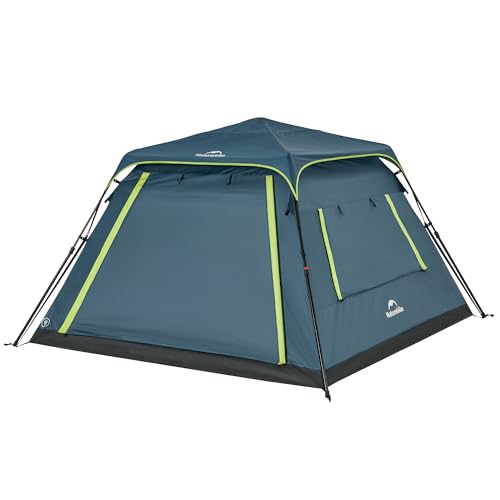
Naturehike Cape Lite Instant Cabin
The Strengths Of Each Pick
The Coody Premium Inflatable Canvas Air Tent takes the kind of shelter you’d expect on a glamp-ground and moves it onto remote camp pads. An inflatable air frame replaces the tangle of rigid poles you usually wrestle with, and a built-in stove jack opens up cold-weather and shoulder-season camping in a way most family tents simply can’t handle.
It’s pitched at campers who want the look and feel of a canvas wall tent without the hours of setup. The breathability of TC cotton-blend canvas helps with condensation on cool mornings, and the tall ceiling makes the interior feel closer to a small cabin than a typical nylon dome. Compared with the lighter Naturehike cabin options further down, this one leans heavier and more permanent, which fits a basecamp or seasonal setup far better than a quick overnight.
Positive Points
- Air-frame design cuts setup time and removes the pole-count headache common with traditional canvas shelters.
- Integrated stove jack enables safe use of a wood stove for cold-weather or four-season camping.
- TC cotton-blend canvas breathes, reducing the heavy condensation you often get with synthetic fabrics.
- Tall, roomy walls that work for standing, changing, and fitting cots or a small table inside.
- Build quality feels closer to a permanent yurt-style shelter than a typical backpacking tent.
Things To Consider
- Bulk and weight make this a drive-in shelter, not a pack-in option for backcountry trips.
- Canvas needs careful drying before storage to prevent mildew on the seams and inner walls.
- You’ll need to source a compatible wood stove separately; the jack alone doesn’t include one.
Who It Suits Best
Glampers, hunters, and cold-weather basecampers who want a roomy canvas shelter they can drive up to and leave standing for a season.
Consider Something Else When
The Naturehike Village Instant Cabin Tent suits families who want a much lighter, fast-setup cabin for summer weekends over a heavy canvas basecamp.
The Panda Air from RBM Outdoors shrinks the inflatable canvas idea into a footprint that fits small campsites and weekend trips. You get the same air-frame setup and stove jack as the larger Coody, but in a tighter package aimed at one to four campers rather than full family basecamps.
This is the pick when you want canvas comfort without hauling a wall tent into the woods. The waterproof, breathable shell handles humidity swings better than basic nylon, and the inflatable beams speed up pitch so you spend more time on the fire. Compared with the Coody up top, the Panda trades floor space and standing height for easier transport and a smaller pad footprint, which road-trippers and small groups tend to appreciate.
A Strong Showing
- Air-frame setup speeds arrival at camp, especially after a long drive.
- Compact size suits smaller tent pads where bigger canvas tents won’t fit.
- Waterproof breathable canvas reduces interior dampness on cool nights.
- Includes a stove jack for shoulder-season trips where a small heater matters.
- Lighter than full-size wall tents, easier to load into an SUV or truck bed.
Worth Noting
- Sleeping capacity is best for two to three adults, not a family of five.
- Storage still requires a dry, aired-out canvas to avoid musty smells over time.
- Peak height is limited, so most campers will spend time sitting or lying down inside.
Made For
Couples and small friend groups who want a canvas glamping experience they can fit into a weekend road trip.
Where Another Pick Suits Better
The Naturehike KOTA Double-Layer Family Tent serves larger families who need true standing-room and a vestibule for gear.
The Naturehike Village Instant Cabin leans into the side of luxury camping that prioritizes space and ease. Pre-attached poles and a cabin-style layout give you full standing height and near-vertical walls, which is a quiet luxury after years of crouching inside dome tents.
The 150D Ti Black fabric and PU 2000mm+ coating handle sustained rain without the soggy-floor worry, and the full-coverage rainfly keeps the vestibule usable during showers. Compared with the canvas options above, the Village trades natural-fiber breathability for lighter weight and faster dry-out, which matters on a two-night family trip. Tall ceilings also mean cots, air mattresses, and a camp chair all fit comfortably without forcing everyone to sleep in a row.
Key Advantages
- Pre-attached pole system lets you pitch the cabin in roughly a minute once you know the trick.
- Standing-height interior suits adults who don’t want to crawl in and out all weekend.
- Full-coverage rainfly protects the entrance area, useful during extended rain.
- PU 2000mm+ rating handles heavy downpours without leaks under normal conditions.
- Available in four- and eight-person layouts so families can scale up without changing brands.
Trade Offs
- Synthetic fabric can trap more condensation than breathable canvas on cold nights.
- Bulky pack size requires a large vehicle for transport and storage.
- Not designed around a stove jack, so cold-weather comfort is more limited than the Coody or Panda.
Right Fit For
Families and small groups who car-camp in mild to warm weather and want cabin-like space without a long setup routine.
Skip It When
The Coody Premium Inflatable Canvas Air Tent makes more sense for campers who run a wood stove or camp through shoulder seasons.
The Naturehike Cape is built for campers who’d rather not fight poles at the end of a long drive. Pre-attached telescoping poles let the tent unfold and lock into place in roughly a minute, and the tunnel-style layout stretches sleeping space without forcing a square footprint.
The 190T polyester shell with PU 3000mm waterproofing handles wet weekends comfortably, and the tall cabin-style section lets you stand inside the main sleeping area. Compared with the Village cabin up top, the Cape is a bit more oriented to sleeping room and less to lounging, which actually fits road-trippers who just need a fast, dry place to crash. Owners commonly report that the trick to setup is keeping the fabric unfolded evenly during the first pop, otherwise the poles fight you a little.
What It Does Well
- 60-second pitch is a real time-saver after dark or in light rain.
- PU 3000mm coating offers strong waterproofing for stormy conditions.
- Tunnel-style design separates sleeping zones for families or co-ed groups.
- Tall ceiling section means adults can dress and move without stooping.
- Multiple size options cover four-, six-, and eight-person groups.
Small Caveats
- Tunnel shape is less wind-stable in open alpine campsites than a dome or cabin shape.
- Setup works best with two people for larger sizes, despite the “instant” label.
- Storage bag runs tight on repack, a common trade-off with pre-attached poles.
Who Should Grab It
First-time campers and busy parents who want fast setup and don’t want to learn traditional pole pitching.
Look Elsewhere When
The Naturehike Village Instant Cabin Tent fits campers who prefer a square, cabin-style interior for shared lounging space.
The Naturehike KOTA is the most flexible layout in this lineup. A double-layer build lets you pitch the inner mesh tent on its own in summer, use just the rainfly as a canopy, or combine both for four-season coverage. That modularity makes it less of a single-trip tent and more of a basecamp system.
Available in four-, six-, and eight-person sizes with vestibules and a porch extension, the KOTA handles strollers, coolers, and wet boots without crowding the sleeping area. The 75D 210T polyester shell with PU 3000mm+ waterproofing shrugs off heavy rain, and the inner mesh keeps the bugs out when the fly is open. Compared with the Cape up top, the KOTA trades setup speed for genuine four-season usability, which matters most on longer family trips where weather shifts quickly.
What Stands Out
- Modular design lets you run inner-only, fly-only, or full setup depending on conditions.
- Vestibules and porch extension keep muddy gear out of the sleeping area.
- 75D polyester with PU 3000mm+ rating is tougher than entry-level tent fabrics.
- Mesh inner layer supports stargazing and ventilation on warm, dry nights.
- Three size options cover families from a couple to a large group.
Honest Caveats
- Full setup takes longer than instant-pole tents, which matters on quick overnight trips.
- Larger sizes are heavy and need a spacious vehicle for transport.
- Four-season rating depends on proper pitch, especially taut guy lines in wind.
Best Suited To
Families running multi-day basecamps in mixed weather who want a tent that doubles as a sun shelter and a winter cabin.
Reach For A Different Pick When
The Naturehike Cape Lite Instant Cabin fits campers who only do one- or two-night trips and don’t need the modular flexibility.
The Cape Lite trims the cabin-tent idea down to its essentials. Pre-attached poles fold the shelter out in roughly a minute, and the footprint at 101.5 by 101.5 inches fits a queen-size mattress with room to spare for a small side table and gear.
Peak height of 62.2 inches lets most adults stand in the center, which is the difference between a tent you crawl into and one you actually move around in. Compared with the larger KOTA above, the Cape Lite drops the vestibule and modular layer system, so it suits quick weekend trips more than multi-day basecamps. For couples and small families who want cabin comfort without hauling a heavy family tent, the Lite is a sensible middle ground.
Everyday Advantages
- Setup under a minute is friendly for campers with limited experience.
- Queen-size mattress footprint handles two adults comfortably with room for gear.
- 62.2-inch peak height means standing room for most adults in the center.
- Lighter than the larger Cape and KOTA models, easier for one person to manage.
- Cabin shape gives full use of floor space, unlike domes with sloping walls.
Points To Note
- No vestibule means wet boots and packs end up just inside the door.
- Capacity listed for four to six is tight for six adults on air mattresses.
- Less weather-rugged than the heavier Cape or KOTA models in sustained storms.
Whose Shelf It Belongs On
Couples and small families running short, fair-weather weekend trips who value easy setup above all else.
A Better Fit Elsewhere
The Naturehike Cape Instant Pop-Up Tent suits groups who need more sleeping room and don’t mind slightly longer setup times.
What To Weigh Before Choosing Your Shelter
A few key attributes decide whether a luxury tent actually feels luxurious once you set it up. Material matters more than many shoppers expect: cotton-blend canvas breathes and feels closer to a cabin, while polyester and nylon dry faster and weigh less. The trade-off shows up on cold nights when canvas traps less condensation and on rainy mornings when synthetic shells pack down faster for the drive home.
Capacity numbers also deserve a closer read. A tent “for eight people” usually means four adults with gear, not eight adults with cots. Peak height is the second number worth checking, since standing room transforms a tent from a sleep pod into a real living space. Pre-attached poles and air frames trade weight for simplicity, and modular double-layer designs trade setup speed for true four-season coverage.
Your campsite sets the ceiling on what’s worth carrying. Remote basecamps reward heavier canvas shelters, while drive-in campgrounds favor quick-pitch cabins. For most weekend campers, a balance of standing height, weather rating, and pack weight matters more than any single spec sheet line.
Mistakes First-Timers Often Make
Pitfalls Shoppers Hit
The most common slip is buying by headcount alone. A four-person tent that fits four adults with no gear isn’t really a four-person tent for family camping. Capacity ratings are best treated as a starting point, then checked against floor area and peak height.
Another trap is assuming “waterproof” means the same thing across models. Polyurethane coatings are rated in millimeters (a measure of how much water pressure the fabric can handle before leaking), and a higher rating generally means better resistance to heavy rain. Skipping the rating, and the difference between a drizzle-ready tent and a downpour-ready tent only shows up on the worst night of the trip.
Where The Extra Money Goes
Spending more on a luxury tent typically buys stronger fabrics, better stitching, taller ceilings, and smarter ventilation. Higher-tier models also tend to include thoughtful touches like multiple doors, vestibules for gear, and modular setups that adapt to summer and winter conditions.
The upgrade pays off most when you actually use the tent year-round. Weekend-only campers in mild climates may not feel the difference between a mid-range and a premium shelter, while basecampers and cold-weather campers usually notice it on the first cold night. The honest read is that a higher-tier tent earns its place when its extra features match the way you camp, not because of any brand promise alone.
Frequently Asked Questions
What makes a tent “luxury”?
Luxury tents typically offer features like standing-height ceilings, weather-rated fabrics, roomier floor plans, and easier setup systems that go beyond basic dome designs.
Are canvas tents worth the extra weight?
Canvas breathes better and feels closer to a cabin, which many campers appreciate on longer trips. The trade-off is weight and longer drying time before storage.
How fast do instant tents really set up?
Most instant tents with pre-attached poles unfold in about a minute once you’ve practiced the motion. First-timers usually take a few extra minutes.
Can these tents handle heavy rain?
Waterproof ratings vary across models, but PU 2000mm+ and PU 3000mm+ coatings are widely used in this category for sustained rain protection. Proper pitch matters just as much as the fabric rating.
Do I need a stove jack?
A stove jack only matters for cold-weather camping with a compatible wood stove. Warm-season campers can usually skip this feature entirely.
The Takeaway
The right luxury tent depends more on how and where you camp than on raw spec sheets. Canvas air-frame shelters like the Coody and Panda reward basecampers and cold-weather campers, while instant cabins like the Village, Cape, Cape Lite, and KOTA fit weekend families who want standing room and fast setup. Match the tent to your usual climate, group size, and trip length, and the shelter will quietly disappear into the background, which is exactly what good gear is supposed to do.